
Chemical Resistant Epoxy Flooring UV Yellowing Guide
Quick Answer
What Buyers Need to Know First
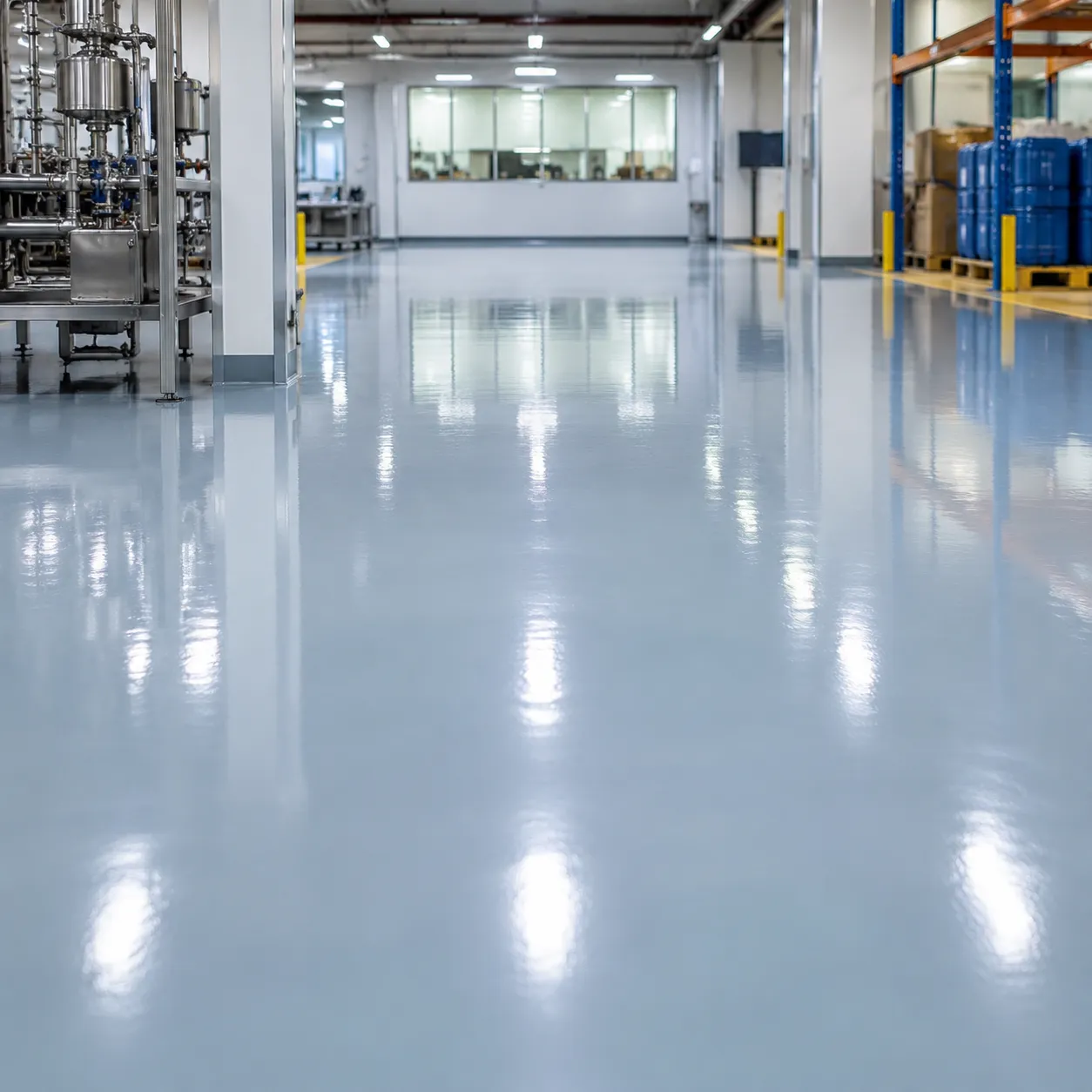
High-performance chemical resistant epoxy flooring delivers superior surface protection against aggressive solvents, harsh acids, heavy machinery impact, and hot tire pickup epoxy damage. It remains the industrial standard for any heavy-duty factory chemical floor coating or commercial concrete floor epoxy system.
Before selecting a formula, buyers must account for the distinct boundary between chemical toughness and environmental exposure:
- Chemical & Mechanical Endurance: Exceptional defense for an acid resistant floor, standing up to continuous chemical exposure, oils, and high-load traffic.
- UV Vulnerability: Standard epoxy resins naturally yellow, discolor, and chalk under continuous exposure to direct sunlight or high-intensity UV light.
- System Design: Long-term aesthetic stability in UV-exposed environments requires pairing the heavy-duty epoxy base coat with an aliphatic polyaspartic or polyurethane topcoat.
Is any epoxy completely UV-proof?
Direct Answer
No epoxy is 100% UV-proof. While high-grade chemical resistant epoxy flooring delivers outstanding durability against harsh industrial chemicals, heavy impacts, and hot tire pickup, standard epoxy resins naturally degrade when exposed to direct sunlight. Over time, UV radiation breaks down the aromatic chemical bonds, causing yellowing, surface chalking, and loss of gloss.
Key Selection Factors or Failure Risks
Selecting the right coating system requires matching your floor’s environment to the proper polymer chemistry:
- Aromatic Chemistry Limits: Standard epoxies provide superior strength for a heavy-duty acid resistant floor or factory chemical floor coating, but their chemical structure amber when exposed to UV rays.
- Topcoat Compatibility: To preserve color stability on a concrete floor epoxy system, apply an aliphatic polyurethane or polyaspartic topcoat over the base coat to block UV light.
- High-Exposure Areas: Sunlit garage bays, doorways, and outdoor ramps face elevated yellowing risks. Adding UV inhibitors slows this process, but topcoats offer the ultimate defense.
- Manufacturing Standards: As a direct wholesale epoxy resin manufacturer, we integrate raw UV stabilizers into our formulations to improve resistance, though polyurethane topcoats remain essential for full outdoor exposure.
Why does overheating increase discoloration?
Direct Answer
Excess heat accelerates thermal oxidation within the resin matrix, breaking down the chemical bonds of amine curing agents. When temperatures spike—whether from an intense exothermic reaction during curing or continuous thermal exposure in an active facility—the polymer chains degrade and turn yellow or brown. In our manufacturing experience, heat acts as a direct catalyst that speeds up discoloration in even the strongest chemical resistant epoxy flooring.
Key Selection Factors or Failure Risks
To prevent heat-induced discoloration and maintain long-term garage epoxy durability and performance, monitor these key failure risks:
- Exothermic Heat Spikes: Pouring sections thicker than recommended traps heat during the curing phase, permanently scorching the binder matrix before it fully sets.
- Curing Agent Vulnerability: Standard aromatic amine hardeners offer high acid and solvent resistance, but they yellow rapidly under thermal stress compared to aliphatic alternatives.
- Thermal Operating Limits: A standard concrete floor epoxy system degrades when subjected to continuous ambient heat or washdowns above 140°F (60°C).
- Localized Heat Sources: Machinery exhaust, steam cleaning, and hot tire pickup concentrate thermal stress on specific areas, leading to patchy surface yellowing on your factory chemical floor coating.
Do Pigments Hide or Worsen Yellowing in Chemical Resistant Epoxy Flooring?
Direct Answer
Dark pigments mask initial yellowing, but they do not stop resin breakdown. Lighter shades—especially whites, light grays, and clear coats—show UV-induced ambering quickly. Over time, UV radiation breaks down the epoxy matrix, causing surface chalking and uneven discoloration regardless of color. Pigments buy visual time, but they do not change the core chemistry of an aromatic epoxy system.
Key Selection Factors or Failure Risks
When selecting pigments for a factory chemical floor coating or concrete floor epoxy system, consider these factors:
- Pigment Quality: High-grade inorganic pigments (like titanium dioxide) offer superior lightfastness, whereas low-grade pigments chalk and fade under UV exposure.
- Color Masking: Dark gray, charcoal, and red hide ambering significantly better than light gray or beige.
- False Security: Dark colors conceal visual yellowing, but physical UV degradation still compromises surface toughness and garage epoxy durability.
- Surface Oxidation: Unprotected dark floors eventually develop a chalky, dull film, masking the true color underneath.
- System Pairing: For maximum performance, pair pigmented chemical resistant epoxy flooring with an aliphatic polyurethane or polyaspartic UV-blocking topcoat.
As a wholesale epoxy resin manufacturer, we engineer pigmented bases to balance visual color stability with heavy-duty chemical protection.
How Should Yellowing Resistance Be Compared in Chemical Resistant Epoxy Flooring?
Direct Answer
We compare yellowing resistance by reviewing standardized UV weathering test data (such as ASTM G154), analyzing resin binder chemistry, and measuring color shift (Delta E values) under heat and light exposure. Never rely on verbal claims—always request verified lab reports and physical sample panels tested under your actual site conditions.
Key Selection Factors or Failure Risks
- Delta E Color Shift Ratings: Request lab reports showing Delta E (ΔE) values after 500+ hours of QUV testing. Lower numerical values mean higher color stability over time.
- Resin Chemistry Selection: Standard aromatic resins used in a concrete floor epoxy system naturally amber over time. Protect your chemical resistant epoxy flooring with an aliphatic, UV-stable topcoat whenever color retention is critical.
- Combined Heat and Lighting: High operational temperatures combined with strong indoor lighting or sunlight significantly accelerate resin discoloration.
- Failure Risk: Specifying a standard factory chemical floor coating without verified light-stability ratings leads to rapid ambering, patchy floor discoloration, and permanent aesthetic failure.
Can a topcoat improve outdoor durability?
Direct Answer
Yes. While our chemical resistant epoxy flooring provides incredible structural strength and adhesion, base epoxies naturally degrade under direct sunlight. Adding a high-performance, UV-stable topcoat—like an aliphatic polyurethane or polyaspartic—creates a protective shield. The base coat builds a heavy-duty concrete floor epoxy system, while the topcoat blocks UV rays, prevents surface chalking, and maximizes long-term garage epoxy durability outdoors.
Key Selection Factors or Failure Risks
- Topcoat Chemistry: Always use aliphatic polyurethane or polyaspartic coatings over epoxy. These formulations absorb UV rays without yellowing or losing flexibility.
- Chemical & Heat Endurance: Ensure the chosen topcoat maintains your acid resistant floor requirements and prevents hot tire pickup epoxy failure under vehicle traffic.
- Inter-Coat Bonding: Apply the topcoat strictly within the recommended cure window. Missing this re-coat window leads to poor chemical bonding and eventual surface delamination.
- Surface Scuffing: If the base epoxy cures completely, mechanically scuff the surface before topcoating to guarantee strong mechanical adhesion.
- Moisture Sensitivity: Never apply topcoats over damp or uncured substrates. Trapped moisture causes gas bubbles, cloudiness, and early coating failure.
What Information Should You Send to the Manufacturer?
To help us formulate the perfect chemical resistant epoxy flooring system for your project, sending accurate technical details upfront saves time and prevents application failures. As a direct wholesale epoxy resin manufacturer, we tailor formulations to match your specific working conditions.
Application, Substrate and Process Details
- Substrate Condition: State whether you are working with fresh concrete, oil-contaminated slabs, or recoating an existing concrete floor epoxy system. Include moisture vapor emission test results and planned surface prep (shot blasting, diamond grinding).
- Chemical & Thermal Exposure: List the specific acids, alkalis, or solvents contacting the surface, including concentration levels and spill durations (splash-and-spill vs. continuous immersion) needed for your acid resistant floor.
- Environmental & Application Parameters: Detail working ambient temperatures, ventilation conditions, and expected pot life requirements for your factory chemical floor coating installation.
Performance, Packaging and Estimated Quantity
- Mechanical Performance: Specify wear demands, such as heavy forklift traffic, severe impact, thermal shock, or high-heat resistance to eliminate hot tire pickup epoxy failures.
- Packaging & Branding Options: Outline your preferred unit sizes (drum sets, IBC totes, or pre-measured kits). As a bulk epoxy resin supplier, we offer custom packaging and private label epoxy resin solutions for distributors.
- Project Volume: Provide total surface square footage and target coating thickness (mils/mm) so we can accurately estimate yield and volume requirements.
How Can Rongwei Support This Project?
We deliver tailored chemical resistant epoxy flooring solutions designed to meet precise industrial specifications. As a direct manufacturing partner, we bridge the gap between heavy chemical exposure requirements and project-specific job site demands.
Sample Matching and Formula Adjustment
Every facility presents unique chemical and environmental hazards. Our technical team adjusts resin formulations to match exact performance requirements:
- Targeted Chemical Defense: Fine-tuning resin matrices to resist specific acids, alkalis, and industrial solvents.
- Viscosity & Cure Customization: Modifying flow properties and pot life for cold-storage application or rapid turnarounds.
- Exact Sample Replication: Testing client-submitted samples to duplicate specific performance properties, texture, and visual finish.
OEM / Private Label Packaging and Bulk Supply
Operating as a trusted wholesale epoxy resin manufacturer and global bulk epoxy resin supplier, we provide flexible production capabilities for commercial partners:
- Private Label Epoxy Resin: Custom packaging, branded labeling, and customized unit sizing tailored to your market.
- Direct Factory Supply: Ordering epoxy resin factory direct ensures stable batch consistency, aggressive pricing, and reliable lead times for large-scale projects.
- Strict Batch Control: Every production run undergoes rigorous QC testing for tensile strength, chemical resistance, and bond reliability.
Buyer Checklist
Questions to Confirm Before Placing an Order
Before finalizing your order for chemical resistant epoxy flooring, run through this checklist to ensure the system matches your exact site conditions and performance demands:
- Chemical & Acid Exposure: What specific chemicals, concentration levels, and spill durations will the floor encounter? Verify if your facility needs an acid resistant floor system or a heavy-duty factory chemical floor coating engineered for harsh solvent contact.
- Thermal & Traffic Demands: Will the surface handle heavy forklift traffic, impact loads, or high-heat exposure? Confirm the coating resists hot tire pickup epoxy failure and offers maximum garage epoxy durability under severe weight.
- Substrate Condition & Moisture: What is the concrete moisture vapor emission rate (MVER) and surface profile (CSP)? Ensure the primer matches the substrate condition to prevent bubbling or delamination.
- Cure Time & Downtime Limits: How rapidly does the space need to reopen for operations? Check the working time, tack-free time, and full-cure schedule against your operational shutdown window.
- UV Stability Needs: Is the installation exposed to direct sunlight or strong indoor UV radiation? Decide whether a UV-resistant topcoat is necessary to prevent surface chalking and discoloration over time.
- Manufacturer Capabilities: Are you purchasing through a direct wholesale epoxy resin manufacturer who can provide custom color matching, technical datasheets, and reliable bulk supply?
Related Sources
- https://www.intertek.com/polymers-plastics/testlopedia/yellowness-index-astm-e313/
- https://pmc.ncbi.nlm.nih.gov/articles/PMC5459211/
- https://www.lib-chamber.com/knowledge/how-astm-g154-uv-testing-supports-polymer-durability-studies
- https://www.hunterlab.com/en/blog/what-standard-do-i-use-to-verify-yellowness-index-performance/
