
Carbon Fiber Quality Control and Composite Material Testing
Importance of Quality Control in Composite Manufacturing
Why Quality Control is Paramount
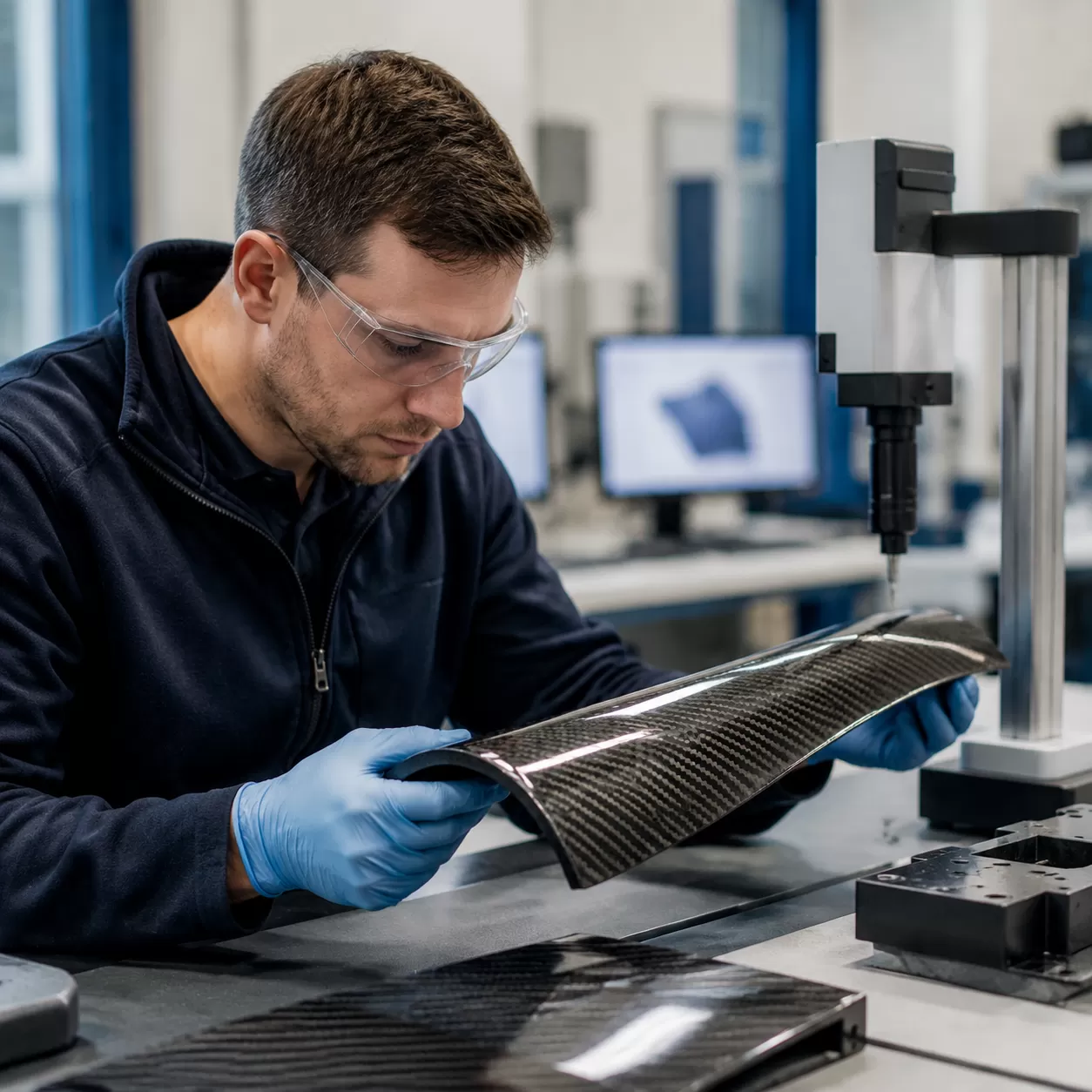
In carbon fiber and composite material testing, stringent quality control (QC) is not optional—it is a baseline requirement. Because high-performance composites are engineered for safety-critical and high-stress applications, even a minor material inconsistency can lead to catastrophic structural failure. Implementing rigorous QC protocols throughout the production lifecycle ensures structural integrity, guarantees component reliability, and maintains the high strength-to-weight ratios that make carbon fiber the material of choice for advanced industries.
The Financial Impact of Material Defects
Neglecting composite material testing carries a severe financial penalty. Early-stage defect detection is significantly more cost-effective than dealing with failures late in the production cycle or post-market.
| Defect Detection Stage | Financial Impact & Consequences |
|---|---|
| Raw Material / Inline | Minimal cost; easily scrapped or reworked before curing. |
| Post-Curing / Machining | Moderate loss; wasted energy, labor hours, and resin matrices. |
| Field Failure / Post-Delivery | Catastrophic; leads to expensive product recalls, liability claims, and severe damage to brand reputation. |
Investing in robust composite defect detection minimizes waste, optimizes manufacturing yield, and protects the bottom line.
Industry Standards and Certifications
Compliance with global composite quality standards is the definitive benchmark for market entry and contract acquisition. To compete in international markets, manufacturers must align their testing methodologies with recognized regulatory frameworks.
- Aerospace & Defense: Adherence to strict Nadcap accreditation and AS9100 quality management systems.
- Global Standards: Alignment with specific ISO composite standards and ASTM standards for mechanical property testing and void content measurement.
- Automotive: Compliance with rigorous OEM-specific material validations.
Securing these certifications proves technical capability, guarantees process repeatability, and builds trust with global tier-1 indicators.
Part 2: Key Quality Indicators in Composite Material Testing
To ensure every carbon fiber component performs flawlessly under pressure, we monitor specific quality indicators throughout the manufacturing cycle. Here are the core metrics we track to guarantee structural integrity and premium finish.
Fiber Content Analysis
The strength of a composite relies heavily on the ratio of carbon fiber to resin. Through precise fiber content analysis, we ensure the optimal balance is achieved. Too little fiber reduces structural strength, while too much fiber leads to dry spots and poor bonding.
Void Content Measurement
Air pockets or voids are the enemy of carbon fiber performance. High porosity weakens the structure and invites catastrophic failure. We use strict void content measurement techniques to keep porosity below industry-allowed thresholds, ensuring a solid, dense matrix.
Interlaminar Shear Strength (ILSS)
A composite is only as strong as its weakest layer. Interlaminar strength measures how well the fiber layers bond with the matrix. To prevent delamination under heavy loads, choosing the right matrix is essential. We formulate our premium epoxy resin selection to deliver maximum adhesion, preventing layers from separating under stress.
Surface Quality
For global markets demanding both aesthetics and performance, surface quality is non-negotiable. We inspect every part for pinholes, fabric distortion, and dry spots. Utilizing a high-quality epoxy resin surface coating helps us achieve a flawless, mirror-like finish that meets strict automotive and consumer standards.
Dimensional Tolerance
Composite parts must fit perfectly into complex assemblies. We measure dimensional accuracy down to the millimeter, ensuring zero warping or shrinkage during the curing process so that every component aligns precisely with your CAD designs.
Part 3: Advanced Composite Material Testing Methods
We use a mix of advanced testing methods to ensure every component we produce meets strict structural and safety requirements. Our facility combines non-destructive testing (NDT) with physical analysis to verify the internal and external integrity of every part.
Microscopic Inspection
Microscopic inspection allows us to examine the cross-sections of our composite components at high magnification. This method is vital for catching micro-cracks, fiber misalignment, and early-sign internal flaws before they become structural failures.
Density Method for Fiber Content Analysis
We use the density method for precise fiber content analysis. By measuring the exact density of the composite material, we can calculate the ratio of carbon fiber to resin. This ensures the material achieves its optimal strength-to-weight ratio without being resin-rich or resin-starved.
Ultrasonic NDT Composite Inspection
For reliable, non-destructive evaluation, our NDT composite inspection relies heavily on ultrasonic testing.
- Pulse-Echo Testing: Finds subsurface delamination and tracks depth.
- Through-Transmission: Detects larger internal voids by measuring sound attenuation.
- Phased Array UT: Provides real-time, high-resolution imaging of the internal laminate structure.
X-Ray Imaging for Composite Defect Detection
When we need to see deep inside complex geometries, X-ray inspection is our go-to for composite defect detection. It gives us a clear look at internal foreign object debris (FOD), core crushing in sandwich panels, and precise fiber orientation inside molded parts.
Infrared Thermography
Thermography is a fast, non-contact NDT method. By applying a brief thermal pulse to the component, we monitor how the heat dissipates. Areas with internal voids, delamination, or moisture entrapment cool down at different rates, mapping out hidden flaws instantly.
Mechanical Property Testing
We back up our non-destructive methods with destructive mechanical property testing on sacrificial test coupons from the same production batch. This validates the actual physical performance of the batch against international ISO composite standards.
| Test Type | Metric Evaluated | Key Quality Indicator |
|---|---|---|
| Tensile Testing | Ultimate tensile strength & modulus | Fiber quality and alignment |
| Flexural Testing | Bending strength and stiffness | Interlaminar shear resistance |
| Compression Testing | Load-bearing capacity under pressure | Resistance to micro-buckling |
Common Defects in Carbon Fiber Quality Control and Their Causes
Even with strict composite material testing, defects can still happen during manufacturing. Understanding why these issues occur is the first step to preventing them and ensuring high-performance results.
Voids and Porosity
Voids are tiny air pockets trapped inside the laminate. They are one of the most common issues caught during composite defect detection.
- Main Causes: Insufficient vacuum pressure, incorrect resin viscosity, or improper degassing during the curing process.
- The Risk: High void content measurement significantly reduces the mechanical strength and fatigue life of the part.
Fiber Wrinkling
Fiber wrinkling occurs when the carbon fiber reinforcement layers buckle or misalign instead of laying perfectly flat.
- Main Causes: Uneven tension during layup, complex mold geometries, or thermal expansion mismatches during curing.
- The Risk: Wrinkles disrupt the load path, leading to a massive drop in the part’s structural integrity.
Resin-Rich Areas
Resin-rich zones happen when there is too much resin and not enough fiber reinforcement in specific areas of the component.
- Main Causes: Poor compaction, improper bleeding of excess resin, or pooling in sharp corners of the mold.
- The Risk: These areas add unnecessary weight and make the composite brittle, altering the results of your fiber content analysis.
Delamination
Delamination is the separation of adjacent layers within a composite material. It is a critical failure mode heavily monitored during NDT composite inspection.
- Main Causes: Impact damage, contamination between layers during layup, or incomplete curing of the resin matrix.
- The Risk: It severely compromises the structural stiffness, often causing the part to fail completely under stress.
Cracking
Cracks can develop within the resin matrix or cut right through the fiber layers themselves.
- Main Causes: Thermal stress from rapid cooling, excessive mechanical loading, or high internal residual stresses.
- The Risk: Micro-cracks propagate quickly under operational stress, which is why rigorous mechanical property testing is vital to catch them early.
Defect Prevention in Carbon Fiber Quality Control
Stopping flaws before they happen is the most cost-effective approach to composite material testing and production. We focus on strict preventive measures across four critical pillars to ensure every part meets the highest performance standards.
Optimizing Process Parameters
Precise control over manufacturing variables directly eliminates structural flaws like voids and dry spots.
- Cure Cycle Management: We strictly monitor heat-up rates, dwell times, and cooling phases to prevent thermal stress and cracking.
- Pressure & Vacuum Consistency: Maintaining a stable vacuum (minimum 28 in Hg for autoclave-quality parts) ensures proper resin flow and consolidation.
- Viscosity Control: Tracking temperature profiles guarantees the resin reaches the ideal viscosity for complete fiber wetting before cross-linking begins.
Raw Material Quality Management
High-quality outputs require pristine inputs. Our composite material testing workflow begins the moment raw materials arrive at our facility.
- Prepreg Shelf-Life Tracking: Carbon fiber prepregs are stored in strictly monitored freezers at -18°C (0°F) to prevent premature curing.
- Moisture Audits: Every batch undergoes moisture analysis, as humidity severely disrupts the resin-fiber bond.
- Supplier Validation: We run incoming mechanical tests on fiber trows and resin batches to verify structural consistency before production.
Standardized Operating Procedures
Human precision is vital to preventing defects like fiber wrinkling and bridging in complex geometries.
- Precision Layup Guides: Technicians utilize laser projection systems to ensure exact ply orientation and fiber alignment.
- De-bulking Schedules: Frequent vacuum de-bulking during layup removes trapped air between plies, minimizing internal porosity.
- Careful Mold Release Application: Controlled release-agent application prevents surface contamination and post-cure part sticking.
Controlled Cleanroom Environments
Environmental variables can quietly ruin advanced composites. We maintain strict cleanroom protocols to protect material integrity.
| Environmental Factor | Target Specification | Impact on Quality |
|---|---|---|
| Temperature | 21°C ± 3°C (70°F ± 5°F) | Stabilizes resin tack and out-life |
| Relative Humidity | Below 50% | Prevents moisture entrapment and voids |
| Air Filtration | Positive pressure / HEPA | Eliminates dust, lint, and airborne contaminants |
Global Composite Quality Standards and Compliance
ASTM Standards for Material Characterization
We strictly follow ASTM standards to ensure precise composite material testing. These guidelines govern how we measure tensile strength, shear properties, and fiber-matrix behavior. Adhering to these protocols guarantees that every carbon fiber component delivers repeatable, data-backed performance.
ISO Composite Standards for Global Quality
Our processes align with ISO composite standards to meet international benchmarks for consistency and safety. Key methods we utilize include:
- ISO 14125: Flexural properties determination.
- ISO 11357: Differential scanning calorimetry (DSC) for resin cure analysis.
Aerospace Standards (AS & BAC)
For high-stakes aerospace applications, we comply with rigid AS (Aerospace Standards) and BAC (Boeing Advanced Composite) specifications. Our NDT composite inspection workflows detect microscopic anomalies, ensuring all flight-critical parts meet absolute safety margins.
Automotive OEM Specifications
We tailor our carbon fiber quality control to meet strict automotive OEM standards. From structural impact resistance to class-A surface finishes, our testing ensures fast-paced production lines receive components that match exact factory requirements.
RW Atelier’s Carbon Fiber Quality Control and Assurance
We maintain absolute precision across every batch of composite materials we produce. Our quality management system ensures that every component meets rigorous performance and safety benchmarks before it leaves our facility.
Certified ISO 9001 Quality Management
Our facility operates under a certified ISO 9001 management system. This framework guarantees strict traceability, standardized manufacturing processes, and continuous improvement protocols for all carbon fiber production lines.
Advanced Composite Material Testing Equipment
We invest in cutting-edge technology to handle complex composite material testing and advanced diagnostics:
- Ultrasonic NDT Systems: High-frequency non-destructive testing to detect internal anomalies.
- Microscopic Analysis: High-resolution optical tools for deep-layer structure inspection.
- Mechanical Test Rigs: Destructive testing setups to verify tensile, compression, and shear limits.
- Thermal Imaging: Infrared cameras that map curing uniformity and thermal consistency.
Uncompromising Quality Commitment
We back our parts with a definitive performance promise. Every structural component undergoes a verified carbon fiber quality control protocol, eliminating material defects like voids, fiber misalignment, or premature delamination. We do not ship components that fail to meet baseline tolerances.
Dedicated Global Customer Support
Our technical team provides direct assistance to engineering and procurement departments worldwide:
- Data Transparency: Full inspection reports and testing certificates are provided with each shipment.
- Engineering Consultation: Direct access to composite specialists for application and design troubleshooting.
- Compliant Packaging: Certified transit protection to secure part integrity during global delivery.
Cost vs Benefit in Composite Material Testing
Investing in carbon fiber quality control isn’t just about compliance—it’s about protecting your bottom line. Balancing the upfront expense of composite material testing against the catastrophic costs of part failure is what keeps your business profitable and reputable.
Testing Costs
Quality assurance requires an upfront investment, but it is highly manageable when optimized.
- Equipment & Lab Fees: Destructive and mechanical property testing require specialized machinery or certified third-party labs.
- Labor: Hiring or training technicians for NDT composite inspection (like ultrasound or X-ray).
- Material Waste: The cost of sacrificing production samples for destructive burn-off or mechanical tests.
Cost of Defects
Skipping proper inspection always costs more in the long run. When a defective composite part leaves the factory, the financial damage escalates rapidly.
| Defect Stage | Financial Impact | Consequence |
|---|---|---|
| In-Process | Low | Minor scrap material or rework time. |
| Post-Production | Medium | Wasted production hours, full material scrap, shipping delays. |
| In-Field Failure | Critical | Product recalls, legal liability, massive brand damage, and lost contracts. |
Return on Investment (ROI)
Implementing a strict composite quality standards protocol yields a clear, measurable return.
- Scrap Reduction: Catching voids or layout errors early prevents wasting expensive carbon fiber and resin.
- Faster Time-to-Market: Standardized testing reduces troubleshooting downtime during mass production.
- Premium Pricing: Global buyers pay a premium for certified, defect-free components, directly boosting your margins.
Ready to Elevate Your Composite Material Testing?
Expert Quality Certification Consult
Navigating complex global regulations doesn’t have to be a headache. We provide streamlined consulting to help your business secure essential certifications, aligning your production with strict international benchmarks smoothly and efficiently.
Advanced Composite Material Testing Services
Don’t leave product integrity to chance. Our facility offers a full suite of carbon fiber quality control solutions, including precision fiber content analysis and advanced NDT composite inspection, ensuring your parts deliver flawless performance under pressure.
Seamless Standard Compliance Guidance
We break down the complexities of ISO composite standards and aerospace mandates into actionable steps. Our team guides you through every benchmark, eliminating regulatory risks and helping you launch certified products into the global market with total confidence.