Chemical Resistant Floor Coating Material and System Guide
Material Comparison: Epoxy vs. Polyurethane vs. Novolac
Selecting the right chemical resistant floor coating requires a precise understanding of material science. Choosing the wrong chemistry leads to premature degradation, disbonding, or complete curing failure under harsh industrial exposure.
The table below outlines how primary industrial resin systems compare in terms of formulation and resistance profiles:
| Coating Type | Core Chemistry | Primary Strength | Weakness |
|---|---|---|---|
| Standard Epoxy | Bisphenol A / Polyamine | Excellent adhesion, high mechanical strength | Vulnerable to concentrated organic acids |
| Polyurethane (PU) | Isocyanate / Polyol | Flexibility, thermal shock resistance, UV stability | Low tolerance for high-concentration acids/alkalis |
| Novolac Epoxy | Phenol-Formaldehyde / Amine | Exceptional acid alkali resistance, high cross-link density | Lower flexibility, brittle if highly impacted |
Key Performance Differentiators
- Cross-Linking Density: Novolac epoxies feature multiple functional groups per molecule compared to standard epoxies. This dense molecular network prevents aggressive solvents and acids from penetrating the matrix and reaching the concrete substrate.
- Chemical Attack Mechanisms: Standard polyurethanes excel against organic acids (like lactic acid in food processing), whereas specialized Novolac systems handle heavy-duty inorganic acids like 98% sulfuric acid.
- Environmental Sensitivity: Polyurethane systems are highly sensitive to moisture during application. Any moisture interference during the chemical reaction triggers a curing failure, leading to bubbling, pinholes, and compromised chemical resistance.
Application Differences in Chemical Resistant Floor Coating Systems
When we deploy a chemical resistant floor coating, where you put it matters just as much as what is in it. Different industries face unique daily threats, meaning a heavy-duty food plant requires a completely different setup than a battery storage facility. Choosing the wrong system leads to blistering, delamination, and costly curing failure.
Industry-Specific Demands
We break down the application zones based on the specific chemical threats they face every day:
- Food and Beverage Processing: These environments deal with constant thermal shock (hot water washdowns) and organic acids (citric acid, lactic acid). The coating must withstand these harsh sanitizing cycles without cracking.
- Chemical Manufacturing and Storage: This is where maximum acid alkali resistance is non-negotiable. Floors here must handle concentrated splashes of sulfuric, hydrochloric, or nitric acids without degrading.
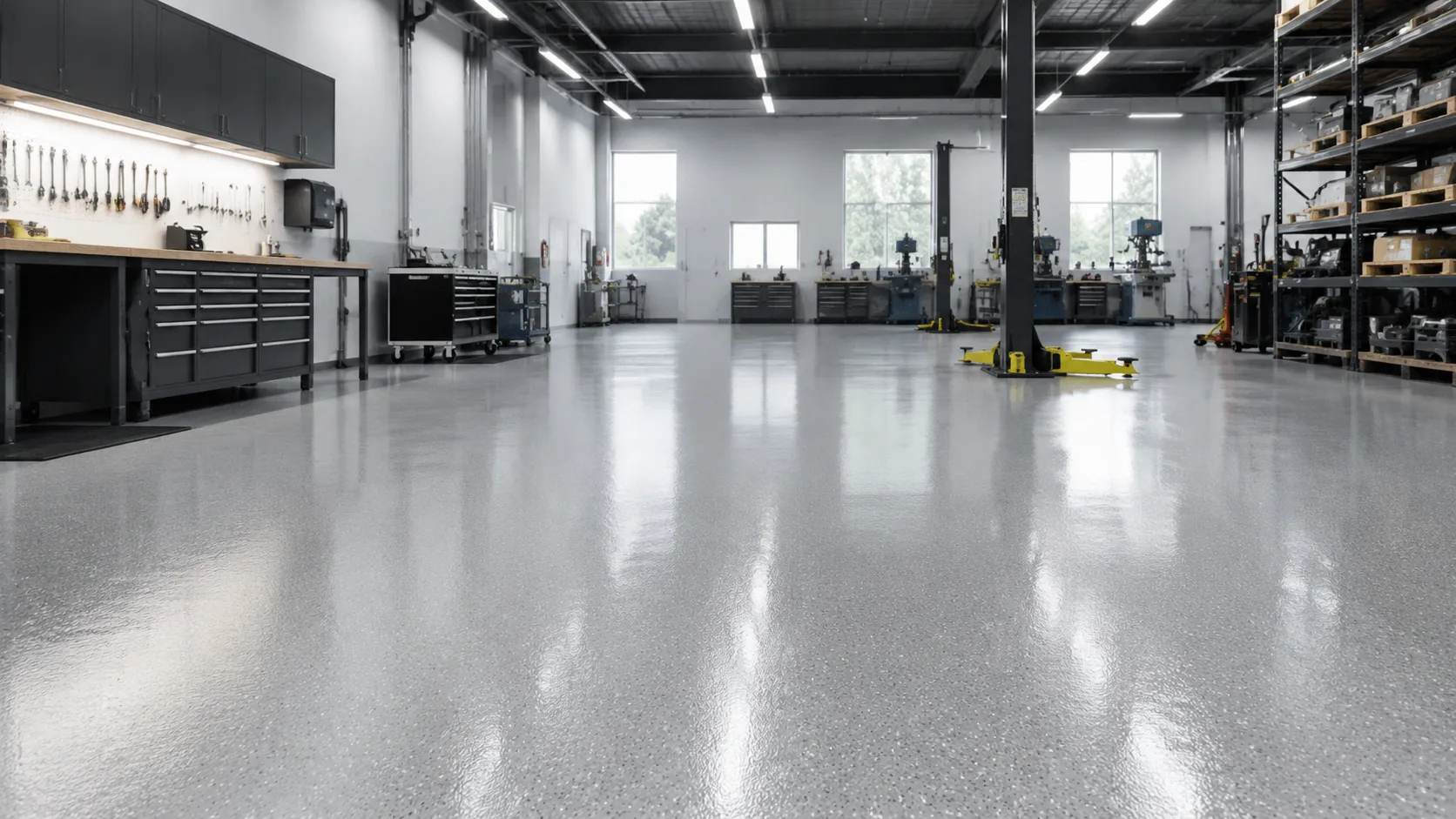
- Automotive and Aerospace Hangars: The primary enemies here are aviation fluids, Skydrol, motor oils, and heavy tire traffic. The floor needs high impact resistance alongside chemical defense.
- Pharmaceutical and Cleanrooms: These floors require a seamless, sterile finish that resists aggressive particulate cleaning agents and solvents while maintaining a flawless gloss.
Application Comparison
| Industry Sector | Primary Chemical Threat | Key Coating Performance Needed |
|---|---|---|
| Food & Beverage | Organic acids, thermal shock, harsh sanitizers | High thermal tolerance, antimicrobial properties |
| Chemical Processing | Concentrated acids, strong alkalis, solvents | Extreme acid alkali resistance, high build thickness |
| Automotive/Aviation | Skydrol, fuels, heavy wheel traffic | Abrasion resistance, stain resistance, gloss retention |
| Pharmaceutical | Solvents, specialized sterilizers | Seamless finish, dust-proof, impact resistance |
Environmental Impact on Curing
The application environment dictates your success. Applying a chemical resistant floor coating in high humidity or extreme cold often triggers a curing failure, leaving the surface sticky, weak, or prone to early chemical attack. We strictly match the coating formulation to the ambient temperature and moisture levels of the job site to ensure the cross-linking process completes perfectly, locking in the required acid alkali resistance.
Choosing the Right Chemical Resistant Floor Coating System
Selecting the ideal chemical resistant floor coating comes down to your specific operational environment. A misfit between the chemical exposure and the resin system can lead to premature curing failure or rapid degradation. To protect your investment, you must match the floor system to the types of chemicals, temperatures, and mechanical traffic it will endure.
Key Factors for System Selection
- Chemical Composition: Identify whether your facility deals with acids, alkalis, solvents, or oils. Different resins offer specialized acid alkali resistance.
- Temperature Exposure: Thermal shock from hot water washdowns can crack standard coatings. High-temperature environments require thermal-shock-resistant systems.
- Mechanical Wear: Heavy forklift traffic demands a system with high compressive strength alongside chemical protection.
