
Epoxy vs Polyaspartic Material Comparison and Selection
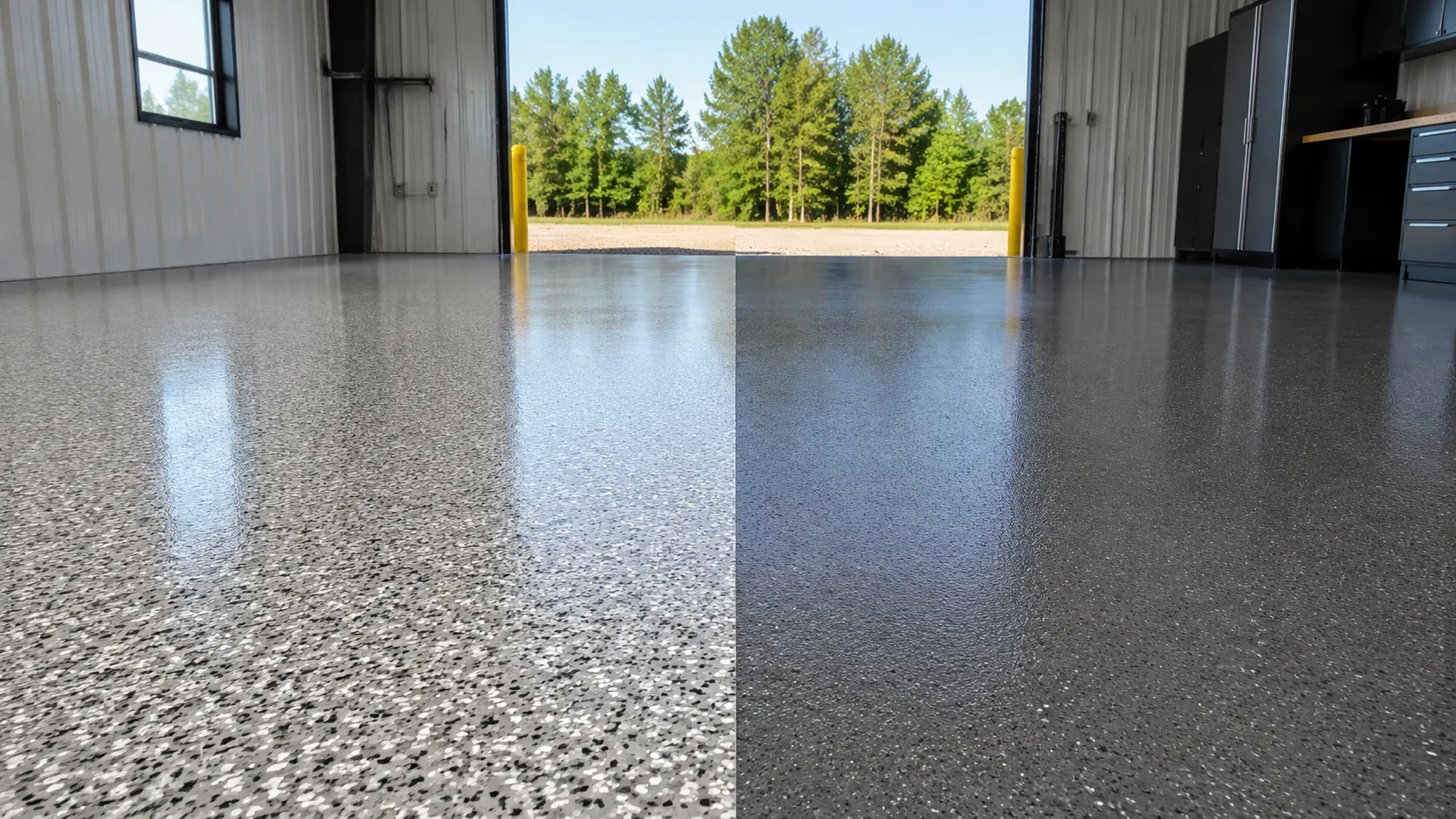
Material Comparison: Epoxy vs Polyaspartic
When choosing the right high-performance floor coating, understanding the core chemical and physical differences between epoxy vs polyaspartic systems is essential for a long-lasting installation. Both serve as industry standards, but their polymer structures deliver drastically different performance profiles.
Epoxy Coatings: The Heavy-Duty Baseline
Epoxy is a thermosetting resin created by mixing a resin base with a hardener catalyst. It is renowned for its excellent adhesion to concrete substrates and high compressive strength.
- Adhesion: Forms an incredibly strong mechanical bond with properly prepared concrete.
- Build Thickness: Excellent self-leveling properties allow it to fill minor cracks and imperfections easily.
- Vulnerability: Standard epoxy lacks UV stability, meaning it will yellow, chalk, and degrade when exposed to direct sunlight over time.
Polyaspartic Coatings: The Next-Gen Aliphatic Polyurea
Polyaspartic is a specialized aliphatic polyurea technology. It was engineered to overcome the main limitations of traditional epoxy while drastically accelerating the installation timeline.
- UV Stability: Inherently UV-resistant. It will not yellow or discolor, making it ideal for both indoor and outdoor applications.
- Flexibility and Elongation: Highly flexible, allowing it to absorb concrete expansion, contraction, and impact without cracking.
- Curing Profile: Offers rapid cure times, though precise mixing is required to avoid a curing failure in high-humidity conditions.
Core Material Specifications
| Feature | Epoxy Coatings | Polyaspartic Coatings |
|---|---|---|
| Chemical Base | Two-component Thermoset Epoxy | Aliphatic Polyurea Derivative |
| UV Resistance | Poor (Yellows over time) | Excellent (100% UV Stable) |
| Flexibility | Rigid / Brittle under high impact | High Elongation / Impact Resistant |
| Tensile Strength | High, but prone to micro-cracking | High, moves with the concrete |
| Sensitivity | Moisture-tolerant during application | Sensitive to extreme humidity during cure |
2. 应用区别 (Application Differences: Epoxy vs Polyaspartic)
When deciding where to install these coatings, the environment makes all the difference. While both protect concrete, their real-world performance varies wildly based on UV exposure, temperature, and timing.
户外与紫外线稳定性 (Outdoor and UV Stability)
- Polyaspartic: This is the go-to for outdoor or high-sunlight areas. It offers superior UV stability, meaning it won’t yellow, fade, or crack when exposed to direct sunlight over time. It is perfect for driveways, patios, and pool decks.
- Epoxy: Best kept indoors. Standard epoxy lacks UV stability and will discolor or become brittle under consistent sunlight. It is ideal for basements, indoor workshops, or controlled commercial spaces.
施工环境与固化时间 (Installation Environment and Curing Time)
| 特性 (Feature) | 环氧树脂 (Epoxy) | 聚脲/聚天门冬氨酸 (Polyaspartic) |
|---|---|---|
| 干燥时间 (Dry Time) | Slow (24–48 hours) | Ultra-fast (1–2 hours) |
| 温度限制 (Temp Limits) | Needs warm weather (50°F+) | Works in extreme cold or heat |
| 固化失败风险 (Curing Failure) | High if moisture or temp drops | Low, but fast setup requires pro speed |
针对不同场景的系统选择 (Scenario-Based Choices)
For a quick turnaround garage project, polyaspartic lets you drive on the floor the next day. However, if you are dealing with a heavily pitted commercial floor that needs a thick, self-leveling base layer to smooth out imperfections, a primer coat of epoxy remains the industry standard. Choosing the wrong system for your specific climate or moisture level is the leading cause of curing failure and peeling.
3. 系统选择:Epoxy vs Polyaspartic
Choosing between an epoxy vs polyaspartic system comes down to your specific environment, timeline, and performance needs. We look at your space’s demands to engineer the perfect setup, often combining both materials to leverage their unique selling points.
Quick Decision Matrix
| Project Needs | Recommended System | Why It Works |
|---|---|---|
| High Traffic Outdoor / Sunlit Spaces | Polyaspartic | Superior UV stability prevents yellowing and chalking. |
| Heavy Industrial / Deep Concrete Repair | Epoxy Base + Polyaspartic Topcoat | Epoxy builds thickness and bonds deeply; polyaspartic adds durability. |
| Same-Day Turnaround Required | Full Polyaspartic System |
