
Epoxy Mixing Ratio Mistake Causes and Solutions
What Causes This Problem in Epoxy Mixing Ratio Mistake?
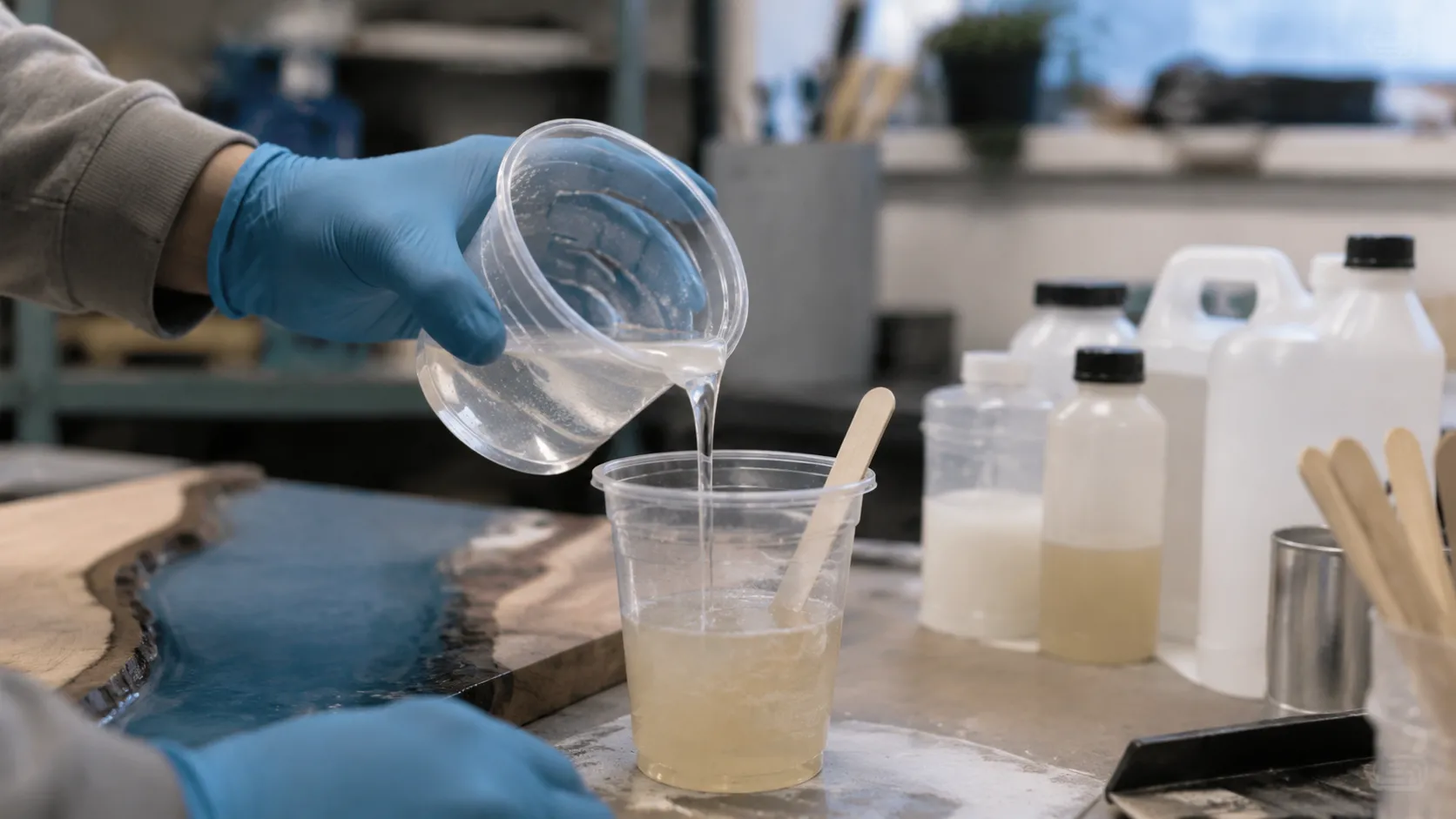
An epoxy mixing ratio mistake is one of the most common reasons industrial coatings, adhesives, and electronics potting compounds fail to perform. When the delicate chemical balance between resin and hardener is disrupted, the polymer chain cannot cross-link properly. This leads to compromised mechanical properties, soft spots, or a complete failure to solidify. Understanding the exact triggers of an epoxy mixing ratio mistake allows manufacturers and assembly lines to eliminate waste and ensure predictable performance.
Material and Formula Causes
The primary material cause stems from using off-specification or poorly formulated products. Low-quality chemical compounds often suffer from inconsistent batch viscosity, making precise measurement difficult.
- Incompatible Formulations: Mixing resins and hardeners from different product lines or different manufacturers completely alters the required stoichiometric balance.
- Aged or Degraded Chemicals: Over time, exposure to ambient air can cause hardeners to absorb carbon dioxide and moisture, a process called carbamation. This degrades the active amines, creating an artificial mixing error even if you measure the physical volumes perfectly.
- Improper Factory Grading: Relying on suppliers without strict quality controls can mean the base chemical equivalence varies from batch to batch, leading to unexpected curing problems.
Mixing, Ratio, or Curing Causes
Human error and improper tools during the preparation phase are direct paths to a resin hardener ratio failure. Epoxy systems are unforgiving; they require exact mathematical execution to achieve full cross-linking.
- By-Weight vs. By-Volume Confusion: This is the most frequent mixing error. A formula requiring a 2:1 ratio by weight cannot be measured 2:1 using volume cups, because resins and hardeners have completely different specific gravities (densities).
- Inadequate Agitation: Failing to scrape the sides and bottom of the mixing container leaves unmixed pockets of pure resin or hardener. When poured, these areas manifest as patches of sticky epoxy or soft epoxy.
- Under-mixing Speed or Time: Mixing too rapidly introduces air bubbles, while mixing too slowly or for too short a duration fails to initiate the required exothermic chemical reaction between the AB components.
Temperature and Humidity Factors
The ambient environment acts as a silent catalyst for curing failures. Even when the physical weight ratio is flawless, climate conditions can mimic or worsen an underlying epoxy mixing ratio mistake.
- Low Ambient Temperatures: Cold environments drastically slow down chemical reaction rates. If the temperature drops below the recommended threshold, the curing process stalls entirely, resulting in epoxy not curing.
- High Humidity and Moisture: Water molecules interfere with the hardener’s chemical structure during the open working time. High humidity causes a greasy, hazy surface film known as “amine blush,” leaving a dull, tacky finish that ruins surface adhesion.
- Thermal Shock: Drastic temperature swings during the initial gel phase disrupt the polymer chain alignment, leading to brittle cross-linking and structural troubleshooting epoxy issues later on.
How to Identify the Root Cause of an Epoxy Mixing Ratio Mistake
When your resin doesn’t set correctly, you are likely dealing with an epoxy mixing ratio mistake. Before scraping away the ruined material, you need to pinpoint exactly what went wrong. Use these diagnostics to identify why you have sticky epoxy or soft, uncured resin.
Check the application environment
The surrounding environment plays a massive role in curing problems.
- Temperature limits: Epoxy requires a specific temperature range to kickstart the chemical reaction. If the room or your substrate drops below 20°C (68°F), the curing process slows down or stops entirely, mimicking a mixing error.
- Moisture and humidity: High humidity introduces water molecules to the curing agent. This leads to amine blush—a greasy, sticky film on the surface—or a cloudy, soft epoxy finish.
- Surface temperature: Cold surfaces draw heat away from the curing resin, preventing a full chemical bond.
Review mixing and working time
Even with the correct resin hardener ratio, poor execution during the mixing phase will cause localized curing failures.
- The “Double Mix” rule: If you mix in one cup and pour directly onto your project, unmixed components from the container walls will slide onto your work, causing permanent sticky spots. Always pour the mixture into a second clean cup and mix again.
- Under-mixing: Mixing too quickly or for too short a time leaves unlinked polymers. You must mix thoroughly for 3 to 5 minutes, scraping the bottom and sides of the cup constantly.
- Exceeding pot life: If you work past the specified pot life (working time), the cross-linking process begins to break down as you apply it, leaving the finish dull, weak, or rubbery.
Compare sample results before bulk use
To rule out a faulty batch or a systemic mixing error before starting large-scale production, we always recommend running a controlled test.
| Test Parameter | Standard Control Sample | Your Production Batch |
|---|---|---|
| Measurement Method | Weight (using a digital scale accurate to 0.1g) | Volume (using cups or pumps) |
| Environment | Controlled 23°C (73°F) room | Actual workshop floor |
| Mixing Container | Small, clean cup (double cup method) | Large mixing pail |
If your test sample cures rock-hard under controlled conditions but your bulk application fails, your issue is environmental or mechanical. If both fail, your mixing ratio is incorrect, or you are using the wrong measurement standard (mixing by volume when the formula requires mixing by weight).
Practical Solutions to Prevent an Epoxy Mixing Ratio Mistake
Making an epoxy mixing ratio mistake is the quickest way to ruin a project, leading to a weak bond, a sticky epoxy finish, or soft epoxy that never fully hardens. Fortunately, these curing problems are entirely preventable with the right setup and process.
Formula Selection: Choosing the Right Epoxy AB Glue
Preventing a mixing error starts long before you pour. Choosing a system tailored to your production style and equipment makes a massive difference.
- Go for Simple Ratios: If you mix manually, a 1:1 or 2:1 resin hardener ratio by volume is much easier to get right than complex 3:1 or 100:45 weight ratios.
- Consider UV Resin or PU Glue: For small-scale assembly or quick repairs, UV resin bypasses mixing altogether, eliminating the risk of ratio mistakes entirely.
- Opt for Pre-packaged Cartridges: For industrial assembly, dual-chamber cartridges with static mixing nozzles automatically dispense the exact ratio every single time.
Improving Your Application Process
If you are dealing with epoxy not curing, your measurement and mixing habits need an upgrade. Here is how we ensure perfect results on the production floor:
- Measure, Don’t Estimate: Always use graduated mixing cups for volume or a digital scale for weight. Never mix weight and volume measurements—they are not interchangeable.
- The “Two-Cup” Mixing Method: Mix your resin and hardener thoroughly in one cup, scrape the sides and bottom, then pour the mixture into a clean second cup and mix again. This ensures no unmixed chemicals are left on the walls of the container.
- Mix in Small Batches: Large batches build up heat quickly, shortening your working time and increasing the likelihood of a rushed, incomplete mix.
Storage and Handling Recommendations
Proper storage keeps the raw chemicals stable, ensuring they behave exactly as the technical datasheet promises.
- Keep Temperatures Stable: Store your epoxy and hardener between 68°F and 77°F (20°C to 25°C). Cold chemicals become thick and difficult to mix, which directly causes curing problems.
- Seal Out Moisture: Keep containers tightly closed when not in use. Hardeners absorb moisture from the air, which degrades the chemical structure and leads to a hazy, tacky, or sticky finish.
- Check Shelf Life: Using expired materials changes the chemical reactivity, making even a perfect mix ratio perform poorly. Always rotate your inventory.
Recommended RW Atelier Solution
An epoxy mixing ratio mistake can ruin an entire production run, leading to sticky epoxy, curing problems, or soft finishes. At RW Atelier, we engineer our formulas to minimize user error and provide reliable bulk supply solutions for global manufacturers.
Product Type to Consider
When troubleshooting epoxy issues caused by measurement errors, choosing the right material system is half the battle. We specialize as a custom epoxy resin manufacturer, offering systems designed with wider mixing tolerances to prevent common curing problems.
| Product Type | Mixing Ratio (by Weight/Vol) | Key Benefit for Mixing Mistakes | Best For |
|---|---|---|---|
| High-Tolerance Epoxy AB Glue | 1:1 or 2:1 | Wider curing window; less sensitive to slight mixing errors | General casting, laminating, and adhesive assembly |
| Fast-Curing UV Resin | No mixing required | Eliminates the resin hardener ratio issue entirely | Small components, doming, and quick-turn production |
| Flexible PU Glue | Custom | High moisture resistance and impact strength | Industrial sealing and potting applications |
Custom Adjustment Options
If standard formulas consistently lead to a mixing error on your production line, we can customize the chemical structure to fit your exact workflow.
- Adjusted Gel Time: We can extend the working time so your team has more leeway to mix thoroughly.
- Color-Coded Parts (A and B): We can add contrasting tint indicators that blend into a uniform color only when a perfect, homogeneous mix is achieved.
- Viscosity Matching: Matching the thickness of the resin and hardener makes hand-mixing and automatic dispensing much more consistent, reducing the risk of a sticky epoxy finish.
When to Request Sample Testing
We highly recommend utilizing our sample testing services before committing to a bulk supply order. This is especially critical in the following scenarios:
- Switching Dispensing Equipment: If you are transitioning from manual hand-mixing to automated meter-mix machines.
- Extreme Environmental Shifts: If your factory floor experiences seasonal temperature or humidity fluctuations that aggravate curing problems.
- New Substrate Integration: When bonding to difficult, low-surface-energy plastics or metals where a perfect resin hardener ratio is non-negotiable.
Our Dongguan factory is ISO 9001 certified, and all custom formulas are shipped with complete SDS/MSDS documentation to ensure seamless integration into your local production standards.
FAQ
Can this problem be solved with a custom formula?
Yes, we can absolutely solve your curing and mixing issues with a custom-engineered formula. As a custom epoxy resin manufacturer, we specialize in adjusting the reactivity, viscosity, and mixing ratio of our Epoxy AB glue and PU glue to match your specific production line. If your team frequently struggles with a manual mixing error, we can develop a user-friendly 1:1 ratio by volume, or formulate a fast-curing UV resin that bypasses the need for a hardener entirely. Customizing the formula minimizes the risk of epoxy not curing and eliminates sticky epoxy issues on your shop floor.
What details should buyers provide?
To help our Dongguan factory team design the perfect solution for your bulk supply needs, please prepare the following details:
- Your current mixing ratio and method: Are you mixing by weight or volume? Is it a manual or automated dispensing process?
- Operating environment: The average temperature and humidity of your workspace.
- Application details: The materials you are bonding or casting, the required curing speed, and the thickness of the application.
- Compliance requirements: Let us know if you need specific SDS/MSDS documentation or ISO 9001 compliance certifications.
Having this information ready allows us to speed up sample testing and deliver a precise, troubleshooting-free formula for your business.
