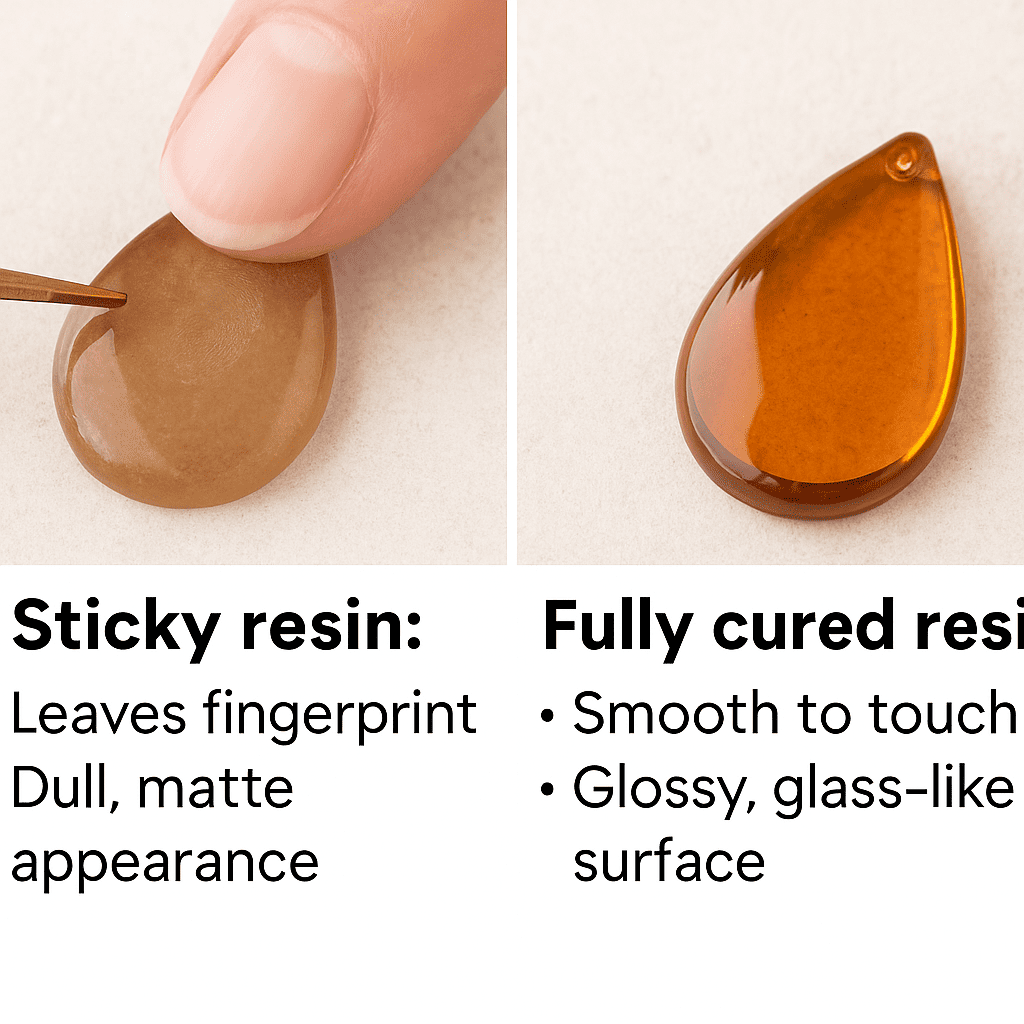
UV Resin vs Epoxy Resin Differences and Best Uses
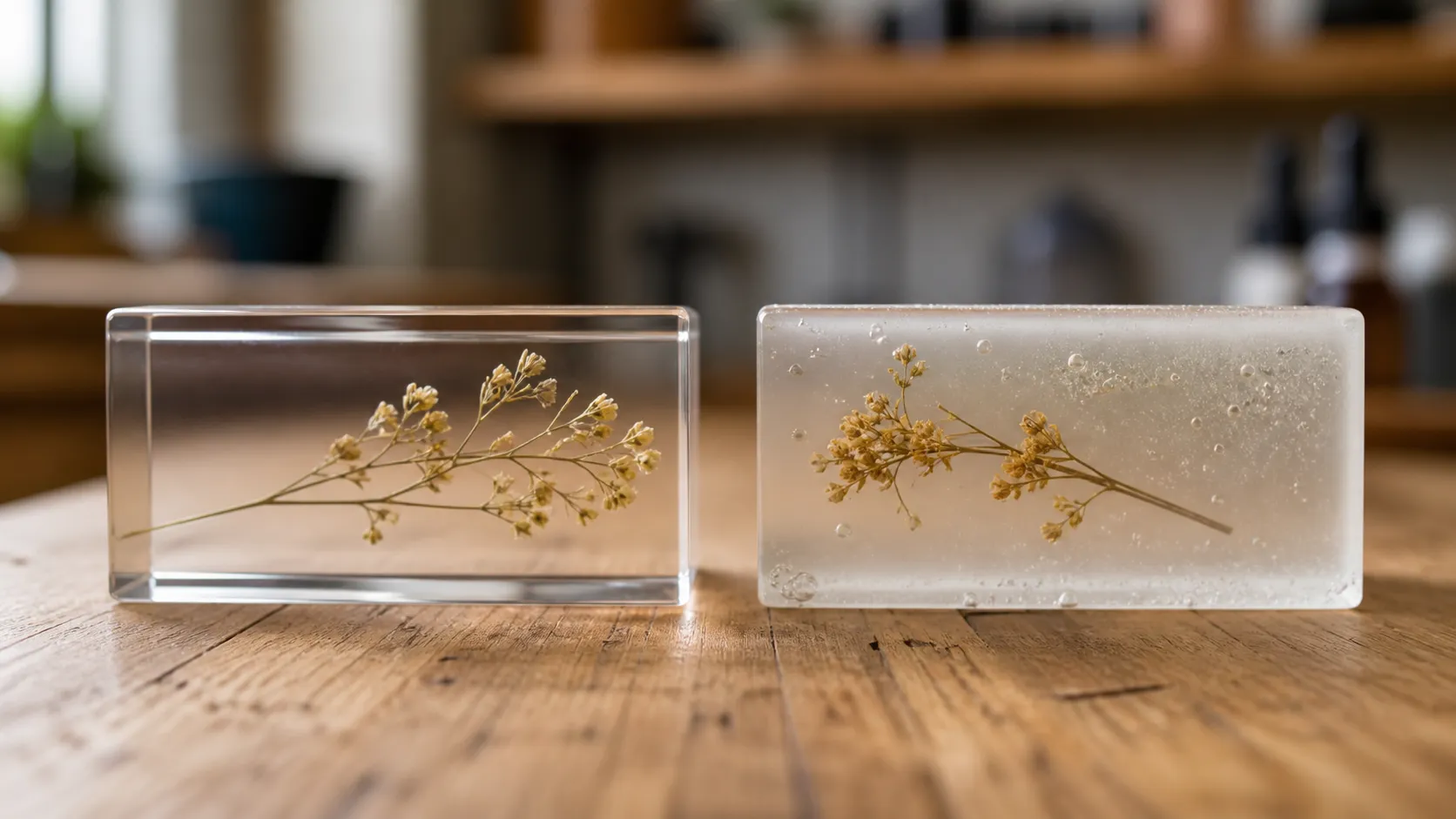
Quick Comparison: UV resin vs epoxy resin
Choosing between UV resin and epoxy resin comes down to speed, project scale, and application thickness. Both materials deliver exceptional clarity and high durability, but their chemical curing mechanisms serve vastly different manufacturing and crafting needs.
Main difference at a glance
The fundamental difference lies in how these materials transition from liquid to solid:
- UV Curing Resin: A single-component polymer that requires no mixing. It cures instantly—typically within 1 to 5 minutes—when exposed to ultraviolet (UV) light.
- Two Part Epoxy (Epoxy AB Glue): A two-component system requiring a precise resin-to-hardener ratio. It cures via a chemical reaction over 12 to 48 hours at ambient temperature.
Best application scenarios
Select the material formulation that fits your specific end-product requirements:
- UV Resin Applications: Precision jewelry resin pieces, small craft resin items, quick bezel filling, rapid prototyping, and localized electronic sealing where fast curing is required.
- Epoxy Resin Applications: Deep-pour river tables, countertop encapsulation, high-durability industrial floor coatings, heavy casting, and large-surface protective clear coating.
Buyer decision table
| Comparison Factor | UV Resin | Two-Part Epoxy Resin |
|---|---|---|
| System Type | Single-component (1K) | Two-component (2K / AB Glue) |
| Curing Trigger | UV Light (365nm–405nm) | Chemical heat reaction |
| Curing Speed | Ultra-fast (1–5 minutes) | Standard (12–48 hours) |
| Pour Thickness | Thin layers (1–3 mm max) | Deep pours (25–50+ mm) |
| Production Scale | Small crafts & rapid repairs | Large castings & industrial surfaces |
| Supply Format | Precision bottles & bulk UV resin | Industrial pails, drums, & custom OEM/ODM kits |
Material and Performance Differences
Understanding how UV resin vs epoxy resin performs in practical application is essential for selecting the right material for your manufacturing process or end product.
Curing method and working time
The core difference between UV curing resin and a two part epoxy lies in their activation trigger and pot life:
- UV Resin: A single-component system requiring no mixing. It stays workable indefinitely until exposed to UV light (365nm–405nm), offering a fast curing speed of 1 to 5 minutes.
- Epoxy Resin: A resin and hardener system (Epoxy AB glue) that cures through a chemical reaction once mixed. Depending on the formula, working time ranges from 20 to 90 minutes, with a full cure taking 12 to 48 hours.
| Feature | UV Resin | Two Part Epoxy |
|---|---|---|
| Trigger Mechanism | UV Light / Sunlight | Chemical mixing (A+B) |
| Pot Life / Working Time | Unlimited (away from light) | 20–90 minutes |
| Cure Time | 1–5 minutes | 12–48 hours |
| Pour Depth Limit | 2–3 mm per layer | Up to 50 mm+ per pour |
Hardness, flexibility, and adhesion
Mechanical strength and bonding behavior vary significantly between these formulations:
- Hardness: High-grade two part epoxy achieves superior ultimate Shore D hardness (80D–85D), making it ideal for high-wear surfaces. UV resin reaches a hard 75D–82D surface rapidly, perfect for fast-turnaround small parts.
- Flexibility: UV resin formulas can be easily modified for flexible, soft, or rigid applications. Epoxy resin typically cures to a rigid structural finish.
- Adhesion: Epoxy AB glue forms deep structural bonds with wood, metals, concrete, and porous surfaces due to slow chemical cross-linking. UV resin provides strong surface adhesion on non-porous glass and acrylics, but cannot cure where light cannot penetrate.
UV resistance, clarity, and durability
Long-term optical clarity and environmental stability depend heavily on curing depth and additives:
- Clarity and Anti-Yellowing: Premium epoxy formulations built with UV stabilizers maintain exceptional long-term optical clarity outdoors. UV resin provides crystal-clear optical finishes instantly, though over-curing under high-wattage UV lamps can cause light yellowing if exposure times aren’t properly controlled.
- Durability: Epoxy resin resists high impact, thermal stress, and heavy mechanical wear over large surface areas. UV resin excels as a hard clear coating that offers immediate scratch resistance for high-volume production items.
Which Option Should You Choose?
Picking between UV resin vs epoxy resin comes down to your project scale, production speed, and application depth. Here is how to decide based on your specific market needs.
| Buyer Category | Primary Need | Recommended Choice | Key Advantage |
|---|---|---|---|
| Craft & Jewelry | Speed & precision | UV resin | Instant cure under UV light, zero mixing |
| Industrial & Flooring | Strength & coverage | Two part epoxy | Deep pouring, high durability, heavy load support |
| OEM/ODM Brands | Market versatility | Both (Custom Supply) | Tailored formulas, bulk supply, branded packaging |
For craft and jewelry buyers
If you make small accessories, charms, or detailed resin jewelry, UV resin is your best option. It requires no mixing, produces minimal waste, and cures in seconds under a UV lamp.
- Best for: Small bezels, doming, quick repairs, and fast prototyping.
- When to pick epoxy: Switch to a two part epoxy craft resin if you are pouring molds thicker than half an inch or making large coaster sets, as UV light cannot penetrate deep layers.
For industrial and flooring buyers
For heavy-duty applications, protective clear coatings, and seamless flooring, two part epoxy resin is the standard. UV curing resin cannot handle deep pour requirements or massive surface areas effectively.
- High durability: Withstands heavy foot traffic, machinery, and chemical exposure.
- Deep pour capability: Allows thick layer applications without bubble traps or uneven curing.
- Cost efficiency: Delivers superior coverage and long-term strength at a lower bulk price point.
For OEM/ODM brand buyers
As a direct resin manufacturer, we help brand owners build profitable product lines across both categories. Whether you need custom-packaged craft kits or industrial-grade bulk supply, your product selection should align with your target audience.
- UV curing resin lines: Perfect for hobby markets demanding fast curing, high clarity, and low viscosity.
- Bulk epoxy AB glue: Ideal for woodworking, construction, and art supply brands needing specific cure times or heat resistance.
- Custom branding: We handle full OEM/ODM formulation, custom bottle sizing, and private labeling to help you scale your product catalog seamlessly.
RW Atelier Product Recommendation
At RW Atelier, we engineer high-grade resin solutions tailored directly to your production requirements. Whether your projects call for rapid-curing UV resin or heavy-duty epoxy resin, our ISO 9001 certified manufacturing delivers consistent clarity, bubble-free finishes, and dependable bond strength across every batch.
Recommended formula by use case
Selecting between UV resin vs epoxy resin comes down to your production speed and coating thickness. We match specific formulas to your exact application:
- Craft & Jewelry Production: High-clarity bulk UV resin for instant curing under UV light in 1–3 minutes. Ideal for quick turnaround on small crafts, resin charms, and bezels.
- Deep Pouring & Woodworking: Low-viscosity two part epoxy (Epoxy AB glue) designed for thick pours, zero bubbles, and ultra-clear table tops.
- Industrial Bonding & Coating: Impact-resistant epoxy and PU glue systems engineered for high adhesion, scratch resistance, and long-term durability.
Custom packaging and bulk supply
We provide end-to-end OEM/ODM manufacturing solutions for distributors, brands, and large-scale industrial buyers seeking direct bulk supply.
| Service Feature | Specifications & Capabilities |
|---|---|
| Custom Packaging | Private label printing, custom bottle sizes, squeeze tips, and retail-ready kits. |
| Formula Tuning | Custom viscosity, UV resistance level, cure speed, and tinting to fit your specs. |
| Safety & Compliance | Full documentation included, including SDS/MSDS and regulatory compliance certificates. |
Sample testing before bulk order
To guarantee that our resin meets your exact processing and quality standards, we offer fast-ship sample testing kits. You can evaluate clarity, hardness, cure time, and adhesion in your own facility before committing to a full bulk order.
FAQ
Which option is more cost-effective?
Cost-effectiveness comes down to project size and turnaround speed. Standard two part epoxy (epoxy AB glue) has a lower raw material cost per gallon, making it the most economical choice for large-scale projects, thick pours, and industrial coatings.
However, UV resin saves significant labor costs and drastically cuts production cycles because it features fast curing under UV light in seconds. For small crafts, fast repairs, and automated factory lines, the time saved with UV curing resin often offsets the higher material price.
| Factor | Two Part Epoxy Resin | UV Curing Resin |
|---|---|---|
| Material Unit Cost | Lower (Ideal for large projects & bulk supply) | Higher per unit |
| Cure Time & Labor Cost | Slow cure (24+ hours); higher labor time | Fast curing (Seconds/Minutes); minimal labor |
| Ideal ROI Application | Countertops, flooring, deep casting | High-volume jewelry resin, small craft resin, electronic sealing |
Can both options be customized?
Yes, absolutely. As a premier custom epoxy resin manufacturer operating an ISO 9001 certified Dongguan factory, we specialize in full OEM/ODM formulations for both resin systems. We tailor the chemical properties and packaging to your target market, backed by complete SDS/MSDS safety compliance.
Custom options we provide for global clients include:
- Formula Adjustments: Customizing viscosity, bubble-release speed, flexibility, heat resistance, and UV stability to prevent yellowing.
- Specialty Finishes: Creating high-gloss clear coating formulas or pre-tinted custom shades.
- Private Labeling & Packaging: Sourcing custom bottles, squeeze tubes, cartridges, or industrial drums with your brand logo.
- Sample Testing: Requesting direct sample testing to evaluate our formulas in your exact production pipeline before placing a full bulk UV resin or epoxy order.