
Epoxy Primer for Concrete Floor Custom Formula Supply
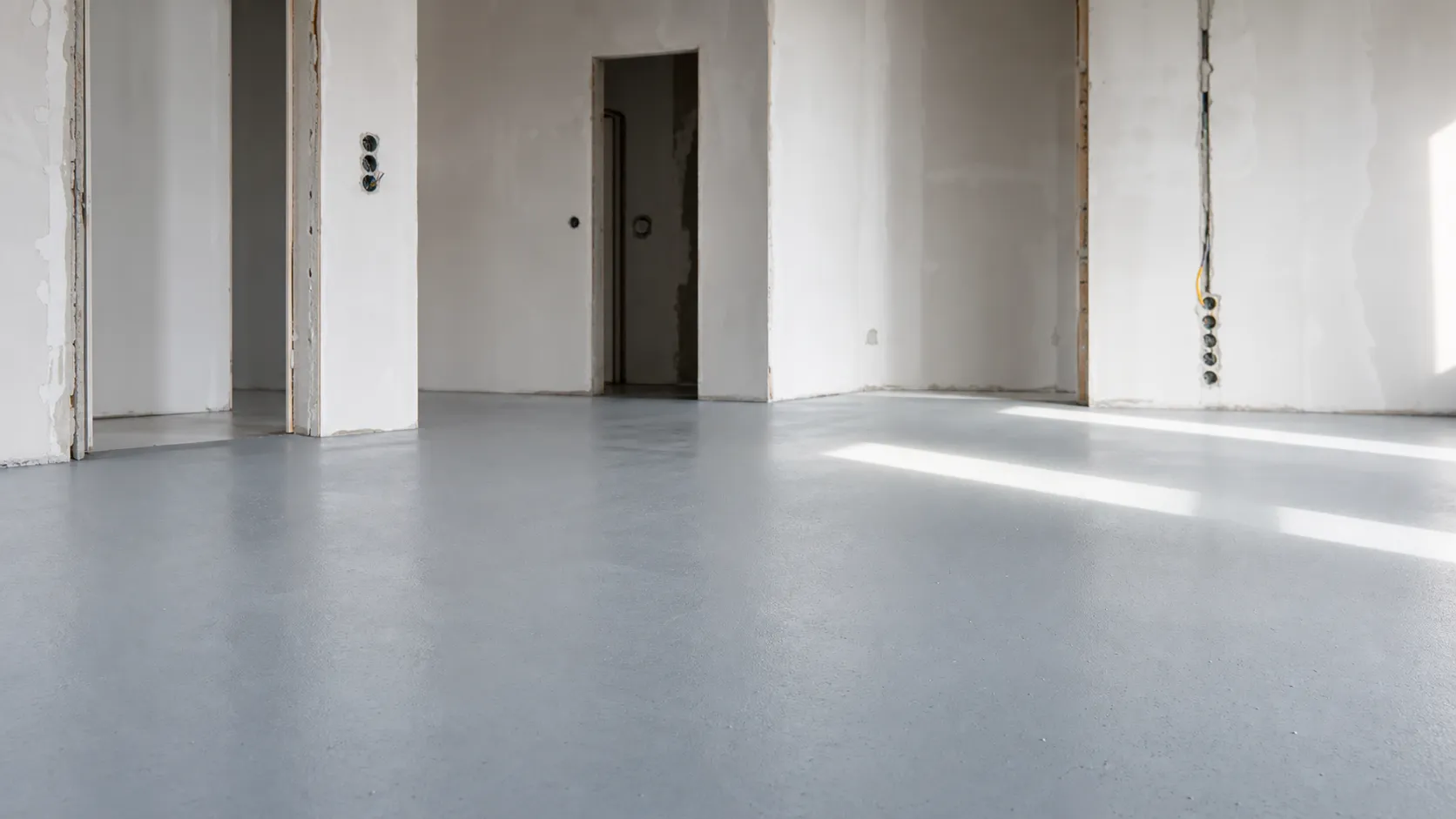
What Is Epoxy Primer for Concrete Floor Used for in Epoxy Floor Coatings?
An epoxy primer for concrete floor applications acts as the foundational bonding bridge between raw concrete substrates and protective topcoats. It penetrates deep into the porous matrix of concrete to seal air capillaries, block moisture vapor transmission, and ensure maximum mechanical adhesion for subsequent coating layers.
Main application scenarios
- Warehouse Floor & Industrial Facilities: Prepares heavy-traffic concrete slabs to resist extreme mechanical loads and heavy machinery traffic.
- Garage Floor Coating Projects: Prevents chemical absorption, hot-tire pickup, and surface peeling in residential and commercial garages.
- Commercial Self Leveling Floor Installations: Seals porous concrete to prevent pinholes, outgassing, and surface defects during decorative topcoat application.
- High-Moisture Substrates: Functions as a dedicated moisture barrier concrete primer to stabilize damp ground-level concrete.
Required material properties
- Low Viscosity: Allows deep penetration into micro-cracks and concrete pores.
- Superior Adhesion: Establishes strong chemical and mechanical bonding with the substrate.
- Dust Sealing: Locks down loose concrete particles to create a clean surface.
- Optimal Curing Profile: Delivers predictable recoat windows for rapid installation.
Common user expectations
Professional applicators and facility owners expect a reliable epoxy floor primer to eliminate bubbling, prevent floor delamination, reduce excess topcoat absorption, and extend the overall operational lifespan of the floor system.
Performance Requirements for Epoxy Floor Coatings
High-performing industrial floors rely on a solid foundation. As a custom epoxy resin manufacturer, we engineer every epoxy primer for concrete floor formulation to meet tough mechanical and environmental standards before topcoats are applied.
Clarity, gloss, and appearance
A top-tier floor coating must look clean and professional while maintaining its aesthetic appeal under hard daily use.
- Optical Clarity: High transparency ensures zero cloudiness or amber discoloration when applying decorative coats.
- Gloss Retention: Maintains a clean, high-shine finish under intense indoor lighting.
- Flawless Finish: Prevents fisheyes, micro-bubbles, and pinholes when prep work is combined with a self leveling floor coat on any garage floor coating project.
Adhesion and durability
Strong bonding power prevents systemic floor failure, peeling, and costly surface repairs.
- Substrate Penetration: Our epoxy floor primer deeply anchors into open concrete pores, creating a permanent mechanical lock.
- Heavy Load Resistance: Built to handle continuous forklift traffic, heavy machinery, and high foot volume across any warehouse floor.
- Flexural Strength: Resists chipping, impact damage, and delamination under heavy structural vibration.
Temperature, moisture, and chemical resistance
Environmental factors pose the biggest threat to concrete coatings. We test our formulas against severe chemical and atmospheric stress.
| Performance Factor | Requirement & Key Benefit |
|---|---|
| Moisture Barrier | Functions as a dense moisture barrier to block sub-slab hydrostatic pressure and rising dampness. |
| Chemical Defense | Blocks penetration from motor oils, hydraulic fluids, solvents, and industrial cleaners. |
| Thermal Shock | Withstands hot tire pickup, seasonal freeze-thaw cycles, and localized temperature spikes. |
How to Select the Right epoxy primer for concrete floor
Choosing the right epoxy floor primer determines the longevity of your entire coating system. The selection depends heavily on the substrate condition, whether you are prepping a heavy-traffic warehouse floor or a standard residential garage floor coating.
Recommended formula type
We engineer specific formulations as a premier custom epoxy resin manufacturer to match different site conditions. If the slab suffers from hydrostatic pressure, a specialized moisture barrier primer is mandatory to prevent delamination.
| Primer Type | Best Used For | Key Benefit |
|---|---|---|
| Water-Based | Standard concrete, low-odor environments | Easy application, breathable |
| 100% Solids | High-traffic industrial floors | Deep penetration, fills minor cracks |
| Moisture Vapor Barrier | Damp concrete, high water tables | Blocks moisture up to 20 lbs |
Mixing ratio and curing conditions
Achieving a flawless chemical bond requires strict adherence to mixing ratios and environmental controls:
- The Mix: Most industrial epoxy AB glue systems utilize a precise 2:1 or 1:1 mix ratio by volume. Mechanically mix for 3 minutes to avoid unmixed spots.
- Temperature: Apply when the ambient and substrate temperatures are between 15°C and 30°C. Low temperatures delay curing, while high humidity causes surface blushing.
- Curing Window: Expect a tack-free state in 8 to 12 hours at room temperature before applying a self leveling floor basecoat.
Packaging and bulk order options
We support global commercial projects through structured OEM/ODM manufacturing and highly efficient factory logistics.
- Standard Packaging: Distributed in 5-gallon pails and 55-gallon drums optimized for freight.
- Bulk Supply: Scalable container shipping options backed by full ISO 9001 quality compliance and certified SDS/MSDS documentation.
- Sample Testing: Small-batch testing kits are provided for upfront quality evaluation before mass production begins.
Common Problems and Solutions
When applying an epoxy primer for concrete floor systems, encountering application defects can stall projects and increase costs. Knowing how to diagnose and fix these issues quickly keeps your job site moving smoothly.
Bubbles, yellowing, or soft curing
Application issues usually stem from environmental factors or improper mixing ratios of the epoxy AB glue system:
- Bubbles and Pinholes: Caused by concrete outgassing or overly aggressive mechanical mixing. Solution: Seal porous concrete with a high-penetration concrete primer and roll out trapped air using a spiked roller before the film sets.
- Yellowing: Caused by direct UV radiation or high-heat exposure. Solution: Use UV-stable topcoats over the epoxy floor primer base, especially near windows, bay doors, or exterior entries.
- Soft Curing: Occurs due to improper resin-to-hardener ratios, low ambient temperatures, or high substrate humidity. Solution: Mix thoroughly according to product specs and ensure ambient temperatures remain above application thresholds during cure.
Surface defects and poor leveling
Surface flaws ruin the finish of a self leveling floor or heavy-duty warehouse floor coating:
- Fisheyes and Craters: Caused by oil, grease, or silicones on the concrete surface. Solution: Mechanically grind or shot-blast the floor, then solvent-wipe to eliminate contaminants prior to priming.
- Poor Leveling and Crawling: Occurs when the coating is applied too thin or onto a cold substrate. Solution: Maintain proper wet film thickness and verify floor temperatures match the product’s recommended application window.
- Peeling and Delamination: Results from applying primer over unaddressed moisture issues. Solution: Always apply a dedicated moisture barrier primer when concrete moisture vapor emissions exceed standard levels.
How to test before mass production
Prevent large-scale failures on commercial or garage floor coating projects by completing thorough pre-application testing:
| Test Type | Objective | Action |
|---|---|---|
| Moisture Vapor Test | Check moisture levels | Perform an ASTM F2170 in-situ probe or ASTM F1869 test before coating. |
| Small-Batch Sample Testing | Verify cure speed & clarity | Conduct sample testing on site to evaluate pot life, flow, and leveling. |
| Pull-Off Adhesion Test | Confirm substrate bond | Apply primer to a mock-up area and run an ASTM D4541 test to measure bond strength. |
We always recommend conducting small mock-up evaluations before rolling out bulk supply materials on large-scale jobs to guarantee flawless performance.
RW Atelier Custom Manufacturing Support
At RW Atelier, we do more than supply off-the-shelf chemicals. As a dedicated custom epoxy resin manufacturer, we back your commercial projects with end-to-end OEM/ODM solutions. Operating out of our advanced Dongguan factory, we manufacture top-tier epoxy primer for concrete floor systems and specialized coatings tailored to your specific performance standards.
Formula adjustment
Every job site presents unique challenges. We fine-tune chemical formulas so your concrete primer performs perfectly under real-world conditions:
- Viscosity Tuning: Adjusted for deep penetration into porous slabs or smooth preparation for a self leveling floor.
- Cure Rate Control: Tailored working times for cold-weather garage floor coating jobs or rapid-turnaround warehouse floor installations.
- Moisture Defense: Enhanced formulas that function as a heavy-duty moisture barrier on damp concrete.
- Product Versatility: Beyond epoxy floor primer formulations, we customize Epoxy AB glue, PU glue, and UV resin systems.
Private label packaging
We build your brand while we manufacture your product. Our comprehensive private label services ensure your products arrive fully branded and market-ready.
- Custom Container Options: Steel drums, plastic pails, or smaller retail-ready kits.
- Complete Compliance: Full regulatory backing with comprehensive SDS/MSDS documentation for safe international shipping.
- Quality Assured: Manufactured under strict ISO 9001 certified quality management systems to guarantee batch-to-batch consistency.
Sample and bulk quotation
We streamline the transition from lab testing to full-scale job site deployment.
- Fast Sample Testing: Request tailored formulations to test adhesion, cure speeds, and chemical resistance on site.
- Scalable Bulk Supply: High-capacity production lines ensure reliable, uninterrupted delivery for large commercial orders.
- Direct Factory Pricing: Transparent, highly competitive quotes structured to maximize your profit margins.
