UV Resin Pigment Compatibility Guide for Cure Success
Quick Answer
UV resin pigment compatibility depends on whether ultraviolet light can pass through your chosen colorant to cure the resin from top to bottom. Because UV resin cures rapidly under ultraviolet light—unlike two-part epoxy AB glue, which hardens via a chemical curing agent—heavy or overly opaque pigments block UV penetration, leaving the bottom layer soft or uncured.
To maintain fast curing, transparency, and structural strength across applications like resin jewelry, crafts, and protective coatings:
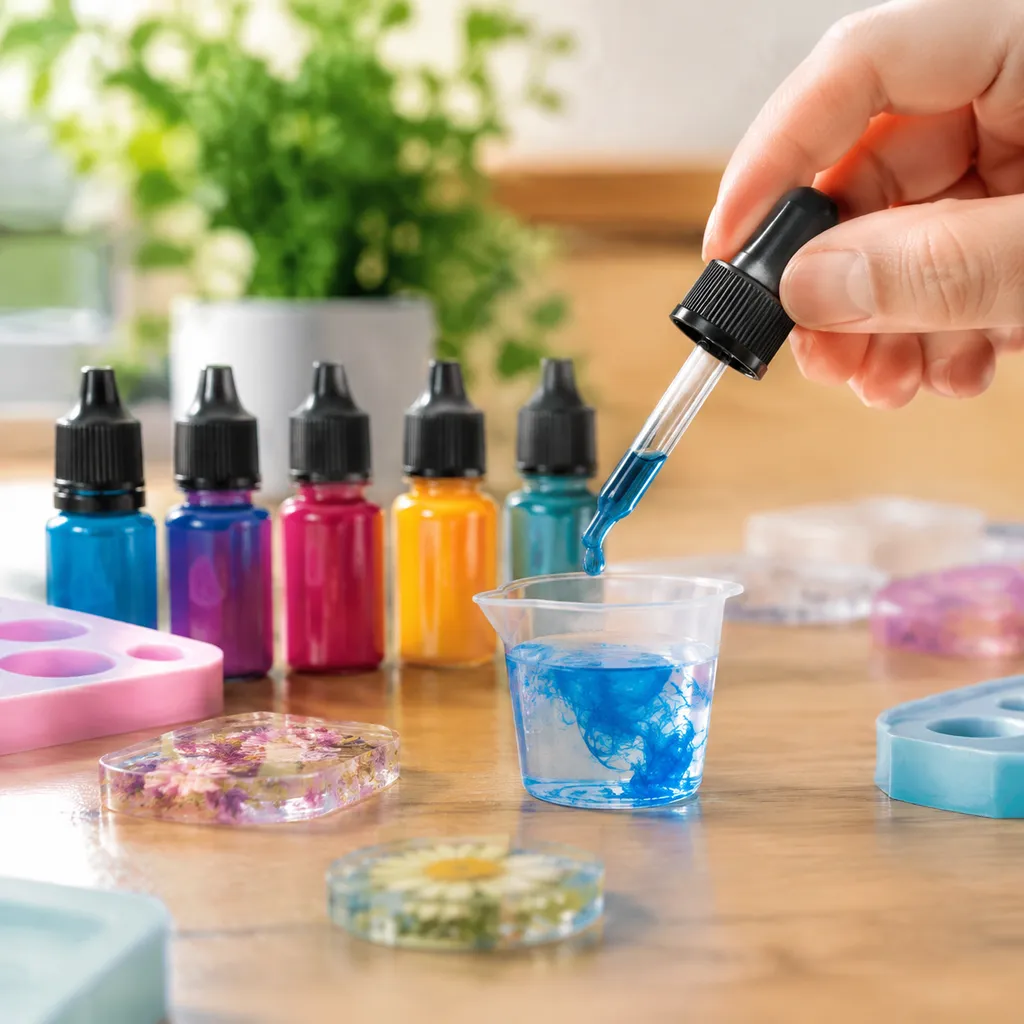
- Best Compatibility: Translucent liquid dyes allow UV light to pass through easily, preserving clarity and full-depth curing.
- Moderate Compatibility: Mica powders and pearlescent pigments work well in thin layers or low concentrations where light can still reach the base.
- High Cure Risk: Dense opaque pastes, water-based colorants, and excessive pigment loads absorb or scatter UV light, causing surface wrinkling or tacky interiors.
For brands developing custom product lines, matching pigment density to resin viscosity and layer depth—and verifying results with free sample testing before scaled production—prevents batch failures.
Define Color Targets Without Losing Cure
When we develop custom UV resin formulas for brands, the biggest production bottleneck is balancing rich color with complete curing. Unlike our two-part epoxy AB glue—which cures through a chemical reaction between the resin and curing agent regardless of how dark the batch is—UV glue depends entirely on ultraviolet light reaching the bottom of the mold or coating.
To nail UV resin pigment compatibility on your production line, define your visual target before mixing:
- Transparent & Tinted Finishes: Ideal for high-clarity resin jewelry, nameplates, and decorative crafts where UV light passes straight through the material.
- Translucent & Pearlescent Effects: Works well in thin layers, provided the colorant allows enough light transmission to trigger a full cure.
- Deep Opaque Shades: Requires careful formula matching and thin application layers so you do not sacrifice surface hardness or structural strength.
Pigment Absorption and Light Blocking
Every colorant interacts with UV light differently. High-opacity pigments, heavy metallic powders, and dark shades absorb or scatter ultraviolet rays right at the top surface. When light cannot penetrate the full depth of the pour, photoinitiator light absorption drops off at the bottom.
In my experience testing custom formulations, light blocking leads to three immediate manufacturing defects:
- Surface-Only Curing: The top skin hardens rapidly under the lamp, trapping uncured liquid resin underneath.
- Wrinkling and Shrinkage: As the cured top layer pulls against a soft interior, the surface ripples or warps.
- Tacky Base Layers: Parts feel sticky when demolded and fail durability checks.
If your product requires dense, opaque color without light-blocking failures, you either need to cure in thin, multi-pass layers or switch to a two-part epoxy or polyurethane system designed for deeper casting.
Compare Liquid Dye and Powder Pigments
When evaluating UV resin pigment compatibility, the physical form of your colorant changes how UV light travels through the resin. Because UV resin cures rapidly under ultraviolet light to preserve transparent effects, your choice between liquid dyes and solid powders directly impacts cure speed and final clarity.
| Colorant Type | Light Transmission | Cure Behavior | Visual Finish | Best Application Fit |
|---|---|---|---|---|
| Translucent Liquid UV Dyes | High | Rapid, even full-depth cure | Glass-clear tint | Resin jewelry, transparent crafts, nameplates |
| Mica & Pearlescent Powders | Moderate | Requires thin layers or low loading | Shimmering, metallic, semi-translucent | Decorative crafts, layered resin art |
| Opaque Pigment Pastes | Low | High risk of surface-only curing | Solid, non-transparent color | Thin surface coatings, specialty drip splice |
| Non-UV Water/Alcohol Colorants | Variable | Risk of cure inhibition or cloudiness | Hazy, soft, or tacky spots | Not recommended without custom resin adjustment |
- Liquid UV Dyes: Formulated to dissolve cleanly without blocking UV rays, making them the safest choice when rapid curing and high transparency are top priorities.
- Powder Pigments (Mica & Metallics): Solid particles reflect and scatter UV light. If you add too much powder, light cannot reach the bottom of the mold, leaving the underside soft.
- Carrier Base Matters: Water-based acrylics or heavy solvents can interfere with the photo-initiated reaction. Stick to colorants designed for UV systems, or let our R&D team adjust the resin formula to match your specific colorant base.
Dispersion Quality and Settling
Even a compatible colorant will fail in production if it clumps or sinks before the UV lamp hits it. Good UV pigment dispersion keeps color uniform from the top surface to the base of the part.
- Preventing Clumps: Dry powders must be thoroughly wet out and mixed smoothly into the resin. Undispersed clumps act like tiny umbrellas, casting shadows that leave uncured wet pockets underneath.
- Managing Particle Settling: Heavy mineral pigments and glitters naturally sink in low-viscosity UV glue. Once settled at the bottom, a dense layer of powder blocks light and ruins surface hardness.
- Custom Viscosity Control: If your product line relies on heavy mica or glitter suspension, we can tailor the base viscosity of our UV resin during sample development so particles stay evenly suspended through the cure cycle.
Establish a Maximum Practical Loading
Finding the exact limit for UV resin pigment compatibility comes down to balancing color richness against light penetration. Because UV resin relies on ultraviolet light to cure rapidly and maintain transparency, adding too much colorant blocks the light path and leaves the bottom layer uncured. We work with brands to pinpoint the ceiling for UV resin pigment loading before moving to scaled production.
To lock in a safe loading threshold for your production line, test small increments using these benchmarks:
- Start low and step up: Mix tiny test batches to find the lowest pigment ratio that still hits your target shade.
- Check the underside: Demold test pieces to verify the bottom surface is tack-free and fully hardened, not just cured on top.
- Watch the thickness: Heavy pigment loads require thinner pours. Unlike deep-pour epoxy systems designed for 2–30 cm castings, opaque UV formulations need shallow layers so light reaches the base.
- Factor in operational requirements: High pigment concentrations can shift flow behavior, clarity, and final surface hardness, requiring adjustments to your custom UV resin formulation.
Why One Cure Schedule Does Not Fit All Colors
Using a single standardized lamp time across an entire color catalog leads to inconsistent curing and surface defects. Different pigments absorb and scatter UV light at completely different rates, meaning an opaque color resin cure behaves nothing like a translucent tint.
| Colorant Type | Light Transmission | Cure Impact | Practical Adjustment |
|---|---|---|---|
| Translucent Tints | High | Fast, even curing through the full layer | Standard cure time with minimal adjustment |
| Pearlescent & Metallic Powders | Moderate (reflects light) | Slows down penetration to the bottom | Pour in thinner layers or extend lamp exposure |
| Dense Opaque Shades (Black, White, Dark Red) | Low (absorbs/blocks light) | High risk of surface-only curing or soft centers | Reduce pigment loading, pour thin coats, or request a tailored formula |
At our facility, we provide free sample testing so our R&D team can match your exact colorants with a custom resin formula—whether you are ordering 1 kg for initial trials or scaling up to 1 ton.
Record Color and Cure Consistency Per Batch
When we scale production from a small test batch to full OEM orders, locking down UV resin pigment compatibility across every run protects your brand from costly defects. Even slight shifts in pigment dispersion or workshop conditions can throw off your cure speed and final transparency.
At our ISO 9001:2015 certified facility, we recommend logging a clear quality record for every production batch before scaling up:
- Exact Pigment Ratios: Record the exact weight percentage of every dye, mica powder, or pigment paste added to your base UV glue.
- Layer Depth & Cure Check: Measure your pour thickness and verify that the bottom layer cures completely without soft spots, surface wrinkling, or tackiness.
- Visual Clarity & Color Match: Compare cured parts against your approved master sample under consistent lighting to confirm proper transparent effects and zero pigment settling.
- Workshop Environment: Note your local ambient temperature and humidity, as regional climate shifts directly impact resin flow and curing behavior.
Keeping a tight batch log makes troubleshooting fast and ensures reliable repeatability whether you are producing 1 kilogram of custom resin jewelry or 1 ton for industrial applications.
RFQ Details to Provide: UV resin pigment compatibility
When you send us an inquiry for a custom UV resin formulation, sharing the exact colorants you plan to use saves weeks of back-and-forth. Because UV resin relies on ultraviolet light penetration to cure rapidly without harmful substances, even minor shifts in colorant chemistry or opacity can change how the final batch sets.
To help our R&D team dial in UV resin pigment compatibility right from the first lab trial, include these core details in your RFQ:
- End-Use Application: Tell us whether you are producing resin jewelry, nameplates, crafts, flexible strip LEDs, or protective coatings, along with your target layer thickness.
- Colorant Type & Carrier Base: Specify if you are mixing liquid UV resin dyes, mica powders, opaque pigment pastes, or specialty glitters, and note what base they are suspended in.
- Target Opacity & Finish: Let us know if the final piece needs high-clarity transparent effects, translucent tinting, or full solid coverage.
- Performance Requirements: Share your expectations for cured surface hardness, flexibility, thermal resistance, or chemical resistance.
- Production Environment & Order Volume: Note your local climate conditions (temperature and humidity) and estimated order size, whether you are starting with a 1 kg trial run or scaling up to 1 ton.
Once we have these parameters, our technical team will review your requirements within a few hours and prepare a tailored formula for free sample testing before you commit to full production.
Discuss Samples and Specifications With RW ATELIER
Testing UV resin pigment compatibility before committing to a bulk order saves time, material, and production rework. At Dongguan RW Atelier Composite Co., Ltd. (RW ATELIER), our in-house R&D team works directly with your colorants and curing setup to dial in transparency, cure speed, and surface finish for your exact application.
| Capability | What We Provide for Your Project |
|---|---|
| Free Sample Testing | Pre-production sample verification using your target colorants, molds, or substrates before mass manufacturing. |
| Custom UV Resin Formulation | Adjustments to clarity, curing speed, hardness, flexibility, and thermal or chemical resistance across 100+ baseline formulas. |
| Flexible Order Scale | Production runs starting from 1 kilogram up to 1 ton, supporting both small-batch product launches and full industrial supply. |
| Certifications & Compliance | Manufactured in an ISO 9001:2015 certified facility with SDS (MSDS) and SGS compliance documentation available. |
| Fast Technical Support | One-to-one engineering consultation with responses within a few hours, automated filling/labeling, and short lead times. |
Whether you are producing resin jewelry, nameplates, flexible strip LEDs, or protective coatings, send over your target application and pigment details to request free sample testing or an instant quote tailored to your brand requirements.
