
Epoxy Resin Supplier Documents Buyer Checklist
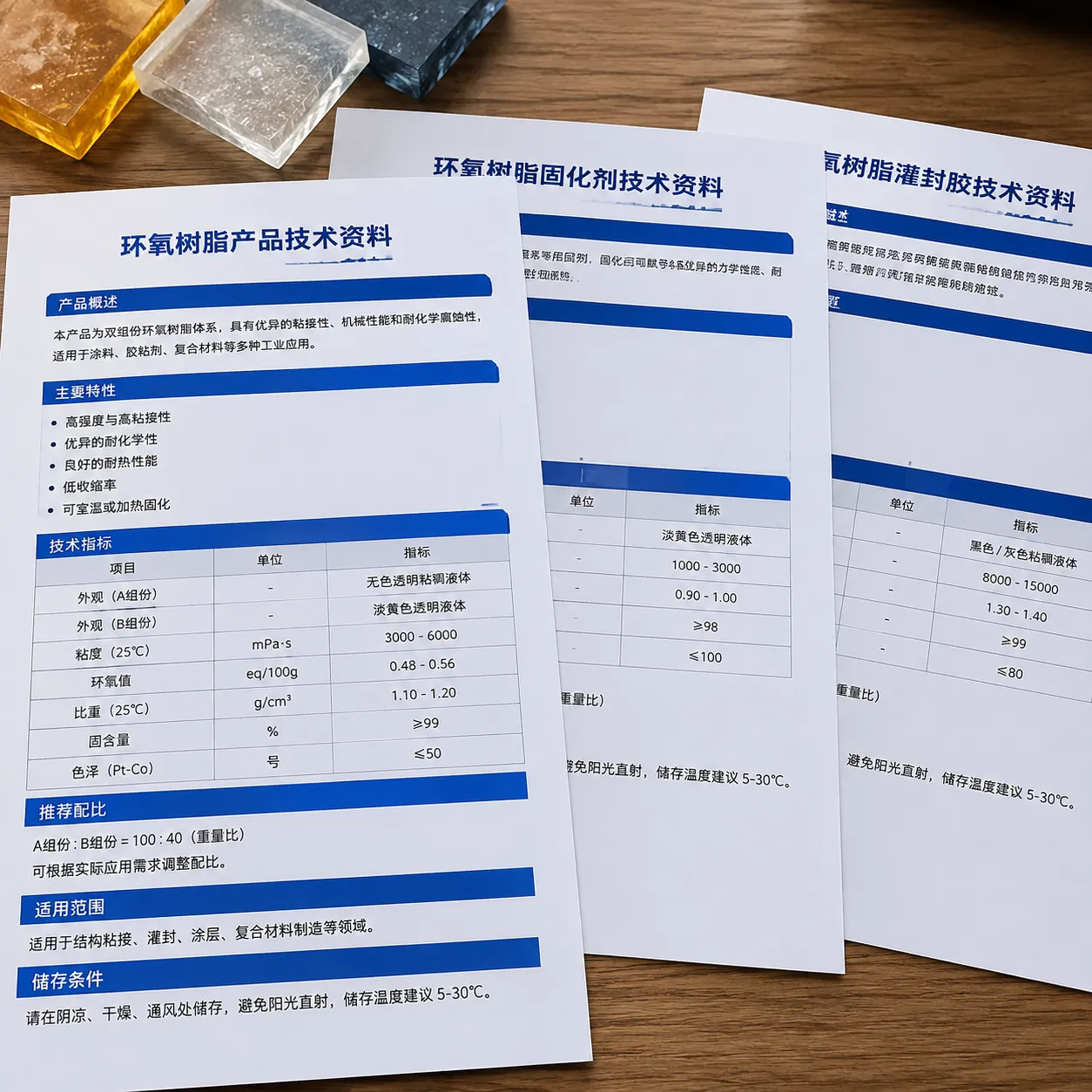
Are you struggling to navigate the compliance paperwork for your resin orders? A single missing file can lead to costly customs delays, failed batches, or major compliance headaches.
Mastering your epoxy resin supplier documents is the ultimate shortcut to protecting your production line. From decoding the critical differences between an SDS, TDS, and COA to verifying test reports and securing mandatory shipping documents, knowing what to request keeps your supply chain bulletproof.
In this guide, you will learn the exact parameters to check, how to handle formula changes, and how Rongwei supports your project with custom sample matching, formula adjustments, and bulk OEM supply.
Let’s dive right in!
Quick Answer
What Buyers Need to Know First
Procuring materials from a custom epoxy resin manufacturer requires strict technical verification to ensure chemical quality, workplace safety, and production repeatability. Complete epoxy resin supplier documents protect your supply chain by validating essential performance metrics before raw materials reach your facility.
Before placing an order or requesting epoxy resin sample matching, buyers must verify three essential compliance documents:
- Safety Data Sheet (SDS): Defines safe handling practices, toxicological data, and transport requirements (epoxy resin SDS).
- Technical Data Sheet (TDS): Details physical properties, mixing ratios, viscosity, and curing schedules (epoxy TDS).
- Certificate of Analysis (COA): Verifies batch-specific laboratory testing results to guarantee lot-to-lot stability (COA epoxy resin).
Sourcing from an ISO 9001 resin factory guarantees complete document traceability, preventing costly application failures in industrial coatings, adhesives, and composites.
What is the Difference Between SDS, TDS, and COA in Epoxy Resin Supplier Documents?
Direct Answer
When evaluating epoxy resin supplier documents, you will encounter three core papers: the Safety Data Sheet (epoxy resin SDS), the Technical Data Sheet (epoxy TDS), and the Certificate of Analysis (COA epoxy resin). Each serves a distinct purpose across safety compliance, processing guidelines, and batch quality verification.
| Document | Primary Purpose | Key Information Included |
|---|---|---|
| SDS (Safety Data Sheet) | Transport, safety, and workplace regulatory compliance | Chemical identity, hazard classifications, handling, storage, and emergency steps |
| TDS (Technical Data Sheet) | Product selection, engineering, and application guidelines | Nominal physical properties, mix ratios, cure times, and performance specs |
| COA (Certificate of Analysis) | Batch-specific quality assurance and lot verification | Actual laboratory test results (viscosity, gel time, color, density) for a specific lot |
We provide complete, fully updated documentation for every formulation to eliminate processing delays and regulatory issues.
Key Selection Factors or Failure Risks
Relying on the wrong document—or skipping verification—exposes your business to costly operational failures:
- Treating a TDS as a guarantee of batch performance: An epoxy TDS gives ideal baseline properties. Only a batch-specific COA epoxy resin confirms that the exact resin batch sitting on your shop floor meets required viscosity, cure speed, and clarity parameters.
- Misaligning the epoxy resin SDS with shipping standards: Attempting to clear customs or transport hazardous materials with outdated or non-localized safety sheets leads to shipping holds, fines, and carrier rejections.
- Ignoring processing updates on the TDS: Mixing ratios and gel times vary between formulations. Using an older sheet instead of the latest technical data can result in incomplete curing, soft resin, or structural failure.
- Does every order need a batch COA?
Direct Answer
Yes, absolutely. As a dedicated OEM epoxy resin factory, we strongly advise receiving a batch-specific COA epoxy resin document with every single order delivered to your facility.
While a technical datasheet outlines what a formula should do, a batch COA proves what that exact lot actually achieved in lab testing before shipment. Requiring this report as part of your standard epoxy resin supplier documents ensures you never run your production line on unverified materials.
Key Selection Factors or Failure Risks
Skipping a batch-specific test report introduces serious operational and financial risks to your production process:
- Batch-to-Batch Variance: Minor shifts in raw material lots can affect viscosity, gel time, or hardener mixing ratios. A fresh COA confirms your shipment matches your required specs.
- Costly Curing Failures: Using off-spec resin can cause incomplete curing, surface tackiness, or structural cracking—leading to expensive scrap and product recalls.
- Traceability & Audits: Working with an ISO 9001 resin factory guarantees lot-level traceability. A batch COA provides the paper trail necessary to pass quality checks and resolve downstream issues quickly.
- Custom Spec Verification: If you rely on a custom epoxy resin formulation, the COA provides absolute proof that metrics like epoxide equivalent weight (EEW), density, and clarity hit your exact targets.
Which documents are needed for shipping?
Direct Answer
When we ship resin orders globally, customs authorities and freight carriers require specific epoxy resin supplier documents to clear customs and ensure safe transport. The essential shipping documentation includes:
- Safety Data Sheet (SDS): Critical for freight forwarders. Section 14 specifies transport hazard classifications, UN numbers (such as UN3077 or UN3082 for environmentally hazardous substances), and proper shipping names.
- Dangerous Goods (DG) Declaration or Non-DG Certificate: Confirms whether the epoxy resin or hardener is classified as hazardous cargo for sea (IMDG) or air (IATA) transport.
- Commercial Invoice and Packing List: Details product descriptions, net/gross weights, HS codes, and batch numbers.
- Bill of Lading (BOL) or Air Waybill (AWB): The official carriage contract matching the cargo manifest.
- Batch COA: Often required by port inspectors to verify material identity and batch compliance before final release.
As an experienced OEM epoxy resin factory, we prepare and attach complete transport documentation for every shipment before it leaves our facility.
Key Selection Factors or Failure Risks
Incomplete or inaccurate shipping paperwork creates severe supply chain delays and added expenses:
- Customs Holds and Port Delays: Incorrect UN classifications on an epoxy resin SDS will cause customs to impound containers at the destination port.
- Unexpected Storage Charges: Discrepancies between the packing list and shipping labels result in cargo holds, leading to heavy daily demurrage fees.
- Rejected Freight: Air and ocean carriers will refuse to load shipments if a non-hazardous liquid lacks a proper Non-DG Certificate or valid testing report.
Partnering with an ISO 9001 resin factory ensures all transport paperwork strictly complies with international shipping codes, keeping your freight moving without unexpected port costs.
How can I verify a test report is relevant?
Direct Answer
To verify that third-party test reports and epoxy resin supplier documents are relevant, cross-reference four critical data points directly against your purchase order: exact product code, test standards used (e.g., ASTM, ISO, UL, RoHS/REACH), issuing laboratory accreditation, and the test date.
A valid test report must match the specific resin grade you are purchasing—not a generic raw material base or an alternate formulation. When we issue testing documentation from our ISO 9001 resin factory, we ensure every technical report clearly correlates with the active epoxy TDS and batch production records to guarantee full traceability.
Key Selection Factors or Failure Risks
Using outdated or mismatched test documents introduces severe compliance and quality risks to your manufacturing line. Focus on the following checkpoints to validate supplier test data:
| Checkpoint | What to Verify | Failure Risk if Overlooked |
|---|---|---|
| Product Grade & Name Match | Exact match with your purchase spec, TDS, and COA epoxy resin records. | Receiving test data for an un-modified base resin rather than your actual custom epoxy resin formulation. |
| Lab Accreditation & Report ID | Independent third-party testing (e.g., SGS, TÜV, Intertek, UL) with verifiable report numbers. | Unverifiable in-house testing claims that fail regulatory import checks or customer audits. |
| Standard & Test Methods | Proper testing protocols (e.g., ASTM D638 for tensile, ASTM D257 for resistivity, UL 94 for flammability). | Incomparable performance data resulting in structural or electrical failure in your end application. |
| Document Date & Standards Version | Issued within the last 12–24 months, reflecting the latest SVHC candidate lists for REACH/RoHS. | Customs seizure, heavy fines, or product recalls due to expired environmental compliance. |
- Trace the Batch Connection: Ensure the sample lot number on the third-party report ties back to raw material supply records and your commercial batch.
- Match Target Application Conditions: Confirm whether mechanical, thermal (Tg), and electrical tests were conducted under curing profiles identical to your shop floor process.
- Confirm Complete Parameter Coverage: Check that the report covers your critical metrics—such as dielectric strength, flame retardancy, or chemical resistance—rather than basic physical values alone.
What Should Be Checked When an Epoxy Formula Changes?
Direct Answer
Whenever a custom epoxy resin formulation changes—whether due to raw material substitutions, cure speed adjustments, or performance modifications—you must secure an updated set of epoxy resin supplier documents. We immediately issue a revised epoxy TDS with updated technical limits, a renewed epoxy resin SDS reflecting any regulatory shifts, and a pre-shipment pilot COA epoxy resin report to verify critical properties before bulk processing begins.
Key Selection Factors or Failure Risks
Failing to audit updated documentation after a formulation change introduces major production risks:
- Pot Life & Exotherm Shifts: Minor tweaks in reactive diluents or hardeners alter gel times, peak temperatures, and shrinkage. Verify the revised TDS to ensure the new formula stays within your processing window.
- Regulatory & Safety Violations: Modified raw materials can introduce newly reportable hazards or alter REACH, RoHS, and VOC compliance. Check Sections 2, 3, and 15 of the updated SDS immediately.
- Mechanical & Adhesion Failures: Small chemical variations can degrade inter-coat adhesion, clarity, or chemical resistance. Run epoxy resin sample matching and compare the pilot batch COA against historical baseline specs.
- Quality Drift: A qualified ISO 9001 resin factory should provide a formal Management of Change (MOC) notice detailing exact property tolerances—including viscosity, epoxy equivalent weight (EEW), and specific gravity.
What Information Should You Send to the Manufacturer?
Getting an accurate custom epoxy resin formulation starts with giving your supplier the right project details up front. When you share clear specifications, we can speed up epoxy resin sample matching, provide precise pricing, and issue the correct epoxy resin supplier documents without unnecessary delays.
Application, Substrate and Process Details
To match or build the ideal formula, share how and where the resin will be applied:
- End-Use Application: Define whether the product is for industrial flooring, electronic potting, composite manufacturing, protective coatings, or art casting.
- Substrate Material: Specify what the resin binds to—such as concrete, steel, aluminum, wood, fiberglass, or specific plastics.
- Processing Parameters: Outline your exact workflow, including required pot life (working time), gel time, mixed viscosity, curing temperature (room temp vs. heat cure), and application method (pouring, spraying, or vacuum infusion).
Performance, Packaging and Estimated Quantity
Defining performance and logistical needs helps our OEM epoxy resin factory hit your targets on the first try:
| Category | Details to Provide |
|---|---|
| Performance Specs | Shore hardness, UV resistance, thermal resistance (Tg), clarity, tensile strength, or chemical exposure requirements. |
| Document & Compliance | Specific environmental or safety parameters required in your batch epoxy resin SDS or test reports. |
| Packaging Requirements | Bulk IBC totes, 200L drums, 5-gallon pails, or customized private-label kits. |
| Order Volume | Sample batch size, trial run quantities, and estimated annual order volume. |
Providing this complete operational picture helps us deliver exact sample matches and guarantee consistent quality from sample testing to full-scale production.
How Can Rongwei Support This Project?
We bridge the gap between high-volume chemical production and your exact application needs. As an ISO 9001 resin factory, we do not just ship chemical drums—we back every shipment with complete epoxy resin supplier documents, custom testing, and dedicated technical support.
Sample Matching and Formula Adjustment
If you have an existing physical product or a specific performance benchmark, our chemical engineering team can replicate and refine it:
- Epoxy Resin Sample Matching: Send us your target benchmark, and our lab will analyze its hardness, clarity, gel time, and viscosity to match the exact profile.
- Custom Epoxy Resin Formulation: We adjust hardener ratios, thermal limits, UV resistance, and flow properties to suit your specific production line.
- Sample Documentation: Every tailored formula includes an updated TDS, SDS, and batch testing certificate before full production begins.
OEM / Private Label Packaging and Bulk Supply
As a flexible OEM epoxy resin factory, we handle every step of production, packaging, and regulatory documentation for your brand:
- Private Labeling: We pack resin systems under your brand identity, complete with fully compliant, localized safety labels and matching product documents.
- Scalable Packaging: From 16 oz retail sets and 5-gallon pails to 55-gallon drums and 1000L IBC totes, we accommodate any order volume.
- Traceable Documentation: Every bulk shipment leaves our facility with batch-specific COAs, shipping papers, and safety data sheets so your inventory remains fully compliant.
Buyer Checklist
Questions to Confirm Before Placing an Order
Before issuing a purchase order, run through this final checklist. Asking these direct questions upfront prevents costly line shutdowns, customs delays, and quality disputes downstream.
- Which essential epoxy resin supplier documents are included with the shipment? Confirm that an updated epoxy resin SDS, comprehensive epoxy TDS, and batch-specific COA epoxy resin test report are supplied automatically before dispatch.
- Does the batch COA reflect our exact specifications? Verify that key properties—such as viscosity, gel time, epoxy equivalent weight (EEW), and shore hardness—match your approved custom epoxy resin formulation.
- Is the manufacturing site properly audited? Ensure you are sourcing from an ISO 9001 resin factory with verified quality control systems and batch traceability.
- Are shipping and dangerous goods papers pre-cleared? Check if UN transport classifications, safety labels, and export packing declarations are fully compliant for your local customs regulations.
- Is the sample approval signed off? Confirm that your epoxy resin sample matching results align 100% with your mass production requirements before releasing the deposit.
Related Sources
- https://fidelisassociates.com/resources/management-of-change-best-practices
- https://www.ecisolutions.com/blog/manufacturing/deacom-erp-software/what-is-a-certificate-of-analysis/
- https://www.hallam-ics.com/blog/what-does-a-chemical-facility-or-high-technology-facility-management-of-change-protocol-look-like-
