
Epoxy Primer for Concrete Floor Yellowing Resistance Guide
Quick Answer
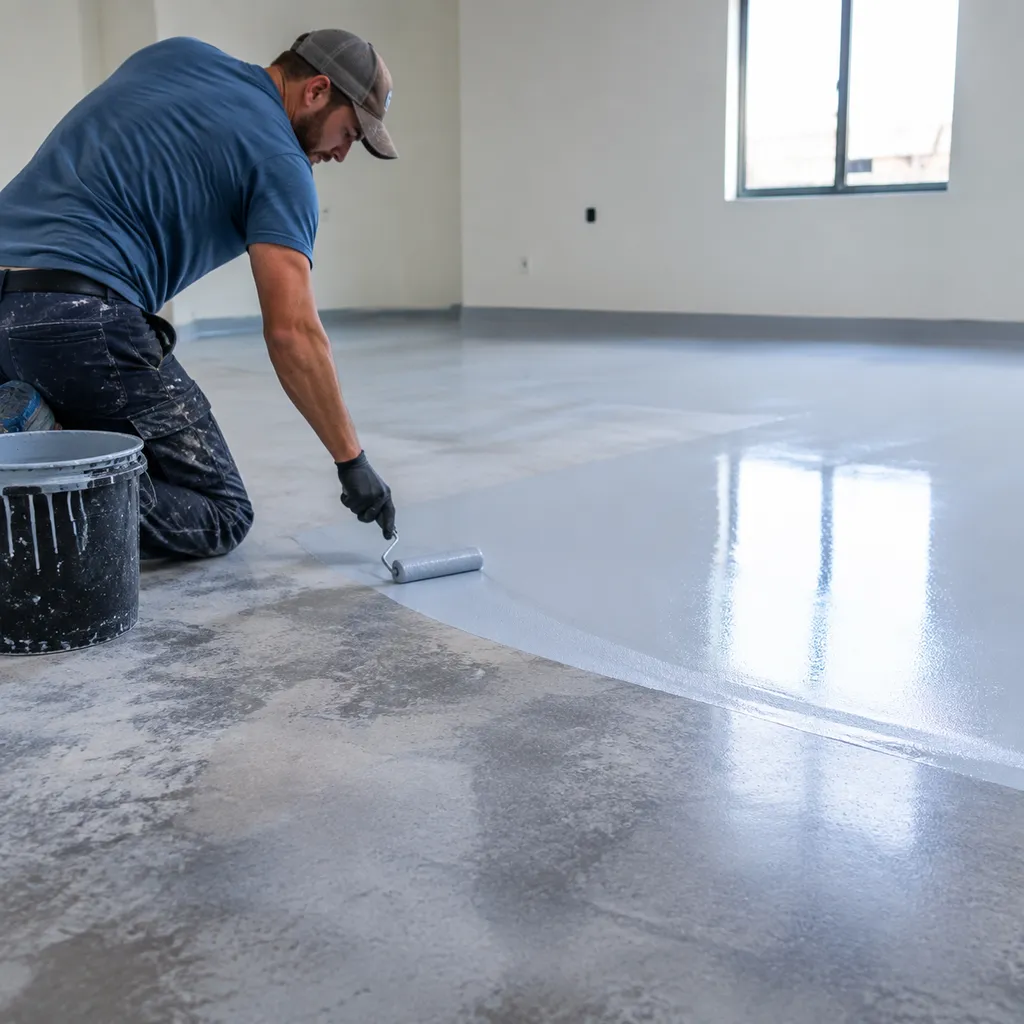
An epoxy primer for concrete floor applications acts as the foundational bonding layer between raw substrates and performance topcoats. It deeply penetrates a porous concrete coating, seals surface capillaries, and blocks outgassing bubbles from ruining the finish. Using a specialized concrete floor primer guarantees maximum epoxy floor adhesion, ensuring the heavy-duty coating system will not blister, peel, or delaminate under stress.
What Buyers Need to Know First
Specifying the correct formulation within a concrete floor epoxy system requires identifying exact job site conditions before placing bulk orders:
- Penetration Depth: Low-viscosity resins soak into micro-cracks and pores to create a permanent mechanical bond.
- Moisture Defense: Slabs prone to high dampness require a dedicated moisture primer to neutralize hydrostatic pressure and vapor transmission.
- Substrate Sealing: Primers seal porous concrete completely, eliminating surface pinholes, air pockets, and outgassing defects in subsequent layers.
- Cost Efficiency: Skipping a primer layer drastically compromises system durability, leading to premature coating failure and costly floor repairs.
Is any epoxy completely UV-proof?
Direct Answer
No, there is no epoxy resin on the market that is completely 100% UV-proof. Standard epoxy chemistry relies on aromatic molecular structures that naturally break down, yellow, and chalk under continuous ultraviolet light. While high-grade light stabilizers delay this discoloration, an epoxy primer for concrete floor applications remains UV-resistant at best—never entirely immune.
Key Selection Factors or Failure Risks
To prevent premature coating failures and heavy discoloration, keep these critical technical factors in mind:
- Aromatic vs. Aliphatic Formulations: Epoxies yellow when exposed to direct sun. For long-term clarity outdoors, rely on an epoxy base for superior epoxy floor adhesion and cap it with an aliphatic polyurethane or polyaspartic topcoat.
- Surface Chalking: Unprotected UV exposure damages the molecular bonds of a concrete floor epoxy system, causing loss of gloss, micro-cracking, and fine surface powdering over time.
- Additive Limitations: Quality UV absorbers and light stabilizers (HALS) slow down color degradation, but they cannot stop it completely. Using an unsealed epoxy outdoors will eventually lead to finish failure, even on a properly prepared porous concrete coating.
Why does overheating increase discoloration?
Direct Answer
Excess heat accelerates chemical oxidation within the amine curing agents of an epoxy primer for concrete floor formulations. When ambient temperatures spike or exothermic heat builds up during mixing, polymer bonds break down rapidly. This thermal stress triggers premature yellowing, dark amber tinting, and surface scorching before the concrete floor epoxy system even finishes curing.
Key Selection Factors or Failure Risks
- Exothermic heat build-up: Mixing large batches without pouring immediately traps heat. This runaway chemical reaction discolors the material right inside the bucket.
- Hot substrate surfaces: Applying a concrete floor primer onto hot slabs accelerates yellowing and flash-cures the surface, drastically weakening epoxy floor adhesion.
- Hardener formulation quality: Low-grade aromatic amines degrade quickly under thermal stress. Sourcing temperature-stable amine blends from a wholesale epoxy resin manufacturer protects against heat-induced yellowing.
- Trapped volatiles: High heat forces the top layer of a porous concrete coating to seal too fast, trapping expanding gases beneath and causing uneven, cloudy discoloration.
- Do pigments hide or worsen yellowing?
Direct Answer
Pigments naturally hide yellowing, but light colors make color shifts far more noticeable. In our manufacturing experience, dark pigments mask resin ambering completely, while light shades like white or pale gray allow underlying yellowing to show through quickly. Utilizing a pigmented epoxy primer for concrete floor projects creates a solid, opaque base, but long-term color stability depends on your choice of topcoat and tint shade.
Key Selection Factors or Failure Risks
Optimizing pigment performance across your concrete floor epoxy system comes down to key formulation choices:
- Color Tint Choice: Dark grays and blacks conceal binder ambering. White, light gray, and tan highlight yellowing quickly under sun exposure.
- Inorganic Pigment Stability: High-quality inorganic pigments resist fading on a porous concrete coating better than cheap organic dyes.
- Surface Chalking: UV degradation breaks down the epoxy binder, causing a white, chalky residue that dulls pigmented finishes.
- Primer Hiding Power: A tinted concrete floor primer ensures maximum hiding power and strong epoxy floor adhesion, preventing concrete stains from bleeding into the topcoat.
How should yellowing resistance be compared?
Direct Answer
We evaluate yellowing resistance through standardized accelerated weathering tests (such as ASTM G154 QUV exposure) rather than simple indoor visual checks. Comparing resin formulations under continuous UV radiation isolates true color shift using Delta E measurements. Reviewing these certified lab metrics gives you an accurate projection of clarity retention before installing a complete concrete floor epoxy system.
Key Selection Factors or Failure Risks
- Accelerated Weathering Reports (ASTM G154): Always request QUV test data from your wholesale epoxy resin manufacturer showing Delta E color change over 500 to 1,000+ continuous test hours.
- Curing Agent Chemistry: Formulations built with cycloaliphatic amines or aliphatic hardeners provide significantly higher resistance to ambering than low-cost aromatic curing agents.
- Substrate Penetration Effects: An epoxy primer for concrete floor applications penetrates deep into a porous concrete coating base. Variable absorption rates can create uneven film thickness, making resin discoloration look patchy across the floor.
- Initial Clarity vs. Long-Term Stability: Crystal-clear resin without dedicated UV stabilizers can yellow rapidly under indirect daylight or high-intensity indoor lights.
- System Layering Strategy: Primer resins prioritize epoxy floor adhesion over complete UV protection. For maximum color retention in sunlit spaces, combine high-performance primers with aliphatic topcoats.
Can a topcoat improve outdoor durability?
Direct Answer
Yes, absolutely. While an epoxy primer for concrete floor applications provides essential epoxy floor adhesion and seals porous concrete, standard epoxy resin inherently degrades when exposed to direct sunlight. Adding an aliphatic polyurethane or polyaspartic topcoat over the concrete floor epoxy system acts as a UV shield. This stops yellowing, chalking, and surface breakdown while maximizing long-term outdoor wear.
Key Selection Factors or Failure Risks
- Recoat Window Timing: Applying the topcoat outside the specified chemical bonding window leads to rapid inter-coat delamination and peeling.
- Vapor Barrier Protection: Topcoats cannot stop ground moisture; a dedicated moisture primer must sit directly on the concrete to block vapor drive.
- UV Shielding Capability: Standard epoxies absorb ultraviolet light; topcoats must contain active UV blockers to shield the lower coating layers.
- Thermal Expansion & Traffic: Outdoor slabs move with temperature swings; choosing a flexible topcoat prevents top-layer cracking over the rigid base.
What Information Should You Send to the Manufacturer?
Getting the right epoxy primer for concrete floor projects requires sharing precise jobsite specifications upfront. Giving us clear details allows our engineering team to supply the exact formulation your floor requires.
Application, Substrate and Process Details
- Substrate Condition: State whether you are dealing with fresh pour, smooth troweled slabs, or an existing porous concrete coating. Highlight high moisture vapor emission rates so we can pair you with a dedicated moisture primer.
- Surface Preparation Method: Detail your prep steps—such as diamond grinding or shot blasting—to guarantee optimal epoxy floor adhesion.
- Environmental Factors: Provide the average ambient temperature, slab temperature, and relative humidity expected during application.
- System Design: Clarify whether the primer will serve as the base for a full concrete floor epoxy system or a specialized topcoat.
Performance, Packaging and Estimated Quantity
As a direct wholesale epoxy resin manufacturer, we customize orders to fit your specific operational and branding needs.
- Performance Criteria: Detail your requirements for chemical resistance, heavy vehicular load tolerances, cure times, and UV stability.
- Custom Packaging: Specify if you need private label epoxy resin with custom branding, pre-measured contractor kits, drums, or bulk IBC totes.
- Order Volume: Provide total square footage or target volume numbers to secure epoxy resin factory direct tier pricing and streamlined supply chain scheduling from your bulk epoxy resin supplier.
How Can Rongwei Support This Project?
As a direct wholesale epoxy resin manufacturer, Rongwei delivers factory-direct solutions tailored specifically to your concrete floor epoxy system requirements. Whether your project demands extreme epoxy floor adhesion on problematic substrates or specialized moisture mitigation, we engineer high-performance formulations built to withstand tough job-site conditions.
Sample Matching and Formula Adjustment
We work closely with your technical team to match physical samples and fine-tune chemical formulas for targeted performance.
- Targeted Penetration: We adjust resin viscosity for deep absorption into a porous concrete coating, ensuring an unbeatable bond line.
- Moisture Defense: We engineer specialized moisture primer blends designed to seal damp slabs and stop osmotic blistering.
- Customized Cure Rates: Tailor gel times and cure windows to match your local climate conditions and application preferences.
OEM / Private Label Packaging and Bulk Supply
Scaling your product line is seamless when partnering with a dedicated bulk epoxy resin supplier. We provide full-service factory support to bring high-grade epoxy primer for concrete floor applications straight to your market under your brand.
- Private Label Epoxy Resin: Custom branding, personalized product labels, and specialized packaging ranging from retail kits to 5-gallon pails and drums.
- Epoxy Resin Factory Direct: Cost-efficient, high-volume production with rigorous batch-to-batch quality control.
- Global Distribution: Reliable container shipping optimized for smooth international delivery to your regional distribution centers.
Buyer Checklist
Questions to Confirm Before Placing an Order
Locking in the right epoxy primer for concrete floor projects requires clarifying performance specs before placing your order. Run through this quick pre-purchase checklist with your supplier to guarantee seamless execution and maximum epoxy floor adhesion:
- What is the moisture vapor emission rate (MVER)? Verify if the slab requires a specialized moisture primer to prevent blistering caused by hydrostatic pressure.
- How porous is the concrete surface? Confirm that the primer is engineered to penetrate and seal a porous concrete coating substrate effectively.
- Is the system fully compatible? Ensure the primer formulation bonds flawlessly with your selected topcoats within the overall concrete floor epoxy system.
- What are the ambient temperature and cure limits? Check pot life, re-coat windows, and temperature restrictions for your specific job site conditions.
- What are the bulk or OEM options? Confirm order minimums, lead times, batch consistency, and private label epoxy resin options directly with your wholesale epoxy resin manufacturer.
Related Sources
- https://www.aicoatings.com.au/how-our-topcoats-stand-the-test-of-time/
- https://www.intertek.com/polymers-
- https://www.researchgate.net/publication/362087879_Yellowing_Mechanisms_of
- https://www.researchgate.net/publication/362087879_Yellowing_Mechanisms_of_Epoxy_and_Vinyl_Ester_Resins_under_Thermal_UV_and_Natural_Aging_Conditions_and_Protection_Methods
