
Epoxy Floor Bubbles and Pinholes UV Durability Guide
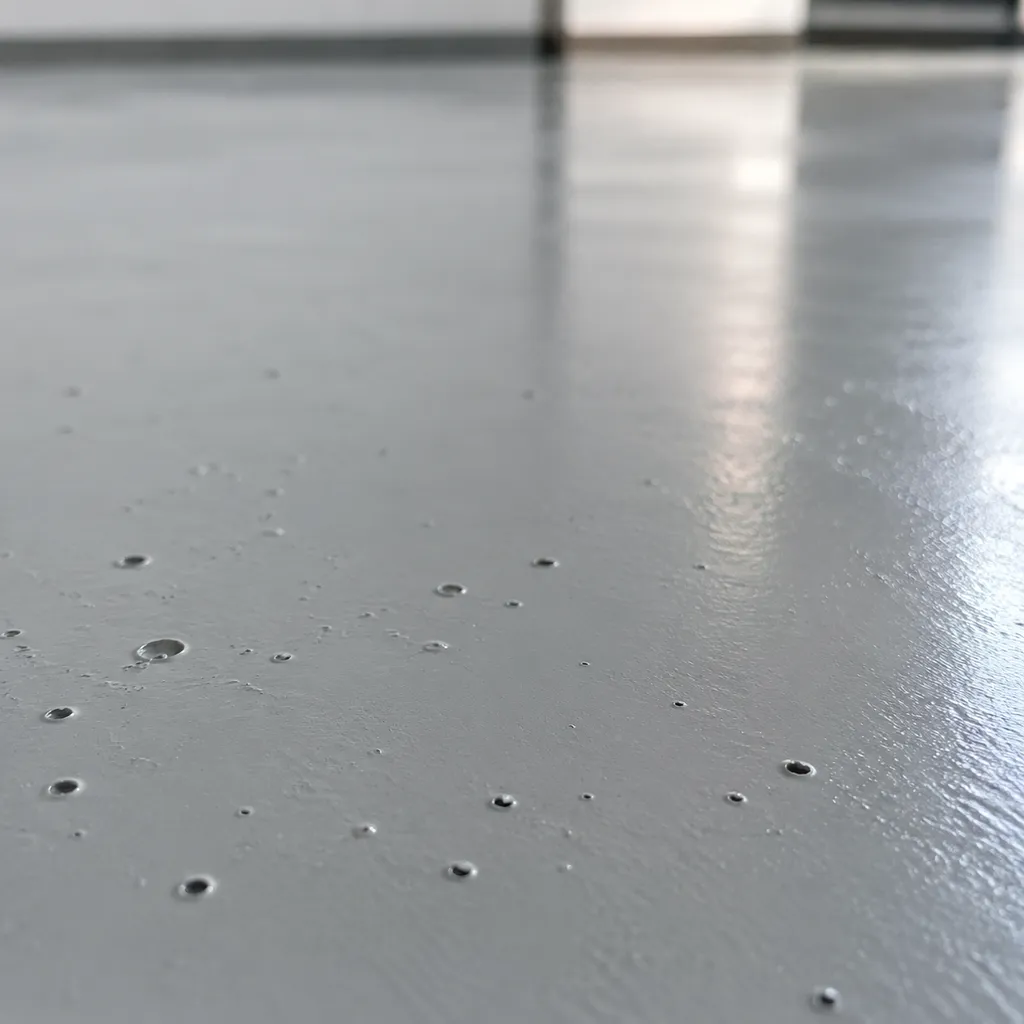
Quick Answer
What Buyers Need to Know First
Epoxy floor bubbles and pinholes are primarily caused by concrete outgassing, high-speed mixing, and improper substrate priming. When air trapped inside porous concrete expands during curing, it pushes upward through the uncured coating, creating unsightly craters, pinholes, and surface voids.
Key root causes include:
- Substrate Outgassing: Rising ambient temperatures cause air inside porous concrete floors to expand and migrate upward through wet resin.
- Inadequate Priming: Omitting a dedicated penetrating primer leaves concrete pores unsealed, allowing trapped air to escape into the self-leveling layer.
- Mechanical Air Entrapment: Mixing resin components at excessively high RPM introduces micro-bubbles directly into the liquid coating.
- Environmental Fluctuations: Uncontrolled humidity or rapid shop temperature shifts disrupt the surface tension during the epoxy curing cycle.
Preventing these defects requires proper substrate sealing with high-penetration primers, controlled application environments, and engineered self-leveling epoxy formulas designed for maximum air-release performance.
Is any epoxy completely UV-proof?
Direct Answer
No epoxy is 100% UV-proof. Standard epoxy resins are aromatic, meaning they inherently react to ultraviolet light by yellowing, chalking, and degrading over time. While high-grade formulations include UV stabilizers and HALS (Hindered Amine Light Stabilizers) to slow this process down, they only delay discoloration rather than prevent it entirely. For true UV resistance on exterior projects, an aliphatic topcoat like polyaspartic or polyurethane must be applied over the concrete floor epoxy system.
Key Selection Factors or Failure Risks
- Thermal Outgassing: Solar radiation raises surface temperatures rapidly. Heat expands trapped air in porous concrete, increasing the risk of epoxy floor bubbles and pinholes if the base slab isn’t properly primed.
- Surface Chalking and Loss of Gloss: UV light breaks down the epoxy polymer chain on the surface. Over time, this leads to loss of shine, micro-cracking, and compromised adhesion.
- Aromatic vs. Aliphatic Chemistry: Epoxy resin formulations are inherently aromatic. To achieve complete light stability, you must pair the base coat with an aliphatic topcoat.
- Unsealed Floor Coating Pinholes: Microscopic pinholes in an unsealed floor allow UV rays and moisture deeper into the coating system, accelerating premature film failure and ambering.
Why does overheating increase discoloration?
Direct Answer
Excess heat accelerates thermal oxidation within the resin matrix during the cure phase. When an epoxy system overheats—due to high ambient temperatures, thick mass pours, or uncontrolled exothermic reactions—the chemical bonds inside aromatic polymer chains break down rapidly. This thermal breakdown turns clear coatings yellow or brown. Crucially, this sudden temperature spike also forces expanding trapped air out of substrate pores, leaving behind severe epoxy floor bubbles and pinholes before the top layer can level out and seal over.
Key Selection Factors or Failure Risks
Thermal spikes directly drive discoloration while worsening surface defects. Managing heat requires balancing key operational factors:
- Mass Exotherm Management: Mixing large batches in deep buckets traps heat inside the container, scorching the formulation and forcing premature gelling that traps expanding gas pockets.
- Accelerated Substrate Outgassing: Thermal spikes drive trapped air upward through a porous concrete resin bed. If the surface film cures too quickly from excess heat, epoxy floor outgassing creates permanent bubbles in self leveling epoxy layers.
- Viscosity vs. Pot Life: Heat drastically shortens working time. While initial viscosity drops, the accelerated setup prevents natural bubble release, locking in widespread floor coating pinholes.
- Hardener Selection: Standard aliphatic or aromatic hardeners react aggressively to heat spikes. Using low-exotherm hardeners stabilizes thermal output, ensuring color stability and preventing structural air entrapment.
Do pigments hide or worsen yellowing?
Direct Answer
Pigments do not stop epoxy resin from yellowing, but they directly control how noticeable discoloration becomes. Darker shades like medium gray, charcoal, and safety colors mask ambering effectively. White, light gray, and transparent topcoats reveal yellowing quickly. However, overloading a formula with heavy pigments to hide UV shift or substrate flaws thickens the mixture. This traps escaping air, leading to epoxy floor bubbles and pinholes during application.
Key Selection Factors or Failure Risks
- Color Selection: Bright whites and light pastels show yellowing first. Darker tones hide visual shifts, but dark surfaces absorb heat faster, which can accelerate thermal degradation.
- Viscosity and Air Release: Adding high loads of pigment paste increases resin viscosity. Thickened material prevents air from venting out of a porous concrete resin substrate, causing bubbles in self leveling epoxy systems.
- Pinhole Formation: Thicker, heavily pigmented coats trap off-gassing vapor from the concrete beneath, creating micro-voids and floor coating pinholes as the surface cures.
- Chemical vs. Visual Stability: Pigments only alter visual perception. The underlying concrete floor epoxy system still undergoes chemical breakdown under UV exposure unless stabilized with dedicated UV absorbers and light stabilizers.
How should yellowing resistance be compared?
Direct Answer
We compare yellowing resistance by testing resin formulations under standardized accelerated UV weathering conditions (such as ASTM G154) alongside real-world solar exposure. We track Delta E color shift values over specific timeframes to measure how resistant a formula is to ambering under heat and ultraviolet light. Comparing resistance requires looking at both chemical stability and surface clarity—yellowing magnifies underlying installation flaws, turning subtle epoxy floor bubbles and pinholes into high-contrast visual defects across your finished surface.
Key Selection Factors or Failure Risks
- Accelerated QUV Testing Data: Compare Delta E color change metrics after 500 to 1,000 hours of continuous exposure rather than relying on qualitative marketing claims.
- Visual Flaw Magnification: As a coating turns yellow, light reflects differently across the floor, making minor floor coating pinholes and micro-voids significantly more noticeable.
- Thermal Stress Interplay: Solar heat accelerates chemical degradation. If epoxy floor outgassing occurs during application, trapped air pockets create uneven thermal zones that discolor faster than the solid resin matrix.
- Resin Chemistry Base: Aromatic epoxy resins will naturally yellow over time. Compare standard epoxy performance directly against aliphatic polyaspartic or polyurethane topcoats when long-term color retention across a concrete floor epoxy system is critical.
Can a topcoat improve outdoor durability?
Direct Answer
Yes, applying a clear, UV-resistant topcoat—such as a polyurethane or polyaspartic finish—dramatically boosts outdoor durability. Standard epoxy resin breaks down, chalks, and turns yellow under direct sunlight. A dedicated topcoat acts as a protective shield against weather, chemical exposure, and UV rays. When applied correctly over a concrete floor epoxy system, it seals the surface and helps minimize surface defects like epoxy floor bubbles and pinholes.
Key Selection Factors or Failure Risks
- UV & Chemical Stability: Choose aliphatic polyurethane or polyaspartic coatings over standard epoxy to prevent ambering and surface chalking outdoors.
- Outgassing Traps: Applying topcoats while the base coat is still off-gassing or over porous concrete resin traps escaping air, causing floor coating pinholes and surface blistering.
- Recoat Timing & Sanding: Applying a topcoat past the manufacturer’s recoat window without scuff-sanding leads to poor intercoat adhesion and premature peeling.
- Thermal Expansion: Outdoor temperature swings cause concrete to expand and contract; rigid topcoats without flexibility can crack, allowing moisture to enter and trigger bubbles in self leveling epoxy.
What Information Should You Send to the Manufacturer?
To help us formulate the right formulation and prevent epoxy floor bubbles and pinholes, share your exact project parameters upfront. Clear job site data allows us to tailor viscosity, cure speed, and air-release additives specifically to your environment.
Application, Substrate and Process Details
Eliminating floor coating pinholes and bubbles in self leveling epoxy starts with understanding your working conditions. Share these key site specs before ordering:
- Substrate Condition: State whether you are applying over a porous concrete resin primer, fresh slabs, or old surfaces prone to epoxy floor outgassing.
- Environmental Controls: Provide ambient room temperatures, slab moisture levels, and relative humidity during application.
- Application Technique: Specify target pour thickness, mixing tools, and whether your crew uses notched squeegees or spiked rollers.
Performance, Packaging and Estimated Quantity
As a direct wholesale epoxy resin manufacturer and bulk epoxy resin supplier, we customize your complete concrete floor epoxy system based on performance targets and volume needs:
| Requirement Category | Details to Provide |
|---|---|
| Performance Specs | Chemical exposure, UV resistance, impact strength, and traffic load requirements. |
| Packaging Options | Standard kits, drums, totes, or custom private-label branding needs. |
| Order Volume & Delivery | Total square footage or gallon requirements alongside your project timeline. |
How Can Rongwei Support This Project?
We eliminate floor coating pinholes and surface defects directly at the manufacturing level. As a trusted wholesale epoxy resin manufacturer, we provide custom resin formulations and scalable supply chain solutions engineered specifically for high-performance concrete floor epoxy system projects worldwide.
Sample Matching and Formula Adjustment
- Targeted Defect Elimination: We modify surface tension, curing speed, and air-release properties to stop epoxy floor bubbles and pinholes caused by epoxy floor outgassing on porous concrete resin substrates.
- Flow & Leveling Control: Our lab fine-tunes resin viscosity to guarantee seamless flow, preventing persistent bubbles in self leveling epoxy applications.
- Precision Formulation Matching: Send us your job site requirements or existing product samples, and we will engineer a tailored formula that matches your exact performance specs.
OEM / Private Label Packaging and Bulk Supply
- Factory-Direct Advantage: Work directly with our epoxy resin factory direct team to reduce material costs and maintain strict quality control.
- Custom Private Labeling: We offer complete private label epoxy resin options, including custom packaging, specialized kit sizes, and fully branded labeling for market-ready distribution.
- Dependable Bulk Operations: As a global bulk epoxy resin supplier, we guarantee consistent batch-to-batch quality, fast production lead times, and steady inventory support for large-scale operations.
Buyer Checklist
Questions to Confirm Before Placing an Order
Before finalizing your bulk order, confirm these key technical and logisitcal details to ensure your project runs smoothly and stays free of epoxy floor bubbles and pinholes.
- Substrate Preparation: Does the recommended primer effectively seal a porous concrete resin base to prevent severe epoxy floor outgassing?
- Air-Release Capabilities: Does the resin formula contain high-grade anti-foaming additives to stop bubbles in self leveling epoxy during thick application layers?
- System Compatibility: What specific coating steps ensure the complete concrete floor epoxy system avoids surface defects and floor coating pinholes under high humidity?
- Environmental Thresholds: What are the ideal temperature and moisture limits to ensure optimal cure speed and surface flow?
- Supply & Logistics: As your direct wholesale epoxy resin manufacturer, what are our minimum order volumes, custom packaging options, and batch-to-batch consistency guarantees?
