
Thermal Shock Resistant Epoxy for Extreme Temperatures
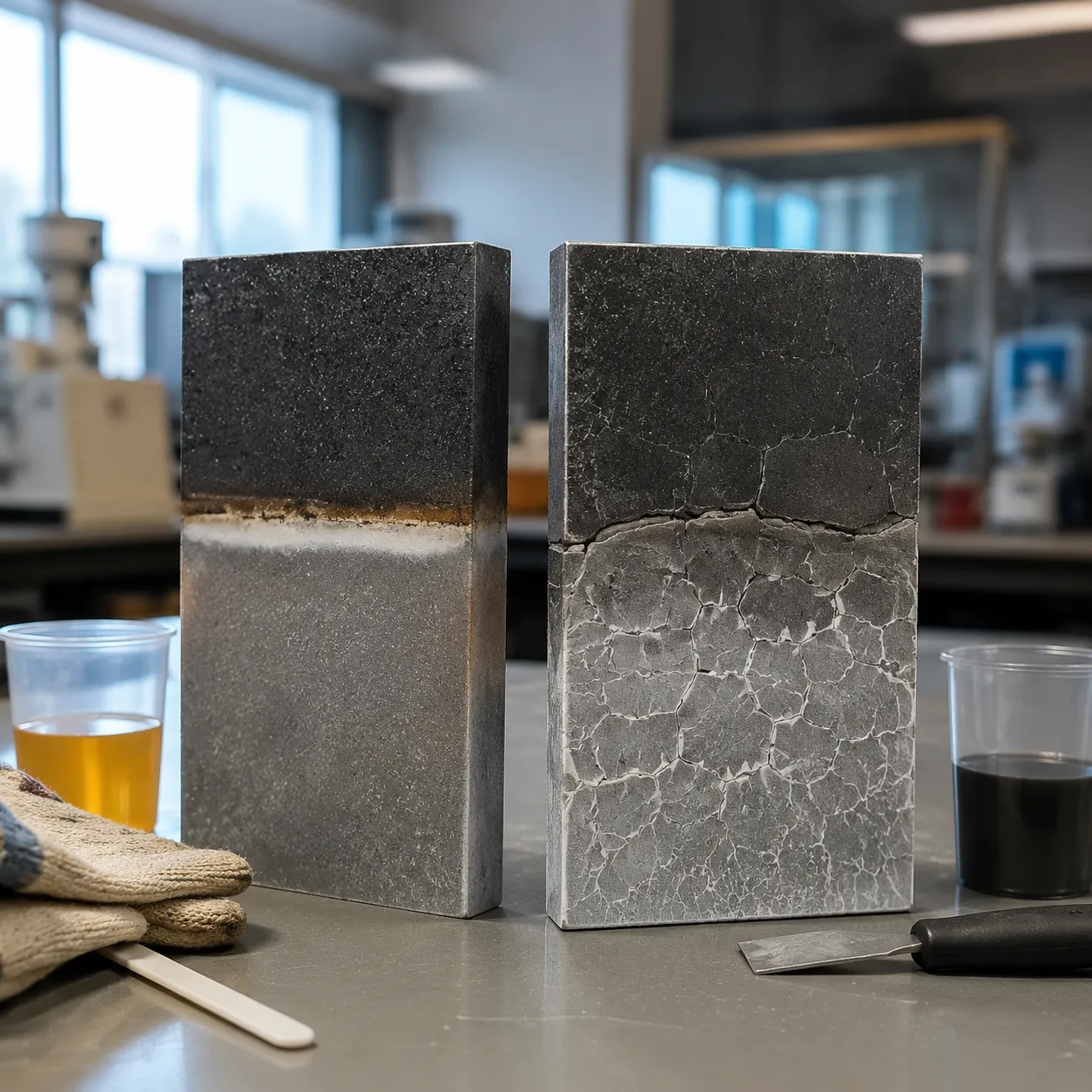
Are you struggling with component failures caused by rapid thermal cycling? Choosing the wrong compound leads to catastrophic cracking, delamination, and seal failure in high-stress electronics, aerospace, and industrial assemblies.
In this guide, you’re going to learn exactly how to select the best thermal shock resistant epoxy for your specific application. We will break down the critical metrics that matter most—from Glass Transition Temperature ($T_g$) and CTE mismatch to potting viscosity and continuous temperature limits.
So if you want to protect your assemblies and eliminate thermal stress failures, this guide is for you.
Let’s dive right in!
What is Thermal Shock Resistant Epoxy?
When industrial components transition rapidly between extreme heat and freezing cold, standard adhesives fail under intense mechanical strain. We engineer thermal shock resistant epoxy to endure these sudden temperature spikes and continuous thermal cycling without cracking, warping, or losing bond strength.
How Toughened Resins Absorb Thermal Expansion
Rapid temperature shifts cause substrates to expand and contract at different rates. Our specialized toughened epoxy resin formulations integrate flexibilizing agents directly into the polymer network. Rather than remaining rigid and brittle, the cure matrix dynamically absorbs expansion stress, distributing thermal loads evenly to provide long-term thermal stress relief.
Standard Epoxy vs. Thermal Shock Formulations
| Performance Feature | Standard Epoxy Formulations | Thermal Shock Resistant Epoxy |
|---|---|---|
| Thermal Shock Response | High risk of fracturing and immediate joint failure | Flexibilized matrix absorbs rapid heat expansion |
| Adhesion Under Stress | Delaminates easily under hot/cold cycling | Maintains continuous high-strength bond line |
| Durability Profile | Brittle; prone to micro-cracking over time | High fracture toughness and thermal fatigue resistance |
| Target Application | General bonding in stable room-temperature environments | Severe industrial environments, electronics, and aerospace |
Key Properties of Thermal Shock Resistant Epoxy
We formulate our thermal shock resistant epoxy to withstand rapid temperature swings without cracking, peeling, or losing adhesion. The secret lies in a few critical physical and thermal properties that work together to protect your assemblies.
Coefficient of Thermal Expansion (CTE) Matching
When bonded materials expand or contract at different rates, standard bonds shear apart. Our CTE matching epoxy aligns its expansion rate with metals, ceramics, and circuit substrates. Matching the coefficient of thermal expansion minimizes interface stress during sudden hot and cold cycling.
Flexibility and Toughened Matrix
Standard epoxies become brittle and fracture under thermal shock. We engineer a toughened epoxy resin system with a balanced glass transition temperature (Tg). This provides built-in flexibility, giving you effective thermal stress relief without sacrificing structural strength.
| Property | Standard Epoxy Resin | Toughened Thermal Cycling Epoxy |
|---|---|---|
| CTE Alignment | High stress mismatch | Tailored CTE to match metals & ceramics |
| Flexibility | Rigid and brittle | High flexural toughness prevents cracks |
| Thermal Conductivity | Low (Heat insulator) | High heat dissipation capability |
| Cryogenic Resistance | Cracks below -40°C | Intact down to cryogenic temperatures (-196°C) |
Heat Dissipation and Environmental Resistance
- Thermal Conductivity: Our thermal conductivity resin transfers heat away from sensitive electronics to eliminate hot spots.
- Cryogenic Resistance: Functions as a reliable cryogenic epoxy adhesive, retaining flexibility even in deep-freeze environments.
- Chemical & Moisture Barrier: Blocks humidity, automotive fluids, and harsh industrial solvents from degrading the bond line.
Common Applications for Thermal Shock Epoxy
We see components fail in the field every single day simply because standard adhesives cannot survive sudden thermal swings. Using a thermal shock resistant epoxy protects critical assemblies when temperatures plunge or spike without warning.
Electronics Encapsulation and Board Potting
Delicate printed circuit boards face severe stress during rapid heating and cooling. Using an epoxy potting compound built for thermal stress relief prevents board warping, solder fatigue, and component failure.
PCB Assemblies: Fills gaps and locks out moisture while absorbing thermal shock.
Encapsulated Components: Protects fragile micro-wire connections from physical stress.
Aerospace and Automotive Engine Compartment Bonding
Under-hood and aerospace environments experience extreme thermal jumps, moving from sub-zero conditions to high operational heat in seconds.
Engine Control Modules: Secures critical sensors subject to rapid hot-cold cycling.
Structural Components: Serves as a toughened epoxy resin that dampens continuous engine vibration.
Cryogenic Equipment and High-Temperature Sensors
Extreme temperature environments require specialty formulations that remain flexible without cracking or losing adhesion strength.
Cryogenic Systems: Acts as a specialized cryogenic epoxy adhesive that stays intact near absolute zero.
Thermal Sensors: Holds tight in high-heat zones where standard resins lose bond strength.
Industrial Machinery Adhesives and Structural Repairs
Heavy industrial equipment operates under intense physical loads, high friction, and fluctuating working temperatures.
Heavy Equipment Bonding: Provides long-term reliability as a high temperature epoxy adhesive.
Structural Maintenance: Bridges different materials seamlessly, minimizing stress caused by CTE mismatch.
Selecting the Best Thermal Shock Resistant Epoxy
Choosing the right thermal shock resistant epoxy requires balancing temperature limits, curing methods, and material compatibility. We evaluate four core factors to ensure long-term bond reliability under severe temperature swings.
Evaluating Temperature Limits
- Operating Range: Verify the baseline temperature boundaries. A formula must withstand long-term exposure to minimum cryogenic temperatures and continuous elevated heat.
- Peak Heat Spikes: Ensure the material tolerates rapid, intermittent temperature surges without softening or charring.
- Glass Transition Temperature (Tg): Select a formulation with a Tg tailored to your application to maintain structural integrity during thermal stress relief cycles.
One-Part vs. Two-Part Epoxy Systems
| Feature | One-Part Epoxy System | Two-Part High Temp Epoxy |
|---|---|---|
| Curing Method | Heat cure required (typically 100°C–150°C) | Room temperature or heat-accelerated cure |
| Mixing Needs | Pre-mixed; zero mixing required | Requires precise meter-mix ratio |
| Storage & Shelf Life | Requires cold storage (-40°C); shorter shelf life | Room-temperature storage; extended shelf life |
| Performance Focus | Exceptional chemical resistance and dense crosslinking | High flexibility, custom cure speeds, and crack resistance |
Viscosity and Dispensing Options
- Low Viscosity Formulations: Best for thin epoxy potting compound applications, encapsulating sensitive electronics, and filling micro-gaps.
- High Viscosity Pastes: Ideal for non-sag vertical bonding, structural adhesive joints, and bridging wide gaps.
- Dispensing Formats: Dual-cartridge systems simplify manual application, while bulk packaging supports automated assembly lines.
Substrate Compatibility and CTE Matching
A CTE mismatch between the adhesive and joining substrates creates severe shear stress during thermal shock.
- CTE Matching Epoxy: Select an filled epoxy resin designed to match the expansion rates of metals, ceramics, or glass.
- Flexible Epoxy Resin: For bonding materials with drastically different expansion rates, rely on a toughened epoxy resin to absorb mechanical strain without delaminating.
Application Best Practices for Maximum Bond Strength
Getting maximum bond strength out of your thermal shock resistant epoxy comes down to strict application habits. Even the highest-grade toughened epoxy resin can fail under extreme temperature swings if applied improperly. We follow a strict process to ensure every bond delivers peak durability and long-term thermal stress relief.
Preparing Surfaces for Optimal Adhesion
Clean, textured surfaces are non-negotiable for reliable bonding.
- Degrease thoroughly: Clean all substrates using industrial solvents or isopropyl alcohol to remove oils, dust, and release agents.
- Mechanically abrade: Lightly grit-blast or sand surfaces to create a micro-textured profile for the thermal cycling epoxy to grip.
- dust removal: Wipe down surfaces with a lint-free cloth and dry air to clear abraded particles right before application.
Precise Mixing and Degassing
Trapped air creates micro-voids that turn into fracture points during rapid temperature changes.
- Follow exact ratios: Measure two-part high temp epoxy components precisely by weight or volume according to specifications.
- Mix completely: Scrape the sides and bottom of the container while mixing to prevent unblended resin pockets.
- Vacuum degassing: Place the mixed material under a vacuum (28–29 in Hg) for 3 to 5 minutes to pull out entrained air bubbles before dispensing.
Recommended Heat Curing Schedules
Post-curing with heat maximizes cross-linking density, elevating structural toughness and performance.
| Curing Phase | Target Temperature | Primary Objective |
|---|---|---|
| Room Temp Pre-Cure | 22°C – 25°C (72°F – 77°F) | Allows air release and initial gelation |
| Heat Ramp | 80°C – 100°C (176°F – 212°F) | Accelerates cross-linking and chemical resistance |
| Thermal Soak | 120°C – 150°C (248°F – 302°F) | Unlocks maximum Tg and full crack resistant epoxy properties |
Avoiding Joint Stress During Temperature Transitions
Minimizing mechanical strain keeps bonded assemblies stable under extreme hot-and-cold cycles.
- Maintain uniform bondlines: Keep bond line thickness consistent (ideally 0.003 to 0.008 inches) to distribute stress evenly.
- Design smooth fillets: Apply small bead fillets along joint edges to prevent sharp stress concentration points.
- Use flexible formulations: Choose a flexible epoxy resin variant when joining materials with contrasting coefficients of thermal expansion.
Frequently Asked Questions
Why Standard Epoxy Cracks Under Thermal Stress
Standard epoxies are rigid and brittle. When temperatures shift rapidly, the bond line expands or contracts faster than the attached substrates. This sudden mismatch creates intense internal stress, leading to immediate micro-cracking and bond failure. We formulate our thermal shock resistant epoxy with toughened polymer chains to safely absorb these rapid dimensional changes without snapping.
Cryogenic Epoxy Resin Performance
Yes, specialized formulations handle extreme cold with ease. Our cryogenic epoxy adhesive systems stay intact even at temperatures as low as -196°C (-320°F). They retain structural flexural toughness during deep freezing cycles, preventing brittleness and joint separation in ultra-low temperature equipment.
How Fillers Enhance Thermal Conductivity
Adding specialized inorganic fillers—like alumina, silica, or boron nitride—significantly boosts performance. Here is how they protect the bond:
- Lowers CTE Mismatch: Reduces the expansion rate to closely match metals and ceramics.
- Dissipates Heat: Improves thermal conductivity resin properties to spread heat evenly and eliminate localized hot spots.
- Reduces Shrinkage: Minimizes volume loss during curing for tighter, stress-free structural seals.
Heat Resistance vs. Thermal Shock Resistance
While both handle elevated temperatures, they address completely different environmental stresses:
| Feature | High Temperature Epoxy | Thermal Shock Resistant Epoxy |
|---|---|---|
| Core Function | Endures continuous, static high heat | Survives rapid hot-to-cold cycling |
| Key Property | High glass transition temperature (Tg) | High flexibility and thermal stress relief |
| Primary Risk | Softening from prolonged heat | Cracking from sudden temperature spikes |
| Best Application | Constant high-temp industrial ovens | Automotive engine bays and aerospace sensors |
