
Parking Garage Ramp Anti Slip Epoxy Buying Guide
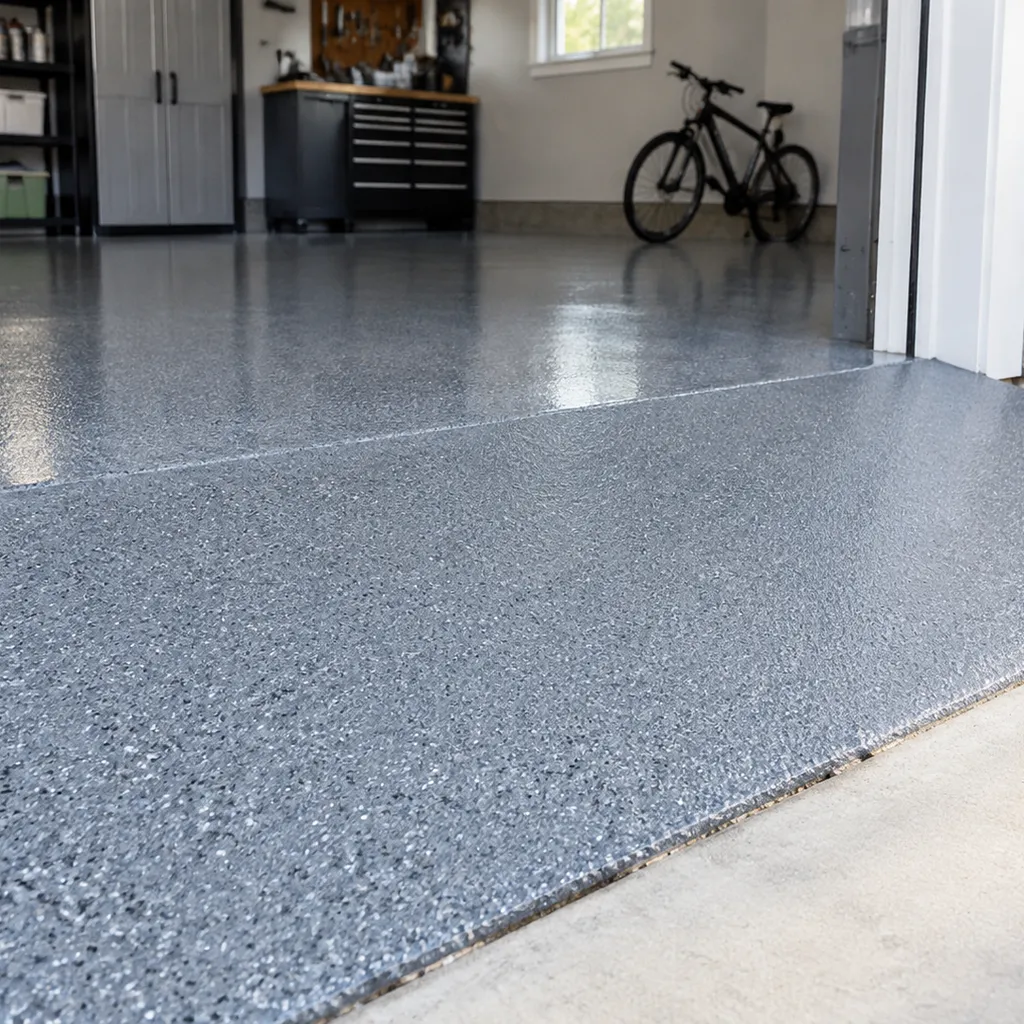
Parking ramps take more abuse than virtually any other surface in your facility.
Between relentless turning friction, heavy wheel loads, and slick rainwater dragged in from outside, standard floor coatings fail fast. That’s why selecting the right parking garage ramp anti slip epoxy system is mission-critical.
Get it right, and you eliminate slip hazards, quiet tire squeal, and protect your concrete for years. Get it wrong, and you face premature delamination, safety liability, and expensive rework.
In this quick guide, you’ll discover what buyers need to know first—from choosing the right anti-slip aggregates and wear-resistant topcoats to managing severe turning stress.
Let’s dive right in.
Quick Answer
A parking garage ramp anti slip epoxy is a heavy-duty, multi-layer resin coating system specifically engineered to handle vehicular friction, steep inclines, and relentless traffic. Standard floor coatings fail on ramps due to intense mechanical forces; an anti-slip epoxy system solves this by anchoring coarse broadcast aggregates directly into an industrial-grade epoxy matrix to generate maximum tire grip.
- Primary Function: Delivers aggressive traction to stop vehicle slippage, skidding, and hydroplaning on interior and exterior slopes.
- System Composition: Features a high-penetration concrete primer, a high-build epoxy body coat embedded with high-hardness aggregate, and a durable protective lock coat.
- Core Protection: Resists extreme shear stress from braking, protects concrete substrates against deicing salts and oil ingress, and withstands heavy vehicular wear.
What Buyers Need to Know First
When you source a parking garage ramp anti slip epoxy, you cannot treat it like standard flat-deck concrete flooring. Ramps handle extreme mechanical stress, continuous braking forces, and wet tire tracking. Before buying or specifying a parking ramp coating, you need to lock down several critical factors:
- Incline and Shear Stress: Driving on a slope creates direct tire shear that tears weak films away from the concrete profile. A flat-deck coating will fail quickly here; you need a dedicated garage slope epoxy built for heavy vehicular torque.
- True Profile vs. Thin Additives: Simple anti-skid paint additives are not enough for steep ramps. Reliable anti slip epoxy flooring requires an epoxy aggregate broadcast system to establish a mechanical profile that tires can grip even in slick conditions.
- Moisture and Fluid Ingress: Vehicles drag in rainwater, snowmelt, road salts, motor oil, and hydraulic fluids. The non slip floor resin must create a dense, impermeable barrier to prevent chemical penetration and substrate degradation.
- Operational Downtime: Garage ramps are critical access choke points. You must plan for cure profiles and return-to-service timelines that match your facility’s maintenance windows.
| Buyer Evaluation Factor | Standard Flat Deck | Garage Ramp Priority |
|---|---|---|
| Mechanical Traction | Low to Medium | High (Mandatory Heavy Broadcast) |
| Braking Shear Resistance | Standard | Extreme Incline Load Capacity |
| Moisture Exposure | Intermittent | Severe (Continuous Runoff/Track-in) |
| System Profile | Thin to Medium Build | High-Build Multi-Layer System |
Getting these parameters straight before placing a bulk order ensures the parking garage coating system meets your site’s safety, friction, and durability demands from day one.
Why Ramps Need a Different Floor System
Standard flat bays do not face the continuous physical punishment that ramps take every single day. A typical parking deck coating simply cannot survive on an incline. When vehicles travel on a slope, gravity shifts the entire dynamic load, multiplying the forces exerted directly onto the substrate.
Without a dedicated parking garage ramp anti slip epoxy, standard coatings peel, delaminate, and lose their grip rapidly. We design garage slope epoxy systems specifically to handle these unique directional forces.
- Constant Shear Stress: Downward gravity combines with forward tire momentum to pull standard coatings away from the concrete.
- Tire Scrubbing: Turning wheels on an incline exert lateral tearing forces that strip smooth surfaces bare.
- Moisture Infiltration: Slopes channel rainwater and chemical runoff directly across the traffic path, creating immediate slip hazards.
- Impact Shock: Rapid acceleration and sudden braking generate high friction spikes at transition points.
Traffic Load and Turning Stress
Vehicles do not just roll down ramps; they turn, brake suddenly, and accelerate from dead stops on steep angles. These dynamic movements place intense mechanical stress on the floor surface.
| Stress Factor | What Happens on the Ramp | Why Standard Epoxy Fails | Ramp System Requirement |
|---|---|---|---|
| Braking Torque | Tires bite hard into the surface while descending. | The top film tears and micro-cracks form. | High tensile load resistance and deep concrete bond. |
| Turning Shear | Wheels pivot while bearing vehicle weight on curves. | Twisting friction rubs smooth coatings thin. | Heavy-duty parking ramp coating with lock-in profile. |
| Acceleration Traction | Drive wheels push down and back on ascents. | Delamination occurs along the bond line. | Rigid base with an elastomeric or reinforced core. |
| Surface Wear | Continuous wheel-track traffic on narrow lanes. | Rutting and aggregate loss expose bare concrete. | High-build anti slip epoxy flooring with embedded broadcast media. |
Managing these continuous forces requires an engineered non slip floor resin build that anchors deeply into the concrete profile and holds firm against constant tire drag.
Choosing Anti-Slip Aggregate
Selecting the right media for a parking garage ramp anti slip epoxy system dictates whether tires grip or slide under heavy slope stress. The broadcast aggregate defines surface profile depth, mechanical traction, and long-term service life under continuous traffic.
- Angular Media vs. Rounded Sand: Sharp, angular aggregates offer superior mechanical bite on steep vehicular ramps, locking tires into the surface during hard braking.
- Epoxy Aggregate Broadcast to Rejection: Flooding the base resin with aggregate until refusal ensures a dense, uniform profile with no bald or slick patches.
- Particle Sizing: Coarser profiles are essential on slopes compared to flat parking decks, preventing premature smoothing caused by grit, dirt, and heavy tire friction.
Wet Areas, Wash Zones and Drainage
Water accumulation compromises ramp traction instantly. Near garage entrance thresholds, open-air transition ramps, wash zones, and drainage trenches, a standard smooth surface becomes an immediate hydroplaning hazard.
- Hydroplaning Prevention: An aggressive, high-profile wet area epoxy floor design lifts tires above standing water films, maintaining positive contact.
- Drainage Flow Alignment: Aggregate texture must allow rain runoff, melted snow, and wash water to route straight toward floor drains without pooling behind aggregate build-up.
- Impermeable Substrate Protection: Wet zone formulations act as continuous moisture barriers, preventing water and carry-over deicing salts from penetrating and deteriorating the underlying concrete.
Topcoat Selection and Wear Resistance
The aggregate provides traction, but your topcoat decides how long that grip actually lasts. On a high-traffic incline, vehicular tires exert continuous shear force. Without a high-durability lock coat, the aggregate dislodges under braking stress, quickly smoothing down your parking garage ramp anti slip epoxy system into a hazard.
We formulate and supply topcoats engineered to encapsulate broadcast media while withstanding relentless industrial abuse:
- Tire Abrasion Resistance: Prevents tire scrub and hot-tire pick-up from gouging the resin matrix during slow, heavy turning maneuvers.
- Chemical & Automotive Fluid Shield: Protects against aggressive fluids like motor oils, brake fluid, battery acid, and de-icing salts carried in during wet weather.
- UV and Environmental Stability: Ramp entrances exposed to natural sunlight require chemical backbones that will not chalk, yellow, or embrittle under continuous thermal cycling.
- Texture Retention: Seals the non slip floor resin without pooling into the valleys, preserving an aggressive profile that cuts through surface water.
| Topcoat Priority | Primary Function | Operational Impact |
|---|---|---|
| Mechanical Lock | Secures the aggregate broadcast | Stops premature aggregate shedding and bald spots |
| Chemical Barrier | Seals out automotive contaminants | Prevents delamination caused by fluid penetration |
| Surface Toughness | Absorbs friction from continuous braking | Lengthens recoat intervals on high-stress slopes |
Maintenance and Recoating Strategy
A heavy-duty parking ramp coating cannot be treated with a “fit-and-forget” mindset. Ramps handle the highest friction concentration of any zone in a commercial facility. We advocate for a planned maintenance and periodic recoat model to maximize service life and eliminate structural downtime:
- Routine Grit Removal: Sweep and clean ramps routinely. Road grit, sand, and fine gravel act like sandpaper under rolling tires, grinding down the topcoat far faster than clean rubber would.
- Proactive Seal Recoating: Inspect transition points and turning arcs annually. Applying a fresh topcoat over the existing textured epoxy before the aggregate wears smooth preserves the core build and saves the expense of complete concrete re-profiling.
- Targeted Spot Repairs: High-friction braking zones can be mechanically abraded, re-broadcast with aggregate, and locked down with resin without shutting down the entire ramp network.
What Information Should You Send to RW ATELIER?
When you reach out to us for a parking garage ramp anti slip epoxy specification or quote, sharing the right job site details upfront helps us match you with the exact resin build, aggregate profile, and delivery timeline your project demands. As an industrial epoxy resin supplier handling direct formulation and supply, we build system recommendations around your real operating conditions.
Here is the essential checklist to send our team:
- Ramp Dimensions and Layout: Total surface area in square meters or square feet, slope percentage, and whether the ramp is straight, curved, or includes tight turning radii.
- Traffic Demands and Vehicle Types: Expected daily vehicle cycles, average vehicle weights (standard passenger cars vs. delivery vans or maintenance trucks), and primary speed zones.
- Environmental Exposure: Whether the ramp is fully underground, covered, or exposed to open weather, UV sunlight, rain carry-over, or freeze-thaw cycles.
- Current Substrate Condition: Age and condition of the concrete, existing coatings or sealers that need removal, moisture issues, and any structural cracks or joint movement.
- Project Schedule and Turnaround Windows: Your target installation window, allowable downtime before traffic return, and regional temperature conditions during application.
Key Data to Include in Your RFQ
| Requirement Category | Details to Provide |
|---|---|
| Area & Incline | Total area, ramp slope angle, and transition zones |
| Exposure Type | Interior garage, exterior apron, or wash/drainage area |
| Load Class | Light vehicular, heavy traffic, or tight braking/turning points |
| Concrete Profile | New pour, bare profiled slab, or failed existing floor |
| Volume Needed | Square meterage for bulk epoxy resin supplier pricing |
Providing these parameters allows us to specify the correct non slip floor resin primer, broadcast rate, and heavy-duty topcoat system for your facility without delays or guesswork.
How Can RW ATELIER Support This Project?
We work directly with facility managers, commercial contractors, and engineers to deliver heavy-duty parking garage ramp anti slip epoxy systems engineered for high stress and demanding vehicular traffic.
As an industrial epoxy resin supplier and factory-direct manufacturer, we eliminate guesswork and middleman markups by tailoring the exact resin formulation and aggregate package your ramp requires:
- Custom Epoxy Formulation: We adjust cure speeds, viscosity, and chemical resistance to align with your specific ramp grade, climate conditions, and vehicle load requirements.
- Factory-Direct Bulk Supply: Sourcing directly through us gives you dependable batch consistency, high-volume capacity, and competitive commercial pricing for large-scale parking deck builds.
- Complete System Matching: We configure each layer of your parking garage coating system—from moisture-tolerant primers to robust aggregate broadcast layers and abrasion-resistant lock coats.
- Technical Application Guidance: We supply comprehensive technical data sheets, surface prep recommendations (CSP standards), and aggregate broadcast ratios to ensure your non slip floor resin achieves optimal mechanical bond and durability.
Whether you need rapid-curing formulations to minimize garage downtime or high-build traction systems for severe incline slopes, our team delivers the materials and engineering support required to complete your installation on schedule.
Related Sources
- https://www.concreteconstruction.net/how-to/materials/traffic-toppings-protect-concrete_o
- https://www.flowcrete.co.uk/our-products/systems/deckshield/
- https://www.hse.gov.uk/slips/technical-information.htm
- https://usa.sika.com/en/construction/floor-covering/deck-coatings.html
- https://www.master-builders-solutions.com/en-gb/products/masterseal
