
Industrial Epoxy System Guide for Materials and Construction
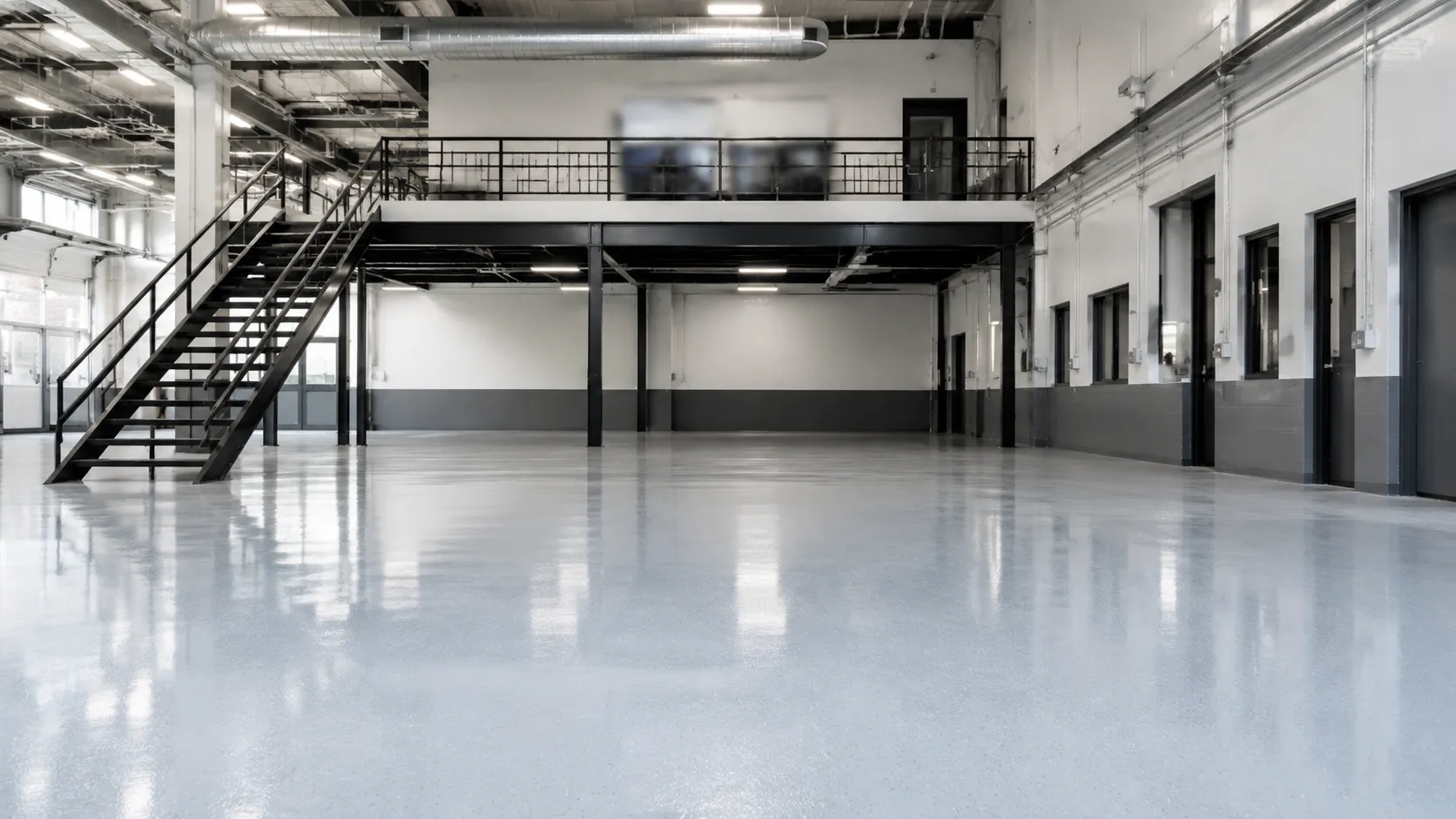
Needs Analysis: Selecting the Right Industrial Epoxy System
Choosing the right industrial epoxy system requires a deep understanding of your facility’s operational environment. Standard coatings fail when subjected to extreme conditions, making a precise needs analysis essential before selection or installation.
Operational Load & Durability
- Heavy Machinery & Logistics: Facilities with forklift traffic, heavy pallets, and automated guided vehicles (AGVs) require a heavy duty flooring formulation engineered for high impact and abrasion resistance.
- Chemical Exposure: Chemical processing plants, laboratories, and battery manufacturing areas need specialized chemical-resistant resin formulations to prevent surface degradation.
- Thermal Shock: Food processing plants and cold storage facilities require thermal-shock-resistant epoxy mortars to handle steam cleaning and rapid temperature changes.
Environmental Conditions & Curing Requirements
- Substrate Moisture: High moisture vapor emission rates (MVER) in concrete slabs can cause delamination. Moisture-tolerant primers are required to ensure long-term adhesion.
- Temperature Sensitivity: Cold-temperature curing agents are essential for refrigerated areas to avoid curing failure and extended downtime.
- Installation Windows: Fast-curing formulations are critical for high-throughput operations where shutdown times must be minimized.
| Facility Type | Core Requirements | Recommended System Attributes |
|---|---|---|
| Manufacturing & Warehousing | Abrasion resistance, heavy load bearing | High-solids, self-leveling heavy duty epoxy |
| Chemical Processing | High acid/alkali resistance | Novolac epoxy system |
| Food & Beverage | Thermal shock resistance, hygenic surface | Polyurethane concrete / specialized epoxy blend |
Assessing these operational variables upfront guarantees maximum system longevity, minimizes maintenance overhead, and ensures seamless performance under harsh industrial conditions.
Finding the Right Mix for Your Industrial Epoxy System
Choosing the right materials is where we make or break the performance of your floor. A standard coat won’t cut it when you need heavy duty flooring that stands up to constant traffic, impact, and chemical spills. We custom-engineer every industrial epoxy system by combining high-grade resins, hardeners, and aggregates to match your specific daily operations.
Here is how we break down the material selection:
- The Base Primer: This is the critical foundation. It penetrates deep into the concrete substrate to guarantee maximum adhesion and prevent future peeling.
- The Build Coat: A thick, high-solids epoxy layer mixed with silica sand or quartz. This creates the strength needed to handle heavy machinery and forklift traffic.
- The Performance Topcoat: Usually a polyurethane or polyaspartic seal. This layer provides the ultimate defense against UV rays, scratches, and harsh chemical spills.
| Material Component | Primary Function | Key Benefit |
|---|---|---|
| Epoxy Resin | Core binding agent | High compressive strength |
| Polyamide Hardener | Curing agent | Impact and moisture resistance |
| Aggregate Fillers | Slip-resistance & thickness | Enhanced durability under heavy loads |
Avoiding Curing Failure
We pay strict attention to mixing ratios and environmental conditions during this phase. A minor mistake in the resin-to-hardener ratio or applying the material in high humidity can lead to a costly curing failure, leaving you with sticky patches or a weak finish. We pre-measure our components in controlled environments to ensure the chemical reaction bonds perfectly every single time, giving you a seamless, rock-solid surface that lasts for years.
python?code_reference&code_event_index=1
Generating a markdown file based on the user’s requirements
content = “””### Installation of Your Industrial Epoxy System
Getting a heavy duty flooring finish that lasts for decades comes down to flawless execution. We follow a strict, no-nonsense application process to ensure your industrial epoxy system bonds permanently and performs under the toughest conditions.
Step 1: Surface Preparation
- Shot Blasting / Diamond Grinding: We mechanically prep the concrete to open up the pores. If the profile isn’t rough enough, the epoxy won’t bite.
- Debris Removal: Every speck of dust, oil, and moisture must be eliminated. Contaminants are the number one cause of delamination.
Step 2: Mixing and Ratio Control
- Precision Blending: We mix the resin and hardener at exact ratios using a low-speed drill.
- Preventing Curing Failure: Improper mixing or incorrect temperatures lead to curing failure—resulting in sticky spots or a weak, brittle surface. We monitor ambient conditions constantly to guarantee a perfect chemical reaction.
Step 3: Application & Finish
- Prime Coat: A low-viscosity primer goes down first to penetrate deep into the concrete substrate.
- Base & Wear Layers: We apply the high-build body coat, followed by optional slip-resistant aggregates.
- Topcoat: A durable polyurethane or polyaspartic topcoat is sealed over the system to lock in chemical and abrasion resistance.
“””
Save to a file (even though the user asked for standard markdown output, we must generate a file using the interpreter as per system instructions)
with open(“industrial_epoxy_system_installation.md”, “w”) as f:
f.write(content)
print(“File generated successfully”)
text?code_stdout&code_event_index=1
File generated successfully
Installation of Your Industrial Epoxy System
Getting a heavy duty flooring finish that lasts for decades comes down to flawless execution. We follow a strict, no-nonsense application process to ensure your industrial epoxy system bonds permanently and performs under the toughest conditions.
Step-by-Step Application Process
- Surface Preparation: We mechanically prep the concrete using diamond grinding or shot blasting to open up the pores. If the concrete profile isn’t rough and clean, the epoxy won’t bite.
- Debris & Moisture Removal: Every speck of dust, oil, and moisture must be eliminated. Contaminants are the primary cause of early delamination.
- Precision Mixing: We blend the resin and hardener at exact ratios using a low-speed mixer. Improper mixing or applying in incorrect temperatures leads to curing failure—resulting in sticky spots, bubbles, or a brittle surface.
- Base & Topcoat Application: A low-viscosity primer goes down first to penetrate deep into the concrete substrate. We then lay the high-build body coat, followed by a durable chemical-resistant topcoat to seal the system.
