
How to Maximize Strength in Carbon Fiber Layups Using Epoxy Resin
How to Maximize Strength in Carbon Fiber Layups Using Epoxy Resin
Introduction
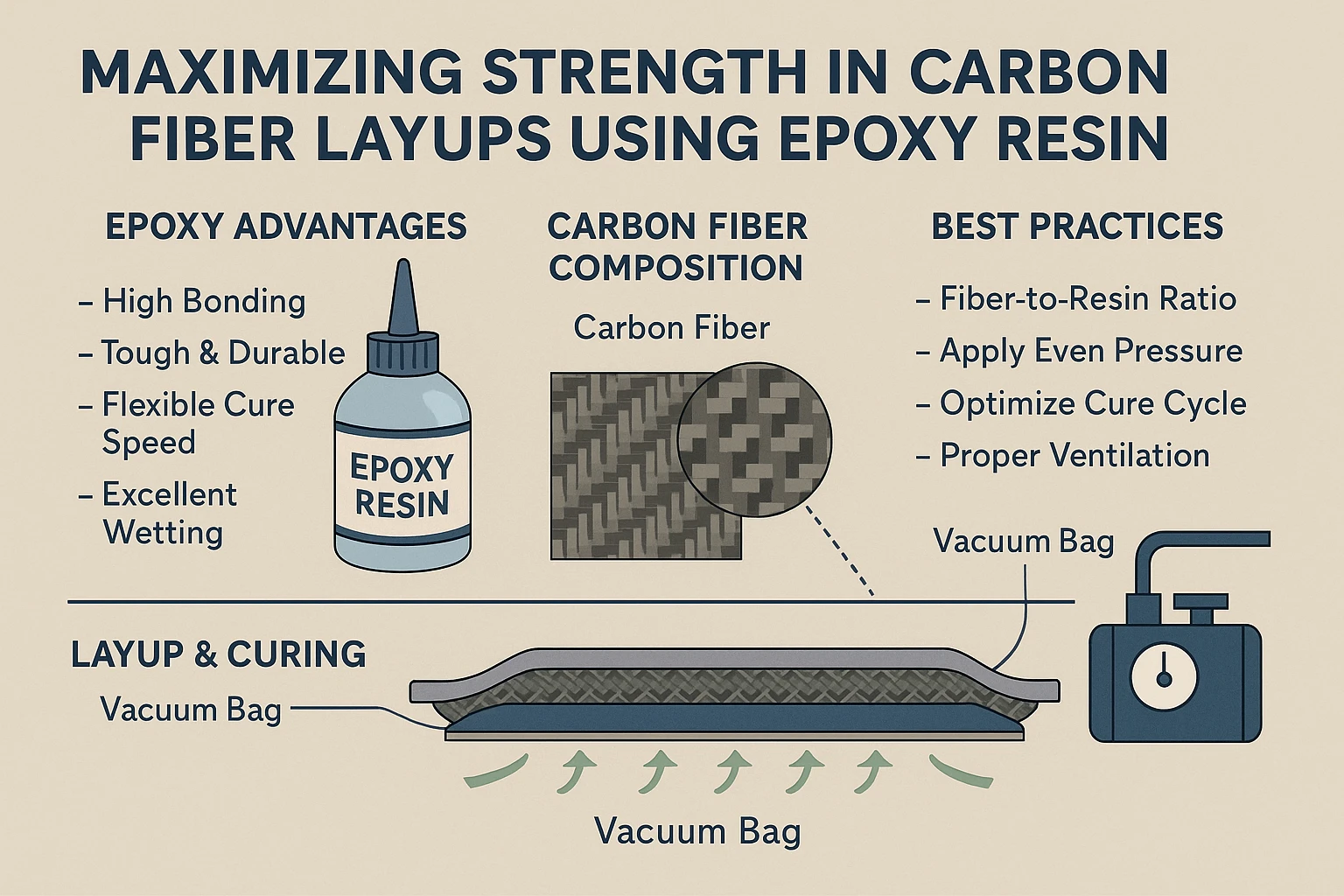
Carbon fiber composites are renowned for their exceptional strength-to-weight ratio, making them indispensable in performance-critical products like surfboards, skateboards, and high-end fishing rods. However, the full potential of carbon fiber can only be realized with the right matrix—most notably, epoxy resin.
In this guide, we’ll explore the essential techniques and epoxy system considerations that can significantly improve the mechanical performance, durability, and processing quality of carbon fiber layups.
Why Epoxy Resin is Critical for Carbon Fiber Layups
Epoxy resins are the gold standard for bonding with carbon fiber due to their:
- High adhesion strength to carbon and other reinforcements
- Low shrinkage, reducing internal stresses
- Excellent fiber wet-out, maximizing fiber volume ratio
- Superior fatigue resistance, critical for sports and cyclic-load products
1. Surface Preparation Is Non-Negotiable
Before laying up carbon fiber with epoxy, ensure the prep surface is:
- Clean and dust-free – use isopropyl alcohol, not acetone
- Lightly abraded – especially for inserts or mold surfaces
- Temperature stable – both materials should be near 20–25°C (68–77°F) before starting
Poor surface preparation = poor adhesion = wasted strength.
2. Choose the Right Epoxy System for Composite Performance
Not all epoxy resins are created equal. Consider:
| Property | Why It Matters |
|---|---|
| Viscosity | Low viscosity aids full fiber wetting |
| Pot life | Longer pot life allows for complex layups |
| Cure profile | Room-temp vs. elevated temp affects strength |
| Tg (Glass Transition Temp) | Higher Tg = better high-temp performance |
Example: For a carbon fiber surfboard stringer:
- Choose a medium-viscosity resin (1500–3000 cps)
- 8–12 hour pot life ideal for larger parts
- Tg of 80–120°C is typical for sports-grade performance
Explore epoxy curing chemistry from Polymer Database
3. Layup Orientation and Fiber Architecture for Strength Optimization
Strength depends not just on material, but how you lay it down:
- Use unidirectional fiber for directional stiffness
- Use woven cloth (twill/plain) for multidirectional strength
- Alternate fiber orientations: [0/90°], [±45°] layers
- Add a peel ply layer for clean bonding surface in multi-stage builds
Correct orientation dramatically improves tensile, shear, and torsional strength.
4. Apply Vacuum Bagging or Compression Techniques
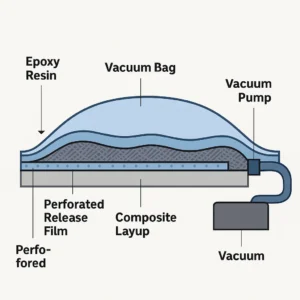
Applying pressure during cure phase enhances:
- Resin compaction and fiber saturation
- Void removal (fewer microbubbles = stronger bond)
- Part flatness and repeatability
Even a simple hand-made vacuum bag setup can improve final part performance by 20–30%.
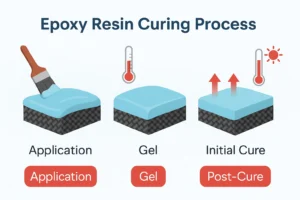
5. Control the Curing Process to Maximize Strength
Follow resin manufacturer specs for time and temperature:
- Room-temp cure: typically 24–48h for full hardness
- Post-cure: 60–120°C for 2–4 hours can boost Tg by 15–25°C
- Avoid curing below 15°C—epoxy may not crosslink completely
Consistent curing = consistent strength. Use a programmable oven if possible.
6. Post-Processing and Long-Term Durability
After curing:
- Sand edges with fine grit to prevent delamination
- Seal with UV-stable topcoat if used in sun-exposed conditions
- Perform tensile/flex tests for quality control
Don’t skip finishing—it protects your structure long-term.
Conclusion: Epoxy Resin as the Backbone of Strong Carbon Composites
To get the best structural results from carbon fiber, you must pair it with a well-formulated and well-processed epoxy system. From surface prep to fiber layup, vacuum pressure to post-cure, every step influences the final mechanical integrity.
By following the techniques outlined here, you can confidently manufacture composite parts that are strong, lightweight, and built to last—even under punishing real-world conditions.
Need help choosing the right epoxy resin for your carbon layup?
📩 Contact our materials engineering team for formulation suggestions and data sheets.