
Epoxy Potting Compound for PCB Thermal Flame Retardant Guide
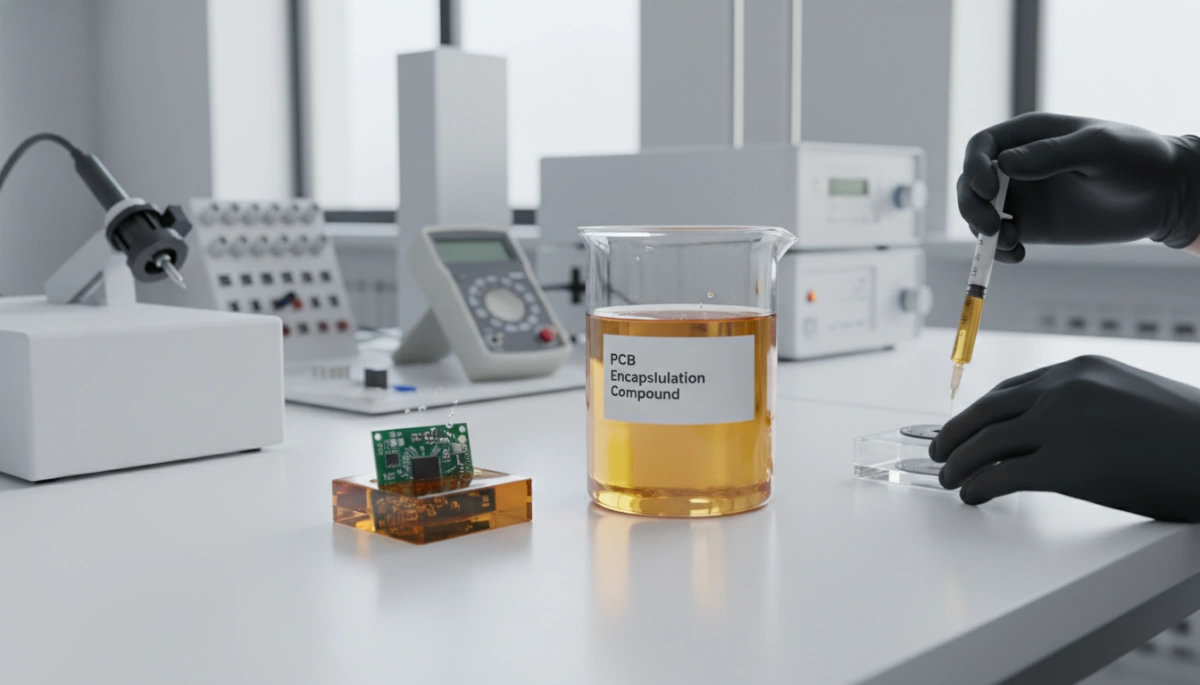
The Silent Killers of Electronics: Why PCBs Fail
In the demanding landscape of modern manufacturing, the reliability of a printed circuit board (PCB) determines the success of the entire product. Despite advanced designs, electronic components remain highly vulnerable to environmental stressors that lead to premature field failures and costly recalls.
The primary drivers of electronic degradation include:
- Moisture and Humidity: Water vapor is the most common cause of failure. It triggers electrochemical migration, leading to short circuits and parasitic leakage paths that compromise signal integrity.
- Thermal Fluctuations: Rapid heating and cooling cycles create mechanical stress. Without a robust electronic encapsulation resin, components can crack, and solder joints may fatigue due to mismatched coefficients of thermal expansion (CTE).
- Chemical Corrosion: Exposure to salt spray, industrial solvents, and atmospheric pollutants causes rapid oxidation of copper traces and delicate bond wires.
- Mechanical Shock: Vibration and physical impact in automotive or industrial settings can physically dislodge components from the board.
To combat these threats, engineers rely on high-performance epoxy potting compound for PCB applications. This protective barrier creates an impenetrable shield, isolating sensitive circuitry from the harsh realities of its operating environment and ensuring a long, maintenance-free service life.
The Importance of PCB Potting: Why Industry Giants Rely on It
In high-stakes electronics manufacturing, failure is a costly mistake. Major industry players don’t leave their hardware to chance; they use epoxy potting compound for PCB to guarantee long-term reliability. This process involves filling an entire electronic assembly with a liquid resin that hardens into a solid, protective mass, creating an impenetrable shield for your circuitry.
- Vibration and Shock Resistance: It stabilizes heavy components, preventing solder joint fatigue and physical damage in automotive or industrial settings.
- Superior Insulation: A high-quality PCB epoxy encapsulation resin prevents electrical arcing and short circuits, even in high-voltage applications.
- Total Environmental Barrier: It provides rugged waterproof circuit board protection, keeping out moisture, dust, chemicals, and corrosive gases.
- Enhanced Thermal Management: Using a specialized thermal conductive potting compound ensures that heat generated by power components is efficiently moved away from sensitive areas.
We focus on providing high-performance electronic encapsulant solutions that meet the rigorous standards of modern manufacturing. When you integrate our PCB epoxy encapsulation resin into your production line, you are effectively eliminating the most common points of failure and protecting your brand’s reputation.
Epoxy vs. Other Potting Materials: Performance Comparison
When you’re looking for the best way to protect your electronics, you’ll usually end up choosing between epoxy, silicone, or polyurethane. While each has its strengths, our epoxy potting compound for PCB is the industry standard for those who need maximum durability and chemical resistance.
We’ve found that for most industrial and consumer applications, the rigid nature of a PCB epoxy encapsulation resin provides the best structural support and moisture barrier. Here is a quick breakdown of how these materials compare:
| Feature | Epoxy Potting Compound | Silicone | Polyurethane |
|---|---|---|---|
| Adhesion | Excellent (Best-in-class) | Poor to Fair | Good |
| Hardness | High (Rigid protection) | Low (Soft/Flexible) | Medium |
| Chemical Resistance | Superior | Good | Fair |
| Moisture Protection | Excellent | Good | Fair |
| Thermal Conductivity | High (With fillers) | High | Moderate |
| Cost-Effectiveness | Very High | Low (Expensive) | Moderate |
Why Choose Epoxy?
- Structural Integrity: Once cured, a circuit board potting epoxy creates a rock-hard shell that protects components from vibration and physical impact.
- Superior Seal: It offers the best waterproof circuit board protection, preventing leaks and corrosion better than thinner coatings.
- Thermal Management: Our thermal conductive potting compound options help pull heat away from sensitive components, extending the life of your device.
- Chemical Shield: If your PCB is exposed to fuels, oils, or harsh cleaning agents, epoxy is the only material that won’t degrade.
For most US-based manufacturing needs—from automotive sensors to heavy-duty power supplies—the reliability of a high-quality electronic encapsulation resin is simply unbeatable.
RW Atelier’s PCB Potting Solutions: Performance, Certifications, and Results
We’ve engineered our epoxy potting compound for PCB applications to meet the rigorous demands of the American manufacturing sector. At RW Atelier, we don’t just provide a chemical; we provide a shield. Our PCB epoxy encapsulation resin is formulated for high-flow penetration, ensuring that even the most densely packed boards are fully protected without air pockets or coverage gaps.
Why Manufacturers Choose Our Formulations
Our high-performance electronic encapsulant lineup is built on three pillars: durability, thermal management, and ease of integration into automated dispensing lines.
- Exceptional Thermal Management: Our thermal conductive potting compound effectively dissipates heat, preventing hotspots in high-power applications.
- Rugged Environmental Shielding: Provides total waterproof circuit board protection against salt spray, humidity, and chemical exposure.
- Mechanical Strength: High impact resistance to protect sensitive components from heavy vibration and mechanical shock.
Industry-Leading Certifications
We ensure our products meet the strict safety and environmental standards required for global distribution and US domestic use:
- UL 94-V0: Certified flame retardant epoxy for electronics.
- RoHS & REACH Compliant: Safe for the environment and compliant with international trade regulations.
- NASA Outgassing Standards: Available for aerospace and high-vacuum applications.
Proven Success Stories
We’ve helped companies across various sectors solve their most difficult protection challenges:
- Automotive Tech: We supplied a custom circuit board potting epoxy for EV charging stations that needed to withstand extreme temperature swings and outdoor exposure.
- Industrial Sensors: Our low-viscosity moisture-proof PCB coating enabled a leading sensor manufacturer to reduce failure rates by 40% in high-humidity factory environments.
- Renewable Energy: Provided high-dielectric strength resins for solar inverters, ensuring long-term stability under constant UV and heat stress.
5 Key Factors for Selecting the Right Epoxy Potting Compound
Choosing the right epoxy potting compound for PCB applications is a make-or-break decision for your hardware’s lifespan. It’s not just about pouring liquid into a box; it’s about matching the material properties to your specific environment. Based on our experience helping manufacturers across the US, these are the five critical factors you need to nail down.
Thermal Conductivity
Heat is the primary killer of high-density electronics. A high-performance thermal conductive potting compound acts as a heat sink, drawing energy away from hot components like power transistors and processors. If your board operates in enclosed spaces or handles high currents, choosing a resin with high thermal dissipation is non-negotiable to prevent thermal throttling or component failure.
Flame Retardant Ratings
Safety standards in the United States are strict, and for good reason. We recommend using a flame retardant epoxy for electronics that meets UL 94 V-0 standards. This ensures that in the event of a short circuit or external fire, the encapsulation material will self-extinguish, protecting the rest of your equipment and maintaining compliance with industry regulations.
Curing Time and Process
Your production throughput depends on how fast your PCB epoxy encapsulation resin sets. You need a balance:
- Pot Life: Enough time to degas and pour without rushing.
- Cure Speed: Fast enough to move products to the next stage of assembly.
We offer formulations that can be heat-cured to snap-set in minutes or room-temperature cured to save on energy costs, depending on your specific line setup.
Total Cost-Effectiveness
Don’t just look at the price per gallon. True cost-effectiveness includes the “hidden” factors:
- Low Rejection Rates: Resins that flow well and don’t create voids.
- Durability: Reducing expensive RMAs and field repairs.
- Yield: Minimal waste during the dispensing process.
Investing in a quality electronic encapsulation resin upfront almost always pays for itself by lowering your long-term maintenance and replacement costs.
Supplier Reliability and Support
A great product is useless if it’s backordered or if you can’t get a technician on the phone when a batch looks off. We pride ourselves on consistent lead times and local technical support. Reliability means knowing the resin you buy today will have the exact same viscosity and chemical makeup as the batch you buy six months from now.
How to Implement PCB Epoxy Encapsulation: From Selection to Production
We’ve refined the process of integrating an epoxy potting compound for PCB into your assembly line to ensure maximum yield and zero downtime. It’s about moving from a lab sample to a full-scale, ruggedized solution without the typical headaches.
1. Material Validation and Testing
Before hitting the assembly line, we help you validate the PCB epoxy encapsulation resin against your specific environmental stressors. We test for:
- Thermal cycling to ensure no cracking.
- Adhesion strength on different substrate materials.
- Chemical resistance against common industrial solvents.
2. Surface Preparation
For a waterproof circuit board protection layer to work, the surface must be pristine.
- Clean: Remove all flux residues, oils, and dust.
- Dry: Ensure the PCB is completely moisture-free; even a tiny amount of trapped humidity can cause delamination during heat cycles.
3. Mixing and Degassing
Consistency is everything. If you are using a two-part thermal conductive potting compound, the mixing ratio must be exact.
- Automated Mixing: We recommend static mixers for high-volume runs to eliminate human error.
- Vacuum Degassing: To achieve a professional, bubble-free finish, pull a vacuum on the mixture to remove entrapped air that could cause electrical arcing.
4. Precision Dispensing
Whether you are doing a manual pour or using a robotic arm, the goal is a steady, controlled flow.
- Bottom-up filling: Start from the lowest point of the housing to push air out as the resin rises.
- Multi-stage pouring: For deep cavities, pour in layers to manage exothermic heat and ensure a perfect moisture-proof PCB coating.
5. Controlled Curing
Don’t rush the science. Follow the specific cure schedule—whether it’s a 24-hour room temperature set or a fast-track oven cure. Proper curing ensures the electronic encapsulation resin reaches its full Shore hardness and insulation resistance, providing the long-term reliability your customers expect.
Troubleshooting Your PCB Epoxy Encapsulation Resin: FAQs
Dealing with application issues can stall your production line. We’ve gathered the most common hurdles manufacturers face when using epoxy potting compound for PCB and how to fix them fast.
- Why are there air bubbles in my finished potting?
Bubbles usually happen during mixing or because of “outgassing” from the board. To get a clear, professional finish with your PCB epoxy encapsulation resin:- Vacuum Degassing: Pull a vacuum on the mixture before pouring to remove trapped air.
- Pre-heat the PCB: Warming the board slightly helps the resin flow better and pushes air to the surface.
- Slow Pour: Pour the resin in a thin stream into one corner and let it level itself out.
- Why is the resin still tacky or soft after the cure time?
If your circuit board potting epoxy isn’t hardening, it’s likely a chemistry issue:- Inaccurate Ratios: Epoxy is a precise science. Always use a scale to measure by weight rather than volume unless specified.
- Poor Mixing: If you don’t scrape the sides and bottom of the mixing container, “unreacted” resin stays soft.
- Temperature: Most resins won’t cure properly if your shop floor is below 65°F.
- How do I handle high viscosity in tight spaces?
If your electronic encapsulation resin is too thick to reach under components:- Choose a low-viscosity formula designed for high-density boards.
- Slightly warm the resin (Part A) before mixing to thin it out naturally without adding solvents.
- Can the potting process damage my components?
Shrinkage and “exotherm” (heat generated during curing) are the main risks. We recommend a flame retardant epoxy for electronics with low-shrinkage properties to ensure the resin doesn’t pull on delicate solder joints or crush sensitive SMD parts as it hardens. - What if the resin is leaking through the housing?
If your waterproof circuit board protection is seeping out of the casing before it sets, use a “thixotropic” or fast-gel epoxy for the base layer to create a seal, then fill the rest with your standard high-performance electronic encapsulant.
Get Your Free Sample and Expert Technical Support
Selecting the ideal epoxy potting compound for PCB is essential for long-term hardware reliability. We provide the tools and expertise necessary to ensure your components are fully protected.
- Free Sample Testing: Request a sample of our PCB epoxy encapsulation resin to conduct internal testing and validation.
- Technical Consultation: Access our engineering team for specialized advice on selecting a high-performance electronic encapsulant or a flame retardant epoxy for electronics.
- Proven Reliability: Our circuit board potting epoxy solutions are designed to meet the rigorous standards of the U.S. manufacturing market.
Secure a free sample and start a technical consultation to ensure your electronics are backed by the best waterproof circuit board protection available.