
Epoxy Resin for Carbon Fiber Composite Selection Guide
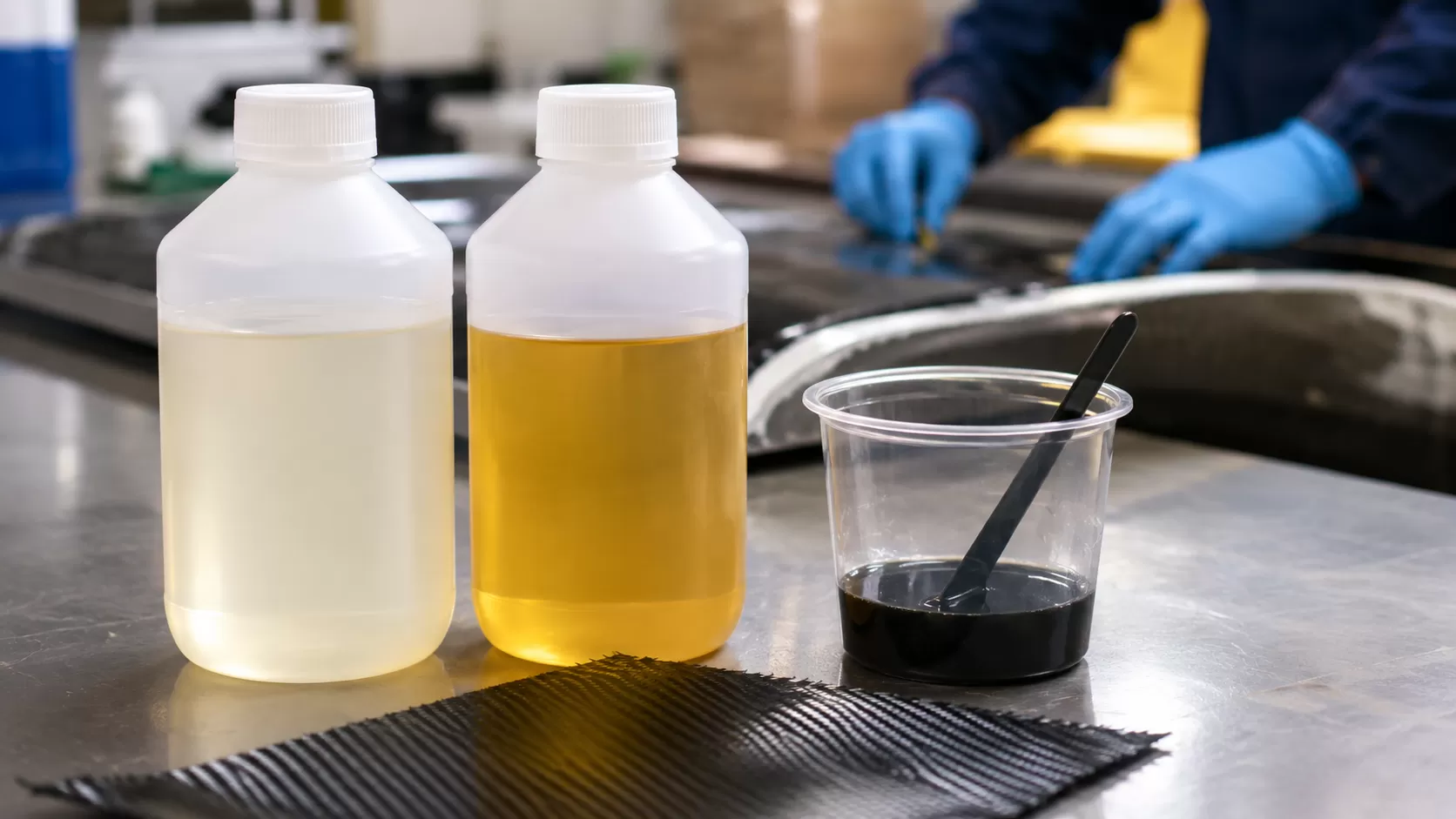
Key Factors in Composite Resin Selection
Choosing the right carbon fiber epoxy selection is the foundation of any successful composite project. To optimize performance and cost, manufacturers must evaluate four critical manufacturing and environmental vectors.
Manufacturing Process (Hand Layup vs. Vacuum Infusion vs. RTM vs. Prepreg)
The fabrication method dictates the required composite resin properties, specifically viscosity and gel time.
- Hand Layup / Spray-Up: Requires a balanced viscosity that allows manual wet-out without excessive draining on vertical surfaces.
- Vacuum Infusion: Demands ultra-low viscosity and an extended open time to ensure the resin flows seamlessly across large carbon fiber architectures before gelling.
- Resin Transfer Molding (RTM): Requires low-viscosity resins engineered for rapid injection and fast cure cycles to meet high-volume production demands.
- Prepreg: Relies on high-viscosity or semi-solid epoxy systems with latent curatives that remain stable at room temperature but react quickly under heat and pressure.
Application Field and Performance Requirements
Different industries demand distinct resin performance comparison metrics. Aerospace applications prioritize high strength-to-weight ratios and strict flame-retardant capabilities. Conversely, automotive and sporting goods focus on high impact resistance, vibration damping, and class-A surface finishes. Defining the primary mechanical load—whether tensile, flexural, or shear—is essential to selecting the correct polymer matrix.
Production Scale and Cost Budget
Balancing resin cost performance involves analyzing both raw material expenses and cycle times. High-volume automated production (like RTM) justifies higher initial tooling and specialized resin costs by drastically reducing cycle times. For low-volume prototyping or large marine structures, open-molding or vacuum-infusion processes using cost-effective, room-temperature curing epoxies offer a more sustainable budget framework.
Environmental Conditions and Lifespan
The operating environment directly impacts long-term durability. Engineers must evaluate maximum thermal exposure, UV radiation, moisture absorption, and chemical contact. Selecting a resin with matching environmental resistance prevents premature micro-cracking, delamination, and mechanical degradation over the product’s intended operational lifespan.
Section 2: Key Composite Resin Properties and Performance Metrics
When choosing an epoxy resin for carbon fiber, understanding raw material specifications is the only way to guarantee part quality. Evaluating these essential composite resin properties ensures your materials handle both the processing stage and real-world stress.
Viscosity and Fluidity
Resin viscosity dictates how well the liquid flows through your carbon fiber fabric. Low-viscosity systems are mandatory for vacuum infusion and RTM to prevent dry spots, while higher-viscosity formulas prevent drain-out in manual hand lay-ups.
Cure Time and Temperature
Finding the right balance between pot life and demolding time keeps production moving. We design our epoxy resin systems with tailored reactivity—giving you enough open time for complex lay-ups while optimizing cycle times at target temperatures.
Resin Mechanical Properties
The structural integrity of any composite relies heavily on the matrix. We evaluate three core resin mechanical properties:
- Tensile Strength: How much pull force the cured resin handles before breaking.
- Flexural Modulus: The stiffness of the resin, preventing buckling under loads.
- Elongation at Break: The flexibility needed to absorb impacts without cracking.
Thermal Epoxy Resin Performance
For high-heat environments, monitoring the glass transition temperature ($T_g$) and the Coefficient of Thermal Expansion (CTE) is critical. Selecting a dedicated thermal epoxy resin ensures your components maintain their dimensions and structural strength when temperatures spike.
Chemical Resistant Epoxy Metrics
Carbon fiber parts often face harsh working environments. A robust chemical resistant epoxy shields your laminates against damage from:
- Industrial solvents and fuels
- Hydraulic oils and lubricants
- Moisture absorption and saltwater degradation
Eco-Friendliness and VOCs
Modern composite manufacturing demands safer work environments. Utilizing low-VOC, low-toxicity formulations protects your team during lamination and simplifies workshop ventilation compliance.
Choosing the Right Carbon Fiber Epoxy Selection by Application
Finding the right composite resin selection means balancing performance with real-world manufacturing needs. Different industries demand different resin mechanical properties. Here is how we match our formulas to your specific application.
Aerospace: High Temperature & Long-Term Reliability
Aerospace components demand ultimate safety and thermal stability. For these applications, we focus on thermal epoxy resin formulas that maintain structural integrity under extreme stress.
- Key Needs: High glass transition temperature ($T_g$), low outgassing, and excellent fatigue resistance.
- Resin Performance: Maximum strength-to-weight ratio with superior resin mechanical properties to withstand high-altitude environments.
Automotive: Cost-Effectiveness & Fast Curing
The automotive sector thrives on high-volume production and quick cycle times without sacrificing safety.
- Key Needs: Rapid cure cycles, automated processing compatibility (like RTM), and impact resistance.
- Resin Performance: Class-A surface finish capability, excellent energy absorption for crash structures, and cost-effective processing.
Wind Energy: Large-Scale & Weather Resistance
Wind turbine blades require massive material scale and decades of reliable operation under harsh outdoor conditions.
- Key Needs: Low viscosity for deep vacuum infusion, long open time, and high moisture resistance.
- Resin Performance: Exceptional chemical resistant epoxy traits to fight weathering, UV degradation, and constant dynamic loads.
Sports Equipment: Lightweight & Premium Aesthetics
From bicycles to tennis rackets, sporting goods need to look perfect while delivering top-tier athletic performance.
- Key Needs: High flexural strength, vibration dampening, and crystal-clear cosmetics.
- Resin Performance: Superior toughness to prevent brittle failures, low weight, and excellent UV stability for clear-coated carbon fiber.
Medical Devices: Biocompatibility & Precision Dimensions
Medical applications require extreme dimensional stability and compliance with strict health regulations.
- Key Needs: X-ray translucency (radiolucency), zero shrinkage during cure, and sterilization tolerance.
- Resin Performance: Non-toxic, biocompatible formulations that maintain exact tolerances for imaging tables and prosthetics.
Resin Performance Comparison by Industry
| Application | Primary Focus | Target Resin Specification |
|---|---|---|
| Aerospace | Thermal & Strength | High $T_g$, Maximum Tensile Strength |
| Automotive | Speed & Cost | Fast Cure, High Impact Resistance |
| Wind Energy | Scale & Durability | Low Viscosity, High Infusion Reliable |
| Sports Equipment | Weight & Look | High Elongation, UV Stable, Clear |
| Medical Devices | Safety & Precision | Biocompatible, Zero-Shrinkage |
Part 4: RW Atelier’s Carbon Fiber Epoxy Selection
Finding the right composite resin selection for your project shouldn’t be a guessing game. At RW Atelier, we engineered our product line to match specific manufacturing workflows and demanding performance targets. Whether you are laminating structural parts or looking for specialized composite resin properties, we have a formula ready to ship.
Standard Epoxy Resin
Our go-to carbon fiber epoxy selection for everyday high-performance laminating. This system balances a forgiving working window with excellent wet-out capabilities, ensuring zero voids in standard hand layups or vacuum bagging.
- Best For: General automotive parts, marine components, and sporting goods.
- Key Benefit: High clarity, excellent adhesion, and balanced resin mechanical properties.
Fast Curing Resin
When cycle time dictates your profitability, this fast-acting formula steps in. Designed to accelerate production schedules without causing extreme exotherm issues or shrinkage.
- Best For: High-volume manufacturing and rapid prototyping.
- Key Benefit: Demold in a fraction of the time while maintaining peak toughness.
High-Temperature Thermal Epoxy Resin
Engineered for extreme environments where standard epoxies soften. This thermal epoxy resin maintains its structural integrity and modulus under intense heat cycles.
- Best For: Under-hood automotive components, aerospace brackets, and industrial tooling.
- Key Performance: High glass transition temperature ($T_g$) after a standard post-cure cycle.
Low VOC Eco-Friendly Resin
A cleaner, safer composite resin selection that doesn’t compromise on mechanical strength. We reduced volatile organic compounds to improve workshop safety and meet strict global environmental regulations.
- Best For: Eco-conscious consumer brands and poorly ventilated workspaces.
- Key Benefit: Low odor, reduced skin irritation risks, and sustainable sourcing.
Specialty Resins (Conductive & Flame Retardant)
Custom-formulated systems built to meet strict industry compliance and specialized epoxy resin specifications.
| Resin Type | Core Function | Primary Market |
|---|---|---|
| Flame Retardant | Self-extinguishing, meets UL94 V-0 standards | Aerospace & Rail Transit |
| Conductive | ESD protection and EMI shielding | Electronics Enclosures |
| Chemical Resistant | Maximized barrier against fuel and harsh solvents | Chemical resistant epoxy for tanks & piping |
Balancing Cost and Performance in Composite Resin Selection
When choosing the right epoxy resin for carbon fiber layouts, balancing your budget against required composite resin properties is the ultimate goal. Here is how we break down the financial and performance trade-offs to help you maximize your investment.
Cost Analysis Table
The table below outlines our resin performance comparison, balancing upfront material costs against long-term manufacturing efficiency.
| Resin Grade | Price Point | Key Epoxy Resin Specifications | Ideal Application |
|---|---|---|---|
| Standard | $ | Good resin mechanical properties, room temp cure | Sporting goods, basic body panels |
| Premium | $$ | High Tg, low viscosity, optimized for infusion | Automotive parts, wind energy |
| Ultra/Specialty | $$$ | Extreme thermal epoxy resin, flame retardant | Aerospace, defense, high-heat environments |
Performance Tiers vs. Pricing
You shouldn’t pay for performance you don’t need. We categorize our product line into distinct tiers so you can map resin mechanical properties directly to your budget:
- Entry-Level Utility: Maximizes cost-efficiency for cosmetic or low-stress carbon fiber components.
- Mid-Tier Performance: The sweet spot for structural integrity, offering excellent chemical resistance and high strength without the exotic price tag.
- High-End Specialty: Engineered for extreme environments requiring advanced thermal epoxy resin capabilities or specialized chemical resistant epoxy certification.
Total Cost of Ownership (TCO)
Looking only at the price per kilogram is a trap. True cost efficiency is measured by Total Cost of Ownership (TCO). A slightly more expensive resin can actually lower your final production costs by focusing on three key areas:
- Faster Cure Cycles: Reduces mold turnaround times, boosting your daily factory output.
- Lower Viscosity: Speeds up fabric wetting, cutting down labor time and reducing scrap rates from dry spots.
- Lower Rejection Rates: Consistent chemical stability means fewer part failures and less wasted carbon fiber fabric.
Bulk Purchasing Discounts
We support scaling businesses with a tiered pricing structure that rewards high-volume manufacturing.
- Drum & Tote Pricing: Drastically lower your cost-per-kilogram by moving from small kits to standard 200kg drums or 1000kg IBC totes.
- Blanket Orders: Secure fixed annual pricing based on your projected yearly consumption while taking deliveries only when you need them.
- Optimized Logistics: Reduced shipping costs per unit when consolidating your orders into full pallet or container loads.
Evaluating Your Composite Resin Supplier
Choosing the right partner for your carbon fiber epoxy selection is just as critical as the resin performance comparison itself. At RW Atelier, we don’t just supply materials; we integrate into your supply chain to guarantee quality and consistency.
Here is how we measure up against the highest global industry standards.
Technical Capability & Innovation
- Advanced R&D: We continuously develop next-generation composite resin properties to meet evolving lightweight and high-strength demands.
- Custom Formulations: If standard epoxy resin specifications don’t fit your exact manufacturing process, our team modifies viscosity, gel times, and cure profiles for your specific setup.
- State-of-the-Art Testing: Every batch undergoes rigorous mechanical, thermal, and chemical resistance testing before leaving our facility.
International Quality Certifications
- ISO 9001:2015 Certified: Our manufacturing plants strictly adhere to international quality management systems to ensure batch-to-batch consistency.
- Traceability: We provide full documentation, including Certificates of Analysis (CoA) and Technical Data Sheets (TDS), ensuring your composite resin selection meets strict aerospace, automotive, or industrial compliance.
Lead Time & Supply Chain Stability
- Global Logistics Network: We maintain strategic inventory levels across key regional hubs to buffer against global shipping disruptions.
- On-Time Delivery: Our optimized production scheduling ensures reliable lead times, helping you avoid costly downtime in your manufacturing facility.
- Safety Stock Program: For long-term contract partners, we hold dedicated safety stock to accommodate sudden spikes in your production demand.
On-Demand Technical Support
- Expert Consultation: Our engineers assist you directly with process troubleshooting, whether you are dealing with infusion issues, exotherm control, or demolding challenges.
- On-Site Assistance: For major production scaling, we offer hands-on technical support to optimize your processing parameters and reduce scrap rates.
Long-Term Partnership Value
- Scalable Production: We seamlessly transition with you from prototyping quantities to high-volume commercial supply.
- Predictive Pricing Models: We work with our partners on structured pricing contracts to shield your operations from raw material market volatility, ensuring optimal resin cost performance over time.
Our Streamlined Procurement Process for Composite Resin Selection
When choosing the right epoxy resin for carbon fiber, a structured buying process minimizes risk and guarantees consistent quality. We walk with you through every stage to ensure the composite resin selection matches your exact production needs.
Step 1: Sample Testing
Before committing, you need to verify resin performance comparison data in your own lab. We provide initial samples so you can test critical resin mechanical properties and cure profiles under your specific shop conditions.
Step 2: Pilot Runs
Once the sample passes, we move to small-batch pilot runs. This stage validates how the carbon fiber epoxy selection performs on your actual tooling and handles your specific vacuum or layout cycle times.
Step 3: Bulk Purchasing
Transitioning to full-scale production requires reliable volume. We scale up your supply with consistent batch-to-batch epoxy resin specifications, optimizing your resin cost performance as order volumes increase.
Step 4: Contract Terms
We lock down the details with clear, transparent agreements. Our contracts secure your pricing, guarantee lead times, and define strict quality control benchmarks to keep your supply chain moving without interruptions.
Common Mistakes in Carbon Fiber Epoxy Selection
Choosing the right composite resin properties can make or break your project. When sourcing epoxy resin for carbon fiber, avoiding these critical missteps will save you time, money, and failed parts.
Chasing the Lowest Price
Going for the cheapest option usually backfires. Low-cost resins often compromise on resin mechanical properties, leading to brittle parts, delamination, or premature failure. Look for the best resin cost performance rather than just the lowest price tag to ensure your carbon fiber structures hold up under load.
Ignoring Process Compatibility
A resin can have incredible specs, but if it doesn’t match your manufacturing method, it’s useless.
- Vacuum Infusion: Requires ultra-low viscosity for deep fabric penetration.
- Hand Layup: Needs a higher viscosity to stay in place without draining out.
Always match the epoxy resin specifications to your specific layout process to avoid dry spots or trapped air.
Overlooking Long-Term Performance
Don’t just test how the part looks right after curing. You need to consider how environmental factors will affect it over time.
- Thermal Epoxy Resin: Essential if your parts face high-heat environments to prevent softening.
- Chemical Resistant Epoxy: Critical for automotive or marine parts exposed to fuel, oil, and moisture.
Failing to account for these environmental stressors leads to rapid degradation in the field.
Partnering with Unreliable Suppliers
A great resin is only as good as the supply chain behind it. Working with inconsistent suppliers leads to batch-to-batch variance, delayed production timelines, and unannounced formula changes. We maintain strict quality control across our entire composite resin selection to guarantee that the material you test is exactly the material you get in bulk.
Ready to Elevate Your Composite Performance?
Choosing the right epoxy resin for carbon fiber can make or break your project’s success. We make the selection process simple, risk-free, and highly cost-effective for your business.
Request Your Free Sample Kit Today
Stop guessing which composite resin selection works best for your production line. Contact us to get a free sample comparison kit tailored to your specific application and testing standards.
- Side-by-Side Testing: Compare our resin performance directly against your current setup.
- Tailored Formulations: Receive samples matched to your specific manufacturing process.
- Zero Obligation: Test the mechanical and thermal properties before making any commitment.
Talk Directly to a Composite Expert
Skip the generic sales pitch and get real technical answers. Our engineering team is ready to help you optimize your manufacturing cycle times and resolve complex application challenges.
- Process Optimization: Get expert advice on viscosity, infusion speed, and cure cycles.
- Custom Formulations: Discuss modifying resin mechanical properties to meet unique stress or environmental demands.
- Direct Engineering Support: Work one-on-one with specialists who understand global manufacturing standards.
Get a Custom Cost Analysis Report
High-performance materials shouldn’t destroy your margins. Let us analyze your current production volume and deliver a transparent resin cost performance breakdown that proves how much you can save.
- Total Cost of Ownership (TCO): View hidden savings from faster cycle times and lower scrap rates.
- Tiered Volume Pricing: Access scalable discount structures designed for growing production lines.
- Efficiency Mapping: Identify exact areas where switching resins reduces waste and labor costs.