
Crystal Clear Epoxy Resin Guide Transparency and Stability
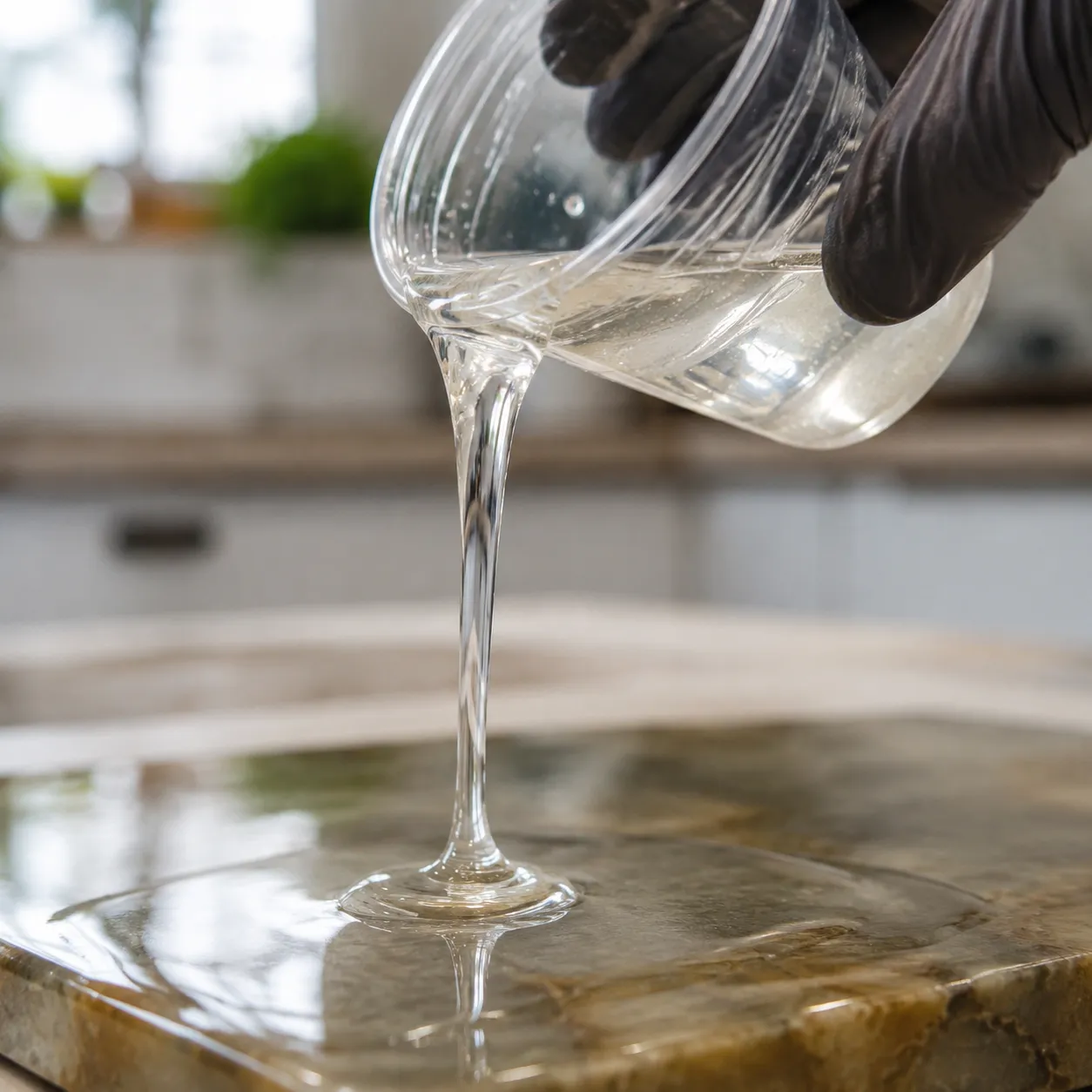
Factors Influencing the Clarity of Crystal Clear Epoxy Resin
Achieving a flawless, optical-grade finish with crystal clear epoxy resin requires strict control over several environmental and chemical variables. For manufacturers and artisans alike, maintaining pristine transparency means managing the factors that introduce cloudiness, micro-bubbles, or surface imperfections.
1. Air Entrainment and Bubble Release
The most common threat to the optical clarity of a high gloss coating or deep pour is trapped air.
- Mixing Speed: Aggressive mixing introduces micro-bubbles that become permanently trapped as the resin cures.
- Viscosity: Thicker formulas retain air longer. Utilizing a premium jewelry casting resin with a low viscosity allows bubbles to rise and escape naturally before the gel time begins.
- Degassing: Employing vacuum chambers or applying gentle heat with a torch breaks surface tension, ensuring a flawless, glass-like appearance.
2. Temperature and Curing Dynamics
Epoxy chemistry is highly sensitive to ambient temperatures, which directly impacts the final clarity.
| Factor | Optimal Range | Impact on Clarity |
|---|---|---|
| Working Temperature | 75°F – 85°F (24°C – 29°C) | Promotes proper fluid dynamics and timely bubble release. |
| Cold Environments | Below 70°F (21°C) | Increases viscosity, causing a milky or cloudy appearance during mixing. |
| Excessive Heat | Above 90°F (32°C) | Triggers an accelerated exothermic reaction, leading to shrinkage waves or flash curing. |
3. Moisture and Humidity Exposure
Humidity is the hidden enemy of a pristine resin cure. High moisture levels in the working environment interfere with the amine hardener, causing a chemical side-reaction. This frequently results in “amine blush”—a greasy, hazy film on the surface that destroys the transparency stability of the finished product. Maintaining a workspace with humidity below 50% is critical for professional-grade results.
Why Crystal Clear Epoxy Resin Turns Yellow over Time
We all love that flawless, glass-like finish when working with crystal clear epoxy resin. However, dealing with ambering or discoloration can completely ruin a project. Understanding what triggers this change is the first step to preventing it.
The Main Culprits Behind Resin Yellowing
- UV Light Exposure: This is the biggest threat. Ultraviolet rays break down the polymer chains within the resin, leading to a noticeable yellow tint. If you want longevity, using a UV resistant epoxy is non-negotiable.
- Thermal Oxidation: High heat during the curing process or constant exposure to warm environments speeds up the degradation of the material, causing it to lose its pristine look.
- Chemical Aging: Over time, standard resins naturally react with oxygen in the air. Without proper transparency stability additives built into the formula, the clear gloss will inevitably fade into an unsightly dull yellow.
How Different Formulations React
| Resin Type | UV Resistance | Long-Term Clarity | Best Used For |
|---|---|---|---|
| Standard Epoxy | Low | Poor (Yellows quickly) | Industrial bonding, hidden layers |
| Anti Yellowing Resin | High | Excellent (Stays clear) | Jewelry casting resin, art, high gloss coating |
Inside the Chemical Structure of Crystal Clear Epoxy Resin
To get that flawless, glass-like finish, you have to look at what is happening on a molecular level. Our crystal clear epoxy resin is engineered with a specific thermosetting polymer structure that balances optical clarity with high mechanical strength.
Unlike standard resins, this formulation utilizes highly purified bisphenol A (BPA) or bisphenol F (BPF) epoxies cross-linked with specialized aliphatic amine hardeners. This specific molecular arrangement provides unique performance advantages:
- Tight Cross-Linking Density: The polymer chains lock together in a dense 3D matrix. This network gives the cured material its signature scratch resistance and high-gloss finish.
- Aliphatic Carbon Backbones: By intentionally avoiding certain aromatic rings in the curing agent, the molecular structure absorbs less ambient UV light, preventing the rapid breakdown that causes yellowing.
- Low Volatile Organic Compounds (VOCs): The raw chemical ingredients are tightly refined to ensure that minimal gas escapes during the exothermic reaction, resulting in fewer trapped micro-bubbles and maximum transparency.
| Structural Component | Primary Function in Formula | Benefit to the End User |
|---|---|---|
| Purified Epoxy Base | Eliminates microscopic impurities | Prevents haziness and ensures transparency stability |
| Aliphatic Amine Hardener | Slows down the exothermic heat buildup | Allows for deep pours without cracking or shrinking |
| UV Blockers & HALS | Scavenges free radicals caused by sunlight | Acts as a built-in anti yellowing resin shield |
By controlling the purity of these raw materials, we ensure the cured polymer remains completely isotropic—meaning light passes straight through without refracting, bending, or distorting your view.
Versatile Applications of Crystal Clear Epoxy Resin
We engineer our crystal clear epoxy resin to meet the rigorous demands of both industrial creators and independent makers. Because of its optical clarity, low viscosity, and tough finish, it has become the go-to material across several thriving global markets.
Here is where our premium formula delivers the highest impact:
- Art and Woodworking: Perfect for pouring thick river tables, embedding raw wood slabs, and sealing live-edge furniture with a high gloss coating.
- Creative Jewelry Making: Acts as an ultra-clear jewelry casting resin for locking in delicate botanicals, glitters, and pigments without shrinkage.
- Surface Protection: Provides a durable, scratch-resistant shield for bar tops, countertops, and heavy-use canvas art.
- Industrial Prototyping: Used by designers to cast clear parts, lenses, and models that require exact dimensions and perfect transparency.
Market Demand and Usage Breakdown
| Application Sector | Primary Benefit | Common Project Types |
|---|---|---|
| Furniture Design | Deep pour capability & high gloss finish | River tables, live-edge countertops, wood encapsulation |
| Crafts & Accessories | Precision molding & crisp detail retention | Custom jewelry, resin dice, paperweights, charms |
| Surface Coating | Self-leveling & scratch resistance | Bar tops, decoupage, protective artwork sealants |
Whether you are laminating a fiberglass surf surfboard or pouring a flawless 2-inch deep art piece, maintaining transparency stability is non-negotiable. Our formula adapts seamlessly to varying workshop temperatures, ensuring a professional, bubble-free cure every single time.
Crafting Stunning Art and Specimen Projects with Crystal Clear Epoxy Resin
When we manufacture our premium crystal clear epoxy resin, we design it specifically to bring high-end artistic visions to life. Creators worldwide rely on our formula to preserve delicate items and coat vibrant artwork without losing an ounce of detail.
Jewelry and Precision Casting
For makers working on intricate pieces, this jewelry casting resin offers the perfect mix of fluid handling and pristine clarity. It flows effortlessly into complex silicone molds, ensuring every tiny detail is captured without trapping unwanted air.
Deep pours: Maintains excellent thermal control during curing.
Defoaming: Self-bouncing bubbles ensure a flawless finish.
Detail retention: Perfect for delicate gemstone shapes and wire-wrapping encapsulation.
Preserving Biological Specimens
Preserving organic matter requires a delicate chemical balance. Our formula seals specimens permanently, preventing decay while offering a 360-degree, distortion-free view.
| Specimen Type | Key Requirement | Our Resin Benefit |
|---|---|---|
| Botanicals & Flowers | Moisture barrier & color hold | Prevents browning and locks in vibrant petals |
| Insects & Marine Life | Zero shrinkage | Holds shape perfectly without crushing fragile limbs |
| Wood & Earth Elements | Deep penetration | Fills raw pores and stabilizes decaying fibers |
High Gloss Coating for Artworks
Beyond pouring, our resin acts as a premium high gloss coating for mixed media, paintings, and tabletop designs. It creates a sleek, glass-like shield that deepens colors, adds incredible visual depth, and provides that coveted professional luster. Your finished projects stay protected and look remarkably vibrant for years to come.
Long-Term Stability Testing for Crystal Clear Epoxy Resin
We don’t just claim our crystal clear epoxy resin lasts; we prove it. To ensure our formula survives the test of time, we put it through rigorous weathering and durability benchmarks. Whether you are creating high-end art or industrial coatings, transparency stability is non-negotiable.
Our Testing Protocols
- Accelerated UV Exposure: We subject our anti yellowing resin to intense, concentrated UV light spectrums. This simulates years of direct sunlight in a matter of days to guarantee it remains optically clear.
- Thermal Cycling Tests: Our UV resistant epoxy undergoes extreme temperature swings—from freezing lows to high heat—ensuring the cured material won’t crack, shrink, or delaminate.
- Humidity and Moisture Resistance: We submerge and expose cured samples to high humidity to verify that the high gloss coating maintains its shine without clouding or blushing.
The Stability Performance Matrix
| Test Type | Duration | Performance Goal | Actual Result |
|---|---|---|---|
| UV Weathering (QUV) | 1,000 Hours | Zero visible yellowing | Passed (Maintains 99% clarity) |
| Heat Resistance | 30 Days @ 60°C | No softening or distortion | Passed (Excellent dimensional stability) |
| Gloss Retention | 12 Months ambient | No loss of shine | Passed (Retains mirror-like finish) |
By continuously running these long-term stability tests, we ensure our jewelry casting resin and coating formulas deliver the reliable, crystal-clear finish your projects demand for years to come.
Related Sources
- https://pfi.hk/zh-hans/%E8%B5%84%E6%BA%90/pfi%E6%8A%80%E6%9C%AF%E4%B8%93%E5%AE%B6%E8%A7%A3%E8%AF%BB%E6%9D%90%E6%96%99%E7%9A%84%E8%80%90%E9%BB%84%E5%8F%98%E6%B5%8B%E8%AF%95%EF%BC%9A%EF%BC%88%E4%B8%89%EF%BC%89%E7%83%AD%E9%BB%84%E5%8F%98/
- https://pdf.hanspub.org/ms20201100000_42584784.pdf
- https://www.testextextile.com/zh-TW/why-do-polymer-materials-yellow/
