
Electronic potting epoxy resin 315AB46 for PCB and LED
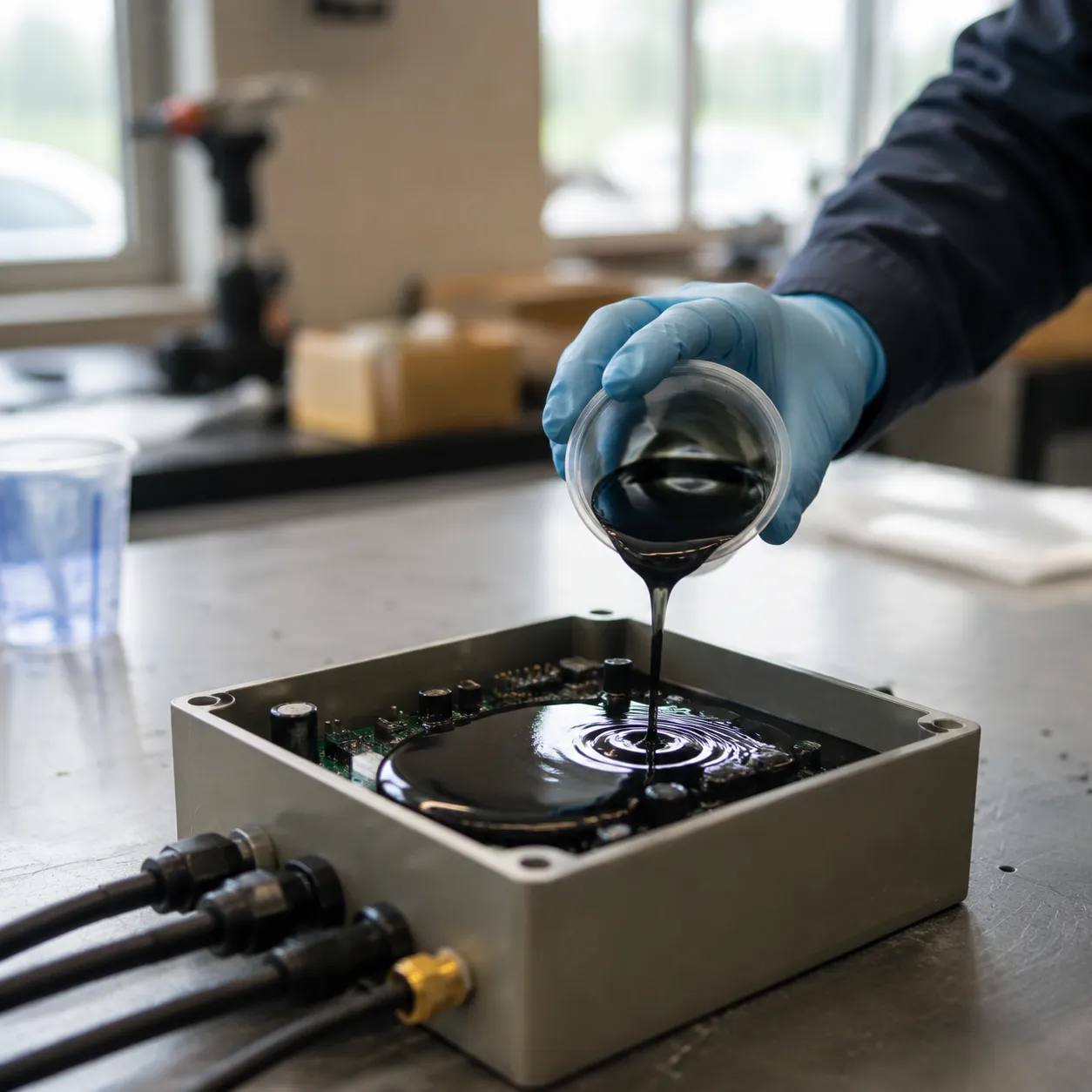
Are your circuit boards failing under harsh conditions, leaving you scrambling for a reliable fix? Finding the ultimate protection for your components can make or break your product’s lifespan and your brand’s reputation.
As a hardware engineer, I know that choosing the wrong compound means risking moisture damage, short circuits, and costly product recalls. You need a solution that goes beyond basic insulation and actually shields your tech from the elements.
In this guide, you’ll discover why electronic potting epoxy resin is the ultimate shield for PCB/LED applications, specifically focusing on the unbeatable moisture-proof and insulation capabilities of 315AB-46. We’ll break down its elite electrical properties, pin it against silicone in a head-to-head epoxy vs. silicone comparison, and give you the exact application methods to master the pour perfectly.
Let’s dive right in.
The Evolution of Electronic Potting in Modern Electronics
Modern electronic components are smaller, more powerful, and increasingly deployed in harsh environments. From automotive sensor modules to outdoor industrial controls, sensitive circuitry faces constant exposure to vibrational stress, thermal shock, and environmental contaminants. Without robust protection, these advanced assemblies are prone to premature failure, leading to costly downtime and maintenance.
To safeguard these vital systems, the electronics industry relies heavily on electronic potting epoxy resin. This specialized encapsulation process involves flooding a component’s housing with a liquid resin, which then cures to form a solid, protective barrier.
Why Advanced Encapsulation Matters
- Mechanical Integrity: Deeply blankets delicate microelectronics to absorb physical impacts and dampen heavy vibrations.
- Environmental Shielding: Completely seals off assemblies from dust, dirt, and corrosive industrial atmospheres.
- Thermal Management: Assists in dissipating localized heat away from critical junctions, ensuring stable long-term performance.
As global manufacturing demands higher reliability and longer product lifespans, choosing a high-performance electronic potting epoxy resin is no longer optional—it is a foundational requirement for next-generation hardware engineering.
The Critical Need for Moisture-Proof Insulation
Electronic components face harsh environments every day. Without proper protection, moisture, dust, and atmospheric contaminants will quickly corrode sensitive circuitry, leading to catastrophic system failures. This is why high-performance electronic potting epoxy resin is essential for modern electronics manufacturing.
Implementing a reliable moisture proof potting compound creates an impenetrable barrier that seals out humidity and prevents electrical shorts.
Key Performance Benefits
- Superior Dielectric Strength: Prevents electrical leakage and arcing in high-voltage environments.
- Total Environmental Sealing: Blocks moisture ingress, salt spray, and industrial pollutants.
- Thermal Stability: Maintains its protective properties across a wide temperature range without cracking.
| Environmental Threat | Impact on Unprotected Circuits | Protection Provided by Epoxy Resin |
|---|---|---|
| High Humidity | Corrosion, electrochemical migration | Complete moisture barrier |
| Dust & Particles | Short circuits, component overheating | Physical encapsulation |
| Voltage Spikes | Electrical arcing, component burnout | High dielectric insulation |
Using a dedicated insulation epoxy resin ensures long-term reliability and extends the operational lifespan of your devices, making it a non-negotiable step in quality electronics production.
Epoxy vs. Silicone: Choosing Your Electronic Potting Epoxy Resin
When you are sealing sensitive electronics, picking the right compound is everything. While silicone has its place for extreme heat, electronic potting epoxy resin is the go-to choice for heavy-duty structural protection.
Here is how they stack up when you need a reliable moisture proof potting compound for your components:
| Feature | Electronic Potting Epoxy Resin | Silicone Potting Compound |
|---|---|---|
| Mechanical Strength | High (Rigid, excellent structural support) | Low (Soft, flexible rubber) |
| Adhesion Power | Superior bonding to metals and plastics | Moderate (Often requires primers) |
| Moisture Resistance | Outstanding (Hermetic seal) | Good (Breathable over time) |
| Chemical Resistance | High resistance to fuels and solvents | Moderate resistance |
Why Epoxy Wins for Rigid Protection
If your assembly faces harsh environments, mechanical impacts, or chemical exposure, insulation epoxy resin delivers the defense you need.
- Unmatched Bond Strength: Epoxy creates a permanent, rock-solid seal around your components. Unlike silicone, it won’t peel away from the edges of a housing under stress.
- Total Environmental Block: It acts as a premium PCB encapsulation resin, blocking out water, humidity, salt spray, and aggressive industrial chemicals.
- Structural Integrity: For devices exposed to heavy vibrations, the rigid nature of epoxy locks every component firmly in place, preventing solder joint fatigue.
Electrical Performance of 315AB-46 Electronic Potting Epoxy Resin
When it comes to protecting sensitive electronics, the electrical properties of your shielding material are non-negotiable. Our 315AB-46 electronic potting epoxy resin is specifically engineered to deliver top-tier isolation and heavy-duty defense against electrical failure.
Key Electrical Properties of 315AB-46
- High Dielectric Strength: Prevents voltage breakdown and arcing, ensuring safe operation in high-voltage environments.
- Excellent Insulation Resistance: Functions as a premium insulation epoxy resin that maintains high resistivity even under continuous thermal stress.
- Low Dielectric Constant: Minimizes signal distortion and power loss, making it ideal for high-frequency PCB encapsulation resin applications.
Performance Data Breakdown
| Property | Benefit to Electronics |
|---|---|
| Dielectric Breakdown | High voltage suppression |
| Volume Resistivity | Prevents current leakage |
| Dissipation Factor | Lowers heat generation during high-frequency operation |
By choosing 315AB-46, you get a reliable moisture proof potting compound that doesn’t just seal your components physically, but guarantees long-term electrical stability under harsh operational loads.
PCB and LED Application Case Studies
When it comes to protecting sensitive electronics, our electronic potting epoxy resin is the go-to standard for demanding PCB and LED applications. Real-world deployment proves that choosing the right PCB encapsulation resin directly impacts the lifespan and reliability of your hardware.
PCB Encapsulation Success
Modern circuit boards face harsh environments, from automotive under-hood temperatures to industrial vibration.
- The Challenge: A major automotive client faced frequent sensor failures due to thermal shock and moisture ingress.
- The Solution: By switching to our high-performance insulation epoxy resin, they completely sealed the components.
- The Result: 100% elimination of moisture-related shorts and a dramatic drop in field returns.
LED Driver and Display Protection
Outdoor LED systems require absolute protection against UV exposure, rain, and fluctuating temperatures.
| Application | Environmental Threat | Key Requirement | Benefit of Our Resin |
|---|---|---|---|
| LED Driver Modules | High heat, humidity | Thermal dissipation & water resistance | Prevents burnout, maintains stable power output |
| Outdoor LED Displays | Rain, dust, physical impact | Clear optical paths & rugged sealing | Uses a specialized moisture proof potting compound to stop corrosion |
By relying on our electronic potting epoxy resin, global manufacturers ensure their components remain fully functional, even when submerged or exposed to extreme weather. Safe, rugged, and reliable—it is the ultimate shield for your electronics.
How to Apply Electronic Potting Epoxy Resin: Step-by-Step Guide
Achieving a flawless, bubble-free finish with our electronic potting epoxy resin comes down to mixing precision and proper application. Whether you are working on a PCB encapsulation resin project or sealing delicate sensors, follow this straightforward process to ensure maximum protection.
Step 1: Preparation and Cleaning
- Clean the Components: Ensure your circuit boards, housings, and LED modules are completely clean, dry, and free of oil or dust.
- Preheat if Necessary: Mildly warming your components before pouring helps the moisture proof potting compound flow smoothly into tight gaps.
Step 2: Precise Measuring and Mixing
- Check the Ratio: Measure out Part A (resin) and Part B (hardener) according to the exact weight ratio specified for the 315AB-46 system.
- Mix Thoroughly: Stir the mixture slowly and steadily in one direction for 3 to 5 minutes. Scrape the sides and bottom of the mixing container to guarantee a uniform blend. Gentle mixing prevents excess air from getting trapped.
Step 3: De-airing (Optional but Recommended)
- Vacuum Degassing: For critical insulation epoxy resin applications, place the mixed compound in a vacuum chamber for 2 to 5 minutes to pull out all micro-bubbles.
Step 4: Pouring and Curing
- Steady Pouring: Pour the electronic potting epoxy resin into the corner of the housing, letting it displace the air naturally as it rises.
- Curing Time: Allow the potted electronics to cure at room temperature, or apply mild heat to speed up the cross-linking process. Keep the assembly level and dust-free until completely hardened.
