
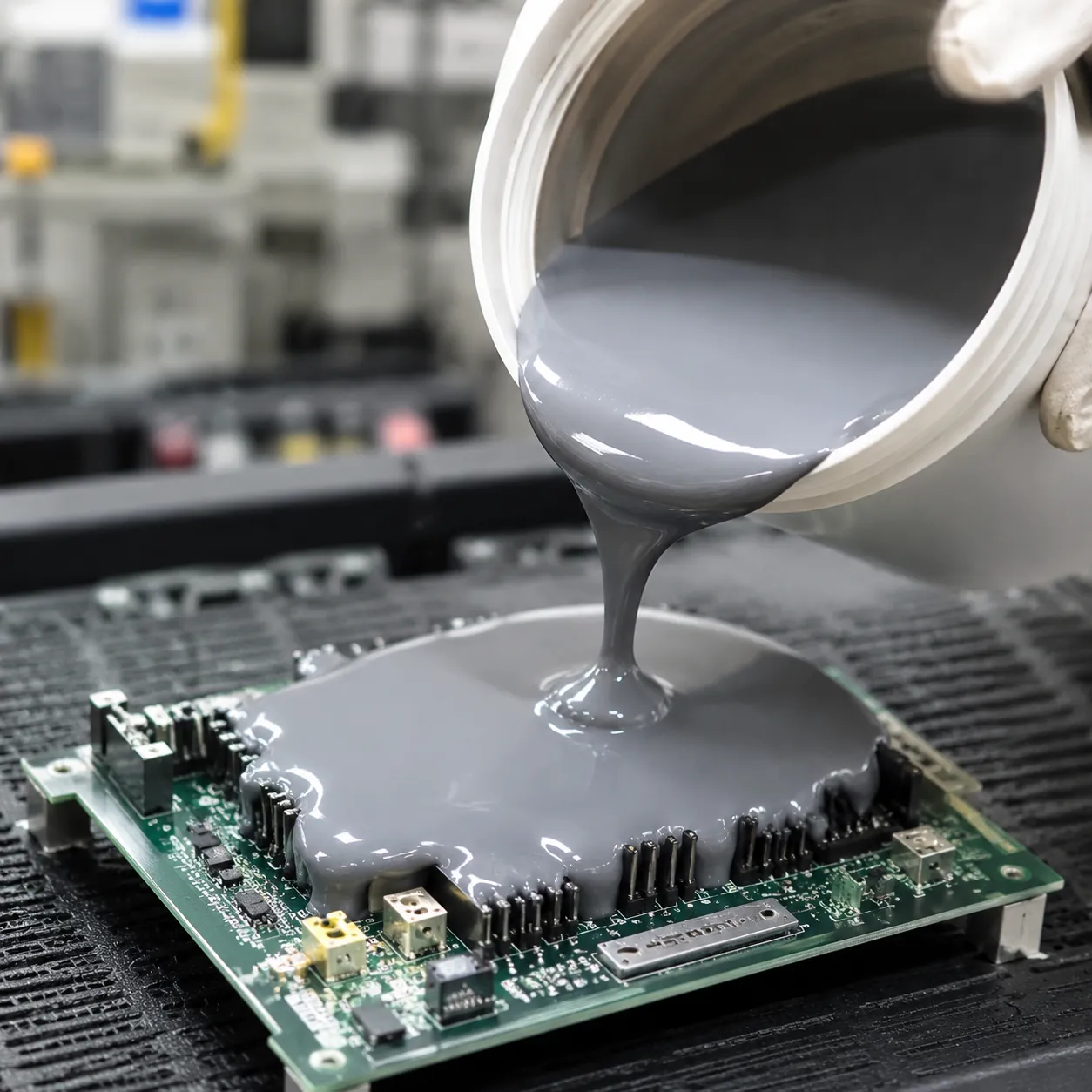
Thermally Conductive Epoxy Potting Compound UV Resistant
Sorry, something went wrong. Please try your request again.
I’m having a hard time fulfilling your request. Can I help you with something else instead?
Sorry, something went wrong. Please try your request again.
Do pigments hide or worsen yellowing?
Direct Answer
In our experience formulating thermally conductive epoxy potting compound solutions, pigments do not stop yellowing, but they directly control how noticeable it becomes. Dark pigments like black or deep charcoal effectively mask the color shift caused by heat and UV exposure, keeping visual degradation hidden. On the flip side, white or light-toned compounds highlight yellowing as the resin matrix ages. Furthermore, using low-grade organic pigments can actually worsen color discoloration under the elevated operating temperatures typical of power electronics encapsulation and LED driver potting.
Key Selection Factors or Failure Risks
- Color Masking vs. Resin Breakdown: Black heat dissipation potting resin hides visual yellowing, but the underlying epoxy matrix still undergoes thermal aging if pushed past its temperature limit.
- Pigment Heat Resistance: High operational temperatures can degrade unstable pigments, causing noticeable shade shifts independent of the base epoxy resin yellowing.
- Filler & Colorant Stability: Our thermal conductivity epoxy uses heavy filler loads; we pair these with high-purity inorganic pigments to prevent heat-induced discoloration.
- Visual Risks in LED Driver Potting: Light-colored potting in visible assemblies risks early aesthetic failure if the pigment system cannot withstand continuous thermal stress.
- Electrical Insulation Resin Reliability: Severe discoloration caused by thermal breakdown often signals resin matrix degradation, which can eventually compromise long-term insulation performance.
Sorry, something went wrong. Please try your request again.
Can a topcoat improve outdoor durability?
Direct Answer
Yes, applying a UV-resistant topcoat over a thermally conductive epoxy potting compound dramatically improves outdoor durability. Standard epoxies tend to yellow, chalk, and break down under prolonged sunlight. Adding an aliphatic polyurethane or acrylic topcoat creates a protective UV shield over the underlying heat dissipation potting resin, preserving both structural integrity and long-term weather resistance.
Key Selection Factors or Failure Risks
- Intercoat Adhesion: The surface of the cured thermal conductivity epoxy must be clean and chemically compatible with the topcoat. Poor bonding leads to peeling, flaking, and moisture penetration over time.
- Thermal Expansion Mismatch: If the topcoat and the core epoxy expand at vastly different rates during temperature shifts, the protective layer will crack and expose the electrical insulation resin beneath.
- Thermal Dissipation Barriers: Applying an overly thick topcoat layer can act as an unwanted insulation barrier, trapping heat and lowering the overall cooling efficiency needed for power electronics encapsulation and LED driver potting.
- Coating Flexibility: Outdoor environments demand a topcoat that stays flexible enough to absorb thermal shock, dynamic stress, and weather changes without developing micro-cracks.
How Can Rongwei Support This Project?
We manufacture every thermally conductive epoxy potting compound directly in our facility, allowing us to control quality, cost, and lead times from raw materials to final shipment.
Sample Matching and Formula Adjustment
Every electronic assembly faces unique heat and stress conditions. We modify formulations so your potting resin matches your precise manufacturing equipment and environmental requirements.
- Targeted Heat Dissipation: We fine-tune filler loadings to deliver exact thermal conductivity levels for high-stress power electronics encapsulation.
- Viscosity & Cure Control: We adjust flow dynamics so your heat dissipation potting resin easily penetrates tight component gaps without air entrapment or sagging.
- Exact Benchmarking: Send us your current material sample, and our lab will analyze and match its hardness, adhesion strength, and cure profile.
OEM / Private Label Packaging and Bulk Supply
Working epoxy resin factory direct eliminates middleman markups while giving you full flexibility over your product packaging and supply chain.
- Private Label Epoxy Resin: We offer custom branding, tailored container sizing, and specialized packaging—from small dual-cartridges to 200L industrial drums.
- Scalable Bulk Operations: As an established bulk epoxy resin supplier and wholesale epoxy resin manufacturer, we maintain large-scale capacity to prevent supply disruptions.
- Global Shipping Standards: All shipments feature export-grade packaging and international compliance documentation to ensure hassle-free delivery to your production floor.
I’m having a hard time fulfilling your request. Can I help you with something else instead?
