
Vacuum Infusion Epoxy Resin Key Buyer Considerations
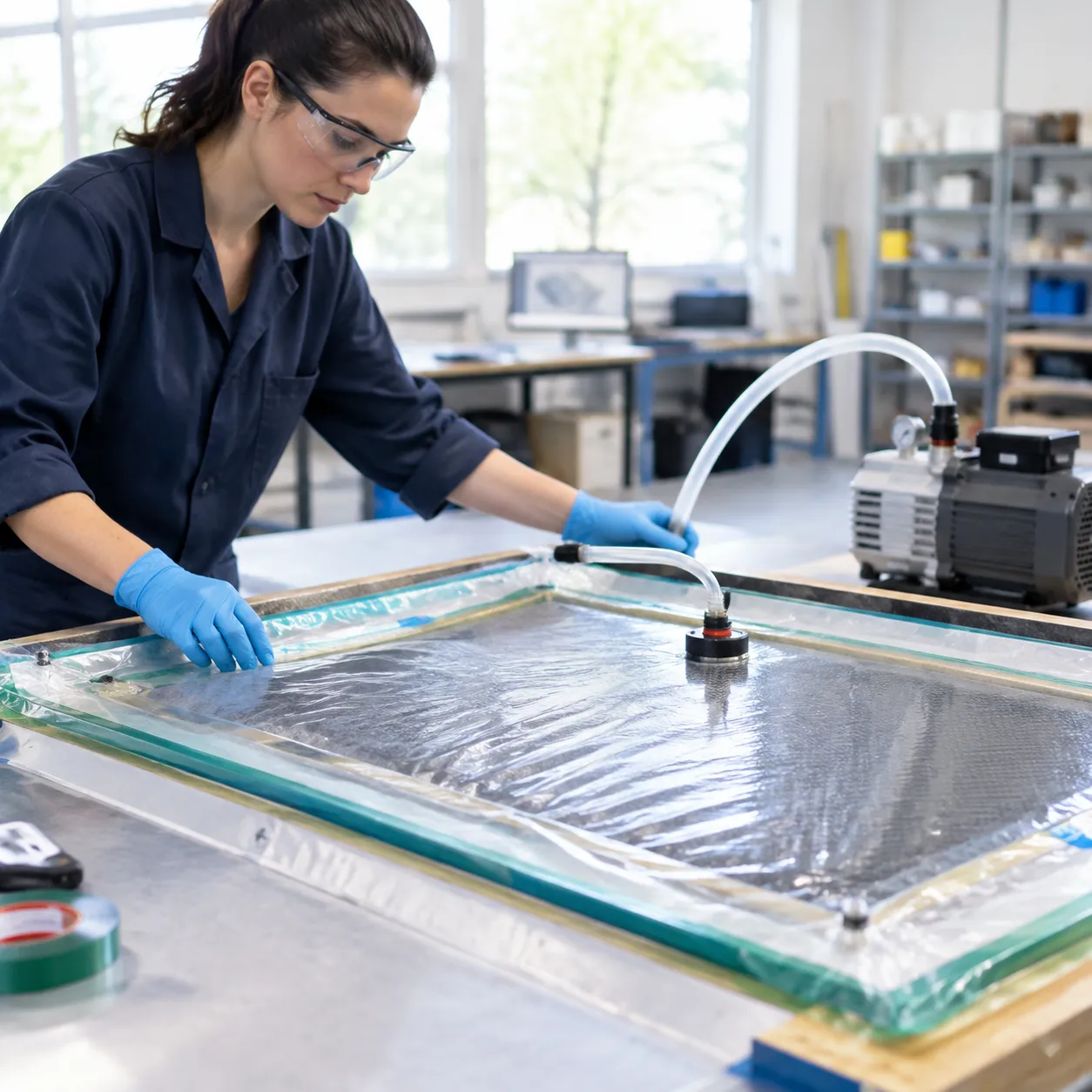
Quick Answer
Vacuum infusion epoxy resin is a high-performance, ultra-low viscosity thermoset polymer formulated specifically for Vacuum-Assisted Resin Transfer Molding (VARTM) and vacuum bagging processes. Engineered to eliminate voids and achieve optimal fiber-to-resin ratios, it ensures uniform fiber wet-out across large, complex composite structures.
Key Performance Benchmarks
- Ultra-Low Viscosity (150–300 mPa·s): Facilitates rapid and consistent resin flow front progression through dense fiberglass, carbon fiber, and aramid reinforcements.
- Extended Pot Life: Provides working times from 60 minutes to over 300 minutes, allowing reliable infusion of large-scale parts without premature gelation.
- Superior Fiber Wet-Out: Maximizes interlaminar shear strength and eliminates micro-voids under continuous negative pressure.
- Controlled Exotherm: Minimizes thermal spikes during the cure phase, preventing part distortion and matrix cracking in thick laminates.
- Exceptional Mechanical Properties: Yields high tensile, flexural, and fatigue resistance with elevated glass transition temperatures ($T_g$) after post-cure.
What Buyers Need to Know First
When you source vacuum infusion epoxy resin, standard wet layup formulations will not work. Vacuum infusion depends entirely on pressure differentials to drive liquid through dry fiber stacks under a sealed bag, meaning your resin chemistry must match your production cycle precisely.
Before ordering in bulk, keep these critical parameters front and center:
- Viscosity is non-negotiable: You need a dedicated low viscosity epoxy infusion system (typically between 150 to 300 mPa·s at room temperature). If the viscosity is too high, the resin stalls, leaving dry spots, voids, and incomplete wet-out.
- Match pot life to part scale: A 1-meter panel and a 20-meter yacht hull need completely different cure dynamics. We formulate long pot life infusion epoxy systems with extended open times so your resin flow front reaches every edge before gelation begins.
- Watch the exotherm on thick layups: Heavy composite structures trap heat. Running an aggressive hardener in thick laminates leads to uncontrolled exotherm, print-through, and warped molds.
- Total fiber compatibility: Whether you infuse carbon fiber, heavy E-glass roving, or aramid, the composite infusion resin must chemically size and bond to the fabric surface for maximum interlaminar shear strength.
Getting these variables right on the front end prevents scrapped parts, dry spots, and wasted production hours.
Define the Infusion Process and Part Size
When we configure a vacuum infusion epoxy resin system, we always start with the physical envelope of your component. Scale determines resin dynamics. Infusing a compact drone arm requires a completely different approach than pulling resin through a 60-foot marine hull or a multi-layer wind turbine spar cap.
Part size dictates your total flow length, feeder line layout, and vacuum strategy:
- Small Parts (< 1 m²): Fast flow fronts, minimal feed lines, priority on quick cycle times.
- Medium Parts (1–5 m²): Balanced resin flow front control with strategic runner placement to eliminate vacuum dead zones.
- Large-Scale Structures (> 5 m²): Extended flow distances that require carefully calculated feed channels to prevent premature gelation before the laminate fills.
Viscosity Window for Vacuum Infusion
Viscosity makes or breaks vacuum-assisted resin transfer molding (VARTM). For reliable infusion, we design our low viscosity epoxy infusion systems to operate within an ideal processing window of 150 to 300 mPa·s (cP) at standard shop temperatures (20°C–25°C / 68°F–77°F).
| Viscosity Range (mPa·s) | Process Suitability | Risk Profile |
|---|---|---|
| < 150 | Ultra-dense carbon stacks, rapid infusion | Risk of vacuum line bleed and resin starvation |
| 150 – 300 | Optimal window for standard composite infusion resin | Balanced flow front and complete core saturation |
| 300 – 500 | Small parts, high-temperature mold pre-heats | Slower wet-out, increased cycle time |
| > 500 | Not recommended for infusion | High risk of dry spots, void formation, and fiber bridging |
Maintaining this low-viscosity window allows the resin to penetrate tightly woven multiaxial fabrics and thick core materials cleanly under vacuum pressure without washing fibers out of alignment.
Pot Life and Flow Distance
Balancing gel time with mold scale is the most critical step when setting up a vacuum infusion project. If your vacuum infusion epoxy resin gels too quickly, the flow front freezes before reaching the vacuum ports, leaving expensive dry zones. If it stays open too long, production cycles stall.
We formulate our composite infusion resin systems with distinct reactivity profiles to match specific part dimensions:
- Small Parts (< 1 m flow path): A standard 30 to 45-minute working time ensures fast turnaround without risking incomplete fills.
- Medium to Large Structures (1–5 m flow path): A 90 to 120-minute long pot life infusion epoxy provides a safe margin for resin to travel across complex geometries.
- Massive Industrial Components (5+ m flow path): Ultra-slow hardeners offer up to 200+ minutes of open time, allowing large-scale infusion setups like boat hulls or wind turbine spars to fully saturate under stable vacuum pressure.
Always measure pot life against your actual ambient working temperature. Higher workshop temperatures accelerate curing, effectively shortening the safe flow window.
Fiber Wet-Out and Flow Front Control
Proper saturation depends on how well the liquid penetrates tightly packed reinforcement plies before curing begins. Using an optimized fiber wet out resin eliminates dry spots, voids, and micro-porosity in heavy multi-axial glass or dense carbon fiber fabrics.
To maintain total control over your resin flow front, focus on these processing benchmarks:
- Steady Flow Velocity: Keep resin line speed uniform across the full width of the part. If the flow front accelerates through high-permeability media too fast, it risks bypassing the underlying structural core.
- Viscosity Stability: Our low viscosity epoxy infusion blends maintain a low viscosity plateau throughout the infusion window, ensuring deep fiber matrix impregnation.
- Flow Front Shape: Keep the resin boundary linear. A jagged or V-shaped flow front indicates uneven vacuum distribution or local fabric pinching, which can trap residual air pockets against the vacuum ports.
Exotherm and Thick Sections
Thick laminate stacks present a clear engineering challenge in vacuum infusion: uncontrolled exothermic heat build-up. When resin pools in thicker cores, stringers, or solid laminate sections, rapid heat generation can cause boiling, matrix cracking, surface telegraphing, or part distortion.
To manage thermal risk without sacrificing production cycle times, we tune the reactivity profile of our vacuum infusion epoxy resin:
- Controlled Reactivity: Slow early-stage cross-linking prevents thermal spikes in sections exceeding 25 mm (1 inch) in thickness.
- Heat Dissipation Management: Modifying the hardener system allows linear heat release, keeping core mold temperatures within safe limits.
- Uniform Polymerization: Steady, low-peak exotherms eliminate localized shrinkage and protect core materials like PVC foam or balsa from thermal degradation.
| Section Thickness | Thermal Risk Level | Recommended Strategy |
|---|---|---|
| < 5 mm | Low | Standard room-temperature cure systems |
| 5 mm – 15 mm | Moderate | Controlled-reactivity composite infusion resin |
| > 15 mm / Solid Cores | High | Low-exotherm custom epoxy formulation with staged ramp |
Cure Schedule and Laminate Validation
Achieving maximum mechanical strength and high glass transition temperatures ($T_g$) requires a validated cure cycle tailored to your tooling and part performance specs.
- Initial Room-Temperature Gelation: Provides safe green strength under vacuum pressure without premature thermal runaway.
- Targeted Post-Cure Profiles: Controlled thermal ramps advance the degree of cure, optimizing tensile strength, interlaminar shear, and service limits for high temperature epoxy resin applications.
- Laminate Quality Verification: We qualify every batch through Differential Scanning Calorimetry (DSC) and Dynamic Mechanical Analysis (DMA) to confirm target $T_g$, complete cross-linking, and near-zero void content.
What Information Should You Send to RW ATELIER?
To help us match or formulate the exact vacuum infusion epoxy resin system for your production line, sending us clear technical parameters upfront saves valuable testing time. As an OEM epoxy resin manufacturer and industrial supplier, we tailor our formulations directly to your process parameters and structural targets.
Essential Details for Your Technical Request
- Part Geometry and Laminate Thickness: Maximum part dimensions, flow length, and critical laminate cross-sections (to calculate pot life and manage exotherm risk).
- Reinforcement Details: Reinforcement fabric type (carbon fiber, fiberglass, aramid, or hybrid), fabric weight (gsm), ply count, and any sandwich core materials (PVC foam, balsa, honeycomb).
- Shop Environment and Infusion Setup: Ambient working temperature, workshop humidity, available degas equipment, and injection strategy (central line, perimeter, or fishbone).
- Cure Parameters and Demold Times: Desired cure cycle (ambient room-temperature cure vs. elevated post-cure schedule) and target cycle turnaround time.
- Thermal and Mechanical Targets: Required glass transition temperature (Tg), flexural/tensile targets, UV exposure, chemical resistance, or specialized cryogenic and high-temperature requirements.
- Order Volumes: Batch quantities, trial sampling needs, drum or IBC tote packaging requirements for bulk supply.
| Project Parameter | Why We Need It | Formulation Impact |
|---|---|---|
| Max Flow Length | Dictates fluid front speed | Viscosity profile & open time hardener choice |
| Thickest Section (mm) | Determines peak exotherm | Reaction kinetics and thermal control |
| Service Temperature | Defines final operating range | Polymer backbone selection & required Tg |
| Production Cycle Goal | Sets shop throughput speed | Demold time and hardener reactivity speed |
Providing these parameters enables our engineering team to recommend a battle-tested composite infusion resin or develop a custom epoxy formulation optimized specifically for your manufacturing setup.
How Can RW ATELIER Support This Project?
At RW ATELIER, we operate as both an OEM epoxy resin manufacturer and a dedicated technical partner. We do not just ship containers; we tailor high-performance vacuum infusion epoxy resin systems to match your exact shop temperatures, laminate schedules, and part dimensions.
Here is how we back your manufacturing operations from lab testing to full-scale production:
- Custom Epoxy Formulation: We adjust viscosity, mixed pot life, and thermal resistance to match your cycle times. Whether you require a high-Tg matrix, cryogenic performance, or ultra-low viscosity for heavyweight fabrics, we engineer the chemistry around your part.
- Factory-Direct Supply: As an industrial epoxy resin supplier, we provide direct batch consistency from our facilities. You receive stable pricing, full lot traceability, and scalable bulk delivery without third-party markups.
- Flow Front & Process Support: We help you calculate resin line spacing, determine optimal vacuum levels, and balance gel times to eliminate dry spots and runaway exotherms on large-scale infusions.
- Quality Assurance & Lab Validation: Every batch of our composite infusion resin undergoes strict QA testing for viscosity tolerances, cure profiles, and mechanical properties before dispatch.
We deliver proven chemical consistency and direct technical backing so your infusion lines run cleanly, efficiently, and without unexpected defects.
