
Epoxy Thermal Cycling Hot and Cold Testing Guide
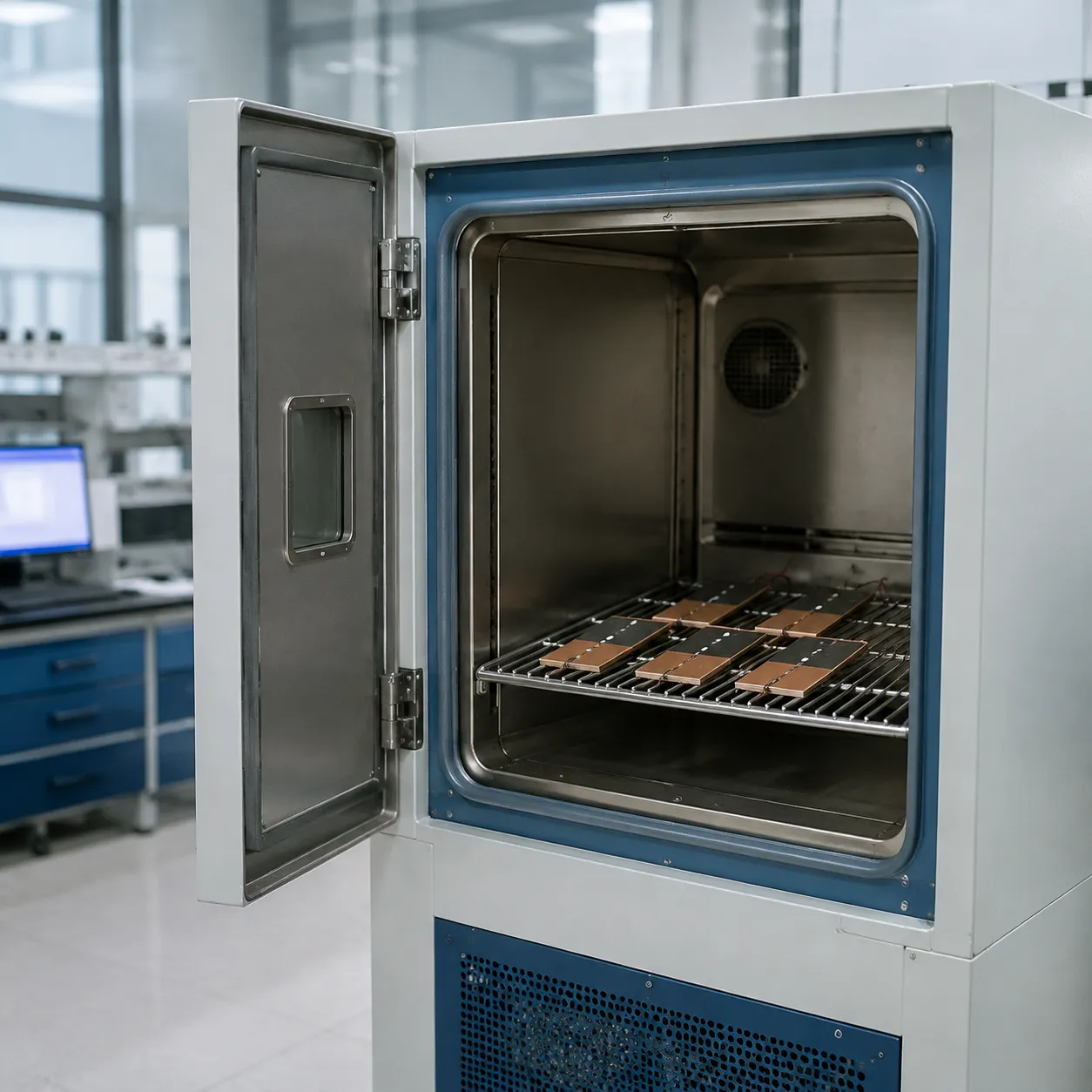
Quick Answer
Epoxy thermal cycling hot and cold performance depends directly on matching the resin’s Coefficient of Thermal Expansion (CTE) with bonded substrates, managing the Glass Transition Temperature (Tg), and maintaining fracture toughness across alternating temperature extremes.
When epoxy systems endure cyclic shifts between freezing lows and elevated heat, long-term durability relies on four critical material parameters:
- CTE Alignment: Minimizing expansion differentials between the epoxy and mating materials (metals, ceramics, FR4) eliminates destructive interface shear stress.
- Tg Threshold Optimization: Engineering the glass transition temperature ensures the polymer matrix does not undergo uncontrolled modulus shifts or embrittlement during operational swings.
- Thermal Fatigue Resistance: Incorporating toughened polymer backbones and specialized micro-fillers prevents micro-cracking, joint fatigue, and hermetic seal breakdown.
- Dimensional Stability: High crosslink density and controlled shrinkage maintain structural integrity from cryogenic conditions up to peak operating temperatures.
What Buyers Need to Know First
When sourcing resins for severe temperature swings, standard datasheets rarely tell the whole story. Surviving repeated epoxy thermal cycling hot and cold demands far more than just a high continuous temperature rating.
Before placing a bulk production order, we recommend evaluating these four core factors:
- The Full Temperature Envelope: Define your absolute lowest and highest limits. Whether your assembly requires a cryogenic epoxy resin base reaching sub-zero extremes or a high temperature epoxy resin rated for prolonged heat, the exact operational spread determines the chemistry needed.
- Ramp Rates and Dwell Times: Slow seasonal shifts create different mechanical loads than rapid hot cold cycling epoxy transitions. Shock-like rate changes trigger immediate stress peaks across the joint.
- Substrate Compatibility: Resins expand and contract differently than metals, ceramics, or FR4 boards. Managing the CTE mismatch early prevents adhesive delamination and cohesive cracking over extended deployment.
- Formulation Flexibility: Off-the-shelf compounds often lack the exact balance of toughness and modulus needed for extreme fatigue resistance. Partnering directly with an industrial epoxy resin supplier and OEM epoxy resin manufacturer allows you to secure a custom epoxy formulation tailored to your specific mechanical and environmental demands.
What Thermal Cycling Does to Epoxy
Subjecting an assembly to repeated swings between high and low temperatures triggers continuous physical strain inside the polymer matrix. When you run an epoxy thermal cycling hot and cold test, the resin expands with heat and contracts with freezing temperatures. This continuous push-pull movement leads to mechanical fatigue over time.
Repeated hot cold cycling epoxy exposure causes several distinct structural degradation patterns:
- Micro-cracking: Internal stresses concentrate around sharp corners, voids, and fillers, causing micro-fissures that spread through the cured resin.
- Loss of Adhesion: Cyclic shear stresses tear the polymer away from bonded substrates, leading to edge delamination.
- Hermetic Seal Failure: Microscopic pathways open up along bond lines, allowing air, moisture, and contaminants to enter sealed electronic or mechanical packages.
- Elastic Modulus Shift: Extended temperature cycles can cause polymer chain embrittlement, reducing the resin’s ability to absorb shock.
Using a dedicated thermal fatigue resin ensures the crosslinked polymer network absorbs repeated dimensional changes without cracking or losing structural cohesion.
CTE and Interface Stress
The primary driver of joint failure during thermal cycling is the CTE mismatch between the cured epoxy and the substrates it bonds. Most standard epoxy resins have a significantly higher Coefficient of Thermal Expansion than metals, glass, ceramics, or FR4 circuit boards.
When the temperature drops, the epoxy shrinks much faster than the adjacent substrate; when heated, it expands far more aggressively. This differential movement generates severe epoxy interface stress:
- Shear Stress at the Bond Line: The boundary between the high-expansion epoxy and low-expansion metal experiences peak shear forces at the outer edges of the joint.
- Peel and Cleavage Forces: Uneven thermal gradients cause the adhesive layer to lift away from corners and perimeter edges.
- Substrate Warping: On thin or flexible components, rigid epoxies can pull and warp the base material during the cooling phase.
To control interface stress during extreme thermal cycling, we formulate specialized industrial systems using engineered silica fillers to lower the resin’s CTE, paired with reactive flexibilizers that distribute thermal stresses across the entire bond line.
How Moisture Changes Cycling Performance
When humidity enters the equation, epoxy thermal cycling hot and cold performance changes drastically. Moisture does not just sit on the surface; it penetrates the polymer matrix over time, creating a combined hydrothermal stress profile that accelerates material breakdown.
- Lower Glass Transition Temperature (Tg): Absorbed water acts as a plasticizer. It reduces the operational Tg of the resin, causing it to soften at much lower temperatures than initially specified.
- Internal Hydraulic Pressure: During rapid heating phases, trapped moisture turns to vapor and expands. During sub-zero cooling, that same moisture freezes and expands, driving micro-cracking and internal delamination.
- Adhesion Loss at the Interface: Moisture naturally migrates to bonding interfaces, weakening the chemical and mechanical grip the epoxy has on substrates like metals, ceramics, and composites.
Applying a reliable moisture thermal cycling evaluation ensures your components survive real-world environments where temperature swings and humidity happen simultaneously.
Modulus and Toughness Changes
Moisture uptake fundamentally alters the mechanical properties of a cured system under continuous hot and cold cycles:
- Modulus Drop at High Temperatures: The plasticizing effect of moisture lowers the tensile and flexural modulus during hot cycles, reducing the structural stiffness of the assembly.
- Embrittlement During Cold Cycles: As temperatures drop, water molecules locked within the network restrict polymer chain mobility, creating severe localized brittleness and reducing impact resistance.
- Accelerated Thermal Fatigue: The cyclic shift between a softened wet state and a rigid, frozen state accelerates thermal fatigue resin failure, leading to cohesive cracks along high-stress paths.
We formulate our resin systems to resist water absorption and retain high fracture toughness across extreme temperature swings, preventing premature mechanical fatigue and joint failure.
How to Design a Thermal Cycling Test
We design hot and cold cycling tests to simulate years of field stress in a controlled lab environment. An effective epoxy thermal cycling hot and cold test profile matches the actual operational extremes of your assembly rather than generic numbers.
To establish a reliable epoxy durability test, we focus on four core test parameters:
- Temperature Range: Standard commercial screening often runs from -40°C to +125°C, while harsh industrial profiles expand from -55°C to +150°C.
- Dwell Time: The assembly must remain at each temperature extreme long enough (typically 15 to 30 minutes) to achieve full thermal equilibrium throughout the epoxy layer.
- Ramp Rate: Transition speeds determine whether you are evaluating progressive thermal fatigue or sudden thermal shock. Typical cycling ramp rates range between 5°C and 10°C per minute.
- Cycle Count: High-reliability applications require anywhere from 500 to 1,000 cycles to uncover long-term micro-cracking and interface fatigue.
Common standard test procedures include MIL-STD-883 Method 1010 for microelectronics and relevant ASTM standards for structural adhesive bonding.
What Data Buyers Should Request
When qualifying a formulation for severe epoxy temperature cycling, always demand verified post-cycling data rather than basic baseline data sheets.
| Required Metric | Why It Matters | Standard Evaluation Method |
|---|---|---|
| Lap Shear Strength Retention | Confirms whether the adhesive bond survives interface strain after cycling. | ASTM D1002 (Tested after 500+ cycles) |
| Micro-Crack & Delamination Inspection | Detects internal resin fractures and substrate separation. | Acoustic Microscopy (C-SAM) or Optical Cross-Section |
| Glass Transition Temperature (Tg) Stability | Verifies that thermal fatigue has not degraded crosslink networks. | Differential Scanning Calorimetry (DSC) |
| Insulation Resistance Retention | Ensures potting compounds retain dielectric integrity without electrical leakage. | ASTM D257 |
| Hermetic Seal Integrity | Confirms environmental seals do not form micro-void paths for moisture ingress. | Helium Mass Spectrometry / Bubble Leak Test |
What Information Should You Send to RW ATELIER?
To help us formulate or match the exact resin for your application, we need specific details about your operating environment and manufacturing setup. Providing complete data upfront ensures your resin handles severe epoxy thermal cycling hot and cold without interface failure, cracking, or loss of adhesion.
When you contact our engineering team, share the following operational parameters:
- Temperature Extremes & Cycle Profiles: Specify your minimum and maximum operating temperatures, dwell times at each peak, and temperature ramp rates (transition speeds between hot and cold states).
- Substrate Materials: List all materials the epoxy will contact (such as aluminum, copper, FR4, ceramics, or engineered plastics) so we can evaluate CTE mismatch and control interfacial shear stress.
- Environmental Exposures: Note whether your assembly faces high humidity, chemical immersion, salt spray, outdoor UV, or continuous vibration alongside temperature swings.
- Application & Processing Limits: Tell us your target viscosity, working life (pot life), dispensing method (manual, meter-mix, or automated potting), and available cure equipment (room temperature vs. heat-cure ovens).
- Industry & Test Standards: Mention any qualification benchmarks you must meet, such as specific automotive, aerospace, or industrial thermal shock and cycling protocols.
| Detail Category | Key Information Needed | Purpose for Formulation |
|---|---|---|
| Thermal Range | Min/Max °C, Ramp Rate, Dwell Time | Determines required Tg and thermal fatigue resistance |
| Bonded Substrates | Metal, ceramic, composite, or plastic types | Guides filler selection to balance CTE and eliminate delamination |
| Moisture / Fluids | Humidity percentage, solvent/fuel contact | Prevents plasticization and wet-cycle bond degradation |
| Production Targets | Pot life, cure time, volume requirements | Customizes viscosity, reaction speed, and packaging format |
As an industrial OEM epoxy resin manufacturer, we use this data to tailor crosslink density, add targeted tougheners, and adjust filler loading to deliver reliable performance under continuous hot and cold cycling.
How Can RW ATELIER Support This Project?
Managing extreme epoxy thermal cycling hot and cold demands requires the right balance of chemistry, processing, and material selection. We partner directly with engineering, production, and procurement teams to deliver dependable solutions tailored to demanding thermal environments.
Custom Formulations and Technical Capabilities
- Custom Epoxy Formulation: We tailor glass transition temperature (Tg), modulus, and flexibility to eliminate thermal fatigue resin micro-cracking and minimize CTE mismatch across different substrates.
- OEM Epoxy Resin Manufacturer: As an epoxy resin factory direct provider, we engineer private-label and application-specific chemistries for high-volume assemblies.
- Industrial Epoxy Resin Supplier: We provide scalable manufacturing capabilities, serving as a reliable bulk epoxy resin supplier with batch-to-batch consistency for critical production schedules.
- Thermal Shock and Cycling Optimization: Our team formulates specialized filled, unfilled, ambient-cure, and heat-cure systems built to handle continuous hot cold cycling epoxy conditions without bond failure or delamination.
Direct Project Collaboration
| Support Area | What We Deliver |
|---|---|
| Material Matching | Selecting high-performance polymer matrices and filler loads to match substrate expansion rates. |
| Processing Guidance | Curing schedules, degassing protocols, and dispensing parameters to eliminate crack-initiating voids. |
| Supply Chain Scale | Reliable factory-direct fulfillment from trial sampling to full-scale commercial manufacturing. |
