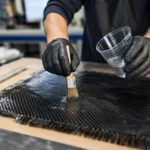
Carbon Fiber Composite Materials CFRP Manufacturing Basics
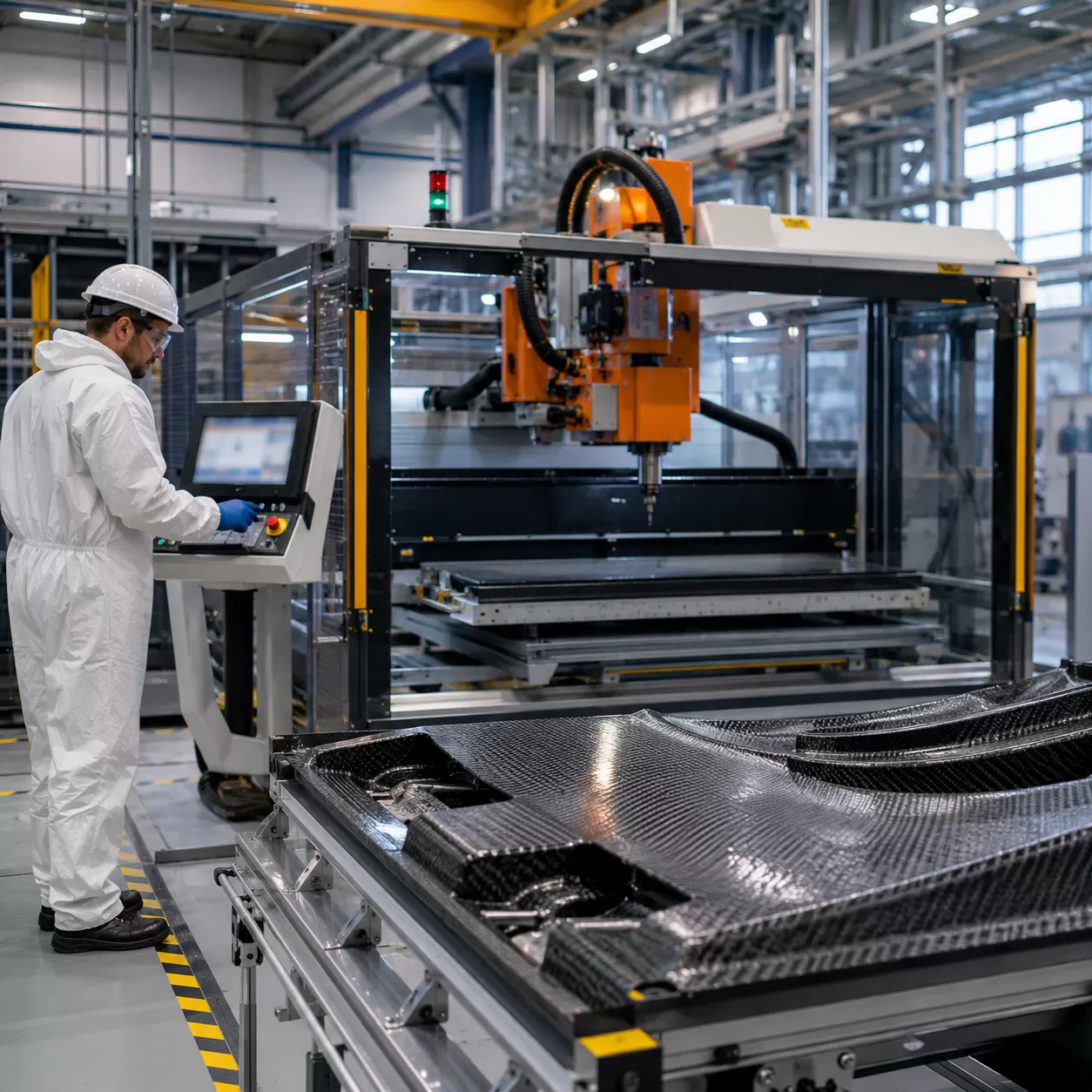
Are you struggling to balance high performance with soaring production costs? Choosing the right materials can make or break your next engineering project.
In advanced manufacturing, carbon fiber composite materials (CFRP) have become the ultimate game-changer. Whether you are looking to slash weight in electric vehicles or withstand extreme stress in aerospace design, understanding CFRP manufacturing basics is no longer optional—it’s a competitive necessity.
But with so many fiber grades, resin matrices, and curing processes available, how do you make the right choice without blowing your budget?
This comprehensive guide breaks down everything you need to know. From raw material science to practical procurement strategies, you’ll learn exactly how to leverage carbon fiber to optimize your products and outpace the competition.
Let’s dive right in.
Part 1: Fundamentals of CFRP
What is Carbon Fiber Reinforced Polymer (CFRP)
Carbon fiber reinforced polymer (CFRP) is a high-performance composite material consisting of two main components: carbon fibers that provide structural strength, and a polymer matrix—typically a high-strength composite resin like epoxy—that binds and protects the fibers.
Understanding these composite material properties is crucial for modern engineering. The fibers handle the tensile load, while the resin distributes the stress and prevents buckling. This synergy creates a material renowned for its exceptional lightweight composite materials profile, unmatched durability, and extreme rigidity, making it a cornerstone of advanced composite material engineering.
Carbon Fiber vs Fiberglass vs Kevlar
When evaluating advanced materials, understanding the distinct performance trade-offs is essential for proper selection.
| Material Type | Tensile Strength | Stiffness (Modulus) | Density (Weight) | Impact Resistance |
|---|---|---|---|---|
| Carbon Fiber (CFRP) | Extremely High | Extremely High | Very Low | Moderate |
| Fiberglass | High | Moderate | Moderate | High |
| Kevlar (Aramid) | High | Low | Low | Extremely High |
Why Choose Carbon Fiber: The Ultimate Trade-Off
Selecting the right material requires a strict balance of strength, weight, and total manufacturing cost.
- Unmatched Strength-to-Weight Ratio: CFRP delivers higher rigidity and tensile strength than steel or aluminum at a fraction of the weight, driving massive energy savings in mobile applications.
- Long-Term Carbon Fiber Durability: It features exceptional fatigue resistance, zero corrosion, and high dimensional stability under thermal stress.
- The Cost Equation: While raw material and processing costs are higher than fiberglass or metals, the lifecycle savings, weight reduction, and performance gains offer a superior return on investment for high-tier industrial applications.
Material Science Behind CFRP Manufacturing Basics
Physical Properties of Carbon Fiber: Strength, Modulus, and Density
When we look at composite material properties, carbon fiber stands out because of its exceptional strength-to-weight ratio. It delivers ultra-high tensile strength and modulus (stiffness) while maintaining a remarkably low density.
| Property | Carbon Fiber | Traditional Steel |
|---|---|---|
| Tensile Strength | Very High (~3500+ MPa) | Moderate (~400-500 MPa) |
| Stiffness (Modulus) | High to Ultra-High | Standard |
| Density | Low (~1.75 g/cm³) | High (~7.85 g/cm³) |
This unique combination makes carbon fiber reinforced polymer (CFRP) the go-to choice for engineering high-strength, lightweight composite materials that easily outperform traditional metals.
The Role of Epoxy Resin: Bonding, Protection, and Performance
Carbon fibers cannot carry structural loads alone; they need a high-performance matrix. In CFRP manufacturing basics, specialized epoxy resin acts as the vital matrix that binds the fibers together.
- Load Transfer: It distributes external mechanical loads evenly across the carbon fiber network.
- Environmental Protection: It shields the fibers from moisture, chemicals, and impact abrasion, ensuring long-term carbon fiber durability.
- Shape Retention: It locks the flexible carbon strands into rigid, permanent, complex geometries.
Why the Fiber-Resin Interface Matters
The true magic of composite material engineering happens at the microscopic level where the fiber meets the polymer matrix. A flawless fiber-resin interface ensures that stress transfers smoothly between the components without delamination. If the bond at this interface is weak, the material will fail early under stress. Achieving a strong molecular bond at this interface is exactly why selecting a compatible, high-strength composite resin is critical to maximizing the structural integrity of the final cured composite.
Industry Applications of Carbon Fiber Reinforced Polymer
Aerospace: Why Commercial Aviation Relies on CFRP
Weight dictates efficiency in the air. We engineer lightweight composite materials for commercial aviation because cutting structural weight directly slashes fuel consumption. By replacing traditional aluminum with advanced carbon fiber reinforced polymer, modern airliners significantly increase their payload capacity and flight range while resisting fatigue and corrosion over decades of service.
Automotive: Lightweight Composite Materials for EVs and Supercars
In the automotive sector, range anxiety and performance drive material choices. For electric vehicles, every pound saved translates to extra miles per charge. For supercars, it means quicker acceleration and sharper handling. We utilize high-strength composites to build ultra-rigid chassis structures and body panels that maximize safety without adding dead weight to the battery pack.
Wind Energy: Maximizing Efficiency in Turbine Blades
Next-generation wind turbines require longer, stiffer blades to capture lower wind speeds effectively. Traditional materials fail under these massive aerodynamic loads. Our carbon fiber solutions provide the extreme stiffness and carbon fiber durability needed to prevent blade deflection, ensuring reliable, long-term power generation under harsh offshore conditions.
Sports Equipment: Premium Gear Built for Performance
Athletes demand gear that responds instantly. From elite racing bicycles to high-end golf clubs and surfboards, composite material engineering allows us to manipulate flex patterns and optimize strength-to-weight ratios. The result is sports gear that delivers better power transfer, precise control, and high impact resistance.
Medical Devices: Enhancing Prosthetics and Imaging Equipment
In healthcare, our materials transform patient outcomes. For prosthetics, carbon fiber offers the perfect balance of flexibility and strength, mimicking natural limb energy return. In diagnostic imaging, its excellent radiolucency makes it the ideal choice for X-ray and CT scan tables, allowing clear imaging paths without distracting artifacts.
Procurement Guide: Carbon Fiber Composite Materials Sourcing
Making the right call in CFRP manufacturing comes down to balancing high performance with your bottom line. When you are sourcing carbon fiber reinforced polymer components, your choices dictate the durability and success of the final product.
Choosing the Right High-Strength Composite Resin
The matrix is just as important as the fiber. The right resin ensures your lightweight composite materials perform under pressure.
- Epoxy Resins: Our go-to for maximum strength, excellent adhesion, and superior carbon fiber durability. Ideal for aerospace and high-end automotive parts.
- Vinyl Ester Resins: A solid middle ground. Offers great corrosion resistance and quicker cure times at a lower price point.
- Thermoplastics: The future of fast-paced composite material engineering. They are recyclable, offer high impact resistance, and reshape production timelines.
Balancing Cost vs. Performance
You don’t always need aerospace-grade specs for every project. Maximizing ROI means matching composite material properties to your actual application needs.
| Material Choice | Cost Factor | Strength Profile | Common Use Case |
|---|---|---|---|
| Standard Modulus CFRP | Budget-Friendly | High Strength / Medium Stiffness | Sporting goods, industrial robotics |
| Intermediate Modulus CFRP | Moderate | Very High Strength | Automotive body panels, marine |
| High Modulus CFRP | Premium Investment | Maximum Stiffness / Low Weight | Aerospace, satellite structures |
Key Supplier Evaluation Criteria
Partnering with the right manufacturer ensures consistency and scales your production without headaches. We evaluate suppliers based on three strict pillars:
- Consistent Fiber-to-Resin Ratios: Look for automated manufacturing processes (like continuous lamination or RTM) that guarantee uniform composite material properties across batches.
- Traceability and Certification: Reliable partners provide full material data sheets and ISO 9001 / AS9100 certifications to prove batch consistency.
- Scalability & Tooling Costs: Ensure the supplier can transition smoothly from prototyping to mass production while optimizing tooling costs to keep your piece-part price competitive.
Take the Next Step in Carbon Fiber Composite Materials Manufacturing
Ready to elevate your project with high-performance carbon fiber reinforced polymer solutions? We provide the expertise and high-strength lightweight composite materials you need to streamline your production and optimize composite material properties.
Download Our Free CFRP Manufacturing Whitepaper
Gain a competitive edge with our comprehensive guide to carbon fiber reinforced polymer engineering. This free technical resource covers essential composite material engineering insights, optimization strategies, and practical tips to maximize carbon fiber durability while managing production costs.
- Deep Dive: In-depth analysis of high-strength composite resin matrix selection.
- Performance Metrics: Detailed breakdown of carbon fiber vs fiberglass in structural applications.
- Cost Efficiency: Proven methods to balance budget and performance in large-scale manufacturing.
Book a Technical Consultation with Our Engineers
Overcome your toughest design hurdles. Schedule a one-on-one session with our application specialists to discuss your specific project requirements, resin compatibility, and manufacturing scalability.
- Tailored Solutions: Direct advice on maximizing lightweight composite materials for your industry.
- Process Optimization: Expert guidance on manufacturing cycle times and part consistency.
- Material Selection: Precision matching of fiber formats and resin systems for your performance targets.
Request a Material Sample Kit
Evaluate the quality, finish, and structural integrity of our advanced carbon fiber composite materials firsthand. Test our premium materials within your own facility to verify their superior composite material properties and processing compatibility.
- Hands-On Evaluation: Experience the exceptional strength-to-weight ratio of our laminates.
- Quality Assurance: Inspect the seamless fiber alignment and flawless resin wet-out.
- Prototyping: Validate bonding, cutting, and finishing characteristics on real material samples.