
Deep Pour Epoxy Overheating Buyer FAQ Guide
Quick Answer
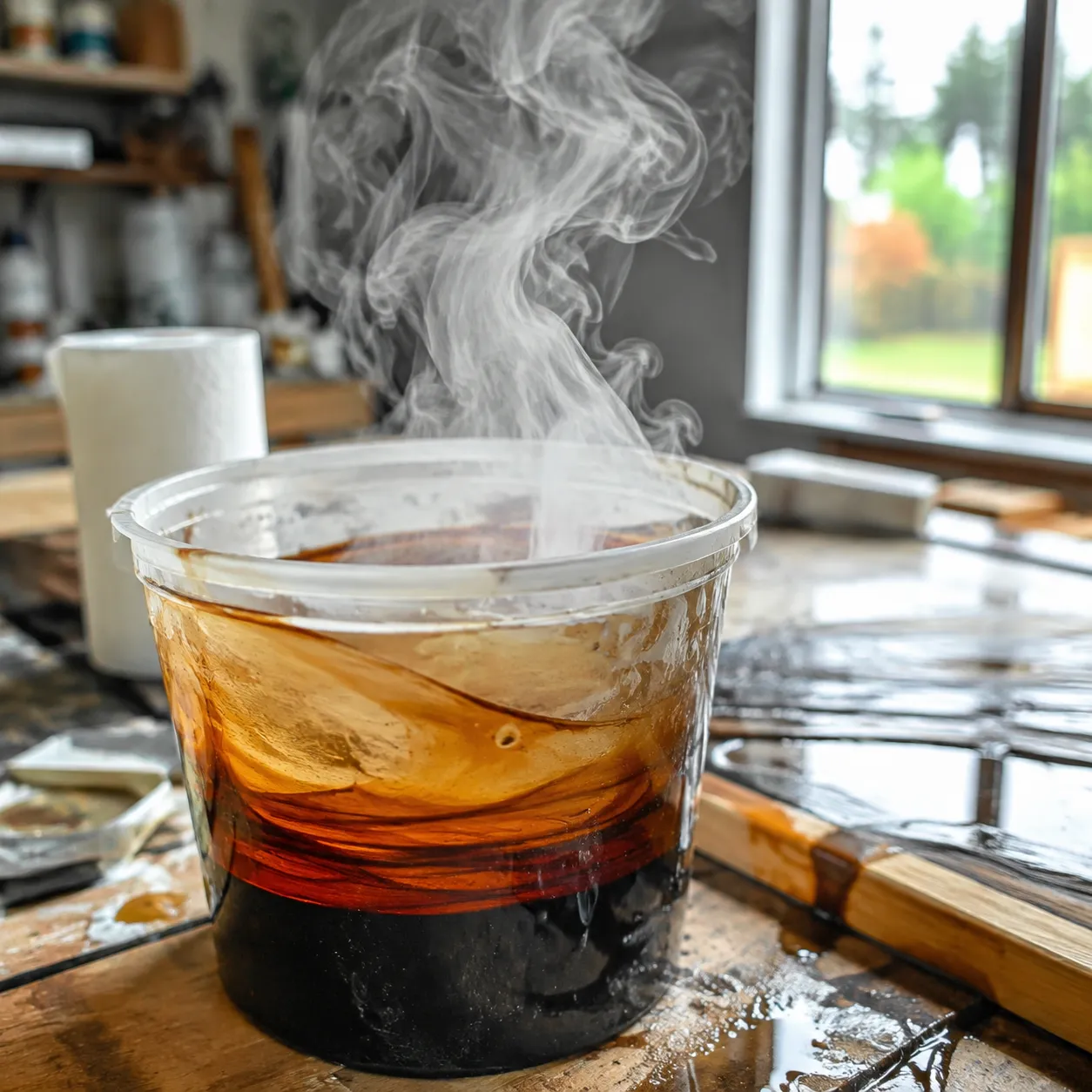
Deep pour epoxy overheating occurs when the chemical reaction—known as the epoxy exotherm—generates heat faster than it can dissipate into the surrounding environment. When casting large volumes or thick layers, trapped thermal energy accelerates the curing process exponentially. This rapid thermal spike triggers river table overheating, which causes resin smoking, yellowing, severe foam formation, and epoxy cracking while curing.
What Buyers Need to Know First
Preventing catastrophic exothermic reactions requires strict control over three primary variables before casting:
- Maximum Pour Depth: Standard resins cure too fast for deep applications. Engineered thick pour epoxy systems use specialized hardeners designed to slow down reactivity for deep castings.
- Ambient Temperature Control: Curing environments must remain between 68°F and 72°F (20°C – 22°C). Higher ambient temperatures significantly increase exotherm speeds.
- Formula Quality: Sourcing directly from a reliable wholesale epoxy resin manufacturer ensures precise raw material ratios, stable curing kinetics, and consistent thermal performance across bulk orders.
When does the official lead time begin?
Direct Answer
Official lead time begins the moment we confirm receipt of your deposit and receive final sign-off on all technical specifications. If your order requires tailored hardener formulations to stop deep pour epoxy overheating, batching starts only after the exact exotherm profile and packaging artwork are approved.
Key Selection Factors or Failure Risks
- Formula Approval: izing the cure speed early is critical. Skipping lab testing for heavy pours increases the risk of epoxy exotherm spikes, which lead to river table overheating and yellowing.
- Specification Delays: Unapproved safety warnings or missing private label artwork hold up production schedules even if payment has cleared.
- Factory Quality Control: Sourcing thick pour epoxy via an epoxy resin factory direct workflow requires pre-shipment thermal testing. This guarantees the chemical mix won’t suffer from resin smoking or stress cracking during deep pours.
Does custom packaging extend the schedule?
Direct Answer
Yes, custom packaging typically adds 7 to 14 business days to initial lead times. While our standard bulk epoxy resin supply ships quickly from stock, custom label design, proof approvals, and specialized container sourcing require additional setup time. Repeat private label epoxy resin orders move much faster once packaging inventory is established at our factory.
Key Selection Factors or Failure Risks
- Container Compatibility: Deep pour epoxy formulas must be stored in specific high-density containers. Selecting unverified custom bottles can cause leaks or contamination long before the product reaches the end user.
- Packaging Lead Times vs. Resin Production: Bottling and custom label printing often take longer than blending the actual resin. Ordering packaging early prevents warehouse bottlenecks.
- Quality Control Approval: Custom artwork, barcode scans, and regulatory label compliance require explicit sign-off before mass production begins.
- Rush Project Risks: Schedule delays caused by custom packaging often prompt end-users to rush jobsite application. Pouring thick pour epoxy too deep to make up for lost time triggers rapid epoxy exotherm, leading to deep pour epoxy overheating, resin smoking, and severe epoxy cracking while curing.
Can Production Start Before Sample Approval?
Direct Answer
We do not start mass production before official sample approval. Deep pour epoxy formulations require exact thermal control, and skipping sample sign-off risks severe batch failure. Approving the physical sample first ensures your bulk order matches your exact viscosity, cure speed, and heat-dissipation requirements.
Key Selection Factors or Failure Risks
- Thermal Overheating: Bypassing sample testing dramatically increases the risk of deep pour epoxy overheating, which leads to resin smoking and thermal discoloration during thick pours.
- Curing Cracks: Unverified formula adjustments can cause uncontrolled heat spikes, resulting in epoxy cracking while curing across large river tables or thick castings.
- Private Label Compliance: Working with a wholesale epoxy resin manufacturer requires testing pot life and clarity upfront to protect your private label epoxy resin brand reputation.
- Costly Scrap & Material Loss: Premature production runs can turn tons of thick pour epoxy resin into unsellable waste if the chemical reaction behaves unpredictably in your working environment.
How is an urgent order handled?
Direct Answer
We handle urgent orders by immediately allocating standard stock from raw material reserves or fast-tracking production on dedicated priority lines. When tight project deadlines arise—or when an in-field batch fails due to deep pour epoxy overheating—we expedite order processing, batch testing, and logistics to dispatch replacement resin within 24 to 48 hours.
Key Selection Factors or Failure Risks
Speeding up supply must never sacrifice batch safety. Key factors to manage during urgent order fulfillment include:
- Formula Stability: Expedited orders must strictly match project specifications. Skipping thermal profile checks risks supplying a fast-curing resin that causes severe epoxy exotherm, leading to resin smoking and epoxy cracking while curing.
- Pour Depth Alignment: Urgent shipments must be verified for thickness capability. Substituting high-viscosity resins for thick pour epoxy applications inevitably results in river table overheating.
- Inventory Readiness: Partnering directly with a wholesale epoxy resin manufacturer ensures core chemical components are pre-stocked for immediate production, bypassing third-party sourcing delays.
- Rapid Quality Control: Accelerated delivery still requires mandatory pre-shipment testing for viscosity and peak exothermic temperature to prevent product failure on arrival.
What Documents Are Needed Before Shipment?
Direct Answer
Before any shipment of bulk epoxy resin leaves our factory direct facility, we provide a complete documentation packet. This includes the Safety Data Sheet (SDS), Certificate of Analysis (CoA), Technical Data Sheet (TDS), Commercial Invoice, and Packing List. For sea or air transport, non-hazardous goods certifications or proper dangerous goods declarations are also included to ensure seamless customs clearance.
Key Selection Factors or Failure Risks
Missing or inaccurate paperwork leads to freight holds and increases the risk of product failure on the job site.
- Batch Verification (CoA): Without a Certificate of Analysis, you cannot verify chemical reactivity. An uncontrolled batch profile is the leading cause of deep pour epoxy overheating, resin smoking, and severe epoxy cracking while curing.
- Pour Depth Guidelines (TDS): Technical Data Sheets define strict ambient temperature limits and maximum depth per pour, protecting your end customers from river table overheating.
- Customs Seizures: Partnering with a wholesale epoxy resin manufacturer requires exact alignment between your SDS chemical classifications and customs declarations to avoid costly port delays.
- Private Label Compliance: For private label epoxy resin orders, labeling and safety documentation must strictly match destination market regulations before dispatch.
What Information Should You Send to the Manufacturer?
To prevent deep pour epoxy overheating and guarantee clean, glass-like cures, we need precise technical details before formulating your resin batch. Providing accurate project data upfront allows us to balance reactivity, control the epoxy exotherm, and eliminate risks like resin smoking or structural thermal cracking.
Application, Substrate and Process Details
- Pour Depth and Total Volume: State your maximum pour depth per layer. Formulations for a 2-inch river table pour differ significantly from a 4-inch deep casting, directly affecting heat dissipation.
- Substrate Material and Preparation: Specify whether you are pouring over live-edge wood, metal, concrete, or decorative media, along with wood moisture levels and mold materials.
- Ambient Working Conditions: Share your production facility’s average ambient temperature and airflow. High room temperatures accelerate the chemical reaction, dramatically increasing the risk of thick pour epoxy failure.
- Processing Methods: Note whether you plan to use vacuum degassing chambers, pressure pots, or manual mixing procedures to eliminate trapped air.
Performance, Packaging and Estimated Quantity
- Technical Performance Specs: Outline your needed pot life, optical clarity, UV resistance, final hardness, and peak temperature limits to prevent river table overheating and epoxy cracking while curing.
- Packaging and Branding Specifications: Define container sizes, ranging from industrial drums and pails to custom private label epoxy resin retail kits with turnkey labeling.
- Volume Projections: State your immediate sample matching requirements along with estimated monthly or annual order volumes so our factory direct supply line can lock in scheduling and raw material pricing.
How Can Rongwei Support This Project?
At Rongwei, we engineer solutions to eliminate deep pour epoxy overheating before your resin hits the job site or manufacturing line. As a trusted wholesale epoxy resin manufacturer, we combine custom chemical adjustments with direct production capabilities to protect your projects from heat-related defects.
Sample Matching and Formula Adjustment
Uncontrolled epoxy exotherm causes river table overheating, resin smoking, and thermal cracking. We optimize formulas to handle thickness without spiking temperature:
- Exotherm Control: We adjust chemical reactivity and cure speeds specifically tailored to your target pour depth and local climate conditions.
- Peak Heat Suppression: Custom-engineered formulas keep thick pour epoxy cool during initial cross-linking, preventing yellowing and structural bubbles.
- Exact Sample Matching: Send us your benchmark material, and our lab will replicate its clarity, viscosity, and cured hardness while optimizing thermal performance.
OEM / Private Label Packaging and Bulk Supply
As a direct bulk epoxy resin supplier, we offer full customization and reliable scale to streamline your supply chain:
- Private Label Epoxy Resin: Complete turnkey solutions including branded bottles, custom kit packaging ratios (2:1, 3:1, or 1:1), and private packaging design.
- Factory Direct Volume: Order directly in 1-gallon kits, 200-liter steel drums, or 1,000-liter IBC totes with consistent quality across every production run.
- Strict Quality Control: Every batch undergoes strict thermal testing to ensure predictable, defect-free cures for your end users.
Buyer Checklist
Questions to Confirm Before Placing an Order
Before finalizing a volume order with an epoxy resin factory direct manufacturer, run through this checklist. Verifying these technical details and workflow specs protects your project from deep pour epoxy overheating, unexpected cure failures, and costly lead-time delays.
- Maximum Pour Depth & Ambient Limits: What is the formula’s strict pour depth limit per pass at your target working temperature? Pushing past this threshold accelerates epoxy exotherm, which causes epoxy cracking while curing.
- Thermal Management: Does the resin require external cooling fans or lower ambient room temperatures for large volume pours to prevent river table overheating and resin smoking?
- Pre-Production Sample Approval: Have you poured and verified a test sample under your real-world shop conditions before starting mass production?
- Packaging & Branding Specs: Are custom label proofs, bottle sizes, and private label epoxy resin packaging requirements fully confirmed?
- Technical Documentation: Has your bulk epoxy resin supplier provided full Technical Data Sheets (TDS), Safety Data Sheets (SDS), and batch consistency guarantees?
