
Vacuum Degassing Epoxy Potting Resin Guide
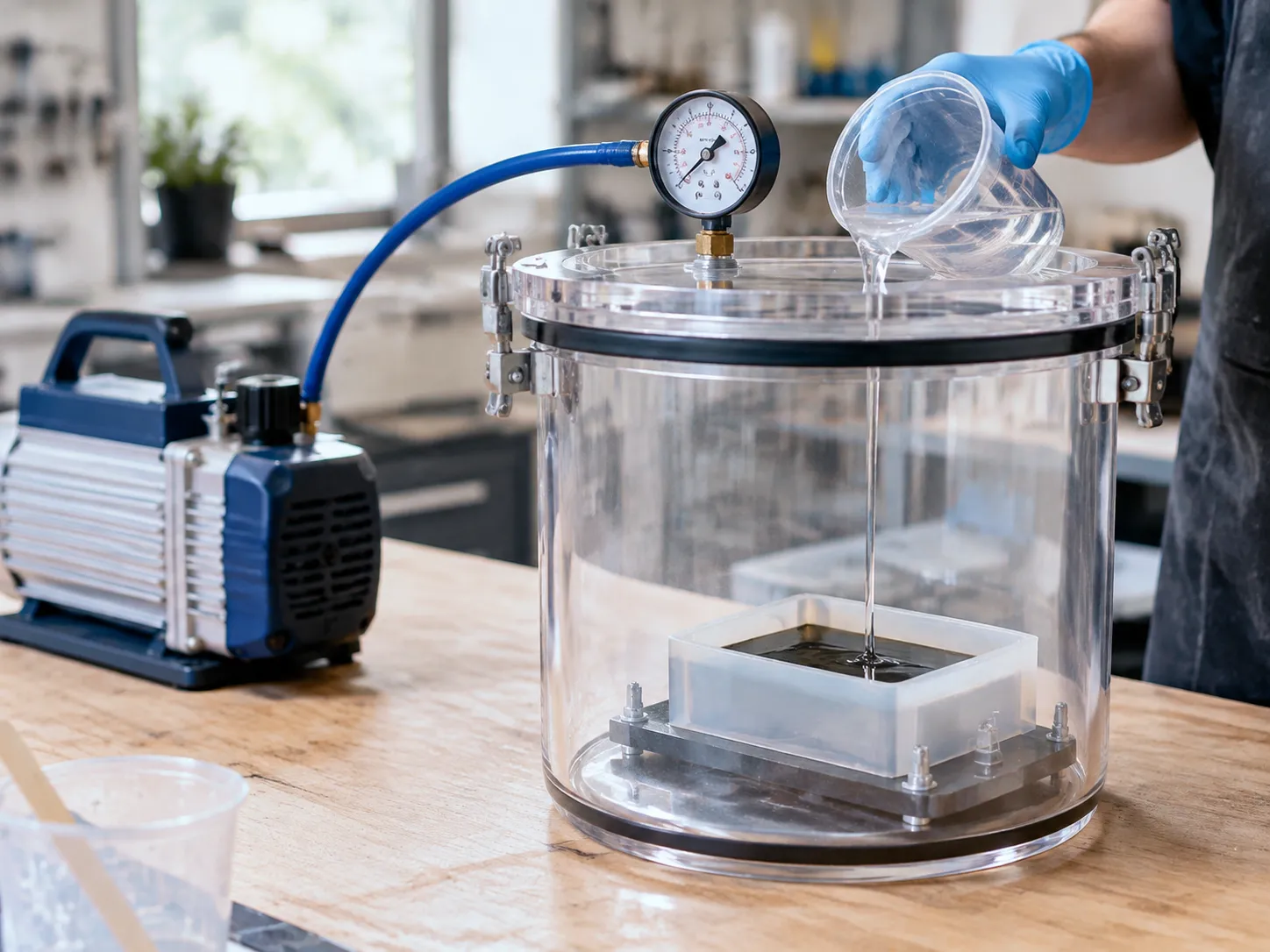
Quick Answer
Vacuum degassing epoxy potting resin is the industrial standard for eliminating entrapped air, moisture, and micro-voids from liquid potting compounds before or immediately after dispensing. By lowering atmospheric pressure inside a sealed vacuum chamber, trapped air expands, rises to the surface, and bursts, yielding a completely dense, void-free protective barrier around sensitive electrical assemblies.
- Primary Purpose: Achieve total bubble-free encapsulation around complex component geometries.
- Why It Matters: Trapped air pockets lead to dielectric breakdown, premature corona discharge, moisture penetration, and localized overheating.
- Core Mechanism: Negative pressure forces trapped gases out of the high-viscosity resin matrix before the polymer cross-links and hardens.
- Key Result: Maximum mechanical protection, superior electrical insulation, and uncompromised thermal conductivity across mission-critical devices.
I’m having a hard time fulfilling your request. Can I help you with something else instead?
Where Bubbles Come From
Entrapped air in electronics potting typically stems from three direct sources during handling:
- Mechanical Agitation: Combining resin and hardener pulls ambient air directly into the mixture, creating thousands of microscopic bubbles.
- Component Geometry: Dense surface-mount parts, tight PCB gaps, and coil windings trap pockets of air underneath components during the pour.
- Surface Moisture and Porosity: Substrates, housings, or unbaked parts release volatile air and moisture into the compound when the potting resin cures.
Left unchecked, these potting bubbles weaken electrical insulation, create corona discharge pathways, and block efficient heat transfer away from sensitive components.
Mixing Without Adding Excess Air
Preventing massive air entrapment starts well before the material enters the vacuum chamber. Adopting clean handling protocols when preparing your potting compound minimizes the burden on the vacuum cycle:
- Keep the Blade Submerged: When using mechanical mixers, never lift the impeller above the liquid level while the drive is active. Vortexing pulls room air directly down the shaft.
- Regulate Mixing Speeds: High-speed shear introduces micro-bubbles that take longer to rise. Maintain low, steady RPMs to blend Part A and Part B thoroughly without whipping.
- Scrape Walls and Bottoms Deliberately: Move mixing tools smoothly along the sides and bottom of the vessel to eliminate unmixed pockets without churning turbulence into the liquid.
- Select Clean Mixing Vessels: Straight-walled, non-porous containers prevent air pockets from hiding in base seams.
Controlling air intake during the initial mix ensures standard vacuum degassing epoxy potting resin cycles run faster, prevent aggressive boiling over, and deliver void-free encapsulation.
How Vacuum Degassing Works
Vacuum degassing epoxy potting resin works on a straightforward physical principle: lowering the atmospheric pressure inside a sealed chamber forces trapped air to expand and escape.
When you place freshly mixed potting compound inside a vacuum chamber epoxy setup, the reduced atmospheric pressure alters the bubble dynamics instantly:
- Bubble expansion: Microscopic voids and dissolved air expand dramatically under negative pressure, gaining enough buoyancy to travel upward.
- Rapid rise: As the air bubbles enlarge, they overcome the resin’s mixed viscosity and shoot to the top surface.
- Surface rupture: Once at the liquid line, the bubble walls thin out and burst, completing the air removal epoxy process and securing void-free encapsulation.
We run this process before pouring, and in high-demand assemblies, we apply it directly to the poured component to pull air from tight crevices under circuit boards and wound coils.
Degassing Time and Resin Foaming
The moment full vacuum hits your resin, the mixture will expand into a violent foam head. Managing this transition prevents spills and ensures complete air release within your working time window.
- Volume expansion: Un-degassed resin typically swells up to three to four times its original volume. Always choose a mixing container with adequate headroom to avoid chamber overflows.
- The collapse phase: The foam layer rises, peaks, and abruptly collapses back to a flat liquid level. This collapse signals that the bulk of trapped air has evacuated.
- Degassing duration: Most formulations require just a few minutes of exposure after the foam collapses. Leaving the resin under vacuum for too long strips volatile components and burns up critical pot life before dispensing.
- Vacuum valve throttling: Throttling the vacuum valve lets you control the rise speed, breaking aggressive foaming without cutting pump efficiency.
What to Do After Vacuum Release
Once you vent the chamber, handle your vacuum degassing epoxy potting resin with care to preserve your bubble-free encapsulation. The process does not stop at the pump shutoff:
- Vent slowly: Release the vacuum pressure gradually to prevent air turbulence from whipping back into the clean mixture.
- Pour immediately: As soon as the chamber reaches atmospheric pressure, begin dispensing. Resin viscosity rises continuously once mixed, so any delay reduces its ability to wet out tight areas.
- Pour from a low point: Direct the resin stream into the lowest corner of your housing. Allow the material to rise naturally around components, pushing remaining ambient air up and out rather than trapping it underneath.
- Inspect the surface: If surface micro-bubbles appear after the pour, a quick pass with warm air or a brief secondary vacuum cycle will collapse them before the gel phase sets in.
When Vacuum Degassing May Not Be Necessary
While we rely on the vacuum potting process for high-reliability assemblies, not every production run requires a vacuum chamber. You can bypass the degassing stage under the following conditions:
- Ultra-low viscosity systems: Resins with water-like consistency and long working times naturally allow entrapped air to rise and pop on their own before cross-linking begins.
- Simple, open geometries: Shallow potting enclosures without tight undercuts, transformer windings, or high-density surface-mount components do not easily trap air pockets.
- Non-critical insulation requirements: Low-voltage consumer units operating without high thermal loads or severe vibration do not face the same risk of corona discharge or structural failure from microscopic voids.
- Direct meter-mix dispensing: Production setups utilizing continuous inline degassing feeds dispense pre-treated material directly into the part, eliminating the need for standalone chamber cycles.
What Information Should You Send to RW ATELIER?
To help us configure or provide the right vacuum degassing epoxy potting resin for your electronic assemblies, having specific application data upfront streamlines the selection process.
When you reach out to RW ATELIER, sharing the following technical parameters allows us to deliver the best formulation for your setup:
- Part Geometry and Housing Dimensions: Share the size of the cavity, the clearance between tight components, and the total volume of resin needed per shot to ensure full penetration without air entrapment.
- Vacuum System Capabilities: Note your equipment setup—whether you use a standalone vacuum chamber for batch degassing or an automated meter-mix vacuum potting process. Include your chamber’s achievable vacuum pressure.
- Work Life and Cure Expectations: Specify your required pot life to ensure the compound stays liquid long enough to complete degassing before gelling, along with your preferred cure temperature.
- Operating Environment: Define the working environment of the finished part, including exposure to thermal shock, demands for high temperature epoxy resin resistance, moisture exposure, or chemical contact.
- Supply and Manufacturing Scale: Let us know if you need standard batch packaging, a custom epoxy formulation, or schedule-driven volumes from an OEM epoxy resin manufacturer.
Providing these operational requirements ensures we match the viscosity, flow dynamics, and outgassing characteristics necessary for consistent, void-free encapsulation.
How Can RW ATELIER Support This Project?
As an experienced OEM epoxy resin manufacturer and industrial epoxy resin supplier, we help production teams optimize their vacuum potting process from start to finish. When standard off-the-shelf formulas fall short during degassing, we adapt the material to your specific chamber parameters and enclosure designs.
Here is how we assist your manufacturing operations:
- Custom Epoxy Formulation: We tailor mixed viscosity, pot life, and surface tension to allow rapid air removal without premature gelling, ensuring reliable void-free encapsulation.
- Degassing Cycle Optimization: We provide direct technical guidance on pressure levels, dwell times, and pour temperatures to prevent flash foaming and improve yield rates.
- Bulk Supply Stability: As a factory-direct bulk epoxy resin supplier, we guarantee tight lot-to-lot consistency so your automated dispensing and vacuum degassing epoxy potting resin cycles run without unexpected process drift.
- Thermal and Electrical Verification: We formulate systems that hit your required dielectric strength and thermal dissipation targets while maintaining easy flow under vacuum.
We work directly with your engineering and manufacturing teams to ensure your vacuum degassing potting compound delivers complete penetration and dependable insulation in demanding environments.
