
Deep Pour Epoxy Viscosity and Yellowing Resistance
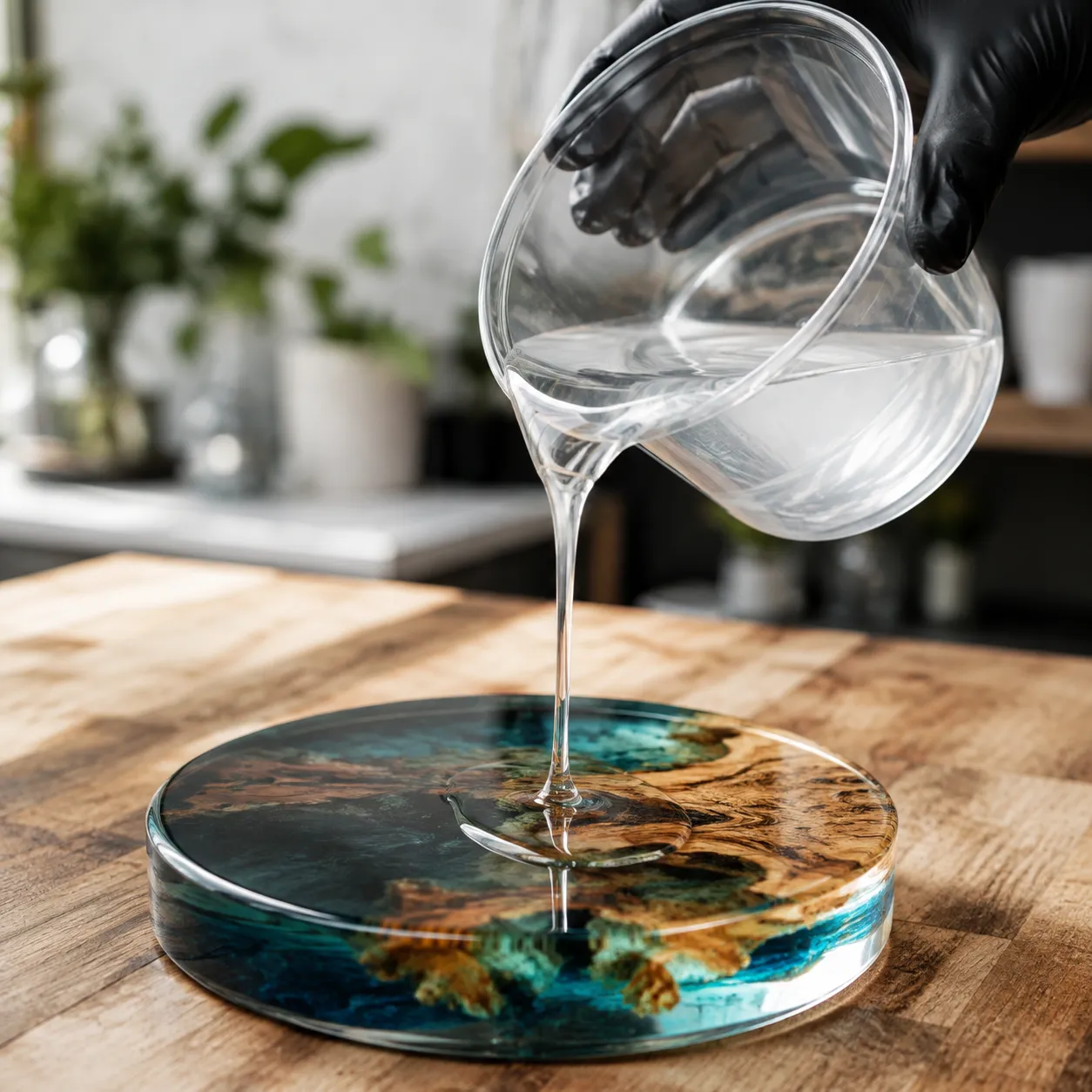
Are you struggling to achieve flawless, bubble-free thick castings? Getting the right deep pour epoxy viscosity is the single most critical factor between a pristine, crystal-clear finish and a ruined project.
In this guide, you will learn exactly how viscosity controls heat buildup, how to evaluate yellowing resistance, and the key selection factors every buyer needs to confirm before placing an order.
Let’s dive right in.
Quick Answer
What Buyers Need to Know First
Optimal deep pour epoxy viscosity ranges between 200 mPa·s and 600 mPa·s (cps) at initial mixing. A water-like, low viscosity casting resin is mandatory for deep applications to maintain exotherm control, prevent yellowing caused by overheating, and ensure total clarity.
- Maximizes Pour Depth: Ultra-low fluid viscosity allows single pours from 2 to 4 inches (50–100 mm) thick without thermal runaway, cracking, or shrinking.
- Automatic Bubble Release: Liquid-thin consistency enables trapped air bubbles to rise to the surface and pop naturally before the gel phase begins.
- Superior River Table Epoxy Flow: Penetrates deeply into porous wood, live edges, and intricate molds without leaving void pockets.
- Extended Exothermic Control: Slower reactivity keeps temperatures low during cure, protecting the resin matrix from severe heat discoloration.
Is any epoxy completely UV-proof?
Direct Answer
No epoxy resin is 100% UV-proof. While high-grade formulations resist yellowing exceptionally well, all epoxy resins eventually yellow when exposed to UV light over long periods. We formulate our low viscosity casting resin with advanced UV absorbers and Hindered Amine Light Stabilizers (HALS) to slow down this oxidation process significantly, keeping your pours clear for years. However, claiming complete, permanent immunity to UV damage is chemically inaccurate for epoxy chemistry.
Key Selection Factors or Failure Risks
When selecting a thick casting epoxy for light-exposed applications, pay close attention to these core factors and potential failure points:
- Thermal Exotherm Control: High peak curing heat degrades built-in UV stabilizers before the project even sets. Managing deep pour epoxy viscosity ensures controlled heat dissipation, protecting the protective additive package.
- Additive Synergy: Ensure the formula combines both UV absorbers (which block radiation) and HALS (which scavenge free radicals). Using only one additive type leads to early discoloration.
- Bubble Retention Risks: Entrapped micro-bubbles refract light and accelerate localized resin degradation. A high-performance bubble release resin allows trapped air to escape effortlessly thanks to optimized river table epoxy flow.
- Substrate Moisture: UV resistance drops significantly if moisture leaches into the cure from under-dried wood or damp substrates, triggering premature cloudiness.
Why Does Overheating Increase Discoloration in Deep Pour Epoxy?
Direct Answer
Overheating triggers thermal oxidation within the polymer matrix. Epoxy curing is an exothermic chemical reaction that produces heat. When thick casting projects trap this heat faster than it can escape, extreme temperatures break down the chemical bonds, causing immediate ambering, scorching, or premature yellowing. Managing deep pour epoxy viscosity is critical to controlling this process: a lower viscosity aids air release, but the curing chemistry must remain slow enough to prevent heat spikes during thick applications.
Key Selection Factors or Failure Risks
- Thermal Runaway Risk: Exceeding recommended pour depths traps heat inside the casting. High peak temperatures accelerate oxidation, permanently ruining clarity before the epoxy fully hardens.
- Viscosity and Heat Balance: Using a low viscosity casting resin promotes excellent river table epoxy flow and natural bubble release. However, low viscosity must be paired with slow-cure chemistry to manage deep-pour heat accumulation.
- Mass-to-Volume Control: Larger resin volumes retain heat much longer than thin layers. Formulating with a specialized thick pour epoxy slows the reaction rate, ensuring controlled heat dissipation across deep pours.
- Ambient Environment Factors: High shop temperatures speed up the exothermic reaction. Pouring thick casting epoxy in overly warm conditions increases heat generation, causing structural stress, cracking, and severe discoloration.
Do pigments hide or worsen yellowing?
Direct Answer
We find that pigments both hide and worsen yellowing depending on their chemical composition and opacity. High-grade opaque pigments like mica powders and titanium dioxide physically block UV light, completely masking yellow discoloration in thick pour epoxy. Conversely, cheap organic dyes break down under sunlight, accelerating ambering. When using a low viscosity casting resin, choosing UV-stable inorganic pigments ensures long-term color clarity without affecting the deep pour epoxy viscosity or flow performance.
Key Selection Factors or Failure Risks
- Pigment Opacity: Opaque pigments physically shield the resin matrix from UV rays, while translucent dyes allow light penetration, making underlying yellowing visible over time.
- Optical Brightening: Adding a microscopic trace of translucent blue or violet tint counteracts initial yellowing shifts in river table epoxy flow projects.
- Heat & Viscosity Impact: Overloading resin with dense paste pigments increases viscosity, hindering bubble release resin self-degassing properties and trapping excess exotherm heat.
- UV Stability Ratings: Pair high-volume castings with inorganic, industrial-grade colorants engineered to withstand long-term UV exposure without shifting tone.
How should yellowing resistance be compared?
Direct Answer
Compare yellowing resistance using standardized laboratory testing rather than marketing claims. Look for QUV accelerated weathering results (ASTM G154) and heat dissipation performance. Deep pour epoxy viscosity plays a critical role here—a low viscosity casting resin releases cure heat faster during a thick pour epoxy project, preventing initial thermal discoloration before UV exposure even begins.
Key Selection Factors or Failure Risks
- Verified QUV Test Hours: Demand lab data showing minimal color change (Delta E rating) after 500+ hours of continuous UV and moisture exposure.
- HALS + UV Absorbers: Ensure the formula includes both Hindered Amine Light Stabilizers (HALS) to protect the resin matrix and UV absorbers to filter light.
- Exotherm Management: Excessive heat in a thick casting epoxy causes immediate thermal ambering. A fluid formula controls heat buildup and functions effectively as a bubble release resin.
- Failure Risk: Evaluating clarity based on thin-coat samples rather than deep-pour specs leads to unexpected scorch marks and rapid yellowing in thick sections.
Can a topcoat improve outdoor durability?
Direct Answer
Yes, applying a UV-blocking polyurethane or acrylic clear coat significantly extends the outdoor lifespan of your project. While deep pour epoxy viscosity is engineered specifically for deep castings, self-leveling, and heat dissipation, standard epoxy resins lack permanent immunity to direct sunlight. Adding a high-performance topcoat creates a protective shield, protecting the underlying thick casting epoxy from yellowing, chalking, and loss of gloss.
Key Selection Factors or Failure Risks
- Surface Mechanical Interlock: Topcoats will peel if applied to a smooth surface. Cured low viscosity casting resin must be sanded with 220–320 grit sandpaper to create enough profile for a durable mechanical bond.
- Chemical Compatibility: Solvents in certain topcoats can react poorly with incompletely cured thick pour epoxy, leading to cloudiness, surface wrinkling, or permanent tackiness.
- Viscosity and Flow Differences: While deep pour epoxy viscosity relies on an ultra-low profile to maximize bubble release resin performance and river table epoxy flow, surface topcoats require higher film-building properties to protect against abrasion.
- Thermal Stress and Delamination: Outdoor temperature swings cause the thick epoxy core and the topcoat shell to expand at different rates. Using a rigid topcoat without flexural strength can trigger micro-cracking and eventual flaking.
What Information Should You Send to the Manufacturer?
Getting an exact chemical match requires clear communication upfront. Sharing your project specifications allows us to fine-tune the deep pour epoxy viscosity, cure profile, and heat resistance for your specific production environment.
Application, Substrate and Process Details
To recommend the right formulation, we need to understand your daily production workflow:
- Pour Thickness: State your target single-pour depth. Deeper pours require a low viscosity casting resin to prevent thermal runaway.
- Substrate Type: Specify if you are pouring over live-edge wood, metal, concrete, or silicone molds.
- Environmental Controls: Provide your typical shop ambient temperature and humidity levels.
- Degassing Setup: Note whether you use vacuum chambers or rely purely on self-venting bubble release resin formulas.
Performance, Packaging and Estimated Quantity
Detailing your commercial and technical expectations helps us deliver consistent bulk batches tailored to your brand:
| Parameter | Required Information | Operational Impact |
|---|---|---|
| Viscosity & Flow | Target deep pour epoxy viscosity (cps range) | Dictates air bubble release rate and deep penetration into porous substrates |
| Physical Specs | Required Shore D hardness, UV resistance, and heat limit | Determines long-term clarity, scratch resistance, and yellowing defense |
| Packaging Format | 1-gallon kits, 5-gallon pails, 55-gallon drums, or IBC totes | Streamlines factory floor handling and container logistics costs |
| Volume Forecast | Initial sample needs, batch sizes, and annual volume | Unlocks wholesale epoxy resin manufacturer pricing and private label options |
How Can Rongwei Support This Project?
We engineer high-performance formulations tailored to match your specific production requirements and market demands.
Sample Matching and Formula Adjustment
Getting the ideal deep pour epoxy viscosity is critical to preventing air entrapment and runaway thermal reactions. We fine-tune formulas directly to match your technical specifications:
- Viscosity Tuning: We adjust flow characteristics to create ultra low viscosity casting resin options optimized for deep penetration and smooth river table epoxy flow.
- Cure Profile Control: Formulations are calibrated for thick pour epoxy applications, extending working time and controlling exotherm heat spikes.
- Performance Enhancements: Tailored adjustments provide enhanced clarity, heat resistance, and specialized bubble release resin properties.
OEM / Private Label Packaging and Bulk Supply
As an established wholesale epoxy resin manufacturer, we deliver epoxy resin factory direct pricing alongside flexible packaging options to help scale your brand:
- Private Label Epoxy Resin: Full custom branding, custom label printing, and targeted container sizes designed for retail or industrial distribution.
- Bulk Supply Capabilities: Consistent supply chains and scalable ordering options from a dedicated bulk epoxy resin supplier.
- Batch Consistency: Rigorous quality control ensures every order of thick casting epoxy maintains precise physical properties and performance standards.
Buyer Checklist
Questions to Confirm Before Placing an Order
Before scaling up production or finalizing a bulk order with a wholesale epoxy resin manufacturer, we always recommend verifying these technical specs. Getting precise numbers upfront protects your profit margins and prevents job-site failures:
- What is the exact deep pour epoxy viscosity rating? Ensure the mixed viscosity sits between 200 and 600 cP. A true low viscosity casting resin ensures effortless self-leveling and optimal river table epoxy flow into complex wooden slabs.
- What is the certified maximum pour depth? Confirm whether the formula is rated for thick casting epoxy applications (e.g., 2 to 4 inches in a single pour) without triggering thermal runaway.
- Does the formula function as a true bubble release resin? Ask if air-release additives are active at ambient room temperatures to eliminate micro-bubbles without constant torching.
- What UV protection package is integrated into the hardener? Request test data on Hindered Amine Light Stabilizers (HALS) to measure long-term clarity retention against sunlight exposure.
- What is the working time versus full cure time? Match the pot life to your ambient shop temperature to avoid premature gelling on large projects.
- What are the direct factory supply options? Check minimum order quantities, private label epoxy resin capabilities, and bulk shipping logistics if you buy epoxy resin factory direct.
| Key Evaluation Parameter | Preferred Target for Deep Pours | Risk of Skipping Verification |
|---|---|---|
| Mixed Viscosity | Ultra-Low (200 – 500 cP) | Trapped air pockets, unlevel surfaces |
| Peak Exotherm | Under 80°C / 176°F | Resin boiling, cracking, severe yellowing |
| Max Thickness Limit | 2 to 4 inches (50mm – 100mm) | Exothermic flash-curing or soft center layers |
