
Epoxy Abrasion Resistance Test Methods Standards and Perform
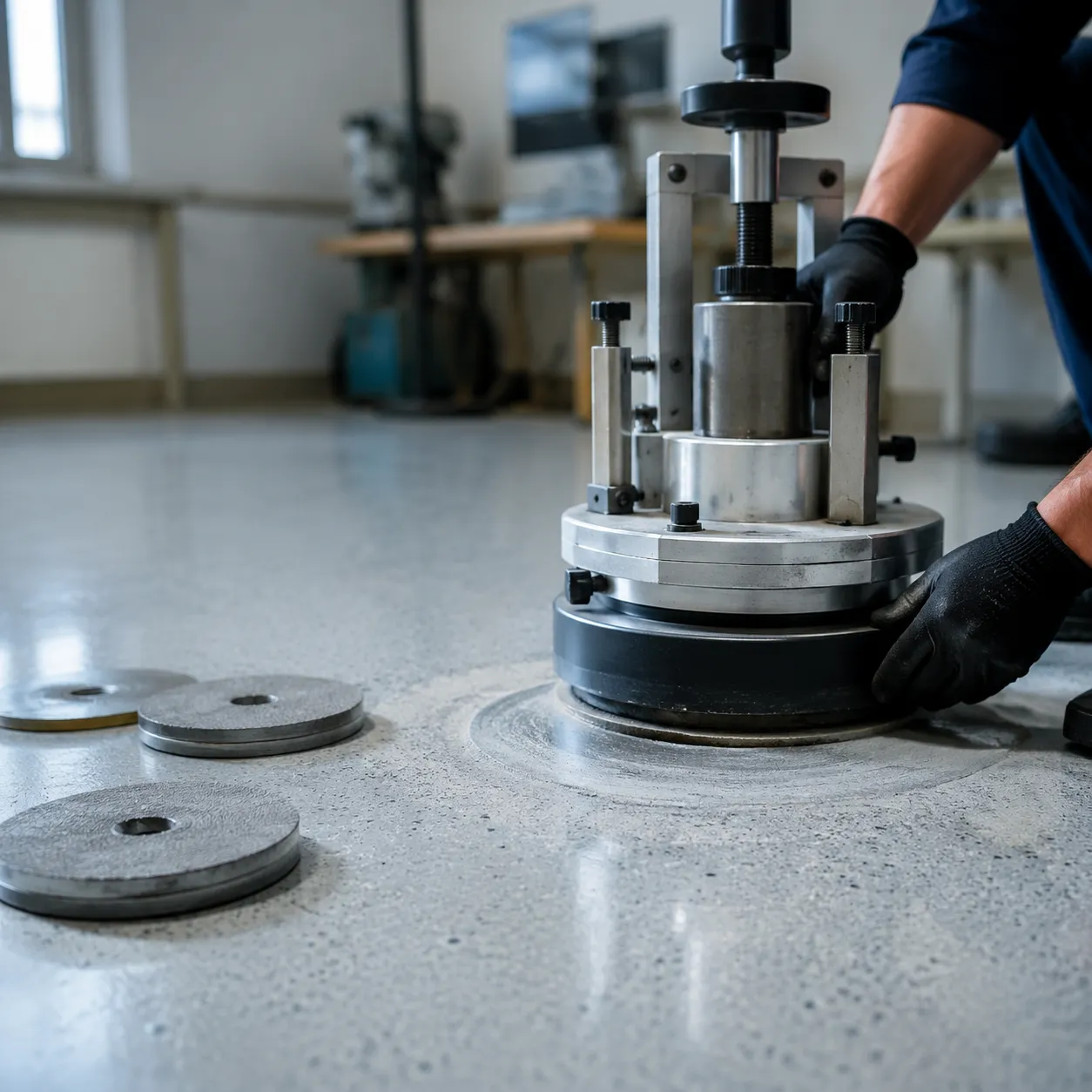
1. Epoxy Abrasion Resistance Test Methods
Evaluating epoxy abrasion resistance is a critical step to ensure industrial, commercial, and residential concrete floors can withstand heavy foot traffic, forklift operations, and mechanical wear. To accurately measure how well an epoxy coating resists surface degradation, manufacturers and quality control experts rely on standardized, quantifiable mechanical testing.
The Taber Abrasion Test
The most widely recognized industry standard for measuring the durability of resinous flooring is the Taber Abrasion Test. This method provides precise, accelerated wear data by subjecting the coating to a continuous rotating shearing action under controlled conditions.
- The Mechanism: A flat, circular epoxy test specimen is mounted on a rotating turntable. Two abrasive wheels are applied to the surface at a specific pressure.
- The Action: As the turntable revolves, the wheels drive in opposite directions, wearing a wear pattern of crossed arcs onto the epoxy film.
- Testing Variables: Load applied: Typically 500 grams or 1,000 grams per wheel.
- Abrasive wheel type: CS-17 (resilient rubber and aluminum oxide) or H-22 (hard vitrified) wheels are commonly used for industrial coatings.
- Duration: Usually run for 1,000 cycles.
Key Metrics for Wear Performance
To quantify the wear test results, two main calculations are used to determine the exact material loss:
| Metric | Measurement Method | Significance |
|---|---|---|
| Weight Loss (Mass Loss) | Measuring the sample weight before and after the test (in milligrams). | Lower milligram loss indicates superior wear resistance. |
| Taber Wear Index | Rate of wear calculated by loss in weight per target number of cycles. | Helps engineers forecast the actual lifespan of the floor under traffic. |
ASTM Standards for Epoxy Abrasion Resistance
When we evaluate the durability of our floor coatings, we rely on globally recognized ASTM standards to measure epoxy abrasion resistance. These benchmarks ensure our products stand up to heavy foot traffic, forklifts, and industrial wear.
The industry looks at a few critical testing standards to quantify how well a surface holds up:
- ASTM D4060 (Taber Abraser Method): This is the ultimate benchmark for a wear test. It measures the weight loss of the epoxy coating after being subjected to a specific number of revolving abrasive wheels under a set load. A lower weight loss means superior durability.
- ASTM D968 (Falling Sand Method): This standard determines how much organic coating resists abrasion caused by falling sand, offering insight into real-world erosive wear.
- ASTM C779: Specifically designed for horizontal concrete surfaces, this test evaluates the relative wear resistance of topcoats under different types of abrasive actions.
| ASTM Standard | Testing Mechanism | Key Performance Metric |
|---|---|---|
| ASTM D4060 | Taber Abraser (Rotary Wheels) | Mass Loss (mg) per 1,000 cycles |
| ASTM D968 | Falling Sand / Abrasive | Volume of sand required to wear through |
| ASTM C779 | Revolving Disks / Dressing Wheels | Depth of wear over time |
By adhering strictly to these ASTM guidelines, we guarantee that every batch of our epoxy flooring provides predictable, long-lasting protection against constant friction and impact.
Understanding Epoxy Abrasion Resistance and Performance
When we talk about floor durability, epoxy abrasion resistance is the ultimate benchmark. High-performance coatings don’t just look good; they survive heavy foot traffic, dragging pallets, and constant vehicular movement without wearing thin.
Key Performance Indicators
Evaluating how well a coating holds up under mechanical stress involves looking at specific wear metrics:
- Low Mass Loss: A premium formula loses minimal weight during a standard wear test, meaning the surface stays intact longer.
- Gloss Retention: High resistance ensures the floor keeps its shine and professional look, even in high-traffic zones.
- Scratch and Gouge Defense: True industrial-grade systems prevent deep gouges that can compromise the concrete substrate beneath.
| Performance Tier | Typical Weight Loss (ASTM D4060) | Ideal Application |
|---|---|---|
| Standard Commercial | < 60 mg | Retail shops, light warehousing |
| Heavy Industrial | < 30 mg | Manufacturing plants, logistics hubs |
| Extreme Duty | < 15 mg | Aerospace hangars, heavy machinery zones |
Why Wear Resistance Matters for Your Space
Investing in a system with proven epoxy abrasion resistance directly impacts your bottom line. Choosing a formula validated by recognized standards like ASTM testing means fewer shut-downs for repairs, longer recoat windows, and a safer, smoother surface for daily operations. High performance means total reliability under pressure.
