
Epoxy Potting Electronics Requirements and Properties
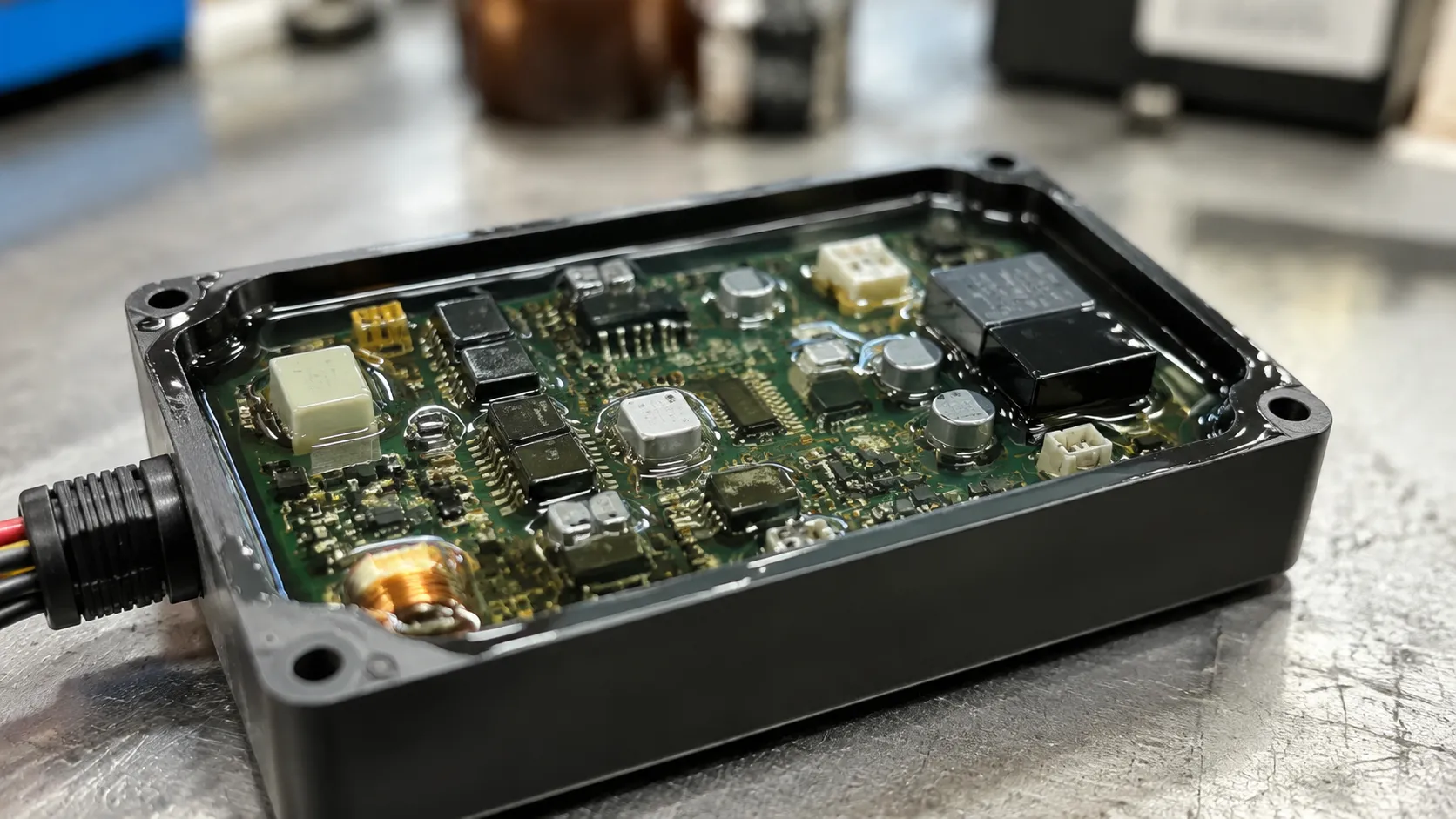
Are you struggling to protect your delicate components from moisture, shock, and extreme heat? Choosing the right epoxy potting electronics solution can mean the difference between a resilient, long-lasting device and catastrophic hardware failure.
You might already know that meeting rigorous electronic demands requires a perfect understanding of your encapsulation principles. But how do you match your specific design with the right material properties?
Well, you’re in for a treat because I’ve spent years analyzing what actually works in the lab and on the production floor. This guide goes beyond the basic datasheets to show you exactly how to shield your tech for maximum reliability.
Let’s dive right in.
Protecting Sensitive Microelectronics
Modern electronic components face increasingly harsh operating environments. From automotive sensor modules to high-frequency communication boards, the demand for epoxy potting electronics has skyrocketed. Sensitive circuits require robust protection against moisture, severe mechanical shock, thermal fluctuation, and corrosive chemical exposure to prevent premature field failures.
Key Electronic Vulnerabilities
- Moisture Ingress: Water tracking leads to parasitic leakage currents and catastrophic short circuits.
- Mechanical Stress: Vibrations in industrial and automotive applications can crack solder joints.
- Thermal Fatigue: Repeated heat cycling causes differential expansion between components, tearing apart delicate traces.
Shielding High-Voltage Systems
As device designs shrink while power densities rise, managing electrical insulation becomes a critical hurdle. Without adequate isolation, high-voltage components suffer from air arcing and corona discharge, which rapidly degrades nearby substrates.
Preventing Electrical Arcing
- Air Displacement: Liquid epoxy flows into complex geometries, eliminating air pockets where dielectric breakdown typically initiates.
- Dielectric Strength: Utilizing specialized potting compounds provides the high dielectric strength and reliable insulation required to contain high voltages within compact footprints.
- Signal Integrity: Eliminating environmental interference ensures clean signal transmission across high-density interconnects.
The Mechanics of Epoxy Potting Electronics
Protecting sensitive components requires more than just a physical barrier. When we use epoxy potting electronics setups, we are fundamentally altering how the device interacts with its environment. The process relies on liquid resins flowing into every gap, enveloping fragile circuitry before transitioning into a solid mass.
Deep Sealing and Void Elimination
- Complete Submersion: Liquid epoxy penetrates microscopic gaps under surface-mount components, displacing air pockets that could trap moisture or corrosive gasses.
- Preventing Curing Failure: Achieving the right mix ratio and temperature control is critical. Improper prep leads to unreacted sticky patches, structural weak spots, and compromised protection.
- Structural Uniformity: Once fully cured, the solid block distributes mechanical stress evenly, isolating delicate solder joints from external vibration and shock.
Establishing High Dielectric Strength
The core goal of encapsulation is electrical isolation. Unprotected circuits risk shorting out due to dust, moisture ingress, or high-voltage arcs.
| Protection Mechanism | How It Works | Key Benefit |
|---|---|---|
| High Dielectric Strength | The cured resin acts as an ultra-reliable electrical insulator, blocking current leakage even under high voltage. | Prevents short circuits and extends component lifespan. |
| Moisture Barrier | Creates a hermetic seal around the board. | Stops electrochemical migration and corrosion in humid conditions. |
| Thermal Dissipation | Specialized potting compounds draw heat away from hot components. | Eliminates localized hot spots without needing bulky heatsinks. |
Material Properties of Epoxy Potting Electronics
Choosing the right formulation determines the ultimate survival of your components. When selecting an epoxy potting electronics compound, the material properties must match both your manufacturing environment and the final operational stresses.
Key Performance Metrics
- Dielectric Strength: High insulation capacity is non-negotiable. The material must prevent electrical arcing and leakage across high-voltage components, even in compact designs.
- Thermal Conductivity: Effective heat dissipation prevents hot spots, drawing thermal energy away from sensitive semiconductors to prolong device lifespan.
- Shrinkage Rate: Low shrinkage during cross-linking ensures the cured resin does not exert undue mechanical stress on fragile surface-mount components.
| Property | Critical Benefit for Hardware |
|---|---|
| High Dielectric Strength | Reliable electrical insulation and arc prevention |
| Optimized Viscosity | Deep penetration into tight gaps without air voids |
| Low Thermal Expansion | Maintains structural integrity during temperature swings |
Preventing Curing Failure
Achieving these optimal properties requires strict adherence to processing guidelines. A curing failure ruins production yields and compromises the protective barrier.
- Mix Ratios: Precise weight or volume balancing of resin and hardener is required to ensure complete cross-linking.
- Temperature Control: Maintaining correct ambient and post-cure temperatures prevents incomplete chemical reactions and sticky residues.
- Moisture Sensitivity: Keeping components and mixing environments dry eliminates bubbles and voids that degrade dielectric strength.
