
Epoxy Prepreg Resin System Guide for Buyers
Quick Answer
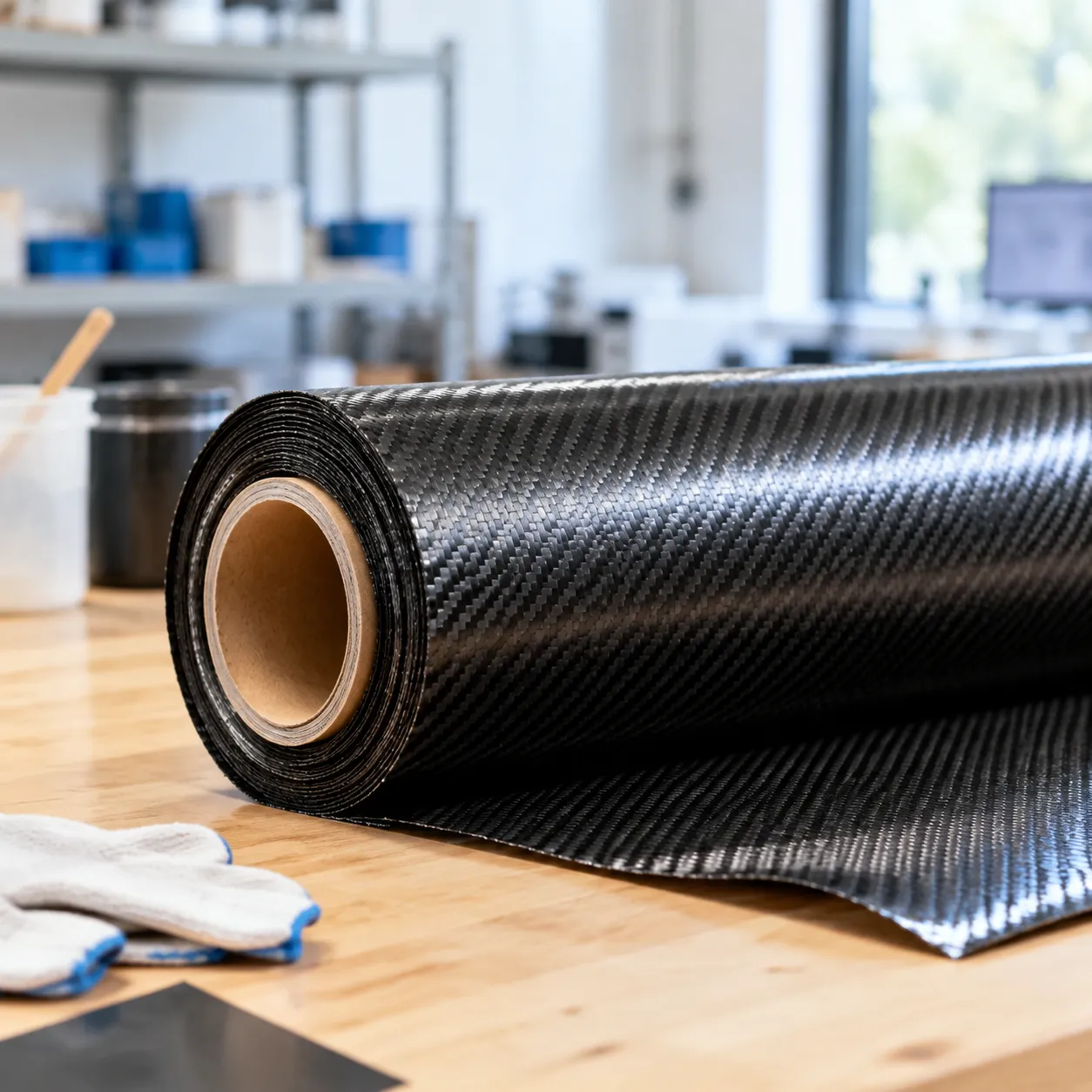
An epoxy prepreg resin system is a specialized, partially cured (B-stage) thermoset formulation pre-impregnated into structural fibers—such as carbon, glass, or aramid. Designed for high-performance composite manufacturing, it eliminates manual wet layups by delivering precise matrix-to-fiber ratios, consistent fiber alignment, and superior structural integrity.
- Precise Resin Content: Delivers consistent mechanical performance and void-free laminates by strictly controlling the resin-to-fiber weight ratio.
- Controlled Viscosity Profile: Engineered for controlled flow during heat-activated cure cycles, ensuring complete fiber wet-out without resin starvation.
- Optimized Workability: Balances tack and drape for efficient layup on complex geometric molds before final consolidation in an autoclave, oven, or hot press.
- High Thermal & Mechanical Properties: Provides robust glass transition temperatures ($T_g$), extreme toughness, and high fatigue resistance across demanding aerospace, automotive, and industrial applications.
What Buyers Need to Know First
Before sourcing an epoxy prepreg resin system, you need to look beyond raw mechanical datasheets. A formulation that excels in an aerospace autoclave will often fail in rapid compression molding or standard vacuum bagging if the rheology, latency, and tack are mismatched to your tooling setup.
As an OEM epoxy resin manufacturer and direct supplier, we advise buyers to lock down these critical baseline parameters before finalizing specifications:
- Processing Compatibility: Match the resin chemistry to your shop floor equipment—autoclave, Out-of-Autoclave (OOA/VBO), or high-pressure compression molding.
- Impregnation Method: Select a hot melt prepreg resin for ultra-low void content and zero residual volatiles, or a solvent-dip system for specific fabric weaves requiring deep wet-out.
- Thermal Thresholds: Define your target glass transition temperature ($T_g$). Standard systems handle up to 120°C, while a high temperature epoxy resin handles service environments above 180°C–220°C without mechanical drop-off.
- Logistics & Handling: Factor in sub-zero freight and storage requirements. Ensure your facility can maintain -18°C storage to preserve the chemical B-stage until layup.
| Procurement Factor | Target Specification | Impact on Production |
|---|---|---|
| Resin Matrix | Standard vs. Toughened Epoxy | Sets impact resistance, fracture toughness ($G_{1c}$), and interlaminar shear strength. |
| Tack Level | Low, Medium, or High Tack | Dictates ply repositioning and mold adherence during complex shape layups. |
| Cure Envelope | Low-temp (80°C) to Fast-cure (130°C–150°C) | Dictates tool turnover speed, energy costs, and exotherm risk in thick laminates. |
| Out-Time Budget | 10 to 30+ Days at 21°C | Sets the maximum allowable floor life before resin aging affects flow and consolidation. |
How an Epoxy Prepreg System Works
An epoxy prepreg resin system combines high-strength reinforcement fibers (carbon, glass, or aramid) with a precisely formulated, partially cured (B-staged) epoxy matrix.
Instead of dealing with wet layups and inconsistent resin ratios on the shop floor, we use a controlled hot melt prepreg resin process to coat the fibers evenly.
Key working mechanisms include:
- Controlled Matrix Chemistry: The pre-catalyzed epoxy stays stable at low temperatures and only reacts fully under heat and pressure.
- Exact Resin Content: We maintain strict resin-to-fiber ratios (typically 32% to 42% by weight), eliminating dry spots and resin-rich zones.
- Void Reduction: Uniform impregnation prevents air pockets inside the fiber bundles before the curing cycle begins.
| Feature | Standard Wet Layup | Epoxy Prepreg System |
|---|---|---|
| Resin Control | Manual (High variance) | Automated (±1% tolerance) |
| Fiber Wet-Out | Operator-dependent | 100% factory pre-impregnated |
| Air Entrapment | Moderate to High | Minimal |
| Cleanliness | Messy, high VOCs | Clean, low VOC, dry handling |
Tack and Drape Requirements
Handling performance depends entirely on two mechanical properties: tack and drape. Finding the right balance ensures your team can lay up complex parts without material lifting or fiber wrinkling.
- Tack (Surface Adhesion): The controlled stickiness that holds plies in place against the mold tool and adjacent plies without slipping. It must be strong enough to adhere on vertical surfaces, yet allow repositioning if an operator misaligns a layer.
- Drape (Conformability): The flexibility of the uncured prepreg to contour over compound curves, tight radii, and deep pockets without bridging or buckling.
| Performance Level | Tack Characteristics | Drape Capability | Ideal Application |
|---|---|---|---|
| High Tack / High Drape | Aggressive bond, instant stick | Excellent over deep draws | Complex geometries, vertical molds |
| Medium Tack / High Drape | Balanced, easily repositionable | Smooth flex over contours | Standard aerospace & automotive panels |
| Low Tack / Stiff Drape | Dry feel, slides into position | Flat to mild curvature | Automated Fiber Placement (AFP), flat plates |
We tailor our prepreg epoxy formulations to your exact shop floor temperature and part complexity, giving you the precise tack and drape needed for zero-defect layups.
Resin Flow During Cure
Controlling resin flow during the heating phase determines the structural integrity of your finished part. As heat rises, the viscosity of our epoxy prepreg resin system drops sharply before gelation begins. This low-viscosity window allows the resin to fully wet out dry fiber bundles and release entrapped air without washing out the laminate.
- Viscosity Minimum: The sweet spot where the resin flows freely to fill micro-voids before cross-linking locks it in place.
- Flow Control: Formulated to prevent resin starvation in high-pressure areas while maintaining full wet-out at the corners.
- Net-Resin Processing: Eliminates the need for messy bleeder plies by precisely metering resin content to retain the exact target fiber-to-resin ratio.
Cure Cycle and Consolidation
Achieving complete laminate consolidation requires balancing the temperature ramp rate with compaction pressure. Whether processing in an autoclave, a heated press, or using vacuum-bag-only (out-of-autoclave) curing, our prepreg cure cycle parameters deliver void contents below 1%.
| Stage | Process Action | Function |
|---|---|---|
| Initial Ramp | 1–2 °C/min heating rate | Lowers resin viscosity gradually to initiate prepreg resin flow. |
| Pressure Dwell | Full vacuum or 3–7 bar positive pressure | Consolidates plies, collapses voids, and drives out air paths. |
| Final Soak | Target cure temp (120 °C to 180 °C) | Completes polymer cross-linking to establish Tg and mechanical strength. |
| Controlled Cool | < 2 °C/min cooling rate | Prevents internal thermal stresses and matrix micro-cracking. |
Storage Life and Out-Time
Managing temperature is critical when handling an epoxy prepreg resin system. Because the resin and hardener are already mixed on the fabric, chemical reaction begins the moment the material leaves the freezer.
We engineer our formulations to balance long shelf stability with practical floor handling:
- Cold Storage Life (-18°C / 0°F): Typically 6 to 12 months. Keeping the prepreg sealed at sub-zero temperatures halts resin advancement and preserves chemical reactivity.
- Shop-Floor Out-Time (21°C / 70°F): Ranging from 10 to 30+ days depending on the specific hardener package. This is the cumulative room-temperature window you have to cut, lay up, debulk, and cure the part.
- Moisture Protection: Always let frozen rolls warm up to ambient temperature inside their sealed moisture-barrier bags before opening. Introducing condensation directly causes dry spots, porosity, and surface blisters during cure.
| Storage Condition | Typical Duration | Key Focus Area |
|---|---|---|
| Freezer (-18°C) | 6–12 Months | Prevent premature polymerization |
| Thawing Window | 24 Hours (sealed) | Eliminate condensation on cold rolls |
| Out-Time (20–25°C) | 14–30 Days | Retain resin tack, drape, and flow |
How to Validate Laminate Performance
To ensure an epoxy prepreg resin system delivers full mechanical strength, we validate every batch using straightforward destructive and non-destructive checks:
- Glass Transition Temperature (Tg) Testing: Run via DSC or DMA to confirm the resin reached full crosslink density during the cure cycle.
- Void Content & Microsectioning: Polishing a cross-section under optical microscopy verifies whether consolidation pressure successfully removed air pockets. We target void content under 1% for structural components.
- Interlaminar Shear Strength (ILSS): Short-beam shear tests (ASTM D2344) confirm the resin-to-fiber bond strength and matrix integrity.
- Visual & C-Scan Inspection: Ultrasonic scanning detects hidden delaminations or dry patches before parts move to final machining.
What Information Should You Send to RW ATELIER?
When you contact us for a custom epoxy prepreg resin system, providing clear project specs upfront helps our engineering team match or formulate the exact system you need without delay. As an OEM epoxy resin manufacturer, we tailor formulations to your specific tooling, fiber, and cure setups.
To get an accurate technical assessment and quote, share the following details:
- Reinforcement Fabric Type: Specify whether you use carbon fiber, fiberglass, aramid, or hybrid weaves, along with the aerial weight (gsm) and weave style (plain, twill, or unidirectional).
- Target Processing Method: Let us know if you run an autoclave, standard vacuum bag only (out-of-autoclave), or a compression molding/hot-press line.
- Thermal & Operating Demands: State your required dry/wet Tg, continuous service temperature, or whether you need a cryogenic epoxy resin or high temperature epoxy resin formulation.
- Handling & Shop-Floor Needs: Detail your desired tack and drape level, target resin content by weight (RC%), and required out time prepreg window at standard shop temperatures.
- Cure Cycle Parameters: Note your target prepreg cure cycle limits, ramp rates, maximum temperature, and allowable soak times.
- Regulatory & Volume Specs: Include fire retardancy ratings (such as UL94 or FAR standards), chemical resistance needs, and expected production volume for bulk epoxy resin supplier logistics.
Providing these operating points allows us to recommend the ideal hot melt prepreg resin or engineer a bespoke solution directly from our factory floor.
How Can RW ATELIER Support This Project?
We work directly with your engineering and manufacturing teams to supply the exact epoxy prepreg resin system your project demands. As a dedicated OEM epoxy resin manufacturer and custom epoxy formulation partner, we eliminate the supply chain friction between laboratory design and high-volume part production.
Direct Engineering and Manufacturing Capabilities
- Custom Epoxy Formulation: We tailor the glass transition temperature (Tg), viscosity curves, mechanical toughness, and reactivity profiles to match your target consolidation cycle—whether that requires an autoclave cure, quick press-molding, or low-temperature out-of-autoclave (OOA) processing.
- Extreme Environment Formulations: Access high temperature epoxy resin systems designed for structural aerospace service or specialized cryogenic epoxy resin matrices engineered for zero-microcracking in extreme cold storage and space hardware.
- Hot Melt Prepreg Resin Development: We deliver stable, solvent-free hot melt prepreg resin films and pre-mixed bulk formulations configured for standard unidirectional (UD) tape and fabric filming lines.
- Bulk Supply and Factory-Direct Consistency: As an industrial epoxy resin supplier, we provide epoxy resin factory direct in drums, totes, or custom batch sizes, backed by strict lot-to-lot rheological tracking, gel time verification, and certified quality reporting.
| Support Phase | RW ATELIER Deliverables |
|---|---|
| Material Selection & Formulation | Custom resin modification, cure kinetics analysis, and out-time optimization |
| Process Scale-Up | Film casting trials, viscosity-temperature mapping, and lay-up troubleshooting |
| Commercial Supply | Reliable bulk volume manufacturing, cold-chain shipment coordination, and full technical documentation |
We help you shorten validation timelines, reduce scrap rates, and secure reliable material supply from initial prototyping all the way to full-scale commercial manufacturing.
