
Epoxy Primer for Carbon Fiber Custom Formula Bulk Supply
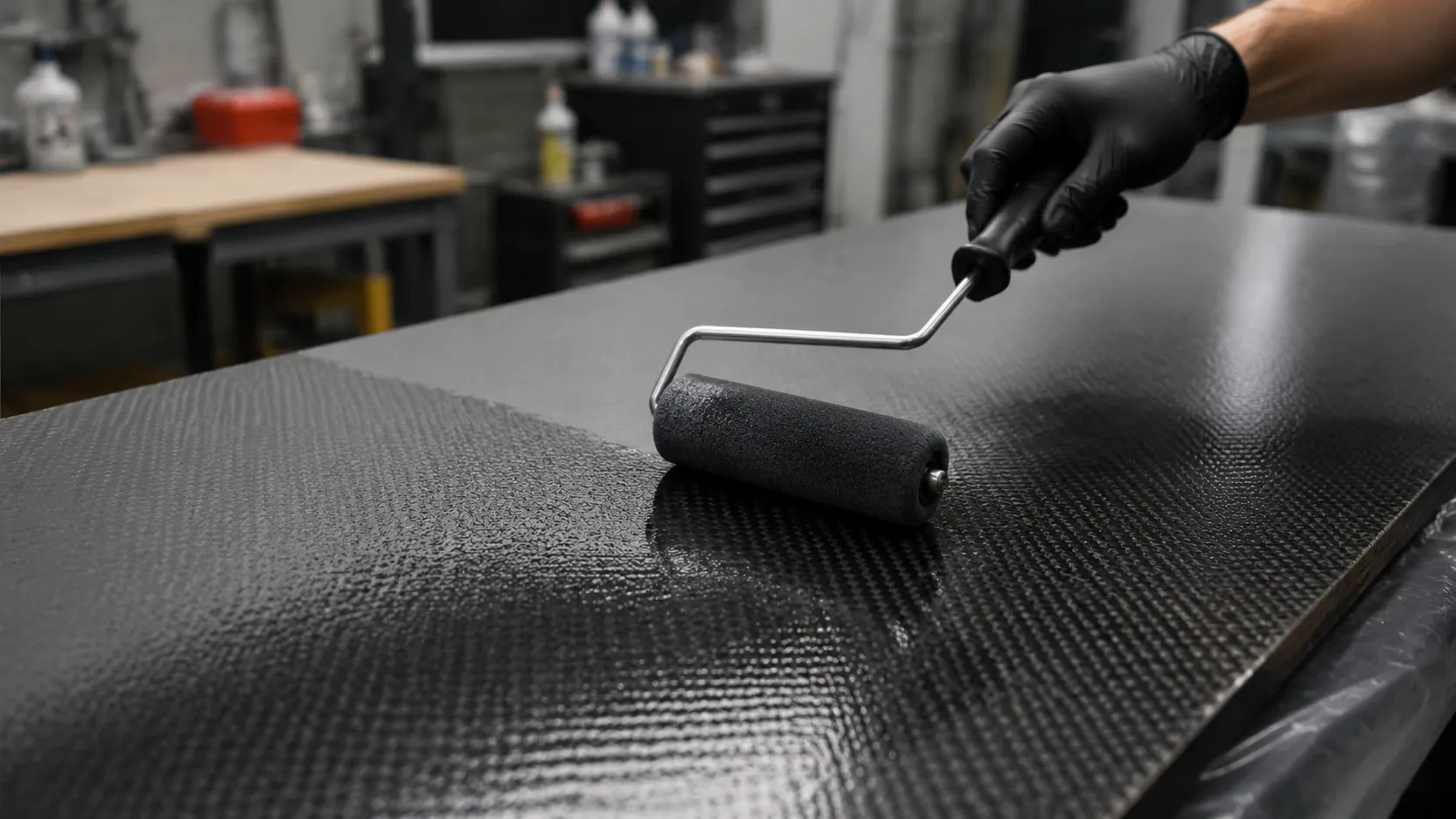
What Is Epoxy Primer for Carbon Fiber Used for in Composite and Fiberglass Resin?
An epoxy primer for carbon fiber serves as a critical foundational layer in high-performance composite manufacturing and finishing. It bridges the gap between the raw composite substrate and the final surface coating, ensuring maximum structural integrity and a flawless finish.
Main Application Scenarios
- Automotive Carbon Fiber: Used on lightweight body panels, hoods, and aerodynamic components to prepare surfaces for automotive-grade paint.
- Sports Equipment Coating: Applied to carbon fiber bicycles, tennis rackets, and hockey sticks to provide impact resistance and a sleek finish.
- Marine Composites: Utilized on fiberglass hulls and carbon fiber masts to create a barrier against harsh aquatic environments.
- Aerospace Components: Deployed on interior and exterior composite panels requiring extreme durability and precise tolerances.
Required Material Properties
To perform effectively on advanced substrates, a premium composite epoxy primer must possess specific technical characteristics:
| Property | Benefit for Carbon Fiber & Fiberglass |
|---|---|
| Superior Mechanical Adhesion | Acts as an aggressive adhesion promoter to prevent delamination. |
| Micro-Pore Sealing | Fills pinholes and microscopic voids inherent in carbon fiber weaves. |
| High Flexibility | Flexes alongside the composite material without cracking under stress. |
| Excellent Sandability | Blocks out smoothly to create a perfectly flat surface for topcoats. |
Common User Expectations
Global manufacturers and composite technicians demand reliability and efficiency from a surface coating. Users expect the primer to offer exceptional UV protection to prevent the underlying resin from yellowing or degrading under sunlight. Furthermore, the product must cure predictably, minimize shrinkage, and provide a chemically stable base that is compatible with various polyurethane, acrylic, and epoxy topcoats.
Performance Requirements for Composite and Fiberglass Resin
Clarity, gloss, and appearance
When applying an epoxy primer for carbon fiber, the visual outcome is just as critical as the structural integrity. High-end applications require an epoxy primer for carbon fiber that delivers a crystal-clear, water-white finish without any cloudiness. This ensures the distinctive weave of the automotive carbon fiber or sports equipment coating remains fully visible and sharp.
- High Gloss: Achieves a mirror-like shine directly out of the mold.
- Optics: Zero distortion across the composite surface.
- Yellowing Resistance: Advanced UV protection prevents Ambering over time.
Adhesion and durability
A premium composite epoxy system must form an unbreakable mechanical and chemical bond with both the substrate and the topcoat. As a dedicated adhesion promoter, the primer locks onto the carbon matrix to eliminate the risk of delamination under extreme mechanical stress.
| Performance Metric | Target Standard | Benefit |
|---|---|---|
| Interlaminar Adhesion | Cross-hatch testing (5B) | No peeling under stress |
| Impact Strength | High toughness | Resists rock chips and cracks |
| Flexibility | Matches composite flex | Prevents surface cracking |
Temperature, moisture, and chemical resistance
Composite parts often operate in harsh environments. The surface coating must act as a barrier against environmental degradation, preserving the underlying structure from moisture intrusion and chemical exposure.
- Thermal Stability: Maintains integrity during high-temperature cycles without softening.
- Moisture Block: Prevents water absorption that causes blistering or osmotic failure.
- Chemical Shield: Resists fuels, oils, solvents, and harsh cleaning agents common in automotive and marine settings.
How to Select the Right Epoxy Primer for Carbon Fiber
Choosing the correct composite epoxy system ensures your surface coating bonds permanently without degrading the underlying weave. The right primer acts as a dedicated adhesion promoter, sealing the porous carbon fiber while creating a flawless base for topcoats or UV protection layers.
Recommended Formula Type
For high-performance applications like automotive carbon fiber and sports equipment coating, a two-component (2K) modified epoxy primer is the industry standard. Unlike standard primers, these specialized formulas are engineered with low viscosity to penetrate the micro-gaps in carbon weaves, preventing pinholes and delamination.
Mixing Ratio and Curing Conditions
Precise execution during the mixing and curing phase prevents soft curing and ensures maximum structural integrity.
| Parameter | Standard Specification | Key Considerations |
|---|---|---|
| Mixing Ratio (Epoxy AB Glue) | 2:1 or 4:1 by weight/volume | Follow the specific formula sheet exactly; do not alter ratios to speed up curing. |
| Pot Life | 20–30 minutes at 25°C | Mix smaller batches to avoid premature gelling during large applications. |
| Curing Temperature | 22°C–25°C (Room Temp) or Heat Cure | Ambient cure works for standard parts; elevated post-curing (60°C) maximizes thermal resistance. |
| Full Cure Time | 24 hours | Wait for complete cross-linking before sanding or applying subsequent PU glue or topcoats. |
Packaging and Bulk Order Options
As a direct custom epoxy resin manufacturer, we provide scalable packaging solutions out of our Dongguan factory to fit both OEM/ODM development and high-volume assembly lines.
- Sample Testing Kits: 1 kg to 5 kg kits for initial formula validation and bench testing.
- Commercial Bulk Supply: 20 kg pails and 200 kg drums for streamlined factory integration.
- Compliance & Standards: All shipments include comprehensive SDS/MSDS documentation and match strict ISO 9001 quality management baselines.
Common Problems and Solutions
Bubbles, yellowing, or soft curing
Working with a surface coating like an epoxy primer for carbon fiber requires precision. If you encounter issues during application, they usually stem from mixing or environmental factors.
- Bubbles: Often caused by mixing too fast or applying the coat in direct sunlight.
- Solution: Mix the composite epoxy slowly in a clean container. Use a heat gun or torch lightly over the surface right after application to pop trapped air.
- Yellowing: Standard resins degrade under solar exposure.
- Solution: Always ensure your formula includes built-in UV protection to prevent ambering on your final parts.
- Soft Curing: This happens due to incorrect mixing ratios or low workshop temperatures.
- Solution: Double-check the weight ratio of your epoxy AB glue. Keep your workspace above 20°C (68°F) during the curing cycle.
Surface defects and poor leveling
Achieving a mirror-like finish on automotive carbon fiber or high-end sports equipment coating projects demands a flawless wet-out.
| Defect Type | Main Cause | Quick Fix |
|---|---|---|
| Fish Eyes / Craters | Surface contamination (oil, silicone, wax) | Clean the composite substrate thoroughly with an alcohol-based degreaser before spraying. |
| Orange Peel | High viscosity or improper spray pressure | Thin the primer according to spec or adjust your spray gun fluid delivery. |
| Poor Leveling | Coating drying too fast | Avoid heavy drafts and ensure the ambient temperature matches the technical data sheet requirements. |
How to test before mass production
Never skip the trial phase before running a large batch in production. Safeguard your yield by following these steps:
- Prepare a Sample Panel: Use a small piece of the exact carbon fiber scrap material from your production line.
- Apply the Adhesion Promoter: Spray or brush the primer coat under standard shop conditions to test flow and leveling.
- Cross-Hatch Adhesion Test: Once fully cured, perform a tape pull test to verify the mechanical bond strength.
- Check Chemical Resistance: Expose the cured sample to typical shop solvents to ensure the barrier holds up perfectly.
RW Atelier Custom Manufacturing Support
Formula adjustment
We tailor every epoxy primer for carbon fiber to match your exact production line requirements. As an experienced custom epoxy resin manufacturer, our Dongguan factory engineers the ideal viscosity, gel time, and curing speed for your specific application. Whether you need an advanced adhesion promoter for automotive carbon fiber parts or a specialized composite epoxy for sports equipment coating, we modify the chemical matrix to maximize performance. Our R&D team ensures your custom Epoxy AB glue or PU glue formulas achieve perfect compatibility with your substrate while strictly maintaining ISO 9001 quality standards.
Private label packaging
Get market-ready products with our full OEM/ODM private label solutions. We handle everything from custom container sizing to professional branding, ensuring your carbon fiber primer or UV resin line stands out on the shelves.
- Custom Volume Options: Small retail kits to large industrial drums.
- Complete Compliance: All shipments include localized SDS/MSDS documentation.
- Turnkey Logistics: Branded packaging designed for safe international transport and immediate distribution.
Sample and bulk quotation
We streamline your procurement process with transparent pricing and rapid turnaround times. We support your validation process from initial sample testing up to full-scale bulk supply runs.
| Order Type | Minimum Order Quantity (MOQ) | Lead Time | Ideal For |
|---|---|---|---|
| Evaluation Sample | Small test batches | 3–5 Days | Lab testing & performance validation |
| Standard Wholesale | Mid-tier volume | 7–14 Days | Regional distributors & mid-size factories |
| Industrial Bulk | Container load / Pallets | 15–21 Days | Large-scale manufacturing & global brands |
