Epoxy Resin Yellowing Prevention with UV Resistant Resin
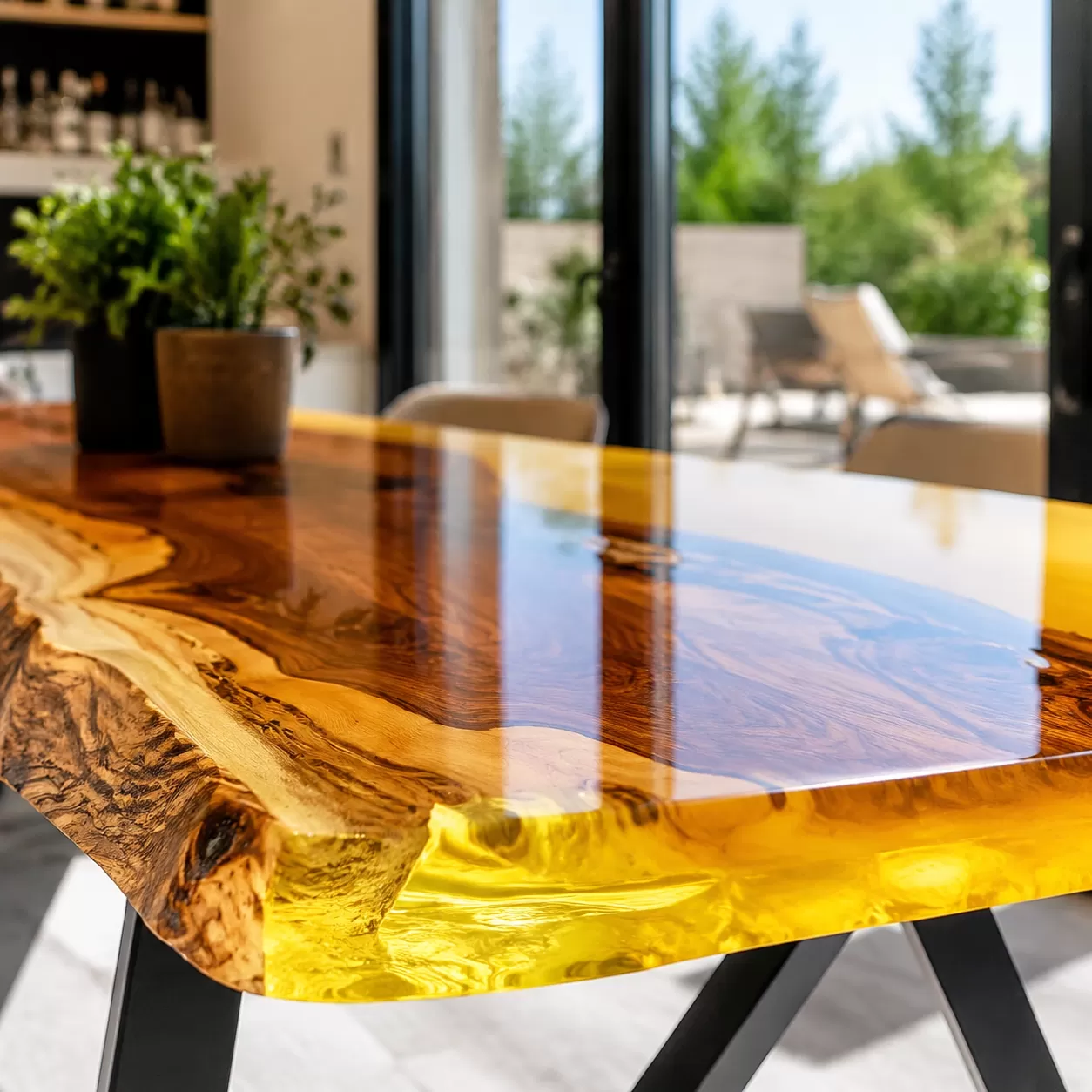
The Science of Yellowing: UV, Oxidation and Temperature
Epoxy resin yellowing is a natural chemical degradation process, primarily driven by three environmental catalysts: ultraviolet (UV) radiation, oxidation, and thermal exposure. Understanding these mechanisms is essential for maintaining the pristine, water-clear finish required for high-end applications.
UV Radiation and Photo-Degradation
When clear epoxy resin is exposed to sunlight or artificial UV rays, the polymers absorb this high-energy light. This absorption triggers a process called photo-degradation, breaking down the chemical bonds within the cured matrix.
- Aromatic Rings: Standard epoxies often contain bisphenol A (BPA), which includes aromatic benzene rings.
- Quinone Formation: UV light breaks these molecular chains, causing them to rearrange into complex structures called quinones.
- The Visual Result: Quinones possess a naturally strong yellow-brown pigment, which visibly discolours the once-transparent resin.
Atmospheric Oxidation
Oxidation occurs when the surface of the cured epoxy reacts with oxygen in the air. This chemical reaction happens continuously, even in indoor environments without direct sunlight.
Key Fact: Oxidation attacks the carbon-hydrogen bonds within the resin, turning them into carbonyl groups. This slow chemical breakdown compromises both the epoxy color stability and the structural integrity of the coating over time.
Thermal Degradation
Temperature fluctuations significantly accelerate transparent resin degradation. High ambient heat or internal peak exotherm temperatures during the curing phase can scorch the polymer chains.
| Degradation Factor | Primary Catalyst | Core Impact on Epoxy |
|---|---|---|
| UV Rays | Sunlight / UV Lamps | Breaks chemical bonds, creating yellow quinones. |
| Oxidation | Ambient Oxygen | Causes surface discolouration and loss of gloss. |
| Temperature | High Heat / Exotherm | Accelerates the aging process and darkens the resin. |
To achieve long-term resin durability, an advanced formulation must specifically counteract these three distinct environmental stressors.
Why Some Epoxy Resins Are More UV-Stable Than Others
Not all resins are created equal, and their chemical structure determines how they handle sunlight. Standard epoxies often rely on cheap aromatic compounds like Bisphenol A (BPA). While BPA provides excellent structural strength, its molecular bonds easily break down under ultraviolet light, leading to rapid ambering.
For projects requiring long-term resin durability, aliphatic compounds or hydrogenated formulations offer far superior epoxy color stability. These advanced chemical chains do not absorb UV light in the same damaging spectrum, meaning the cured material stays crystal clear for years.
| Resin Type | UV Resistance | Best Used For | Yellowing Risk |
|---|---|---|---|
| Standard Epoxy | Poor | Industrial flooring, hidden bonding | High (Weeks to months) |
| UV-Stabilised Epoxy | Excellent | Deep pours, river tables, art | Very Low (Years) |
| Polyurethane / Polyaspartic | Superior | Outdoor topcoats, high-exposure areas | Negligible |
In the UK market, using a cheap alternative often leads to costly repairs and ruined workpieces. We focus exclusively on engineering a highly stable clear epoxy resin that utilises premium raw materials to block transparent resin degradation before it even starts. Investing in a formulation specifically designed as a UV-resistant epoxy resin ensures your work retains its pristine, water-clear finish without unsightly discoloration.
How Yellowing Impacts Product Value: A Cost-Benefit Analysis
When we talk about epoxy resin yellowing prevention, we aren’t just discussing aesthetics; we are talking about your bottom line. In the UK market, where high-end bespoke furniture and resin art are major investments, transparent resin degradation is a silent profit killer.
The True Cost of Cheap Resin
Choosing a budget-friendly resin might save you a few pounds upfront, but the long-term costs often outweigh the initial savings:
- Reputation Damage: A “clear” river table that turns amber within six months leads to unhappy clients and negative reviews.
- Replacement Expenses: Refurbishing or replacing a yellowed piece is significantly more expensive than using a UV-stable resin from the start.
- Devaluation: Once yellowing begins, the resale value of an artwork or furniture piece drops by up to 60%.
The ROI of UV-Resistant Epoxy Resin
Investing in a high-quality UV-resistant epoxy resin is a strategic business move. While the premium for anti
RW Atelier’s UV-Resistant Epoxy Resin: Our Formulation and Test Data
At RW Atelier, we engineered our UV-resistant epoxy resin to tackle the British climate—where unpredictable sunlight and indoor UV exposure constantly threaten clear pour projects. We do not just claim long-term clarity; we back it up with rigorous lab testing and an advanced chemical formula.
The Science Behind Our Anti-Yellowing Epoxy Formula
Our proprietary clear epoxy resin blends two critical defensive components at a molecular level:
- Hindered Amine Light Stabilizers (HALS): These act as scavengers, trapping free radicals before they can attack the polymer chain and cause transparent resin degradation.
- UV Absorbers: These act like a premium sunscreen for your projects, filtering out damaging ultraviolet rays and converting them into harmless heat.
Proven Lab Results: Xenon Arc Weathering Test
We put our formulation through the industry-standard ASTM G154 accelerated weathering test, simulating years of indoor and outdoor exposure. The table below shows how our epoxy color stability holds up against standard clear resins on the market.
| Resin Type | Yellowing Index (YI) at 0 Hrs | YI at 500 Hrs (Simulated 3 Years) | YI at 1,500 Hrs (Simulated 10 Years) | Visual Clarity Rating |
|---|---|---|---|---|
| RW Atelier Clear Resin | < 0.5 | 1.2 | 2.8 | Water-Clear / No Change |
| Standard Craft Epoxy | 0.8 | 4.5 | 9.2 | Distinct Yellow/Amber Tint |
| Low-Cost Industrial Coating | 1.1 | 6.8 | 12.4 | Heavy Amber Degradation |
The Verdict: Our unique formulation delivers long-term resin durability, maintaining a water-clear finish that is up to 4 times more stable than standard options under direct UV exposure.
By investing in our advanced outdoor epoxy coating technology, British makers and artisans get total peace of mind that their high-end projects will look flawless for a decade or more.
5 个防黄变的最佳实践:How to Stop Epoxy Resin Yellowing
Keeping your projects crystal clear takes a bit of know-how. Over the years, we have refined our process to tackle the common issue of transparent resin degradation.
Here are five practical, tried-and-tested steps to ensure top-tier epoxy color stability and long-term clarity.
选择正确的树脂类型 (Choose a UV-Resistant Epoxy Resin)
The foundation of any long-lasting project is your choice of material. Standard epoxies simply cannot handle sunlight.
- Always opt for a specialized UV-resistant epoxy resin formulated with hindered amine light stabilisers (HALS).
- For deep pours like river tables, use a high-quality clear epoxy resin designed to cure slowly, which prevents heat build-up and early yellowing.
添加 UV 稳定剂 (Use Advanced UV Stabilisers)
If you are working on outdoor installations or high-exposure pieces, relying on the raw resin mix isn’t enough.
- HALS (Hindered Amine Light Stabilisers): These act as scavengers to trap free radicals before they can damage the polymer chain.
- UV Absorbers: These work like sunscreen for your project, absorbing harmful radiation and dispersing it safely as low-level heat.
适当的固化条件 (Control the Curing Environment)
The British weather can be unpredictable, but your workshop environment shouldn’t be. Getting the cure right is essential for long-term resin durability.
| Factor | Ideal Condition | Why It Matters |
|---|---|---|
| Temperature | Stable 18°C – 22°C | Prevents thermal shock and cloudiness. |
| Humidity | Below 60% | High moisture causes amine blush and rapid discolouration. |
| Sunlight | Total shade during cure | Liquid resin is highly vulnerable to UV damage before it fully sets. |
后期保护涂层 (Apply an Outdoor Epoxy Coating)
Once your piece is cured, adding a sacrificial barrier will drastically extend its lifespan, especially for items exposed to the elements.
- Apply a premium, automotive-grade UV-stable resin topcoat or a high-solid polyurethane varnish.
- This extra layer takes the brunt of the weather, preserving the anti-yellowing epoxy underneath.
存储与运输管理 (Smart Storage and Transport)
Epoxy resin yellowing prevention starts long before the pour and continues well after the sale.
- Raw Material Storage: Keep unmixed components in a dark, temperature-controlled space. Never leave bottles in a damp van or next to a workshop window.
- Transit Protection: When shipping finished goods across the UK, use opaque packaging to block sunlight, and avoid leaving packed items in hot delivery vehicles for extended periods.
Industry Standards and UV-Resistant Epoxy Resin Certifications
When we talk about UV-resistant epoxy resin, we don’t just rely on guesswork. To ensure epoxy color stability and long-term performance in the UK market, we align our formulations with rigorous international benchmarks. These certifications are the only way to guarantee that a “clear” resin won’t turn a murky amber after six months in a bright room.
Key Performance Benchmarks
We test our products against specific ASTM and ISO standards to measure exactly how they handle environmental stress:
- ASTM G154 / G155: This is the gold standard for UV-stable resin. It uses accelerated weathering (fluorescent UV light and water spray) to simulate years of exposure in a matter of weeks.
- ISO 4892: Specifies the methods for exposing plastics to laboratory light sources to determine transparent resin degradation levels.
- ASTM D1925 / E313: We use these “Yellowness Index” tests to quantify exactly how much a sample shifts from clear to yellow over time.
| Standard | What it Measures | Importance for UK Customers |
|---|---|---|
| ASTM G154 | Accelerated UV Weathering | Ensures long-term resin durability against sunlight. |
| ISO 4589 | Thermal Stability | Prevents yellowing caused by heat rather than just light. |
| ASTM D1925 | Yellowness Index (YI) | Provides a mathematical proof of epoxy color stability. |
By sticking to these anti-yellowing epoxy standards, I can confidently say our resin meets the professional requirements for high-end furniture and art. It isn’t just a claim; it’s verified technical performance that protects your investment and our reputation.
Customer Success Stories: Real-World UV-Resistant Epoxy Resin Performance
We do not just rely on laboratory data; our formulas are proven daily in workshops across the United Kingdom. From coastal studios in Cornwall to busy commercial spaces in London, our UV-resistant epoxy resin delivers exceptional epoxy color stability that lasts.
Here is how our trade clients use our clear epoxy resin to protect their high-value projects against transparent resin degradation.
The Surrey Oak River Table
- The Project: A bespoke 3-metre English Oak river dining table placed in a bright, south-facing conservatory.
- The Challenge: Constant exposure to direct sunlight through glass, creating a high risk of premature yellowing.
- The Outcome: Built using our deep-pour UV-stable resin, the crystal-clear centrepiece remains perfectly transparent three years later. The client reports zero shift in clarity, maintaining the premium look essential for high-end furniture.
Coastal Resin Art Gallery, Edinburgh
- The Project: A series of high-gloss, mixed-media seascapes featuring delicate white and pale blue pigments.
- The Challenge: Traditional epoxies yellow quickly over white backgrounds, ruining the crisp coastal aesthetic.
- The Outcome: By switching to our anti-yellowing epoxy as an outdoor epoxy coating and topcoat, the artist achieved long-term resin durability. Even with high UV exposure near the gallery windows, the whites stay brilliant and the blues stay true.
Why UK Makers Trust Our Formula
| Application | Key Requirement | Long-Term Result |
|---|---|---|
| River Tables | Deep pour clarity without air bubbles or tinting | Flawless transparency that showcases the wood grain over time |
| Resin Art | Non-yellowing over white and light pigments | Retains original colour palette without warmth or ambering |
| Coasters & Trays | Heat resistance combined with UV stability | Daily-use items look brand new despite sunlight and warm mugs |
Ready to Protect Your Work? Get Your Free Epoxy Resin Yellowing Prevention Test Today
Yellowing can completely ruin the premium look of a project, but you don’t have to guess how your current materials will hold up. We want to show you exactly how our UV-resistant epoxy resin performs under pressure compared to standard alternatives.
What You Get When You Connect With Us:
- Complimentary Yellowing Evaluation: Send us a sample of your current resin or your project specifications, and our team will run it through our accelerated UV testing rigs to benchmark its long-term epoxy color stability.
- Bespoke Technical Consultation: Speak directly with our UK-based team to get a tailored anti-yellowing epoxy strategy that fits your specific workshop setup and curing environment.
- Sample Kit: Try our industrial-grade, UV-stable resin formula on your own workbench to experience the ultimate long-term resin durability firsthand.
How It Works
| Step | Action | What to Expect |
|---|---|---|
| 1 | Get in touch | Fill out our quick contact form with your current project setup. |
| 2 | Send or Share | Provide your details or send over a small sample of your current material. |
| 3 | Receive Analysis | Get a comprehensive breakdown of your material’s transparent resin degradation risks alongside a premium upgrade solution. |
Do not risk the reputation of your business or the longevity of your high-end installations. Secure your free testing and tailored consultation with RW Atelier now to ensure absolute clarity for every single pour.