
Epoxy Storage Conditions Risks and Safety Guidelines
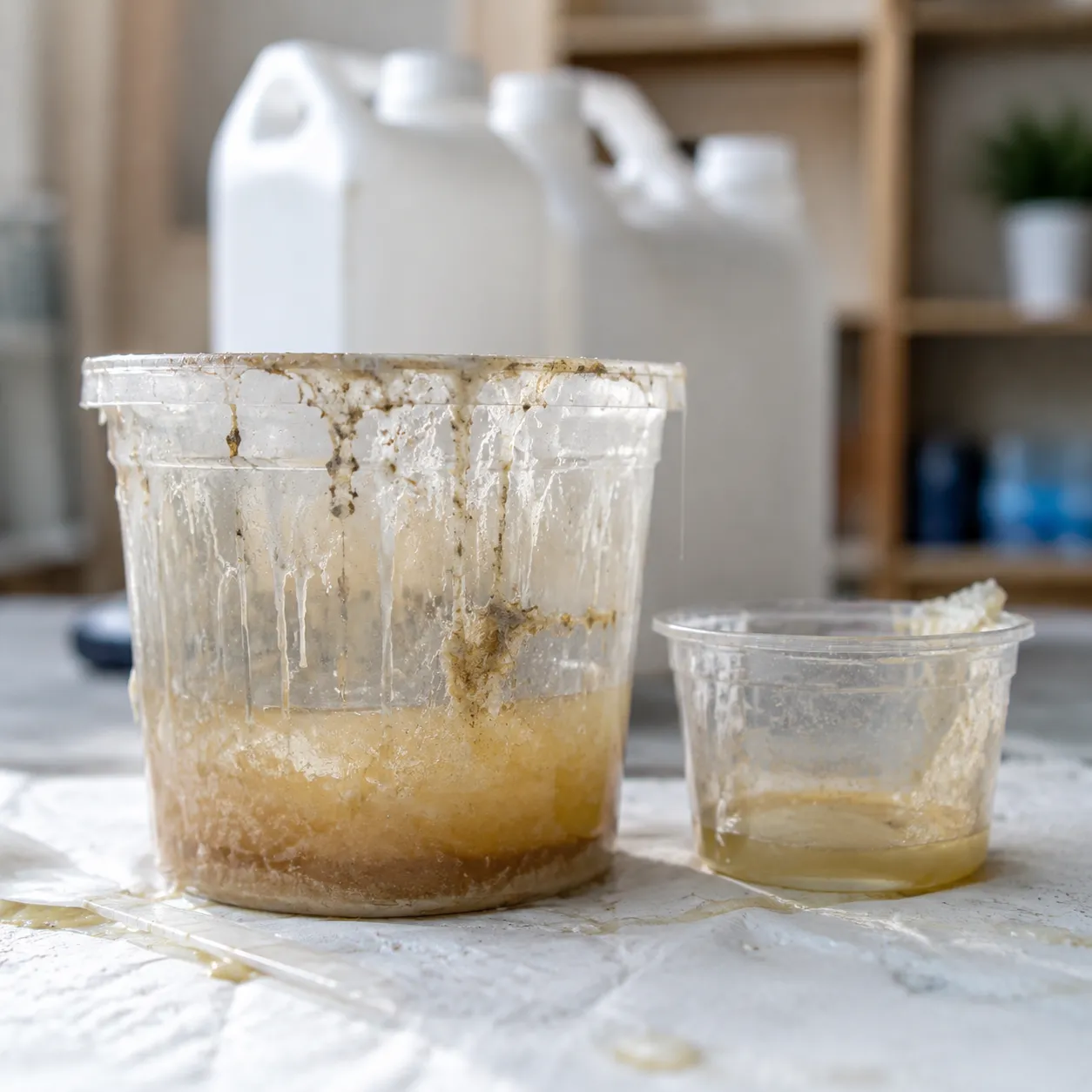
Proper Epoxy Storage Conditions
Maintaining strict control over epoxy storage conditions is the single most critical factor in preserving the chemical integrity, shelf life, and performance of industrial adhesives. Epoxy resins and hardeners are highly sensitive chemical compounds that require a stable environment to prevent premature degradation.
To ensure maximum product stability and cross-linking efficiency during application, adhere to the following baseline environmental parameters:
- Temperature Control: Store epoxy components within a consistent temperature range of 15°C to 25°C (59°F to 77°F). Avoid extreme fluctuations, as freezing can cause crystallization, while excessive heat accelerates premature aging.
- Moisture Prevention: Epoxy components exhibit high moisture sensitivity, meaning exposure to humidity can lead to contamination, amine blush, or incomplete curing. Always store containers tightly sealed in a dry, low-humidity environment.
- Light and Ventilation: Keep storage areas well-ventilated and shielded from direct sunlight or UV exposure, which can discolor resins and destabilize the chemical formulation.
| Environmental Factor | Ideal Target Range | Primary Storage Objective |
|---|---|---|
| Temperature | 15°C – 25°C (59°F – 77°F) | Prevent crystallization and thermal degradation |
| Humidity | Low / Dry (< 50% RH) | Eliminate moisture contamination and curing failure |
| Sunlight | Zero Direct Exposure | Prevent UV-induced yellowing and premature aging |
By implementing these rigorous inventory controls, industrial users can prevent premature material failure, optimize mechanical properties, and guarantee reliable bonding performance across all global distribution channels.
Risks of Incorrect Epoxy Storage Conditions
Ignoring proper epoxy storage conditions triggers a chain reaction of chemical issues that ruin product performance. When handlers overlook temperature and climate controls, it leads to two major forms of material failure:
Chemical Degradation and Shelf-Life Cut Short
- Premature Curing: Storing epoxy in high-temperature environments kickstarts the chemical reaction inside the container. This thickens the resin, shortens the working pot life, or gels the material completely before application.
- Crystallization: Exposure to cold temperatures causes the resin to crystallize, turning cloudy or solid. While reversible, it disrupts production timelines and requires careful reheating.
- Hardener Oxidation: Open or poorly sealed containers expose hardeners to air, causing them to discolor and lose reactivity, which prevents a full cure.
Moisture Sensitivity and Application Failure
- Amine Blush: High humidity triggers moisture sensitivity in the hardener. The epoxy absorbs atmospheric water, creating a greasy, waxy surface film known as amine blush. This completely ruins inter-coat adhesion.
- Foaming and Bubbles: Water contamination reacts with certain curing agents, releasing gas during the curing cycle. This leaves behind trapped bubbles, voids, and a structurally weak, porous finished product.
- Incomplete Curing: Excess moisture disrupts the stoichiometric balance required for a perfect chemical bond, leaving the cured epoxy permanently soft, tacky, or brittle.
Best Practices for Epoxy Storage Conditions
To prevent costly product failure, keeping your epoxy in prime condition requires strict adherence to climate controls. Our team maintains a rigorous protocol to ensure every batch performs exactly as engineered.
Ideal Temperature Control
Temperature fluctuations are the quickest way to ruin high-quality resins and hardeners.
- Optimal Range: Store all components between 15°C and 25°C (60°F to 77°F).
- Avoid Freezing: Do not allow epoxy to drop below 10°C (50°F), as this can cause crystallization.
- Prevent Overheating: High heat accelerates chemical degradation, shortening the shelf life significantly.
Moisture Sensitivity Management
Epoxy compounds have a high moisture sensitivity. Contact with humidity or water can cause curing issues, blushing, or complete structural failure.
- Tightly Sealed Containers: Always reseal caps immediately after dispensing.
- Dry Environment: Keep the storage area well-ventilated with a relative humidity level below 60%.
- Nitrogen Purging: For opened industrial containers, use a dry nitrogen blanket to displace moist air before sealing.
Standard Operating Protocol
| Parameter | Target Specification | Action If Violated |
|---|---|---|
| Temperature | 15°C – 25°C | Warm gradually to 50°C if crystallized |
| Humidity | < 60% RH | Use dehumidifiers in storage zones |
| Positioning | Upright, off concrete floors | Elevate on pallets or shelving |
| Light Exposure | Complete darkness / No direct UV | Move to windowless storage rooms |
