
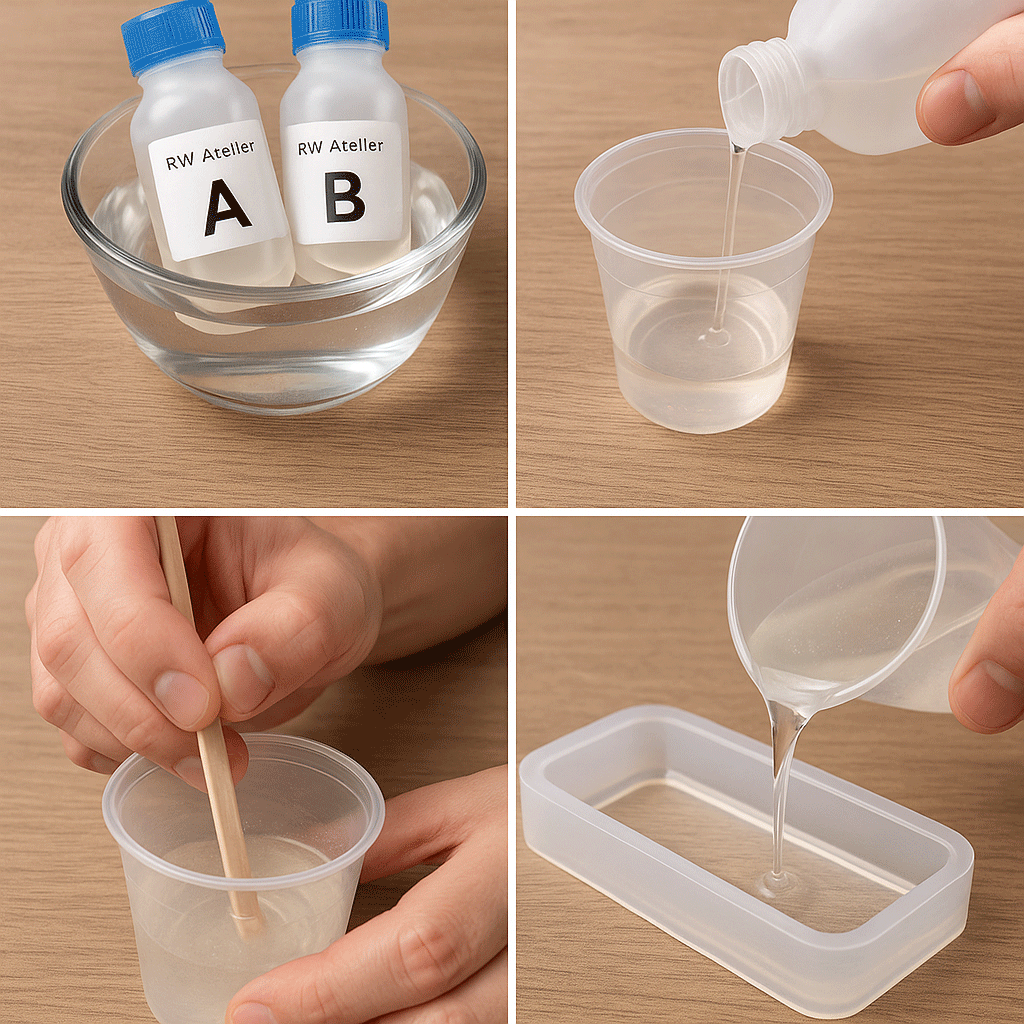
How to Mix Epoxy AB Glue Without Bubbles (5 Easy Steps for Crystal Clear Results) Learn how to mix epoxy AB glue without bubbles in just 5 simple steps. Get crystal-clear, professional results for jewelry, woodwork, and resin art using RW Atelier’s low-bubble formulas like 315AB and 5050AB. 🔧 Quick Snapshot Working Time: 10–30 minutes […]
Epoxy AB glue is a powerful two-part adhesive widely used in crafts, woodworking, electronics, and small-scale manufacturing. It offers strong, clear, and long-lasting bonds—but like any chemical material, it needs to be stored properly to maintain peak performance.
Whether you’re using 315AB, 703AB, 5050AB, or other variants, poor storage can lead to common issues like crystallization, yellowing, or premature hardening. This guide will help you keep your glue fresh, stable, and ready for action.
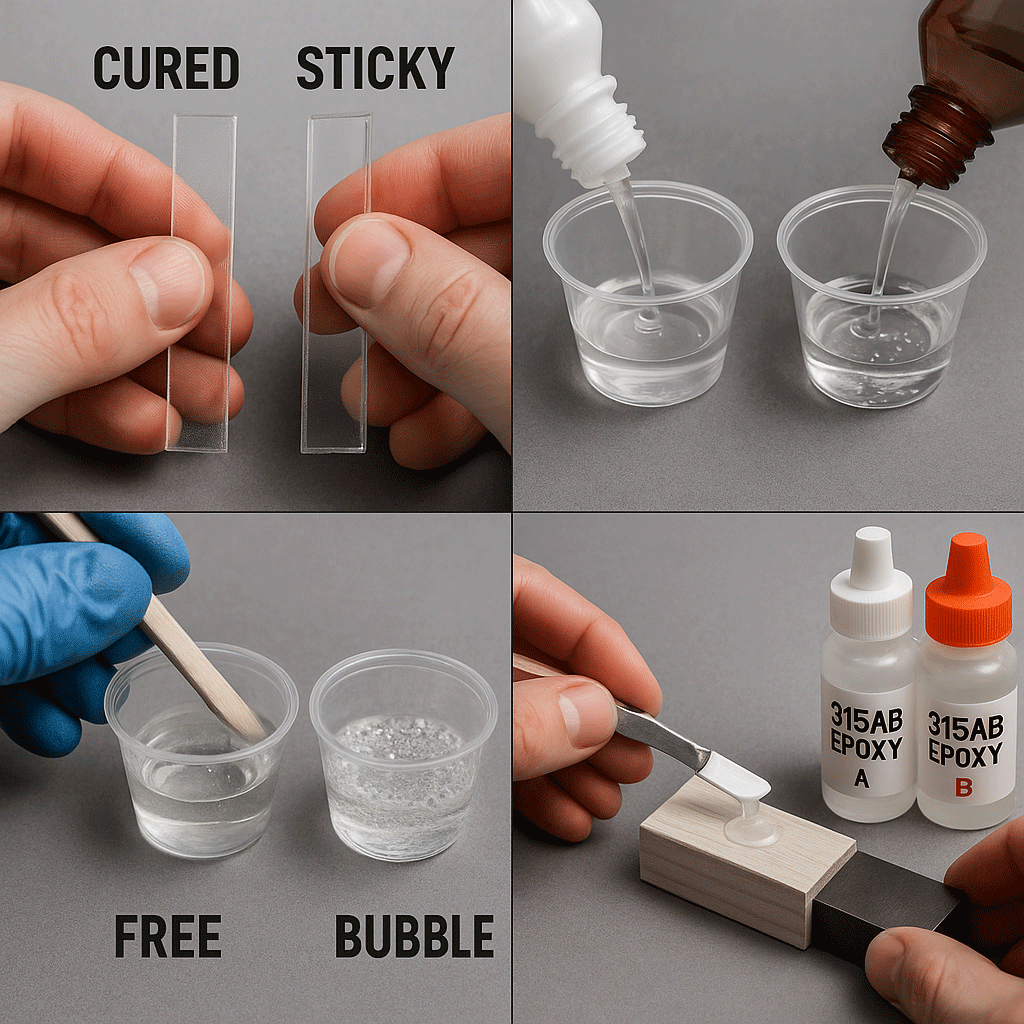
How to Use Epoxy AB Glue for Strong and Clear Craft Bonding (And How to Fix It When It Doesn’t Cure)
Epoxy AB glue is an indispensable adhesive used by makers, artisans, and small manufacturers who need strong, long-lasting bonds that remain visible and transparent. Whether you’re working with wood, metal, resin, or plastic, mastering this two-part adhesive can mean the difference between a flawless finish or a sticky, foggy mess.
This all-in-one guide walks you through how to apply epoxy AB glue properly for smooth, bubble-free bonding—and what to do when things go wrong.
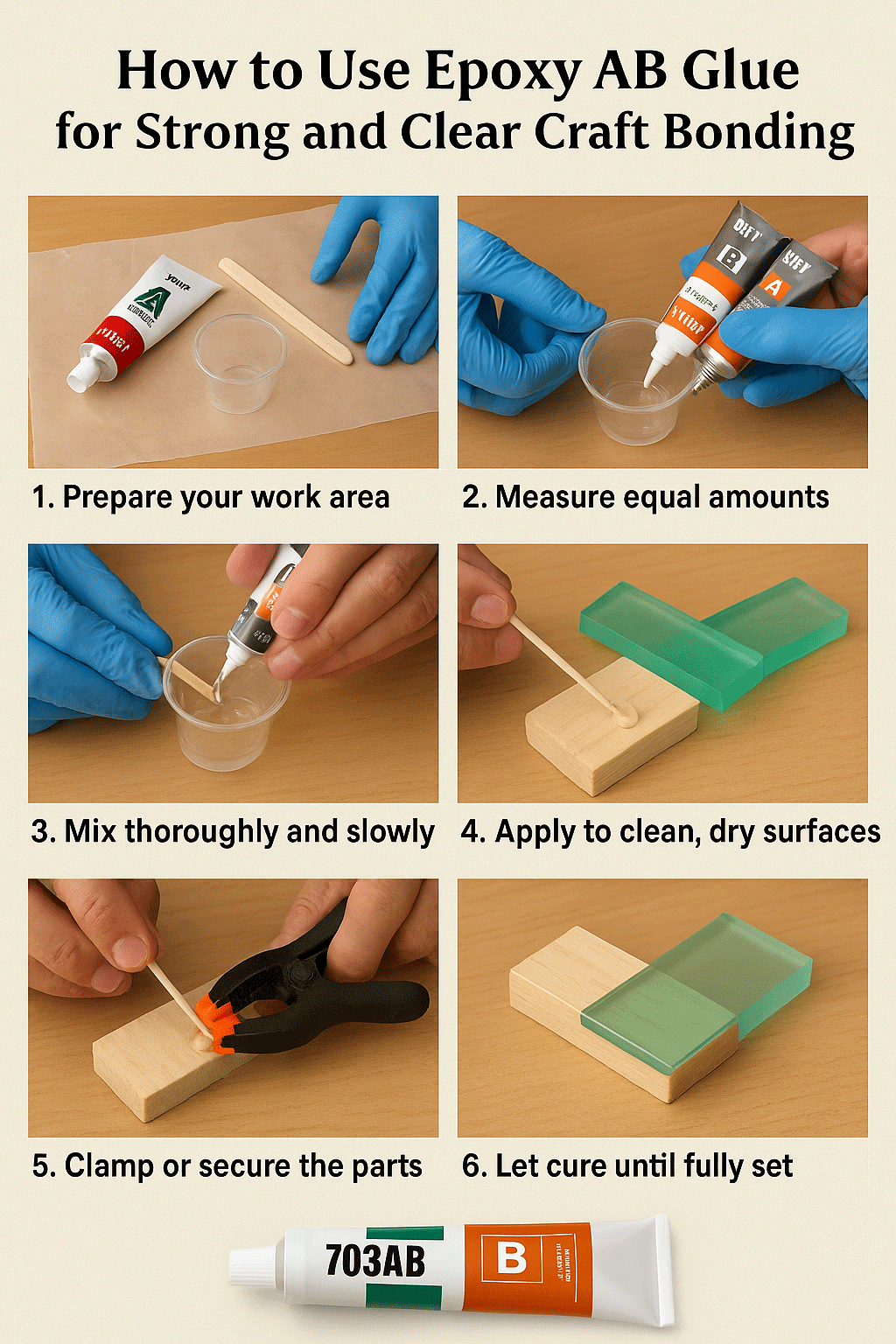
Epoxy AB glue is a must-have adhesive for makers, artisans, and small manufacturers. It delivers strong, long-lasting bonds that are also visually clean and transparent. Whether you’re working with wood, metal, plastic, or resin, mastering this two-part adhesive is essential for getting professional-looking results instead of messy, cloudy finishes.
What Is Epoxy Resin AB Glue? A Simple Guide to How It Works and Where It’s Used If you’ve ever made handmade jewelry, fixed a cracked surfboard, or repaired fishing gear, chances are you’ve come across epoxy resin — especially in the form of AB glue. But what exactly is it? Why is it so […]
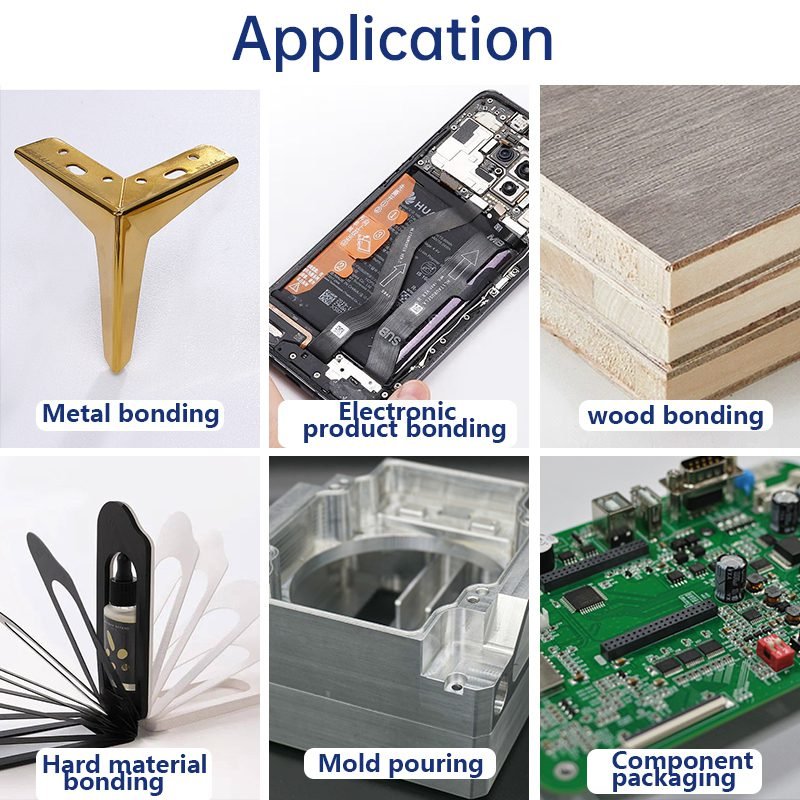
Industrial adhesives play an integral part in electronics manufacturing. Their various uses in electronics production range from bonding, sealing, encapsulating and protecting electronic components to offering properties such as electrical conductivity, thermal conductivity, low outgassing rates and moisture resistance. Electronic manufacturing industries utilize various adhesives that suit specific purposes and requirements, with each suitable for […]

Adhesives have increasingly replaced soldering processes in electronics manufacturing and assembly. Adhesives provide strong bonds to hold PCB components in place while protecting electronics against vibration, corrosion and environmental hazards. Common uses for adhesives in electronics applications include bonding of surface-mount devices, wire tacking, potting/encapsulating/coating PCBs conformally as well as conformal coating PCBs. A variety […]

A versatile two-component adhesive used in many industries, AB glue has excellent bonding abilities but may present challenges and drawbacks that limit its performance across sectors. Here we explore strategies and practical solutions that may improve its functionality to maximize efficiency across numerous fields. Overview of AB glue AB glue is a two-component adhesive typically […]
An AB adhesive is a two-component glue made up of A agent and B agent; these need to be mixed in specific proportions in order for it to play its purpose, making this widely applicable in multiple fields due to its special performance characteristics. Characteristics of an Adhesive bond. High Bond Strength: When […]
Manufacturers often prioritize storage costs and quality when choosing industrial adhesives, particularly one-component adhesives with tight storage conditions as improper storage could compromise their chemical properties and lead to high storage costs. One component adhesives require careful storage conditions in order to retain their quality properties over time; otherwise their chemical composition would deteriorate rapidly […]
- 1
- 2