
Chemical Resistant Floor Coating Industrial Comparison Guide
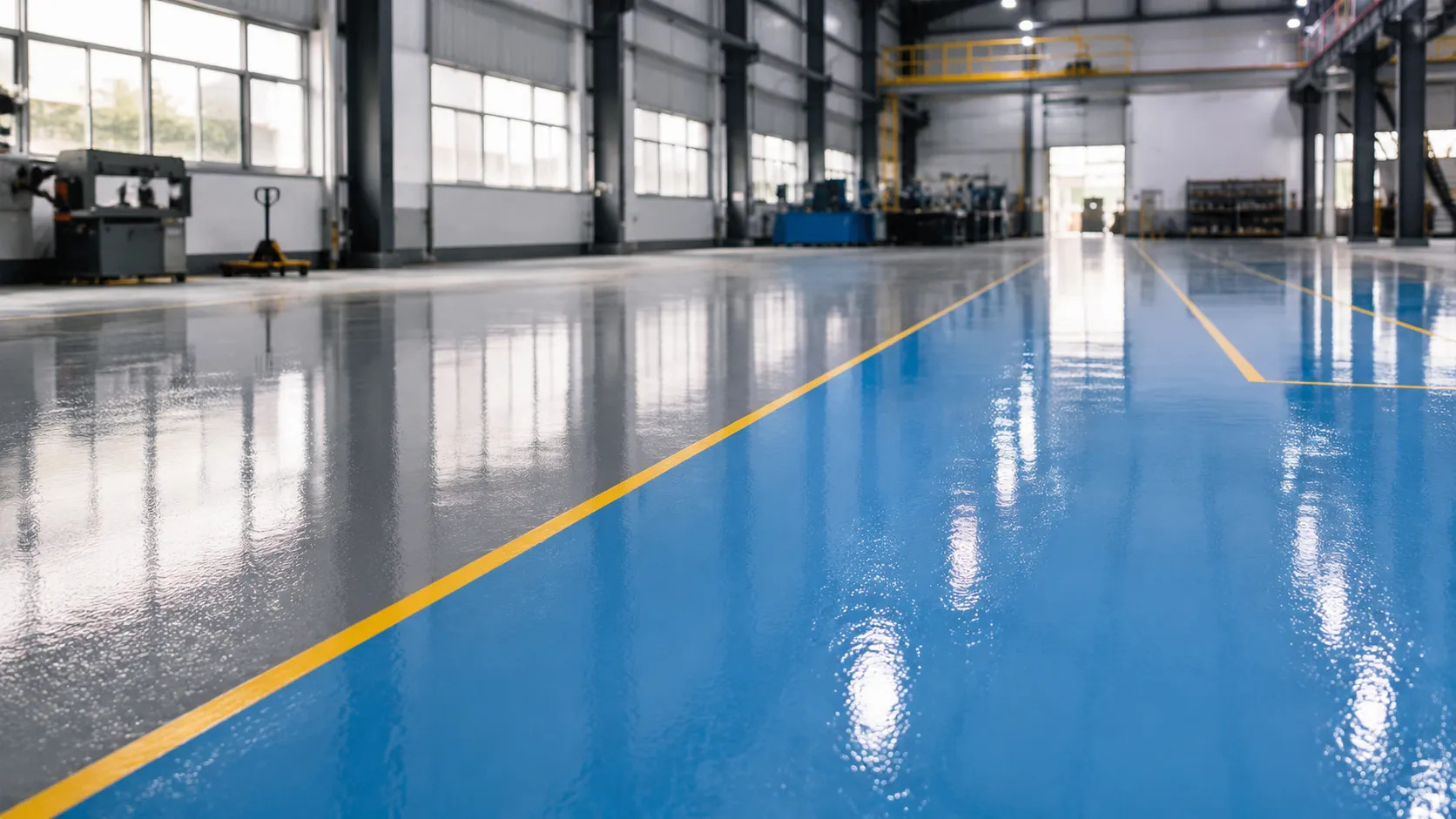
Choosing the wrong chemical resistant floor coating for an industrial facility is an expensive mistake. One spilled solvent or harsh acid can strip away a cheap finish in minutes, leaving you with thousands in repair costs and unwanted downtime.
As an operations manager who has overseen millions of square feet of factory floors, I know that choosing the right industrial flooring materials goes way beyond a basic glossy finish. You need a surface that handles forklifts, heavy impacts, and aggressive chemical spills without flinching.
But with so many options out there—epoxies, polyurethanes, and polyaspartics—how do you know which one actually holds up under pressure?
To make it easy, I’ve put together a complete performance comparison of the industry’s top coatings. Some are incredibly durable, others cure in hours, and a few are built specifically for extreme acid environments.
Let’s dive right into the breakdown.
Industrial Environments
Industrial facilities operate under grueling conditions where floors are constantly subjected to harsh realities. From heavy machinery traffic to accidental chemical spills, standard concrete surfaces simply cannot hold up. Without proper protection, corrosive substances penetrate porous concrete, leading to structural degradation, safety hazards, and costly operational downtime. Implementing a high-performance chemical resistant floor coating is non-negotiable for maintaining facility integrity, ensuring regulatory compliance, and protecting your foundational investment.
Material Selection
Choosing the right protective layer requires a precise understanding of your facility’s daily exposure. Not all coatings are created equal, and selecting the wrong chemistry often leads to premature curing failure or rapid degradation.
- Epoxy Coatings: The industry standard for high-impact zones, offering excellent adhesion and seamless durability.
- Polyurethane Systems: Highly flexible and resilient, making them ideal for areas exposed to thermal shock and UV radiation.
- Novolac Epoxies: The ultimate choice for extreme environments, specifically engineered for maximum acid alkali resistance against highly concentrated chemicals.
Performance Comparison
| Coating Type | Acid & Alkali Resistance | Impact Resistance | Thermal Tolerance | Best Suited For |
|---|---|---|---|---|
| Standard Epoxy | Moderate | High | Up to 140°F | Warehouses, Assembly Lines |
| Novolac Epoxy | Extreme (High Concentration) | High | Up to 250°F | Chemical Processing, Storage |
| Polyurethane | Moderate (Splashes) | Very High | Up to 200°F | Food & Beverage, Cold Storage |
Related Sources
- https://pmc.ncbi.nlm.nih.gov/articles/PMC12552478/
- http://ndl.http://ndl.ethernet.edu.et/bitstream/123456789/40895/1/220.pdf
- https://saudijournals.com/media/articles/SJCE_101_1-11.pdf
- https://www.cureusjournals.com/articles/3722-integrating-multi-criteria-decision-making-and-the-taguchi-method-for-high-performance-material-selection-in-rigid-flange-coupling-systems.pdf
- https://www.epj-conferences.org/articles/epjconf/pdf/2026/32/epjconf_icramen2026_05015.pdf
