
Epoxy Potting Compound for Electronics UV Yellowing Guide
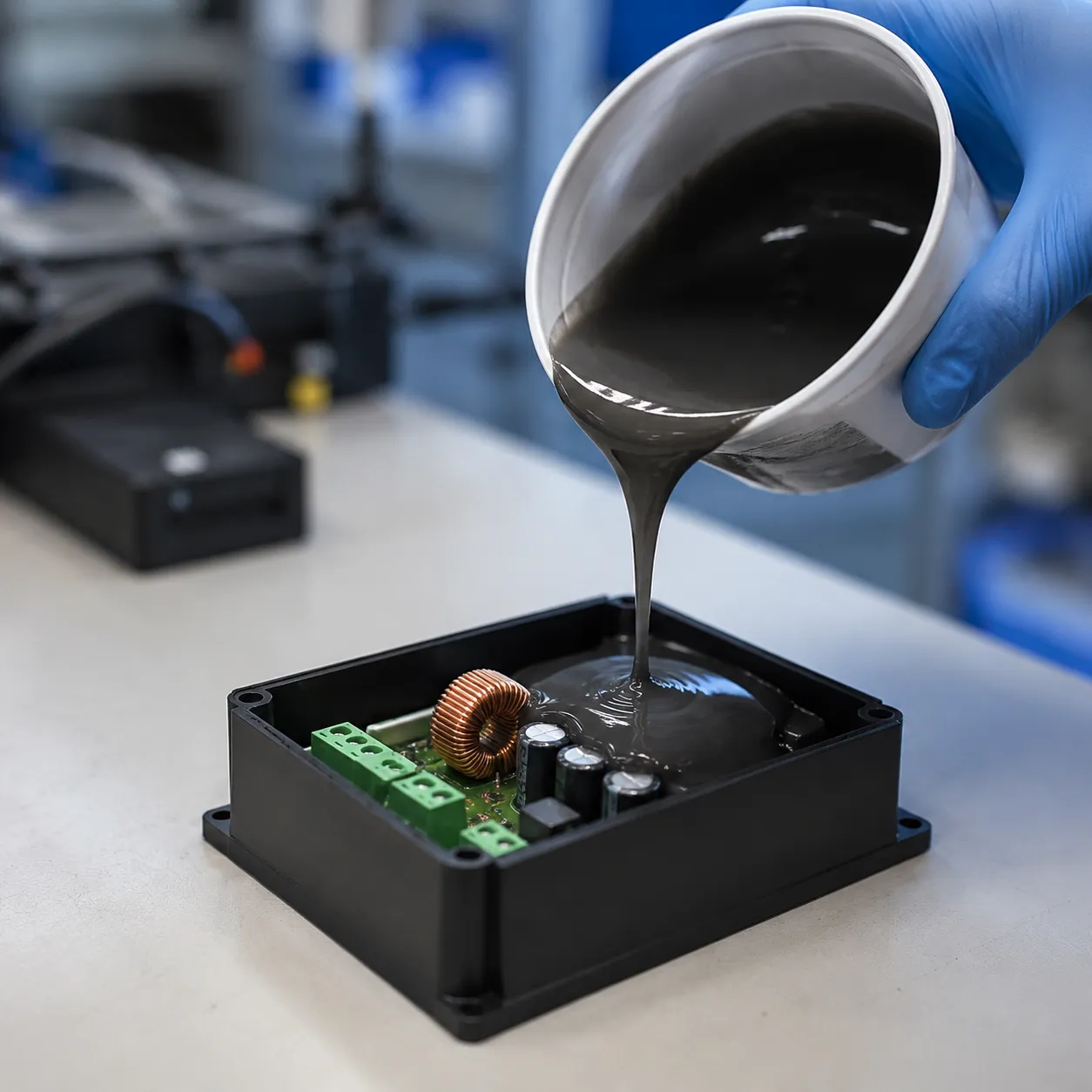
Quick Answer
What Buyers Need to Know First
An epoxy potting compound for electronics protects sensitive PCB assemblies, LED drivers, and electrical modules from moisture, vibration, thermal stress, and environmental contaminants. Selecting the optimal formulation requires balancing thermal conductivity, dielectric strength, viscosity, and cure profile to match your specific assembly process.
- Electrical Insulation: Provides high dielectric strength as an electrical insulation resin to prevent short circuits and arcing.
- Thermal Management: Dissipates heat away from critical components to extend operational lifespan.
- Environmental Sealing: Functions as an impermeable electronic encapsulation epoxy barrier against moisture, dust, and corrosive chemicals.
- Processability: Viscosity determines how effectively the PCB potting resin fills micro-gaps and voids around dense components.
Sourcing directly from a reliable wholesale epoxy resin manufacturer ensures batch-to-batch consistency, custom formula adjustments, and competitive pricing for high-volume production lines.
Do pigments hide or worsen yellowing?
Direct Answer
Dark pigments like black or dark gray visually mask yellowing in an epoxy potting compound for electronics, keeping aesthetic degradation hidden. However, pigments only conceal color changes—they do not stop polymer breakdown. Low-grade organic pigments can actually accelerate discoloration, react under UV exposure, or fade. Using stable, high-grade inorganic pigments or carbon black hides aging while maintaining essential electrical insulation resin performance.
Key Selection Factors or Failure Risks
- Inorganic vs. Organic Pigments: Inorganic oxides and carbon black remain stable under heat and light. Cheap organic dyes break down quickly, triggering color shifts in your PCB potting resin.
- Thermal Heat Trapping: Darker colors absorb more thermal energy. In high-power assemblies, increased heat buildup can accelerate polymer aging beneath the surface.
- Hidden Structural Degradation: Opaque electronic encapsulation epoxy prevents visible yellowing, but physical issues like surface chalking, micro-cracking, and loss of adhesion can still occur.
- Optical Requirements for LEDs: Clear or white LED potting compound systems cannot rely on dark pigments. These require specialized UV absorbers and optical brighteners to preserve clarity without color shifts.
Sorry, something went wrong. Please try your request again.
Sorry, something went wrong. Please try your request again.
Sorry, something went wrong. Please try your request again.
Sorry, something went wrong. Please try your request again.
Buyer Checklist
Questions to Confirm Before Placing an Order
Before committing to a bulk production run, verify these critical factors to ensure your chosen epoxy potting compound for electronics delivers seamless manufacturing and long-term field reliability:
- Thermal & Electrical Specs: Does the electrical insulation resin meet your required operating temperature range, dielectric strength, and heat dissipation targets?
- Flow & Cure Parameters: Is the mixed viscosity low enough to penetrate tight gaps without trapping air? Ensure the pot life and cure schedule align with your automated dispensing lines.
- Environmental Resistance: Will the cured electronic encapsulation epoxy face UV exposure, severe thermal shock, moisture ingress, or harsh chemical contact?
- Application Alignment: Have you selected a tailored PCB potting resin for mechanical shock protection, or a specialized LED potting compound where high optical clarity is critical?
- Supply Chain & Customization: Can your wholesale epoxy resin manufacturer or bulk epoxy resin supplier guarantee consistent batches, UL flammability compliance, and private label epoxy resin options directly from the factory?
