
Bubbles in Electronic Potting Compound Causes and Prevention
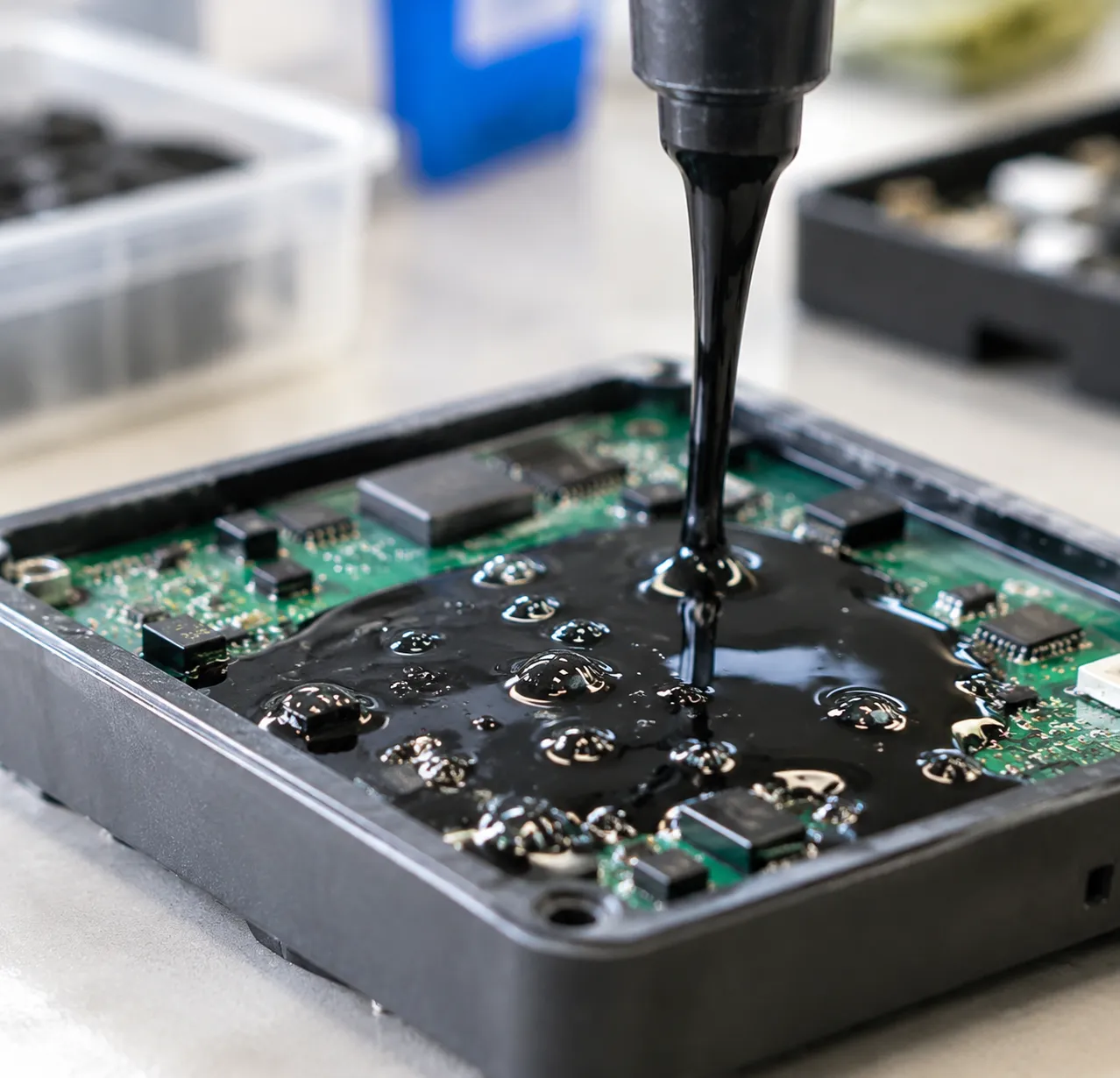
Quick Answer
What Buyers Need to Know First
Air bubbles in electronic potting compound severely compromise electrical insulation, thermal dissipation, and environmental sealing. Voids inside encapsulated electronics create localized hot spots, lower dielectric breakdown voltage, and allow moisture ingress that leads to premature circuit failure.
Key factors that cause void formation during potting:
Mechanical Air Entrainment: High-speed mixing without proper degassing introduces micro-bubbles directly into the resin mixture.
Material Viscosity: High-viscosity systems struggle to flow around dense PCB components, trapping pockets of air underneath surface-mount devices (SMDs).
Substrate Outgassing: Unbaked PCB substrates, porous solder masks, and tight component crevices release trapped air during the exothermic reaction.
Chemical Reactions: Moisture in raw materials or ambient air reacts with sensitive formulations, creating gas pockets during the curing phase.
Improper Cure Profiles: Fast cure kinetics and rapid gel times lock in bubbles before natural self-degassing can occur.
To eliminate bubbles in electronic potting compound, adopt pre-cure vacuum degassing, select optimized low-viscosity formulations, apply stepped thermal curing profiles, and ensure pre-potting component drying.
Is any epoxy completely UV-proof?
Direct Answer
No epoxy is 100% UV-proof indefinitely. Standard aromatic epoxy systems naturally absorb ultraviolet light, which gradually breaks chemical bonds and leads to ambering, surface chalking, or brittleness over extended outdoor exposure. While we formulate UV-stabilized electrical insulation resin systems that resist degradation far longer than standard materials, no pure epoxy remains entirely immune to extreme, continuous solar radiation. When combined with process defects like bubbles in electronic potting compound, UV degradation can accelerate around surface-level voids, leading to localized micro-cracks and reduced environmental protection.
Key Selection Factors or Failure Risks
- Polymer Backbone Selection: Standard bisphenol-based epoxies are prone to yellowing under UV radiation. For outdoor applications requiring high optical clarity, aliphatic systems or specialized polyurethane and silicone potting alternatives provide better color stability.
- Trapped Void Vulnerability: Pockets of air and bubbles in electronic potting compound create structural weak spots. When exposed to outdoor UV and thermal cycles, these voids undergo differential thermal expansion, accelerating surface cracking.
- Dielectric and Insulation Breakdown: Prolonged UV exposure degrades the surface matrix of the potting layer, compromising moisture resistance and dielectric insulation performance over time.
- Additive Stabilization: Integrating targeted UV absorbers and hindered amine light stabilizers (HALS) into our custom formulations significantly delays solar degradation for outdoor PCB and electrical assemblies.
Why does overheating increase discoloration?
Direct Answer
Overheating during the curing phase or under high operational temperatures accelerates thermal oxidation within the resin matrix. When an electronic potting compound experiences excessive heat—often triggered by uncontrolled exothermic reactions or improper heat profiles—the chemical bonds begin to degrade. This thermal breakdown shifts the polymer’s optical clarity to dark yellow or brown while simultaneously forcing volatile gases to expand, which frequently exacerbates voids and bubbles in electronic potting compound applications.
Key Selection Factors or Failure Risks
- Exotherm Peak Management: Large potting volumes generate high internal heat during cure. If the formulation cannot dissipate this exotherm, severe discoloration and bubbling occur near the center of the PCB assembly.
- Cure Profile Mismatch: Forcing an oven cure epoxy potting system to ramp up too quickly causes localized scorching and locks in outgassing air before the material can naturally degas.
- Thermal Stability Rating: Operating components above the compound’s continuous temperature rating causes gradual yellowing, surface embrittlement, and loss of insulation resistance.
- Degradation of Dielectric Performance: Discoloration is an immediate indicator of polymer degradation, which compromises moisture sealing, adhesion to substrates, and dielectric breakdown strength.
Do pigments hide or worsen yellowing?
Direct Answer
Pigments effectively hide visual yellowing, but they do not stop the underlying chemical aging of the resin. While adding black, gray, or dark colorants masks amber discoloration completely, it does not prevent mechanical breakdown. Furthermore, improper pigment integration can actually introduce moisture or air into the mix, accelerating the formation of bubbles in electronic potting compound during dispensing and cure.
Key Selection Factors or Failure Risks
- Visual Masking vs. Material Breakdown: Opaque colorants conceal surface color shifts, but the core electrical insulation resin still experiences UV and thermal stress over time.
- Moisture Ingress and Foaming: Poorly stored or non-degassed pigment pastes can introduce trace moisture, creating chemical outgassing and micro-bubbles in moisture-sensitive potting systems.
- Increased Viscosity: High pigment loading increases the overall compound thickness. Higher viscosity prevents natural self-degassing, trapping process air around sensitive PCB components.
- Cure Selection Impact: Whether you use ambient cure encapsulation or oven cure epoxy potting, highly pigmented systems require strict vacuum degassing to eliminate trapped voids before heat accelerates the gel phase.
How should yellowing resistance be compared?
Direct Answer
I always compare yellowing resistance by evaluating the polymer base chemistry, thermal stability, and clarity retention under accelerated environmental exposure. When dealing with an electrical insulation resin or transparent potting matrix, optical degradation is directly accelerated by elevated operating temperatures, cure exotherm, and trapped air voids. Comparing materials side by side under identical thermal aging cycles gives you the truest baseline for long-term clarity and structural stability.
Key Selection Factors or Failure Risks
To accurately benchmark yellowing performance across different resin formulations, focus on these critical factors:
- Base Chemistry Selection: Polyurethane and silicone potting systems inherently offer higher optical stability under UV and heat than standard aromatic epoxy formulas.
- Thermal Exotherm Control: High peak exotherm during cure can scorch the polymer chain early. Formulations balanced for controlled reaction kinetics protect against premature color shifts.
- Impact of Trapped Voids: Internal micro-voids and bubbles in electronic potting compound trap atmospheric oxygen, creating localized oxidation pockets and hot spots that accelerate yellowing and degrade dielectric strength.
- Cure Profile Compatibility: Whether utilizing an ambient cure encapsulation process or an oven cure schedule, improper temperature ramping can cause flash yellowing.
- Failure Risks: Discoloration is rarely just cosmetic in electrical potting; it often signals polymer degradation, loss of optical transmission for sensors/LEDs, embrittlement, and reduced moisture protection.
Can a topcoat improve outdoor durability?
Direct Answer
Yes. Applying a dedicated protective topcoat or dual-layer encapsulant significantly boosts outdoor weatherability, UV resistance, and long-term environmental protection. However, a topcoat only performs effectively if the underlying base layer is fully cured and free of defects. Surface voids or micro-bubbles in electronic potting compound create weak points where moisture collects, ultimately leading to topcoat blistering, delamination, and electrical insulation failure.
Key Selection Factors or Failure Risks
- Interlayer Adhesion: The topcoat must chemically bond with the underlying epoxy, polyurethane, or silicone potting base. Incompatible chemistries lead to peeling and moisture ingress.
- Surface Void Elimination: Lingering bubbles in electronic potting compound break the continuous surface seal, causing pinholes in the topcoat layer that expose sensitive PCB components to rain, humidity, and UV exposure.
- Thermal Expansion Matching (CTE): Differences in thermal expansion between the potting mass and the topcoat can cause cracking during outdoor temperature swings.
- Outgassing Risks: If the base electrical insulation resin is not properly degassed before curing, heat from outdoor sunlight triggers outgassing, lifting the topcoat and creating blisters.
- Process Compatibility: Ensure whether you are pairing an ambient cure encapsulation with a fast-curing protective finish or using an oven-cured system to maintain consistent layer integration.
What Information Should You Send to the Manufacturer?
To help us engineer the right formulation and prevent bubbles in electronic potting compound during your production, we need a clear picture of your operational setup and design targets. Sharing precise technical requirements upfront ensures we match you with a system that flows smoothly, cures reliably, and eliminates void entrapment.
Application, Substrate and Process Details
Process variables directly dictate how air behaves during mixing and dispensing. When requesting technical matching, provide:
- Substrate & Housing Materials: Specify the casing (ABS, polycarbonate, aluminum) and PCB components. Certain porous materials require preheating to prevent outgassing bubbles.
- Dispensing Method: State whether you use manual batch mixing, automated meter-mix-dispense (MMD) equipment, or a vacuum dispensing chamber.
- Cure Schedule Preferences: Clarify if your line requires ambient cure encapsulation, a fast cure electronics resin, or oven cure epoxy potting.
- Cavity Geometry: Outline potting depth, component density, and tight clearances where high-viscosity resins might trap pocket voids.
Performance, Packaging and Estimated Quantity
As a direct bulk epoxy resin supplier, we adjust physical, electrical, and logistical parameters to suit your manufacturing schedule:
| Category | Information Needed |
|---|---|
| Functional Properties | Required thermal conductivity, flame retardancy ratings, and dielectric strength for your electrical insulation resin. |
| Material Flow | Viscosity preferences, self-leveling requirements, and target gel time to ensure natural degassing before cure. |
| Packaging Format | Dual cartridges for field repair, small pails, or standard 200L industrial drums direct from our factory. |
| Order Volume | Pilot sample volumes, trial batch requirements, or scheduled bulk delivery timelines for private label epoxy resin programs. |
How Can Rongwei Support This Project?
Eliminating bubbles in electronic potting compound requires the right resin chemistry matched to your specific dispensing process. As a dedicated epoxy resin factory direct partner, we work directly with your engineering and production teams to prevent void defects, optimize flow, and maintain reliable electrical insulation.
Sample Matching and Formula Adjustment
We solve bubble entrapment at the chemical level by modifying formulation properties to fit your assembly line:
- Viscosity Optimization: We adjust resin and hardener flow rates to ensure deep penetration around dense PCB components without trapping air pockets.
- Self-Degassing Capabilities: Our custom-formulated electrical insulation resin systems promote rapid natural air release before the compound gels.
- Cure Kinetic Tuning: Whether your process relies on room-temperature gelation or oven curing, we balance work life and cure speed so air escapes completely before crosslinking.
- Direct Sample Matching: Send us your benchmark material or project specifications, and we will formulate, test, and provide matched evaluation samples.
OEM / Private Label Packaging and Bulk Supply
As a dependable wholesale epoxy resin manufacturer and bulk epoxy resin supplier, we support scaling electronics manufacturers and brand owners worldwide:
- Packaging Configurations: We supply materials in dual cartridges for manual repair, pails for batch runs, and bulk drums or IBC totes tailored for automated meter-mix-dispense (MMD) systems.
- Private Label Epoxy Resin Services: Complete custom branding, labeling, and technical documentation for distributors and industrial brands.
- Direct Factory Supply: Stable batch-to-batch consistency, strict quality control against moisture contamination, and direct technical support to keep your potting lines void-free.
Final Buyer Checklist
Questions to Confirm Before Placing an Order
Before you place your bulk order, make sure every parameter aligns with your manufacturing setup. Eliminating bubbles in electronic potting compound requires the right balance between material properties and your specific production environment.
Use this checklist to confirm all technical and operational details with our technical team:
- Viscosity & Self-Degassing: Does the selected resin system have the right flow characteristics to self-level and release trapped micro-bubbles around dense PCB components?
- Dispensing Compatibility: Is the formulation matched to your equipment, whether you are using manual mixing, static mix nozzles, or automated meter-mix-dispense (MMD) systems?
- Cure Kinetics: Have you confirmed whether an ambient cure encapsulation or a staged heat-cure cycle best prevents exotherm boiling and outgassing on your assembly line?
- Substrate & Moisture Sensitivity: Are your electronic components, housings, and boards properly preheated or dried to prevent moisture reactions that trigger foaming?
- Batch Volumes & Packaging: Have you selected container sizes that minimize air entrapment during shop-floor transfer and match your pot life requirements?
- Insulation & Reliability Specs: Does the cured electrical insulation resin meet your required dielectric strength, thermal dissipation, and flame-retardant standards?
Locking in these details upfront ensures you receive a direct-from-factory potting formulation optimized for void-free, reliable performance.
