
AB Epoxy Not Curing and UV Yellowing Buyer Guide
Quick Answer
What Buyers Need to Know First
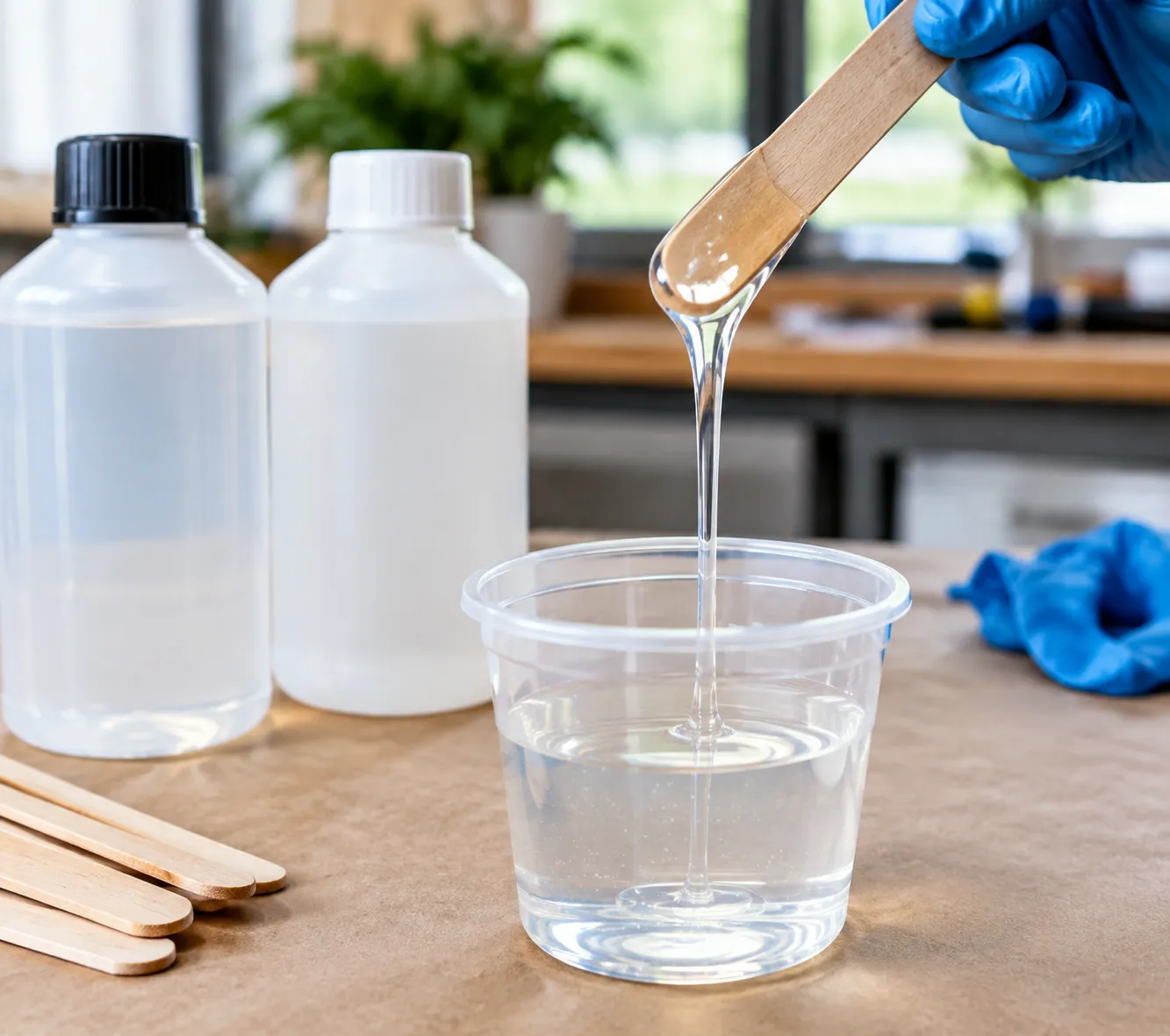
When dealing with AB epoxy not curing, the issue almost always stems from four critical formulation and processing factors:
- Incorrect Mixing Ratio: Deviating from the exact manufacturer-specified Part A (Resin) to Part B (Hardener) ratio causes chemical imbalance. Adding extra hardener does not speed up cure time; it leaves unreacted molecules that result in a sticky epoxy adhesive or soft, gummy matrix.
- Inadequate Mixing and Scraping: Failing to thoroughly scrape the sides and bottom of the mixing vessel leaves unblended components, leading to localized patches of uncured AB glue.
- Temperature and Environmental Conditions: Ambient working temperatures below the recommended threshold severely slow down or halt cross-linking. High humidity can trigger surface tackiness and moisture interference.
- Incompatible Additives: Excess colorants, moisture, or unsuitable solvents prevent the two-part system from achieving complete molecular polymerization.
| Epoxy Curing State | Primary Root Cause | Immediate Action |
|---|---|---|
| Completely Liquid / Runny | Severe wrong epoxy ratio or omitted Part B | Scrape off completely down to solid substrate; reapply. |
| Sticky / Tacky Surface | Low temperature, moisture, or amine blush | Warm the workspace, sand stabilized topcoat, or wipe with solvent. |
| Soft / Gummy Throughout | Incomplete mixing or slight ratio deviation | Remove uncured material; re-pour with accurate measurements. |
Is any epoxy completely UV-proof?
Direct Answer
No epoxy is 100% UV-proof. While high-grade formulations feature advanced UV inhibitors and light stabilizers to delay yellowing, all epoxy resins eventually react to prolonged ultraviolet radiation. Direct sunlight breaks down the aromatic chemical bonds in the polymer matrix, leading to discoloration, loss of gloss, or surface chalking over time.
Key Selection Factors or Failure Risks
- Stabilizer Packages: High-performance formulas use a combination of UV absorbers and Hindered Amine Light Stabilizers (HALS) to slow down degradation significantly.
- Under-Curing Vulnerability: If you run into an AB epoxy not curing issue or an incomplete cross-linking cycle, the softer, uncured polymer chains will degrade and yellow significantly faster under sunlight.
- Indoor vs. Outdoor Duty: Standard two-part epoxy systems are designed primarily for interior use; direct outdoor placement without specialized blockers will always shorten service life.
- Protective Overcoats: For continuous exterior exposure, relying solely on resin is a failure risk. Applying an aliphatic polyurethane or UV-filtering clear topcoat over the cured epoxy is required to block direct UV penetration.
Why does overheating increase discoloration?
Direct Answer
Overheating accelerates the oxidation of the polymer network and hardener components during the chemical reaction. When two-part systems experience excessive heat—either from an uncontrolled exothermic reaction or aggressive external heat sources applied to fix AB epoxy not curing—the amine compounds degrade. This thermal stress scorches the formulation at a molecular level, shifting the cured matrix from crystal clear to an amber or yellowish tint almost immediately.
Key Selection Factors or Failure Risks
- Uncontrolled Exothermic Heat: Pouring high-mass layers with fast-cure formulations traps heat in the core, causing thermal runaway and immediate discoloration.
- Improper Forced Curing: Using torches or heat guns too close to rescue a sticky epoxy adhesive burns unreacted raw materials instead of promoting balanced cross-linking.
- Amine Hardener Oxidation: Excessive temperatures trigger rapid oxidation in standard amine systems, leading to a permanent yellow tint and two part glue curing failure.
- Wrong Epoxy Ratio Sensitivity: Off-ratio mixtures generate uneven thermal zones during reaction, leaving soft spots alongside heat-scorched, discolored areas.
- Formulation Thresholds: Selecting standard fast-cure resins for thick pours guarantees heat buildup; matching pour depth to system reactivity is essential to prevent thermal degradation.
Do pigments hide or worsen yellowing?
Direct Answer
Pigments can effectively hide yellowing, but using the wrong type or adding too much will trigger severe chemical problems. Opaque, UV-stable pigments mask underlying amber shifts by blocking light penetration. However, introducing excessive liquid tints or water-based colorants interferes with polymer cross-linking, leading directly to AB epoxy not curing and leaving you with a soft, sticky epoxy adhesive.
Key Selection Factors or Failure Risks
When coloring formulations, balance aesthetic masking against the risk of a two part glue curing failure:
- Colorant Compatibility: Always use dedicated dry mica powders or epoxy-dispersed pigment pastes. Incompatible dyes contain moisture or volatile solvents that inhibit the hardener, causing uncured AB glue.
- The 5% Rule (Avoid Ratio Shifts): Keep all additives under 3% to 5% of the total volume. Overloading colorants mimics a wrong epoxy ratio, which prevents the resin matrix from reaching full hardness.
- Optical Masking vs. Color Shift: Dark, opaque shades (charcoal, deep metallics, black) conceal natural oxidation completely. Pure whites, pale pastels, and transparent tints show amber tones quickly and can look muddy over time.
- Moisture Introduction: Off-the-shelf liquid colorants often carry hidden water. Moisture contamination reacts with amine hardeners, which explains why is my ab epoxy glue still sticky or not curing on the surface.
How should yellowing resistance be compared?
Direct Answer
Compare yellowing resistance by evaluating accelerated UV weathering test data (such as QUV exposure hours) and measuring color shift using the standard Yellowing Index (YI) or Delta E (ΔE) metrics. Visual side-by-side checks under direct sunlight are unreliable; dependable comparisons require standardized lab exposure reports and an assessment of the underlying hardener chemistry.
Key Selection Factors or Failure Risks
When evaluating two-part epoxy systems for clarity and long-term stability, we focus on several decisive performance indicators:
- Hardener Chemistry: Formulations built with aliphatic or cycloaliphatic curing agents demonstrate substantially higher resistance to UV yellowing than standard aromatic amine bases.
- Curing Completeness and Mix Ratios: An improper mix ratio or poor blending leaves unreacted chemical compounds behind. When dealing with an uncured AB glue layer or a sticky epoxy adhesive caused by a wrong epoxy ratio, these free, unreacted amine groups degrade and oxidize rapidly, drastically accelerating yellowing.
- Standardized Accelerated Testing: Compare technical data sheets based on identical test parameters (such as ASTM G154 cycle testing). Verify total hours before a detectable ΔE color shift occurs rather than relying on promotional claims.
- Additive Packages: High-grade formulations incorporate synergistic blends of UV absorbers and Hindered Amine Light Stabilizers (HALS) to interrupt the free radicals that cause photo-oxidation.
- Thermal History: Resin subjected to high peak exothermic heat during a deep pour will begin with compromised thermal stability, causing it to yellow significantly faster than a properly heat-dissipated cure.
For industrial production and bulk supply, testing cured, fully reacted plaques under identical light and thermal conditions ensures that the structural epoxy you specify meets performance requirements without premature failure or discoloration.
Can a topcoat improve outdoor durability?
Direct Answer
Yes. Applying a dedicated, UV-stable topcoat—such as an aliphatic polyurethane or an exterior-grade clear coat—significantly improves outdoor durability. While two-part AB epoxy systems provide exceptional bonding strength, structural integrity, and impact resistance, standard epoxy formulations naturally degrade and chalk when exposed to direct sunlight and weather. A protective topcoat acts as a sacrificial barrier, filtering harmful radiation and moisture before they can reach the base resin.
Key Selection Factors or Failure Risks
To ensure long-term exterior performance without inducing coating failure, keep the following critical factors in mind:
- Substrate Cure State: Never apply a protective topcoat over uncured AB glue or a sticky epoxy adhesive. If you are dealing with a two part glue curing failure caused by a wrong epoxy ratio or inadequate mixing, the topcoat will trap unreacted compounds, resulting in blistering, hazing, and delamination. The underlying epoxy must be completely cured and hard before topcoating.
- Intercoat Adhesion: Once the base layer is cured, thoroughly scuff-sand the surface and clean away dust or surface films. Mechanical keying provides the necessary tooth for the topcoat to adhere permanently without peeling under thermal expansion.
- Solvent & Chemical Compatibility: Ensure the solvent package in the topcoat does not attack or soften the underlying epoxy matrix. High-solids polyurethanes and tested clear finishes designed for polymer composite substrates yield the most reliable results.
- Elasticity and Thermal Cycling: Match the flexibility of the topcoat to the substrate and environment. Rigid epoxies paired with flexible topcoats or vice versa must withstand localized expansion cycles caused by outdoor temperature swings.
What Information Should You Send to the Manufacturer?
When you contact us to formulate or supply your resin, providing the right operational data from day one prevents problems like AB epoxy not curing in production. We use your exact shop conditions and application parameters to calibrate the hardener latency, viscosity, and curing profile before blending your batch.
Application, Substrate and Process Details
To ensure your system cross-links completely without leaving uncured AB glue or sticky residue, share these specific production details:
- Substrate Materials: Tell us exactly what you bond, coat, or cast (e.g., hardwoods, porous concrete, aluminum, carbon fiber, or engineered plastics).
- Working Temperature and Humidity: Provide your baseline workshop climate. Low ambient temperatures directly cause two-part glue curing failure and extended gel latency.
- Dispensing and Mixing Method: Specify whether you mix manually in batches, run meter-mix equipment, or use static mix dual-cartridges. This ensures the mix viscosity matches your equipment and prevents wrong epoxy ratio issues.
- Pour Depth and Application Thickness: List your typical single-pour thickness. Mass builds heat; high-volume pours require tailored latency to prevent runaway exotherm or tacky, under-cured surfaces.
Performance, Packaging and Estimated Quantity
To tailor the formula to your production line and logistics requirements, include your target specifications:
- Cure Profile and Demold Time: Define your target working time (pot life) and required handling strength timeline (e.g., 2 hours, 12 hours, or 24 hours).
- Mechanical and Environmental Requirements: State required thermal resistance, flexural strength, chemical exposure tolerances, or outdoor durability needs for custom structural epoxy formulations.
- Packaging Formats: Indicate how you want material delivered:
- 50 ml / 400 ml dual-barrel cartridges
- 1 kg / 5 kg split sets for manual dispensing
- 20 kg pails, 200 kg steel drums, or 1,000 kg IBC totes for bulk industrial production
- Volume Requirements: Outline your initial trial sample size, trial batch needs, and projected recurring order volumes to streamline custom blending and bulk freight handling.
How Can Rongwei Support This Project?
Solving curing failures permanently requires a manufacturing partner who understands chemical formulation at the factory level. As a direct manufacturer, we eliminate the common root causes of AB epoxy not curing by engineering formulas with reliable mix tolerances, stable reactivity, and dependable cross-linking performance.
Sample Matching and Formula Adjustment
We tailor chemical profiles to match your exact production environment, cycle times, and application demands:
- Custom Mix Ratios & Reactivity: We formulate custom structural epoxy systems that prevent two part glue curing failure, even under variable workshop temperatures.
- Tolerant Formulations: Off-ratio tolerance adjustments to prevent soft or uncured AB glue issues caused by minor measuring mistakes.
- Viscosity and Gel-Time Tuning: Precise adjustment of open time and thermal cure curves to avoid sticky surfaces, overheating, or incomplete hardening.
- Lab Testing & Sample Verification: Direct bench-testing of your substrates and pigments to confirm full mechanical cure before production begins.
OEM / Private Label Packaging and Bulk Supply
As a dedicated wholesale epoxy resin manufacturer and bulk epoxy resin supplier, we provide complete end-to-end manufacturing solutions:
- Precision Dispensing Packaging: Dual-barrel cartridges, pre-measured pouches, bottles, and pails engineered to eliminate the wrong epoxy ratio for end users.
- Private Label Epoxy Resin: Turnkey brand manufacturing with your labels, custom viscosities, and certified technical data sheets.
- Epoxy Resin Factory Direct Supply: Reliable volume shipments in standard pails, 200L drums, or 1000L IBC totes with consistent batch-to-batch quality control.
- Global Logistics Support: Direct export handling, complete safety documentation, and reliable lead times for worldwide distribution.
Final Buyer Checklist
Questions to Confirm Before Placing an Order
Before committing to bulk procurement, I always advise buyers to run through a quick verification checklist. This final check ensures that your production environment, mixing setup, and resin formulation align perfectly, preventing costly issues like an AB epoxy not curing down the line.
- Mixing Ratio Specifications: Is the ratio measured by weight or by volume? Using the wrong epoxy ratio is the primary cause of uncured AB glue on the production floor.
- Curing Temperature & Humidity Thresholds: Does your facility operate within the recommended temperature range for full cross-linking, or do you need a custom-formulated hardener to prevent a sticky epoxy adhesive finish?
- Working Time (Pot Life) vs. Demold Time: Does the gel time give your operators enough room to pour and degas before curing begins?
- Additive & Substrate Compatibility: Have you verified that your pigments, fillers, or bonding substrates will not interfere with the chemical reaction and cause a two part glue curing failure?
- Packaging and Dispensing Requirements: Are you ordering bulk drums, customized IBC totes, or dual-cartridge systems that fit your automated mixing gear directly from our bulk epoxy resin supplier lines?
| Order Verification Item | Specification to Confirm | Risk Mitigated |
|---|---|---|
| Mixing Protocol | Weight ratio vs. Volume ratio tolerance | Soft, tacky, or permanently uncured resin pours |
| Ambient Processing Limits | Minimum cure temp (e.g., 20°C–25°C) & max humidity | Moisture contamination, surface blushing, and incomplete cures |
| Viscosity & Exotherm Control | Layer depth limits and heat buildup profiles | Boiling, thermal cracking, or localized curing failure |
| Custom Formulation Matching | TDS validation for specialized substrates | Adhesion failure and inconsistent batch hardness |
Locking in these details with our wholesale epoxy resin manufacturer team before production runs ensures every batch arrives optimized for your exact working conditions and application needs.
