
AB Epoxy Glue for Plastic UV Yellowing Buyer Guide
Quick Answer
What Buyers Need to Know First
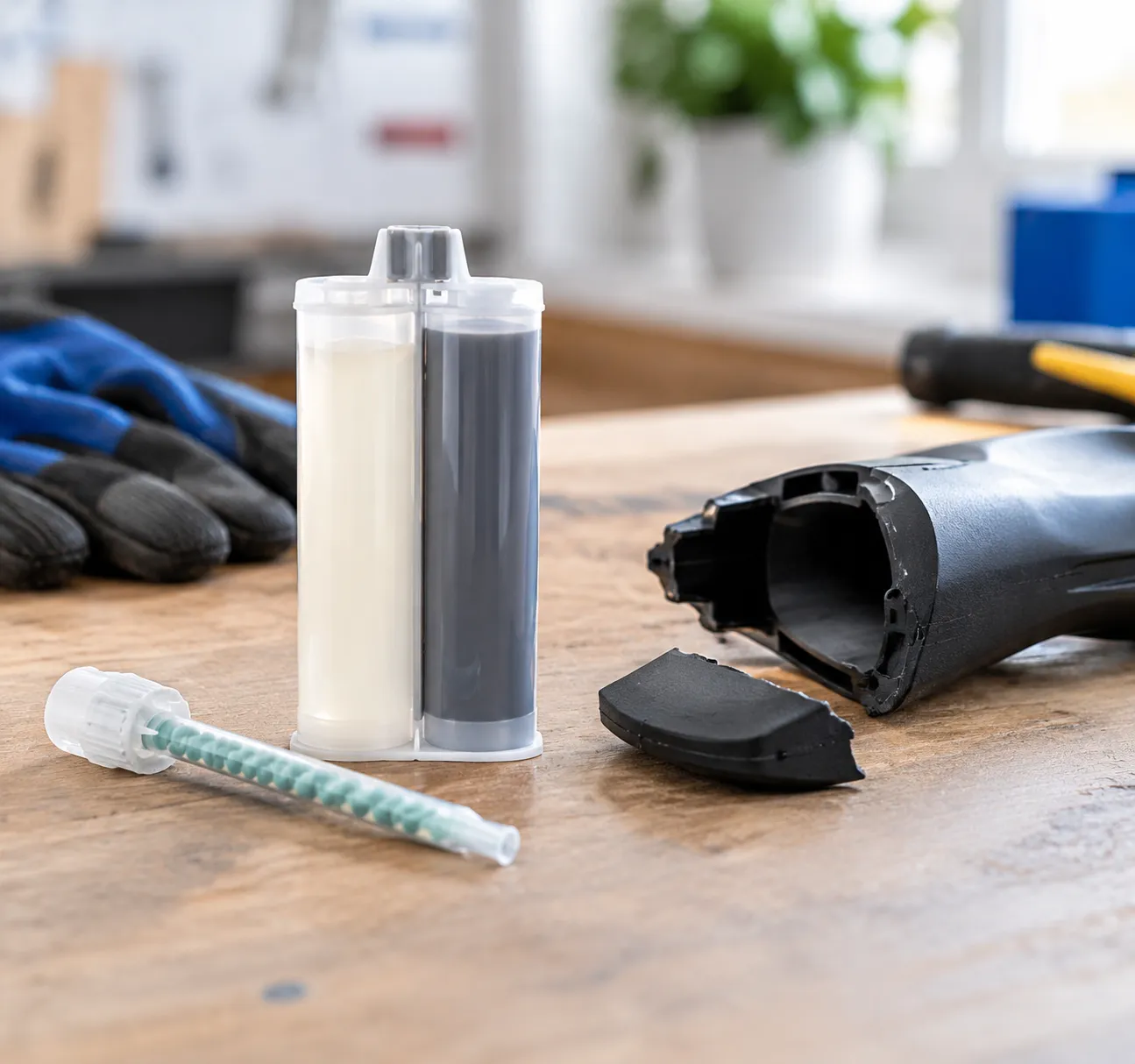
AB epoxy glue for plastic is a high-performance, two-component adhesive system engineered to create rigid, high-shear structural bonds across a wide range of plastic substrates. Achieving reliable, long-term adhesion depends on selecting the right formulation matched to the specific polymer type and service environment.
- Substrate Compatibility: Standard formulations bond exceptionally well to rigid plastics such as ABS, PVC, polycarbonate (PC), acrylic (PMMA), and fiber-reinforced composites (FRP).
- Low Surface Energy (LSE) Plastics: Untreated polyolefins like polyethylene (PE) and polypropylene (PP) require surface treatment (flame, corona, or specific adhesion primers) or specialized modified resin systems to bond effectively.
- Two-Part Chemical Cross-Linking: Combining Resin (Part A) and Hardener (Part B) initiates a room-temperature cure that resists impact, vibration, moisture, and common industrial chemicals.
- Surface Preparation is Critical: Removing surface contaminants, degreasing, and light mechanical abrasion significantly increase mechanical interlocking and prevent premature bond failure.
- Dimensional Stability: Two-component epoxy cures with negligible shrinkage, making it ideal for gap filling, structural assembly, and component sealing.
Is any epoxy completely UV-proof?
Direct Answer
No epoxy is 100% UV-proof over an indefinite timeline. While we formulate our AB epoxy glue for plastic with advanced UV absorbers and hindered amine light stabilizers (HALS) to dramatically delay yellowing, all epoxy polymers will eventually undergo photochemical degradation under sustained direct sunlight. For exterior projects, UV resistance means delaying degradation and maintaining joint strength, not permanent immunity to solar radiation.
Key Selection Factors or Failure Risks
When choosing a plastic bonding epoxy for outdoor or high-light environments, consider these critical factors:
- Polymer Backbone Chemistry: Standard structural epoxies rely on aromatic chains that absorb UV light and break down over time. For maximum clarity and longevity, modified formulas or specialized aliphatic systems offer superior resistance.
- Bond Line Sun Exposure: Clear plastics (like acrylic or polycarbonate) allow sunlight to pass directly through the substrate to the adhesive interface, accelerating bond-line failure if the epoxy lacks UV stabilizers.
- Surface Chalking and Brittleness: Severe UV exposure does more than cause yellowing; it eventually leads to surface micro-cracking, loss of flexibility, and reduced peel strength across plastics like ABS and PVC.
- Discoloration vs. Structural Integrity: Yellowing is often a cosmetic issue initially, but unchecked photochemical degradation will ultimately compromise the structural load capacity of the joint.
Why does overheating increase discoloration?
Direct Answer
Excess heat triggers rapid thermal oxidation inside the polymer matrix. When you mix and cure AB epoxy glue for plastic, an exothermic reaction naturally generates heat. If this reaction runs too hot—or if the bonded assembly operates in high-temperature environments—the chemical structure of the amine hardeners breaks down and oxidizes, turning the cured bond yellow, amber, or dark brown.
Key Selection Factors or Failure Risks
- Exotherm runaway in thick layers: Applying thick glue lines or mixing large, deep batches traps heat, dramatically spiking cure temperatures and scorching the adhesive from the inside out.
- Hardener formulation limits: Standard amine systems lack thermal stabilizers, making them vulnerable to rapid discoloration when pushed past their temperature thresholds.
- Substrate heat damage: Excess heat doesn’t just discolor your plastic bonding epoxy; it can soften, warp, or degrade heat-sensitive plastics like thin PVC and ABS.
- Compromised structural integrity: High-temperature discoloration is usually a visual sign of chemical degradation, often accompanied by embrittlement and reduced peel strength.
Do pigments hide or worsen yellowing?
Direct Answer
Pigments physically mask yellowing rather than stopping the underlying chemical degradation. Adding dark, opaque colorants—such as carbon black, dark grey, or deep tones—effectively conceals the amber shift that naturally happens when AB epoxy glue for plastic is exposed to sunlight or heat. However, translucent tints, light pastels, and pure whites will not hide this shift; in fact, matrix discoloration beneath light pigments often makes the yellow cast even more obvious over time.
Key Selection Factors or Failure Risks
- Pigment Compatibility: Mixing untested liquid dyes or solvent-based colorants into your plastic bonding epoxy can disrupt cross-linking, resulting in tacky surfaces, reduced shear strength, and bonding failure on plastics like ABS or PVC.
- Color Drift in Light Tones: When bonding or filling visible plastic joints with white or off-white formulations, standard resins will drift toward a yellow-beige hue unless formulated with UV blockers and specialized light stabilizers.
- Filler Loading Limits: Adding too much dry pigment increases viscosity and weakens the structural integrity of your epoxy adhesive for ABS, compromising joint flexibility and impact resistance.
- Thermal Absorption: Darker pigments absorb more ambient heat under direct sunlight, which can raise surface temperatures and accelerate the long-term aging of the underlying polymer matrix.
How should yellowing resistance be compared?
Direct Answer
To accurately compare yellowing resistance in AB epoxy glue for plastic, rely on standardized accelerated weathering test data rather than initial out-of-the-bottle clarity. We evaluate yellowing by measuring color shift (Delta E values) over fixed intervals under controlled UV radiation and thermal exposure, typically using QUV or Xenon arc test standards (such as ASTM G154 or ISO 4892). A plastic bonding epoxy that appears crystal clear immediately after cure can discolor rapidly if formulated with aromatic hardeners rather than UV-stabilized aliphatic systems.
Key Selection Factors or Failure Risks
When selecting a reliable epoxy for plastic assemblies exposed to light, we recommend auditing the following performance criteria:
- Standardized Lab Testing: Always evaluate ASTM or ISO accelerated aging reports. Comparing baseline yellowing indices across 500 to 1,000 hours of continuous UV exposure gives an objective benchmark.
- Hardener Chemistry: Formulations built on aliphatic or cycloaliphatic amine curing agents provide significantly higher resistance to UV oxidation than standard aromatic systems.
- Substrate Interaction: Plasticizers in plastics like flexible PVC or fire-retardants in ABS can migrate into the bondline and accelerate discoloration under sunlight.
| Evaluation Metric | High Yellowing Resistance | Standard Formulations |
|---|---|---|
| Curing Chemistry | Aliphatic / Cycloaliphatic systems | Standard aromatic amine systems |
| UV Additives | Integrated UV blockers & HALS | Basic or no stabilizer package |
| Primary Risk | Slight optical shift over prolonged years | Rapid ambering, chalking, and bondline fatigue |
Failure Risks: Choosing a custom structural epoxy purely based on initial clear appearance often leads to noticeable cosmetic degradation on white or transparent plastics, and severe photo-oxidation can eventually compromise mechanical adhesion.
Can a topcoat improve outdoor durability?
Direct Answer
Yes, a dedicated protective topcoat significantly enhances outdoor durability when using AB epoxy glue for plastic. Standard structural epoxy chemistries break down under direct sunlight over time. Applying an aliphatic polyurethane, acrylic, or specialized UV-blocking clear coat shields the underlying adhesive bond line from direct ultraviolet radiation, moisture intrusion, and surface erosion, extending the functional lifespan of the plastic assembly in exposed environments.
Key Selection Factors or Failure Risks
Adding a secondary protective layer requires balance between chemical compatibility and mechanical adhesion. Overlooking key interface dynamics can cause premature joint failure.
- Intercoat Adhesion: The topcoat must chemically bond or mechanically anchor to the cured plastic bonding epoxy. Sanding the cured epoxy joint lightly creates mechanical tooth, preventing delamination.
- Coating Flexibility: Plastics flex and expand under temperature shifts. A rigid, brittle topcoat will crack over a flexible joint, allowing UV and water to reach the bond line. Match the elongation properties of the topcoat to the substrate.
- Chemical Compatibility: Solvent-borne topcoats can attack certain sensitive plastics like ABS, polycarbonate, or polystyrene. Ensure the topcoat solvent carrier does not soften or craze the plastic edge around the adhesive bead.
- Coating Coverage Integrity: Any pinhole, missed seam, or thin edge creates a failure path. UV degradation migrates inward from unprotected edges, undermining the adhesive structure beneath.
What Information Should You Send to the Manufacturer?
When sourcing the right AB epoxy glue for plastic, providing complete technical requirements upfront eliminates guesswork and speeds up sampling. As an epoxy resin manufacturer, we evaluate the following production parameters to match or tailor the ideal formula for your assembly line.
Application, Substrate and Process Details
Accurate bonding depends entirely on knowing the materials and how they move through your facility:
- Exact Substrate Types: Specify both surfaces being joined—such as ABS to ABS, polycarbonate to aluminum, or rigid PVC to acrylic.
- Surface Preparation: Note whether parts undergo corona treatment, plasma etching, solvent wiping, or are bonded directly as-molded.
- Dispensing Method: State whether your process uses dual-barrel hand cartridges with static mixers or automated meter-mix dispensing machines.
- Cure Schedule: Define your open working time (pot life), target fixture time, and whether you cure at ambient shop temperatures or via heat ovens.
Performance, Packaging and Estimated Quantity
Mechanical and commercial requirements allow us to optimize both product performance and production economics:
| Requirement Category | Details to Provide |
|---|---|
| Mechanical Performance | Lap shear strength, peel strength, impact resistance, and required bond flexibility. |
| Environmental Exposure | Continuous operating temperatures, thermal cycling, moisture, chemical contact, and UV exposure. |
| Packaging Configuration | 50 ml, 200 ml, or 400 ml side-by-side cartridges, 1 kg sets, 5-gallon pails, or 200 kg steel drums. |
| Supply Scope | Prototype sample quantities, trial run volume, estimated annual usage, and custom private label requirements. |
Sharing these details upfront ensures our lab formulates a custom structural epoxy that delivers reliable adhesion directly into your workflow.
How Can Rongwei Support This Project?
As an established epoxy resin factory direct manufacturer, we provide end-to-end technical support and production capabilities to ensure your bonding operations run smoothly and cost-effectively.
Sample Matching and Formula Adjustment
Getting a dependable bond on plastic requires the right chemical balance. We do not just sell off-the-shelf formulas; we optimize AB epoxy glue for plastic to match your exact substrate requirements.
- Substrate-Specific Formulations: We tailor plastic bonding epoxy systems for engineering plastics such as ABS, PVC, polycarbonates, and specialty blends.
- Performance Tuning: Our lab adjusts open time, cure speed, shear strength, impact resistance, and viscosity to fit your exact assembly process.
- Sample Testing & Verification: Send us your substrates. We run adhesion, lap-shear, and aging tests in-house to verify bonding performance before you place a commercial order.
- Custom Structural Epoxy Solutions: When standard adhesives fail under high mechanical load, we develop modified formulations engineered specifically for high-stress structural joints.
OEM / Private Label Packaging and Bulk Supply
Whether you need finished retail-ready products or large-scale industrial containers, we operate as your dedicated wholesale epoxy resin manufacturer and private label partner.
- Flexible Packaging Options: 50ml and 400ml dual-component cartridges (1:1 and 2:1 ratios), squeeze tubes, bottles, 20kg pails, and 200kg drums.
- Private Label Services: Full OEM packaging support, including custom branded labeling, dual-cartridge printing, blister packs, and multi-language instruction inserts.
- Bulk Epoxy Resin Supplier Reliability: Consistent batch-to-batch quality control, high monthly production capacity, and stable export logistics to support global supply chains directly from our manufacturing facility.
Final Buyer Checklist
Questions to Confirm Before Placing an Order
Before finalizing a bulk order of AB epoxy glue for plastic, verifying technical parameters and production compatibility ensures you get the exact formulation for your manufacturing process. Review this checklist to confirm all critical details with us:
- Substrate Compatibility: Confirm whether your application involves standard plastics like epoxy adhesive for ABS and epoxy for PVC, or challenging materials requiring a low surface energy plastic adhesive.
- Bond Strength and Mechanical Load: Ensure the custom structural epoxy meets your shear, tensile, and peel strength specifications under continuous operational stress.
- Operating and Environmental Conditions: Verify working temperature ranges, outdoor UV exposure, moisture levels, and chemical contact requirements for the bonded parts.
- Cure Profile and Assembly Speed: Align the pot life, fixture time, and full cure time with your line’s cycle times and dispensing equipment.
- Packaging and Dispensing Format: Specify your preferred packaging—whether standard dual-barrel cartridges with static mixers for manual application or bulk drums for automated lines.
- Sample Testing and Validation: Run pre-production validation batches on actual production parts to confirm reliable plastic bonding performance.
- MOQ, Lead Times, and Private Labeling: Finalize volume tiers, custom branding requirements, and scheduled delivery logistics directly with your wholesale epoxy resin manufacturer.
