Epoxy Resin Letters Guide Materials Glow Texture and Uses
Material Structure Differences: Epoxy Resin vs. Acrylic
When manufacturing premium illuminated signage, choosing the right core material dictates both the production process and the structural integrity of the final product. The fundamental difference between epoxy resin letters and traditional acrylic letters lies in how they are shaped and structured.
1. Liquid Poured Solid Cast (Epoxy Resin)
- Seamless Construction: Epoxy resin letters are manufactured using a liquid-pouring process. The liquid resin is cast directly into a pre-fabricated metal channel letter shell (typically stainless steel or aluminum).
- Chemical Bonding: As it cures, the liquid resin chemically bonds with the housing, creating a seamless, one-piece solid face.
- Internal Encapsulation: The resin completely fills the cavity, encapsulating the internal LED modules. This eliminates air gaps and prevents moisture ingress.
2. Solid Sheet Thermoforming (Acrylic)
- Mechanical Assembly: Acrylic letters start as solid, flat plastic sheets. They must be heated, laser-cut, and mechanically joined or glued to the return walls.
- Visible Seams: Because it relies on mechanical bonding and adhesives, acrylic signage inherently features joints and seams where the face meets the side profiles.
| Structural Feature | Epoxy Resin Letters | Acrylic Letters |
|---|---|---|
| Material State during Processing | Liquid monomer (poured) | Solid sheet (thermoformed/cut) |
| Seamless Integration | Perfect; 100% seamless bond | Limited; relies on glue/joints |
| Waterproofing Capability | Superior (natural encapsulation) | Moderate (depends on silicone sealing) |
| Edge Definition | Sharp, casting-mold precision | Cut-dependent, slight radius limitations |
Understanding this structural divergence is critical for global signage distributors. The poured liquid nature of an LED resin sign delivers a unified structural component that outperforms multi-piece acrylic assemblies in both durability and architectural refinement.
Surface Texture Comparison: High Gloss Letters vs. Acrylic
When you look at premium signage up close, the surface finish tells the whole story. The tactile and visual texture of epoxy resin letters is fundamentally different from standard acrylic, and this is where resin truly wins on premium appeal.
The Visual Depth of Resin vs. Acrylic
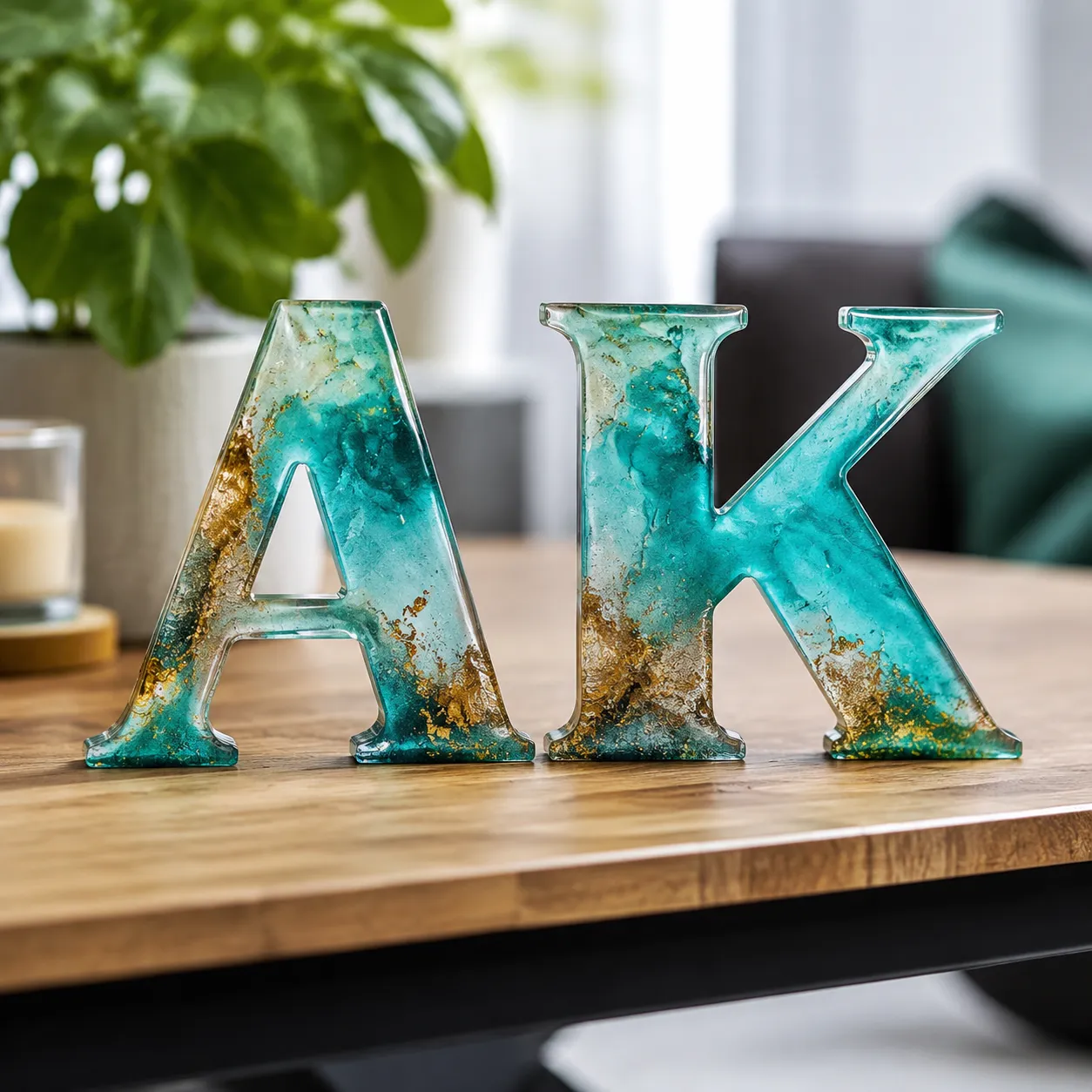
- Epoxy Resin Letters: Liquid resin cures into a seamless, solid layer. It creates a natural high gloss letters finish with a slight, liquid-like meniscus curve at the edges. This gives the sign a rich, 3D depth that looks poured-on and high-end.
- Acrylic Letters: Acrylic relies on mechanical cutting and flame polishing. While it is flat and shiny, it lacks that luxurious, molded “liquid glass” depth. The edges remain sharp and flat, missing the premium, rounded look of poured resin.
| Feature | Epoxy Resin Letters | Acrylic Letters |
|---|---|---|
| Surface Finish | Ultra-smooth, seamless high gloss letters | Flat, standard gloss |
| Edge Profile | Soft, naturally curved meniscus | Sharp, hard-cut edges |
| Visual Depth | Deep, liquid-like dimension | Flat reflection |
| Premium Feel | High-end luxury appeal | Standard commercial look |
Why Texture Matters for Your Brand
In retail and corporate environments, customers judge your quality by your storefront. The flawless, mirror-like surface of an illuminated signage resin finish eliminates the cheap, plastic look often associated with standard signs. Our proprietary pouring process ensures the face is perfectly leveled, free of ripples, and highly reflective, giving your brand a solid, prestigious presentation that acrylic simply cannot replicate.
Key Advantages of Epoxy Resin Letters for Modern Signage
When we manufacture epoxy resin letters, our focus is on delivering a premium product that leaves traditional signage in the dust. As a business owner, you need an LED resin sign that looks flawless up close and performs reliably over time.
Here is why our epoxy resin letters are the ultimate choice for high-end branding:
- Ultra-High Brightness: The liquid resin poured into the letter housing creates an optically clear matrix. This allows light to distribute with zero loss, outshining standard acrylic letters vs resin letters setups by a mile.
- Seamless 3D Finish: Unlike acrylic faces that require joints or trim caps, these high gloss letters feature a perfectly solid, smooth front face that looks sleek and sophisticated.
- Perfect Color Mixing: The cast resin acts as a natural light diffuser. It eliminates hot spots and shadow areas completely, resulting in an incredibly vibrant, evenly illuminated signage resin effect.
- Superior Weather Resistance: We engineer our resin formula to resist yellowing, cracking, and outdoor aging, ensuring your storefront stays sharp for years.
5. 3136AB-5 Application Solution for Epoxy Resin Letters
To achieve the perfect finish on an LED resin sign, choosing the right formula is everything. Our 3136AB-5 epoxy resin is specifically engineered for high-end epoxy resin letters, offering a seamless potting solution that balances fluid workability with extreme durability.
Whether you are crafting intricate high gloss letters or large-scale illuminated signage resin displays, this solution ensures a flawless execution every time.
Step-by-Step Production Workflow
- Shell Preparation: Ensure your metal or acrylic letter channels are completely clean, dry, and dust-free. Securely install the LED modules at the base.
- Precise Mixing: Blend the 3136AB-5 components strictly according to the specified weight ratio. Stir thoroughly for 3 to 5 minutes until the mixture is perfectly clear.
- Color Tinting: Add specialized liquid pigments directly into the mixed resin if you are creating vibrant, colored resin letters rather than standard white.
- The Pouring Process: Pour the mixture slowly into the letter chassis. The self-leveling properties of 3136AB-5 will automatically create a flat, smooth, bubble-free surface.
- Curing Time: Allow the letters to cure in a dust-free environment. The formula cures into a rock-hard, high-gloss protective layer that seals the electronics completely.
Technical Performance Matrix
| Feature | Performance Benefit | Direct Advantage for Signage |
|---|---|---|
| Viscosity | Low viscosity & self-leveling | Eliminates trapped air bubbles automatically |
| UV Resistance | Advanced anti-yellowing stabilizers | Maintains pristine clarity on outdoor signs |
| Light Diffusion | Optimized scattering properties | Delivers smooth, hot-spot-free illumination |
| Cure Shrinkage | Ultra-low shrinkage rate | Prevents warping and edge separation |
Using the 3136AB-5 system drastically reduces production rejection rates. It addresses the common pain points of traditional acrylic letters vs resin letters, giving your workshop a reliable, premium solution that guarantees uniform light transmission and a high-end liquid-gloss appearance.
6. Ideal Clients for Epoxy Resin Letters
Choosing epoxy resin letters is a strategic investment for businesses that refuse to blend into the background. Over the years, we have found that our illuminated signage resin solutions deliver the highest ROI for specific types of clients who prioritize flawless branding and longevity.
Here is a breakdown of who benefits the most from our premium liquid-cast signage:
High-End Luxury Brands & Boutiques
For premium retailers, standard signage just won’t cut it. Brands that require high gloss letters with a seamless, jewelry-like finish choose resin over traditional options. The smooth, seamless face elevates storefronts in high-end shopping districts, reflecting a true luxury identity.
Premium Chain Stores & Corporate Headquarters
Consistency is everything for a multi-location brand. When comparing acrylic letters vs resin letters, corporate clients choose our resin formula because it eliminates light leakage and hot spots. It ensures your corporate logo looks exactly the same in every single location, maintaining strict brand guidelines.
Designers and Architects Demanding Customization
If your project involves intricate scripts, complex logos, or very slim strokes, standard fabrication methods fall short. Our resin pouring process allows for extreme precision, making it the go-to choice for creative directors who want to bring highly detailed LED resin sign concepts to life without structural compromises.
Businesses Looking for Long-Term Value
While the initial investment is higher than basic plastic letters, our clients look at the total cost of ownership. Thanks to the heavy-duty UV-stabilized formula, these letters resist yellowing and weathering, making them the ultimate choice for business owners who want to buy once and enjoy a flawless storefront for years to come.
