
Epoxy Coating Failure Causes Defects and Solutions
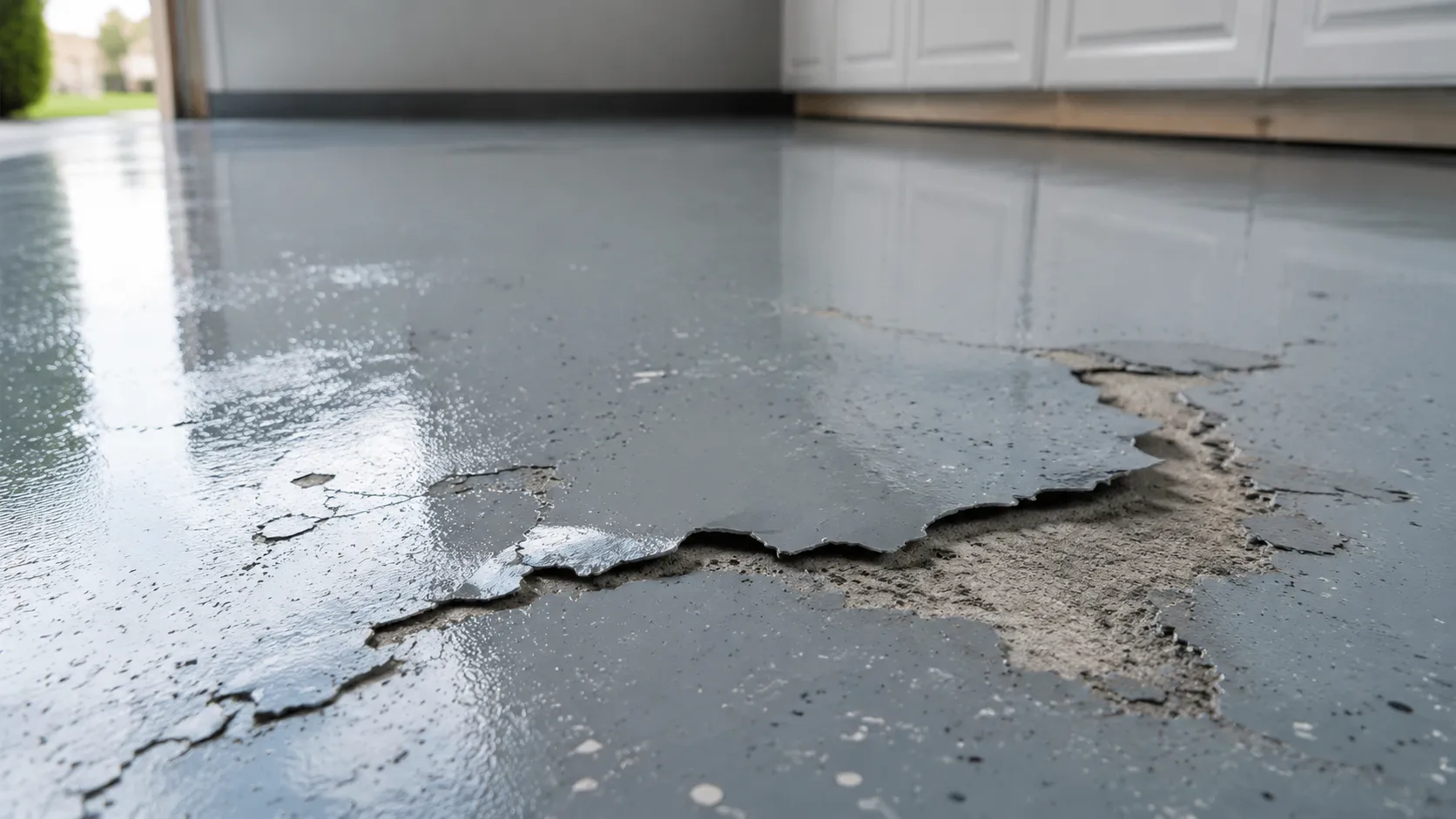
Ever noticed how a flawless epoxy coating can completely transform a space, only to watch it bubble, peel, or crack a few months later?
It’s incredibly frustrating.
You followed the instructions, but you still ended up with a massive headache. The truth is, epoxy coating failure rarely happens by accident. It usually boils down to hidden system defects or critical mistakes made before the first coat even touches the floor.
But don’t panic.
I’ve analyzed why these coatings fail and, more importantly, how to fix them. In this quick guide, you’ll discover the exact reasons for failure, the underlying system flaws, and the foolproof solutions to get a rock-solid, professional finish that actually lasts.
Let’s dive right in.
Common Causes of Epoxy Coating Failure
Epoxy coatings offer exceptional durability, but improper application or environmental factors can lead to premature epoxy coating failure. Understanding why these systems fail is the first step toward ensuring a long-lasting, high-performance finish.
Poor Surface Preparation
The leading cause of epoxy coating failure is inadequate surface preparation. Epoxy requires a clean, porous profile to bond mechanically with the substrate.
Contamination: Residual oil, grease, dust, or chemical sealers create a barrier that prevents the epoxy from adhering, causing the system to reject the coat.
Smooth Substrates: Concrete that has not been properly acid-etched, diamond-ground, or shot-blasted will be too smooth, leading to widespread peeling and delamination.
High Moisture Vapor Transmission (MVT)
Hydrostatic pressure and high moisture levels within a concrete slab are major threats to resinous floors.
Osmotic Blistering: When moisture rises through the concrete, it traps water vapor beneath the impermeable epoxy film.
Delamination: This trapped pressure forces the coating away from the substrate, resulting in unsightly bubbles and complete adhesion loss.
Imbalanced Mixing and Curing Failure
Epoxy is a precise two-part chemical system requiring strict adherence to mixing ratios and environmental conditions.
Incorrect Ratios: Failing to mix the resin and hardener at the exact manufacturer-specified ratio prevents the cross-linking process, resulting in a permanent curing failure.
Temperature Extremes: Applying coatings in environments that are too cold slows the chemical reaction, while excessive heat accelerates it too quickly, inducing brittle cracking and structural weakness.
2. Epoxy Coating Failure: Systemic Defects
When we look at why an epoxy coating failure happens, the blame often falls entirely on the installer. However, after years in this industry, we know that built-in system defects are just as common. These are the underlying flaws within the materials and the prep phase that set a project up for failure before the first coat even cures.
Poor Thermal Compatibility
Concrete and epoxy do not react to temperature changes the same way. When a facility experiences rapid temperature swings, the concrete base and the epoxy topping expand and contract at different rates.
The Result: Extreme shear stress at the bond line.
The Outcome: The system shears itself apart, leading to widespread cracking and peeling.
Low Moisture Vapor Tolerance
Standard epoxy systems act as complete vapor barriers. If your concrete slab lacks a proper sub-slab vapor barrier, moisture pushes upward through the porous concrete.
The Pressure Build-up: Hydrostatic pressure forces moisture to the surface.
The Failure: The trapped moisture cannot escape, destroying the adhesive bond and causing ugly blisters and bubbling.
Formulation and Mixing Vulnerabilities
An epoxy system is only as good as its chemical balance. If the ratio of resin to hardener is off by even a tiny fraction, or if the mixing speed introduces excessive air, the system suffers from systemic weakness.
| System Defect | Primary Impact | Visual Sign |
|---|---|---|
| Incorrect Mix Ratio | Incomplete chemical reaction | Sticky patches, curing failure |
| Entrained Air | Weakened physical structure | Pinholes, tiny surface craters |
| Brittle Formulations | Zero impact resistance | Spiderweb cracking under loads |
3. 解决方案
We don’t just supply high-performance formulas; we help you get the job done right. To fix an epoxy coating failure and prevent issues like peeling, cracking, or curing failure from happening again, we rely on a systematic, no-nonsense recovery process.
Step-by-Step Restoration
- Strip the Failed Coating: Remove all loose, peeling, or uncured epoxy. Use mechanical grinding or approved chemical strippers to get down to clean, bare concrete.
- Decontaminate the Substrate: Scrub the floor with industrial degreasers to lift deep-seated oils, fats, and chemical residues. Rinse thoroughly and let it dry completely.
- Profile the Surface: Use shot-blasting or diamond grinding to achieve a concrete surface profile (CSP) of 2 to 3. This gives the new primer a rough texture to grab onto.
- Verify Moisture Levels: Always run a calcium chloride or relative humidity (RH) test. If moisture is high, apply a specialized moisture vapor barrier primer before the main coat.
- Control the Environment: Ensure ambient temperatures and relative humidity levels match the product data sheet. Keep the workspace well-ventilated but free of dust and debris during application.
Epoxy Recovery Checklist
| Restoration Stage | Target Action | Expected Outcome |
|---|---|---|
| Removal | Grind away all peeling, cracking areas | Clean, structurally sound base |
| Preparation | Open concrete pores via mechanical grinding | Strong mechanical bond |
| Mixing |
