
Epoxy vs Polyaspartic Comparison for Floor Coating Choice
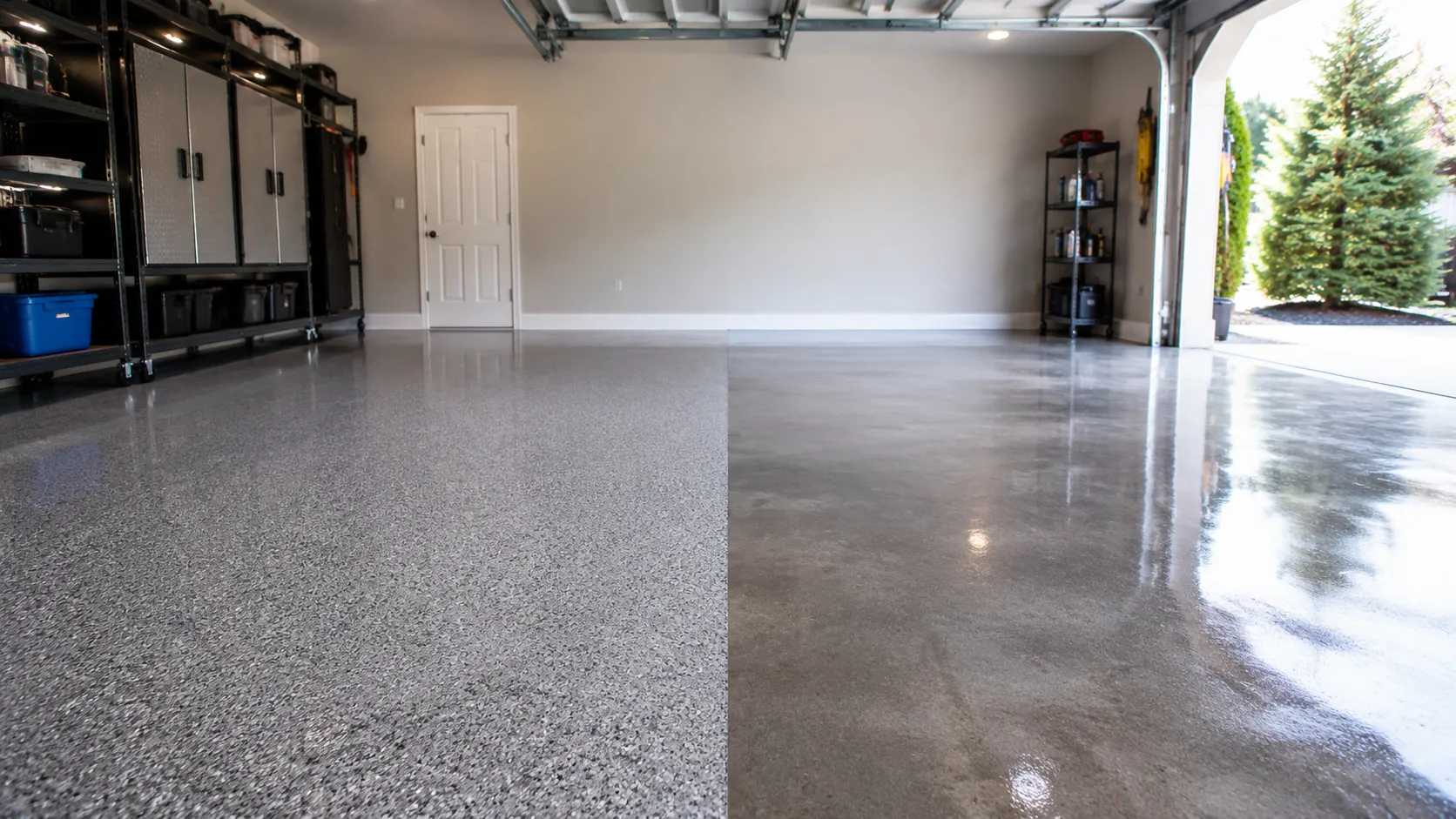
Are you struggling to choose the ultimate coating for your floors? Picking between epoxy vs polyaspartic can make a massive difference in your project’s durability, timeline, and overall budget.
As a flooring specialist, I know that investing in the wrong system can lead to premature peeling and wasted money. You need real-world guidance, not just marketing fluff.
Well, you’re in for a treat because I’ve put together the definitive material comparison and application breakdown to help you make the right system selection. Some benefits are proven, others depend entirely on your environment, but they are all critical to your decision.
Let’s dive right in.
Epoxy vs Polyaspartic: Material Comparison
Choosing the right concrete coating system is critical to the longevity, aesthetics, and performance of any flooring project. While both epoxy and polyaspartic coatings are widely utilized, their distinct chemical compositions dictate vastly different performance profiles under real-world conditions.
Chemical Composition and Properties
| Feature | Epoxy Coatings | Polyaspartic Coatings |
|---|---|---|
| Chemical Type | Thermosetting polymer (resin + hardener) | Aliphatic polyurea derivative |
| Curing Speed | Slow (typically 12 to 24 hours per coat) | Rapid (typically 30 to 60 minutes) |
| UV Stability | Poor (prone to yellowing and chalking) | Excellent (100% UV stable) |
| Flexibility | Rigid (higher risk of cracking under stress) | Highly flexible (moves with concrete expansion) |
| VOC Emissions | Low to moderate (depends on formulation) | Extremely low to zero VOC options available |
Key Performance Differences
1. Durability and Impact Resistance
Epoxy is incredibly hard, making it highly resistant to heavy loads. However, its rigidity can be a drawback. Polyaspartic coatings offer superior flexibility, allowing them to absorb impacts from dropped tools or heavy equipment without chipping or peeling.
2. UV Stability and Esthetics
- Epoxy: Standard epoxy formulations lack UV stability. When exposed to direct sunlight, they degrade, leading to yellowing, fading, and chalking over time.
- Polyaspartic: Formulated as an aliphatic material, polyaspartic is inherently UV stable. It maintains its crystal-clear, high-gloss finish indefinitely, making it ideal for both interior and exterior applications.
3. Curing Performance and Application Risks
The curing process represents a major point of divergence:
Curing Failure Risks: Epoxy is highly sensitive to temperature and humidity during application. Incorrect mixing or moisture in the concrete slab can easily lead to a curing failure, resulting in sticky spots or bubbles.
Rapid Curing Advantage: Polyaspartic cures exceptionally fast through a humidity-assisted reaction. While this drastically reduces downtime—allowing a full system install in just one day—it requires highly skilled application to prevent premature curing before the product is fully laid out.
Epoxy vs Polyaspartic: Application Differences in Real-World Use
Choosing between
2. 应用区别
在实际铺设中,epoxy vs polyaspartic 的表现截然不同。我们需要根据具体的空间环境、施工工期以及日照条件来决定最终的使用方案。
空间与环境适应性
- 户外与半开放区域(阳台、车道、露台): 这些区域必须使用 polyaspartic。它具备极佳的 UV stability(紫外线稳定性),长期暴晒绝不泛黄、不开裂。如果在这里错误地使用普通 epoxy,阳光直射很快就会让涂层发黄粉化。
- 室内与地下空间(地下室、封闭式厂房): Epoxy 在这里更具优势。由于没有紫外线直射,它的高性价比和强大的抗重压性能得以完美发挥。
施工效率与固化风险
- Polyaspartic(快速交付): 固化时间极快,通常在数小时内即可干燥,甚至能实现“一天完工”。然而,它的施工窗口期极短,对温湿度要求极高。如果施工人员不够专业,很容易在潮湿或高温环境下遭遇 curing failure(固化失败),导致涂层起泡或附着力不足。
- Epoxy(容错率高): 固化时间通常需要 24 到 72 小时。虽然工期较长,但它的流平性极佳,施工容错率高,极少出现因环境波动导致的固化失败,非常适合大面积且不急于投入使用的项目。
核心选型建议:
追求极致速度、抗紫外线(如车库门前、室外地坪),首选 polyaspartic;如果是大面积室内找平、预算有限且工期充裕,选择 epoxy 更加稳妥。
Choosing the Right System: Epoxy vs Polyaspartic
Selecting the ideal floor coating depends entirely on your environment, budget, and turnaround requirements. While both options offer incredible protection, comparing epoxy vs polyaspartic reveals distinct use cases for each.
Why Choose an Epoxy System?
Epoxy remains the industry standard for thick, self-leveling builds and cost-effective surface prep.
Best for Indoors: Ideal for basements, workshops, and facilities with no direct sunlight.
Excellent Adhesion: Bonds deeply into concrete, filling minor cracks and imperfections seamlessly.
Budget-Friendly: Highly cost-effective for covering large square footage.
Note: Standard epoxy lacks UV stability, meaning it will yellow over time if exposed to sunlight.
Why Choose a Polyaspartic System?
Polyaspartic is the premium choice when speed, extreme durability, and weather resistance are non-negotiable.
Rapid Curing: Floors dry in hours rather than days. However, professional installation is critical to prevent curing failure in high-humidity conditions.
Superior UV Stability: Will not fade, yellow, or chalk under direct sunlight, making it perfect for garages and outdoor patios.
High Flexibility: Offers unmatched impact resistance and tolerates temperature fluctuations without cracking.
The Ultimate Hybrid Solution
For most residential garages and commercial spaces, you do not have to choose just one. Our recommended setup combines the strengths of both materials to maximize performance:
| Layer | Material | Key Benefit |
|---|---|---|
| Base Coat | Epoxy | Maximum adhesion to the concrete base |
| Top Coat | Polyaspartic | Ultimate durability and high UV stability |
This hybrid system delivers the best of both worlds, ensuring your floor looks pristine and performs flawlessly for decades.
