
Waterproof Epoxy Potting Compound UV Resistance Guide
Quick Answer
What Buyers Need to Know First
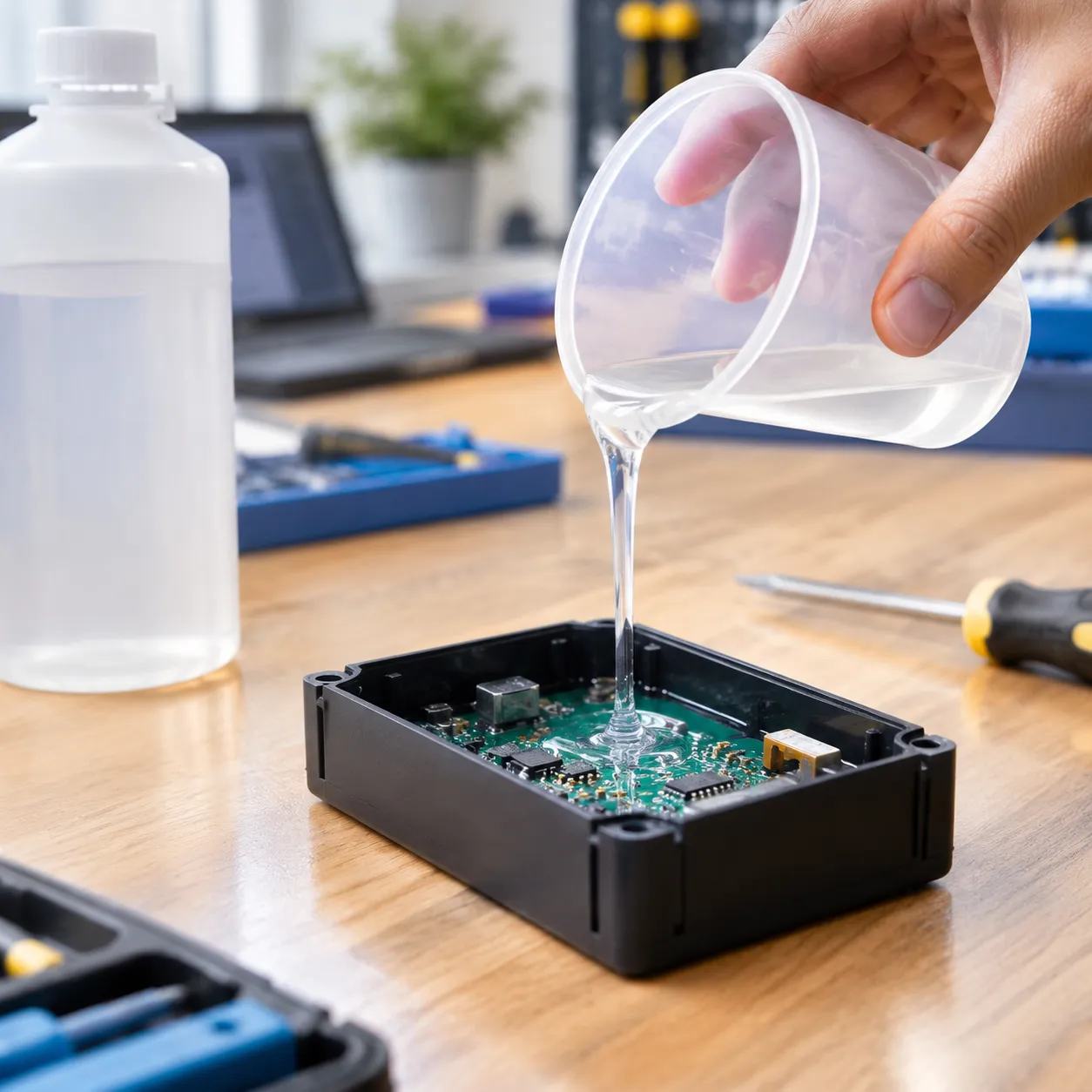
A waterproof epoxy potting compound creates a solid, continuous physical barrier that completely seals electronic components, printed circuit boards (PCBs), and delicate wiring against liquid water, moisture vapor, and corrosive chemical agents. When engineered correctly, it delivers robust PCB waterproof encapsulation while acting as a high-performance electrical insulation resin.
Before sourcing or deploying a potting solution, buyers must evaluate several foundational criteria:
- Hermetic Moisture Protection: The compound must completely fill housing cavities and eliminate micro-gaps to ensure long-term humidity protection potting and corrosion resistance.
- Substrate Adhesion: Strong chemical and mechanical bonding to metals, plastics, and board-level components is required to prevent moisture migration along interfaces.
- Environmental & Thermal Stability: The formulation must maintain structural integrity, dielectric performance, and crack resistance throughout the assembly’s target operating temperature range.
- Process Compatibility: Viscosity, pot life, mix ratio, and curing mechanics must seamlessly integrate with your production line and dispensing equipment.
Is any epoxy completely UV-proof?
Direct Answer
No, no epoxy resin is 100% UV-proof. While a high-grade waterproof epoxy potting compound offers outstanding moisture resistance and mechanical durability, standard aromatic epoxy chemistry naturally breaks down under direct ultraviolet light. Over time, prolonged sun exposure causes surface yellowing, chalking, and micro-cracking. UV stabilizers and specialized formulations significantly slow this aging process, but they cannot stop it entirely without external shielding.
Key Selection Factors or Failure Risks
When selecting an encapsulation material for outdoor electronics, balancing UV stability with electrical and barrier properties is critical. Ignoring sunlight exposure leads to predictable field failures:
- Aromatic vs. Aliphatic Formulations: Standard aromatic epoxies cure fast and provide superior adhesion, but they discolour rapidly under sunlight. Modified aliphatic systems or polyurethane and silicone alternatives hold color longer under constant outdoor exposure.
- Loss of Moisture Barrier: UV degradation is rarely just cosmetic. Surface chalking and micro-fissures compromise PCB waterproof encapsulation, allowing moisture ingress, corrosion, and dielectric breakdown over time.
- UV Stabilizers and Blockers: Specialized additives like UV absorbers (UVA) and hindered amine light stabilizers (HALS) extend outdoor service life, though they only delay photodegradation rather than prevent it permanently.
- Physical Shielding: For long-term outdoor installations, pairing an epoxy-potted module with an opaque, UV-rated enclosure or a protective topcoat provides the best defense against sunlight and water damage.
Why does overheating increase discoloration?
Direct Answer
Overheating accelerates thermal oxidation within a waterproof epoxy potting compound. When resin experiences excessive heat—either from an uncontrolled exothermic reaction during the curing stage or continuous high operating temperatures from packed electronics—the polymer chains break down and oxidize. This chemical degradation directly causes visible discoloration, shifting clear or light-colored formulations to yellow or dark amber.
Key Selection Factors or Failure Risks
Thermal stress does more than just ruin the visual appearance; it often signals that the material’s structural integrity is compromised. When selecting an electrical insulation resin for high-heat environments, keep these critical factors and risks in mind:
- Exotherm Management: Deep potting pours release significant heat during cure. If heat cannot dissipate quickly, the core temperature spikes, leading to immediate yellowing and internal thermal stress.
- Operating Temperature Limits: Pairing a standard formulation with high-temperature components leads to long-term oxidation, surface chalking, and loss of clarity.
- Loss of Mechanical Properties: Discoloration caused by overheating often coincides with polymer embrittlement, increasing the risk of micro-cracks that compromise moisture resistance and corrosion protection.
- Formula Optimization: For assemblies that generate continuous heat, choosing a tailored moisture resistant electronics resin designed for thermal stability ensures long-term protection without premature degradation.
Do pigments hide or worsen yellowing?
Direct Answer
Pigments hide yellowing rather than worsening the chemical degradation of the resin. Adding opaque colorants to a waterproof epoxy potting compound masks the natural amber tint caused by UV light and thermal exposure. Darker shades like black or charcoal grey completely conceal color shifts, whereas white, light grey, or translucent formulations make discoloration more noticeable over time.
Key Selection Factors or Failure Risks
When selecting pigmented systems for PCB waterproof encapsulation and electrical protection, keep these key performance points in mind:
- Color Tone Selection: Black and dark grey pigments deliver the best visual masking for outdoor and high-temperature environments. White and pale formulations require light-stable colorants to avoid visible shade shifting.
- Pigment Compatibility: High-grade industrial pigments maintain structural integrity without compromising the electrical insulation resin properties or curing profile.
- False Sense of Protection: While dark pigments hide cosmetic yellowing, they do not stop polymer oxidation beneath the surface if the material is exposed to intense UV.
- Long-Term Barrier Stability: Properly dispersed colorants will not affect humidity protection potting or corrosion protection epoxy performance, ensuring reliable, long-lasting moisture barrier protection.
How should yellowing resistance be compared?
Direct Answer
We compare yellowing resistance using standardized accelerated weathering tests and objective optical measurements, not casual visual checks. The reliable way to evaluate any waterproof epoxy potting compound is by reviewing accelerated UV exposure data (such as ASTM G154 / QUV testing) alongside quantifiable color change metrics like Delta E (ΔE) and the Yellowness Index (YI) recorded over set intervals.
Key Selection Factors or Failure Risks
To accurately evaluate how well an electrical insulation resin resists color shift and degradation, focus on these essential criteria:
- Accelerated QUV Exposure Data: Compare formulations based on standardized exposure cycles (UV-A 340nm irradiance, elevated temperature, and condensation periods) rather than indoor ambient light exposure.
- Delta E (ΔE) and Yellowness Index (YI): Rely on spectrophotometer readings. A low ΔE value over 500 to 1,000 hours indicates superior chemical stability and minimal optical shift.
- Thermal Aging Separation: Differentiate between heat-driven discoloration and sunlight-driven discoloration by reviewing high-temperature storage test results alongside UV data.
- Substrate Interaction: Ensure the test samples include your intended substrate or enclosure material, as chemical migration from plastics can accelerate yellowing.
Primary Failure Risks:
- False Initial Clarity: Selecting a resin solely because it cures crystal-clear often results in rapid ambering within weeks of outdoor field operation.
- Overlooking Structural Breakdown: Severe yellowing is frequently the first sign of polymer chain scission, which can eventually lead to surface chalking, micro-cracking, and loss of moisture barrier performance in outdoor potting applications.
Can a topcoat improve outdoor durability?
Direct Answer
Yes. Applying a dedicated topcoat is one of the most effective ways to enhance the outdoor service life of a waterproof epoxy potting compound. While the base epoxy delivers dependable PCB waterproof encapsulation, deep mechanical strength, and electrical insulation resin performance, prolonged sun exposure can erode unprotected surfaces. A specialized, weather-resistant topcoat acts as a durable shield, stopping UV degradation and surface chalking before they compromise the underlying potting material.
Key Selection Factors or Failure Risks
Adding a secondary coating layer requires careful balancing to ensure long-term humidity protection potting and corrosion protection epoxy performance:
- Interlayer Adhesion: The topcoat must bond seamlessly to the cured waterproof epoxy potting compound. Incompatible chemistries or contaminated surfaces cause peeling and water entrapment.
- Thermal Expansion Matching: Both layers must expand and contract at compatible rates during outdoor temperature swings to prevent cracking or delamination.
- Cure Window Integration: Applying the topcoat within the recommended cure stage ensures optimal chemical bonding between layers.
- Environmental Chemical Resistance: The combined system must maintain complete resistance to moisture, salt spray, and atmospheric pollutants without embrittlement.
What Information Should You Send to the Manufacturer?
Getting the right formulation on the first try requires clear communication. When you request a waterproof epoxy potting compound from us, providing specific technical and operational details ensures we match or custom-tailor the exact resin system for your production line.
Application, Substrate and Process Details
To ensure proper flow, wetting, and adhesion, share your exact assembly workflow with us:
- Target Application: Specify whether you need PCB waterproof encapsulation, cable joint sealing, sensor potting, or power module protection.
- Substrate Compatibility: List all housing and component materials (e.g., aluminum, ABS, polycarbonate, copper, FR4) so we can ensure long-term bonding and match thermal expansion coefficients.
- Dispensing Setup: Tell us if you use manual mixing, dual-cartridge static mixers, or automated meter-mix dispensing equipment.
- Process Windows: Define your required pot life (working time), gel time, and curing method (room-temperature cure or heat-accelerated oven cure).
Performance, Packaging and Estimated Quantity
We also need to know your operational environment and logistical requirements to configure the final product:
| Requirement Category | Details to Provide |
|---|---|
| Environmental Protection | Operating temperature range, UV exposure, chemical contact, and required humidity protection potting levels. |
| Electrical & Mechanical Specs | Hardness requirements (Shore D rigid vs. Shore A semi-flexible), dielectric strength for electrical insulation resin performance, and corrosion protection epoxy needs. |
| Packaging Format | Dual cartridges, 1 kg / 5 kg working kits, 20 kg pails, or 200 kg industrial drums. |
| Order Volume | Sample testing volume, initial pilot-run quantities, and projected annual bulk procurement. |
How Can Rongwei Support This Project?
We support your production from initial testing to large-scale manufacturing, delivering dependable waterproof epoxy potting compound solutions built around your exact processing requirements. Working as your direct manufacturing partner, we eliminate guesswork and keep your supply chain running smoothly.
Sample Matching and Formula Adjustment
Every potting line and component design presents unique challenges. We refine and calibrate formulations to ensure optimal performance on your line:
- Custom Property Matching: We adjust viscosity, cure schedules, and hardness to suit automated dispensing or manual pouring.
- Environmental Resistance: Formulas are optimized for high humidity protection potting, thermal cycling, and chemical resistance.
- Sample Testing & Validation: We provide targeted sample batches to verify adhesion, void-free flow, and effective PCB waterproof encapsulation before full production.
- Electrical Reliability: Formulations are dialed in to serve as high-grade electrical insulation resin with robust corrosion protection.
OEM / Private Label Packaging and Bulk Supply
As an epoxy resin factory direct producer and wholesale epoxy resin manufacturer, we offer flexible packaging and volume supply options tailored to your distribution model:
- Private Label Packaging: Complete private label epoxy resin options, including customized dual-cartridges, bottles, pails, and 200L drums with your branding and labeling.
- Volume Scalability: High-capacity batch processing guarantees consistent quality and reliable lead times for industrial-scale runs.
- Direct Supply Reliability: As a dedicated bulk epoxy resin supplier, we ensure batch-to-batch consistency, complete documentation, and dependable export packaging for global delivery.
Final Buyer Checklist
Questions to Confirm Before Placing an Order
Before finalizing your bulk purchase of a waterproof epoxy potting compound, running through a practical pre-order checklist prevents costly production stops and ensures the formulation meets your exact field conditions.
Review these essential operational and technical points with our team prior to production sign-off:
| Evaluation Area | Key Verification Item | Why It Matters |
|---|---|---|
| Environmental Protection | IP-level moisture barrier and continuous operating temperature limits | Guarantees reliable PCB waterproof encapsulation and high-humidity protection. |
| Dielectric Integrity | Required dielectric strength and insulation resistance values | Ensures long-term electrical insulation resin performance without short circuits. |
| Chemical & UV Exposure | Resistance to outdoor weathering, industrial solvents, and thermal shock | Prevents cracking, delamination, and corrosion on sensitive electronic sub-assemblies. |
| Processing Profile | Mixed viscosity, pot life/work time, and gel time | Matches your automated dispensing equipment or manual casting workflow smoothly. |
| Exotherm & Cure Speed | Peak exotherm temperature during mass potting | Avoids heat damage to sensitive components and prevents shrinkage stress. |
| Packaging & Lead Times | Cartridge, pail, or bulk drum supply with clear shelf-life specs | Streamlines inventory handling directly from our wholesale epoxy resin manufacturing line. |
Pre-Order Verification Points
- Substrate Adhesion: Confirm the compound bonds securely to your housing plastics (e.g., ABS, PBT, polycarbonate) and metal connectors without requiring specialized primers.
- Sample Testing: Validate cured pilot samples under real-world cycling conditions before proceeding with full batch manufacturing.
- Safety & Compliance: Ensure full batch traceability, technical data sheet (TDS) alignment, and relevant safety documentation match your regional import requirements.
- Supply Schedule: Align your delivery timeline and batch volumes to maintain continuous production flow directly from the factory.
