
LED Module Potting Epoxy Guide for Electronic Encapsulation
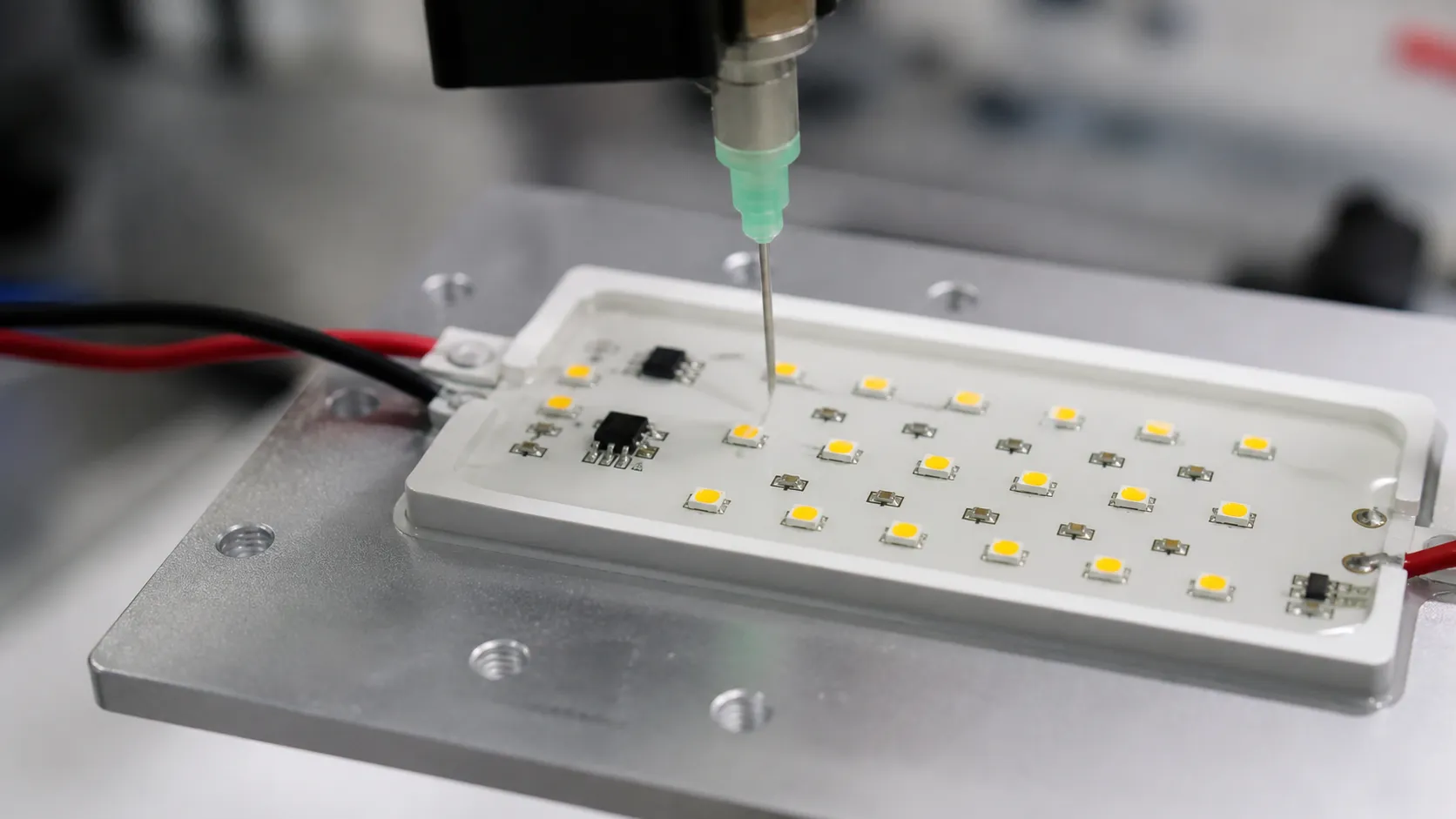
What Is LED module potting epoxy Used for in Electronic Potting and Encapsulation?
LED module potting epoxy is a specialized protective compound designed to shield sensitive electronics from harsh environmental factors. In electronic potting and encapsulation, this material creates a solid, protective barrier around light-emitting diodes (LEDs) and their driving circuitry. By completely enveloping the components, it prevents premature failure and maintains the optical and electrical integrity of the entire system.
Main application scenarios
This high-performance compound is widely utilized across several demanding sectors:
- Outdoor Architectural Lighting: Protects wall washers, linear lights, and facade illuminations from heavy rain, humidity, and UV exposure.
- Commercial LED Displays: Encases large-scale outdoor advertising screens and stadium billboards to ensure continuous operation in changing weather conditions.
- Automotive and Marine Electronics: Shields vehicle headlights, indicators, and marine cabin lights from intense vibrations and saltwater corrosion.
- Industrial Indicator Systems: Used in heavy machinery and control panels where electronic sealing is critical to resist oil, dust, and chemical splashes.
Required material properties
To deliver long-term protection, the potting material must exhibit specific physical and chemical characteristics:
- Excellent Moisture Resistance: Prevents water ingress to eliminate the risk of short circuits and corrosion on the PCB.
- High Thermal Stability: Dissipates heat generated by high-power LEDs, maintaining a safe operating temperature for the components.
- Superior Insulation Epoxy Performance: Offers high dielectric strength to isolate electrical currents safely.
- Optical Clarity: Ensures maximum light transmission without yellowing or dimming the LED output over time.
- Optimum Flexibility: Absorbs mechanical impacts and accommodates the thermal expansion and contraction of different substrates.
Common user expectations
Global buyers and engineers prioritize reliability and ease of processing when choosing an encapsulation material:
| User Expectation | Engineering Requirement | Business Impact |
|---|---|---|
| Long-Term Durability | Resistance to UV yellowing and degradation | Reduced warranty claims and maintenance costs |
| Efficient Processing | Low viscosity for self-leveling and easy air release | Higher production throughput and fewer defects |
| Reliable Protection | Consistent adhesion to plastic, metal, and PCBs | Extended product lifespan in extreme environments |
Performance Requirements for Electronic Potting and Encapsulation
When you protect sensitive electronics, the encapsulant must deliver reliable physical and optical protection. Choosing high-grade LED module potting epoxy ensures your components perform stably under demanding operational conditions.
Clarity, gloss, and appearance
For optical displays, light fixtures, and signage, visual quality is critical. Our formulation provides high clarity and a smooth, glossy finish that enhances light output without dulling the display.
- High Optical Transmittance: Keeps light output crisp, vivid, and bright.
- Non-Yellowing Formula: Resists UV degradation to prevent discoloration over time.
- High Gloss Finish: Delivers a slick, clean aesthetic for exposed components.
Adhesion and durability
A strong seal prevents delamination and structural failure. LED module potting epoxy creates a rigid, permanent bond across diverse substrates like aluminum, PCB boards, and copper wiring.
| Key Aspect | Performance Benefit |
|---|---|
| Substrate Bonding | Anchors firmly to plastic, glass, and metal without primers. |
| Mechanical Strength | Absorbs physical shocks, heavy vibrations, and impact loads. |
| Structural Integrity | Prevents shrinkage or micro-cracks during cure and long-term use. |
Temperature, moisture, and chemical resistance
Outdoor electronics and industrial modules face harsh ambient conditions daily. Proper electronic sealing shields circuits against environmental stressors.
- Thermal Stability: Withstands continuous high operating temperatures and thermal cycling without cracking.
- Moisture Resistance: Creates a waterproof barrier that prevents short circuits and corrosion.
- Chemical Protection: Defends delicate circuits against oils, mild acids, solvents, and dust exposure.
How to Select the Right LED module potting epoxy
Choosing the correct compound prevents field failures and protects your components from harsh environments. We engineer specific formulations to match your exact production setup and performance targets.
Recommended formula type
Two main chemistries dominate electronic sealing for lighting components. For most standard applications, an epoxy AB glue system delivers the highest mechanical strength and cost-effective insulation epoxy properties. However, if your project involves flexible strip LED resin or requires extreme UV stability to prevent yellowing outdoors, a specialized PU glue (polyurethane) or optical-grade UV resin is the better choice.
Mixing ratio and curing conditions
Achieving the perfect cure depends entirely on precise mixing and the right thermal environment. Most industrial LED module potting epoxy systems use a simple weight ratio.
| Formula Type | Common Mix Ratio (A:B by Weight) | Pot Life (At 25°C) | Typical Cure Schedule | Primary Benefit |
|---|---|---|---|---|
| Standard Epoxy | 4:1 or 2:1 | 30–45 mins | 24 hours at room temp / 2 hours at 80°C | High adhesion & thermal stability |
| Flexible PU | 5:1 or 1:1 | 15–25 mins | 12 hours at room temp / 1 hour at 60°C | Low stress, excellent moisture resistance |
| Fast UV Resin | Single-component | N/A (Stable) | Seconds under 365–405nm UV light | Instant processing for high-speed lines |
Packaging and bulk order options
We offer flexible bulk supply packaging tailored to your dispensing equipment. Smaller assembly lines benefit from easy-to-use 50ml or 400ml dual cartridges, while automated high-volume factories utilize our 5kg pails or 200kg drums.
As a direct custom epoxy resin manufacturer, all shipments originate from our Dongguan factory and carry full certification, including ISO 9001 quality management compliance and complete SDS/MSDS documentation for global customs and safety clearing. Single-kilogram kits are available for initial sample testing before locking in full commercial volumes.
Common Problems and Solutions with LED Module Potting Epoxy
Working with LED module potting epoxy requires precision. Even small deviations in temperature or mixing can lead to noticeable defects. Below are the most common issues encountered during electronic sealing and how to fix them.
Bubbles, yellowing, or soft curing
- Bubbles: Often caused by high-viscosity mixing or pouring too fast.
- Solution: Use a vacuum degassing chamber before pouring, or choose a low-viscosity Epoxy AB glue with excellent self-deaeration properties.
- Yellowing: Standard resins degrade under UV light and high heat.
- Solution: Upgrade to an insulation epoxy formula with built-in UV stabilizers or switch to an advanced PU glue if the module faces direct sunlight.
- Soft Curing: This happens due to inaccurate weighing or poor mixing.
- Solution: Always weigh components by weight, not volume. Mix thoroughly along the sides and bottom of the container until the fluid is completely streak-free.
Surface defects and poor leveling
- Crater marks and ripples: Caused by surface contamination (moisture, oil, or dust) on the LED driver potting housing or the strip itself.
- Solution: Clean and dry all components before potting. Ensure the workspace maintains a stable, draft-free temperature.
- Poor leveling: If the resin cures too fast, it won’t flatten out.
- Solution: Optimize the gel time. Adjust the ambient temperature or request a formula adjustment for a longer working time to allow the liquid to level naturally.
How to test before mass production
| Test Step | Objective | Key Metric |
|---|---|---|
| Small-Batch Sample Testing | Verify mixing accuracy and compatibility with the flexible strip LED resin substrate. | Hardness & Clarity |
| Thermal Shock Test | Check thermal stability by cycling between high and low temperatures. | Crack resistance |
| Moisture Resistance Test | Ensure the seal protects against water ingress in humid environments. | IP67/IP68 Waterproofing |
Pro Tip: Never skip the trial phase. Running a small-scale sample test saves time, reduces material waste, and ensures the LED module potting epoxy performs perfectly under actual factory conditions before moving to full bulk supply production.
RW Atelier Custom Manufacturing Support
At RW Atelier, we provide tailored solutions for your LED module potting epoxy needs, taking your project from initial design through high-volume production. Operating out of our Dongguan factory with ISO 9001 certification, we give you direct access to custom formulations, flexible packaging, and competitive pricing.
Formula adjustment
Every LED application has unique demands—whether you need high thermal stability for a high-wattage LED driver potting project or extra clarity and flexibility for a outdoor flexible strip LED resin.
We adjust our formulations to meet your specific physical and chemical requirements:
- Viscosity & Flow: Modified for faster self-leveling or higher gap-filling performance.
- Thermal & Electrical: Tweaked for higher thermal conductivity or increased insulation epoxy properties.
- Curing Profile: Speed up UV resin reaction times or adjust heat/room temperature curing schedules.
- Environmental Resistance: Enhanced yellowing resistance and moisture resistance for long-term outdoor electronic sealing.
[Standard Epoxy AB Glue] —> [Formula Adjustment] —> [Custom LED Module Potting Epoxy]
(Viscosity/Clarity/UV)
Private label packaging
We offer full OEM/ODM private label services so you can market our high-performance formulas under your own brand identity.
| Packaging Type | Target Application | Key Features |
|---|---|---|
| Dual Syringes | Small-scale repair & field installation | Precise 1:1 or 2:1 automatic mixing |
| Cartridges & Cans | Automated dispensing lines | Quick integration, reduced air entrapment |
| Bulk Drums | Mass industrial potting | Cost-effective, high-volume supply |
- Custom Branding: Your logos, labels, and safety messaging printed directly on container units.
- Full Compliance: Complete SDS/MSDS documentation supplied with every shipment to ensure smooth global customs clearance.
Sample and bulk quotation
Testing before scaling up is critical in electronic packaging. We make evaluation straightforward with rapid sample dispatch and transparent volume pricing.
- Request Samples: Get small-batch testing samples to verify clarity, adhesion, and cure times on your production line.
- Evaluate Performance: Test the material under real operating conditions for moisture, heat, and chemical stress.
- Receive Bulk Pricing: Lock in tiered volume discounts backed by stable factory production capacity.
Direct Supply Advantage: Working directly with our factory cuts out middleman markups, giving you consistent material quality and predictable production schedules.
