
PCB Potting Epoxy Guide for Electronics Encapsulation
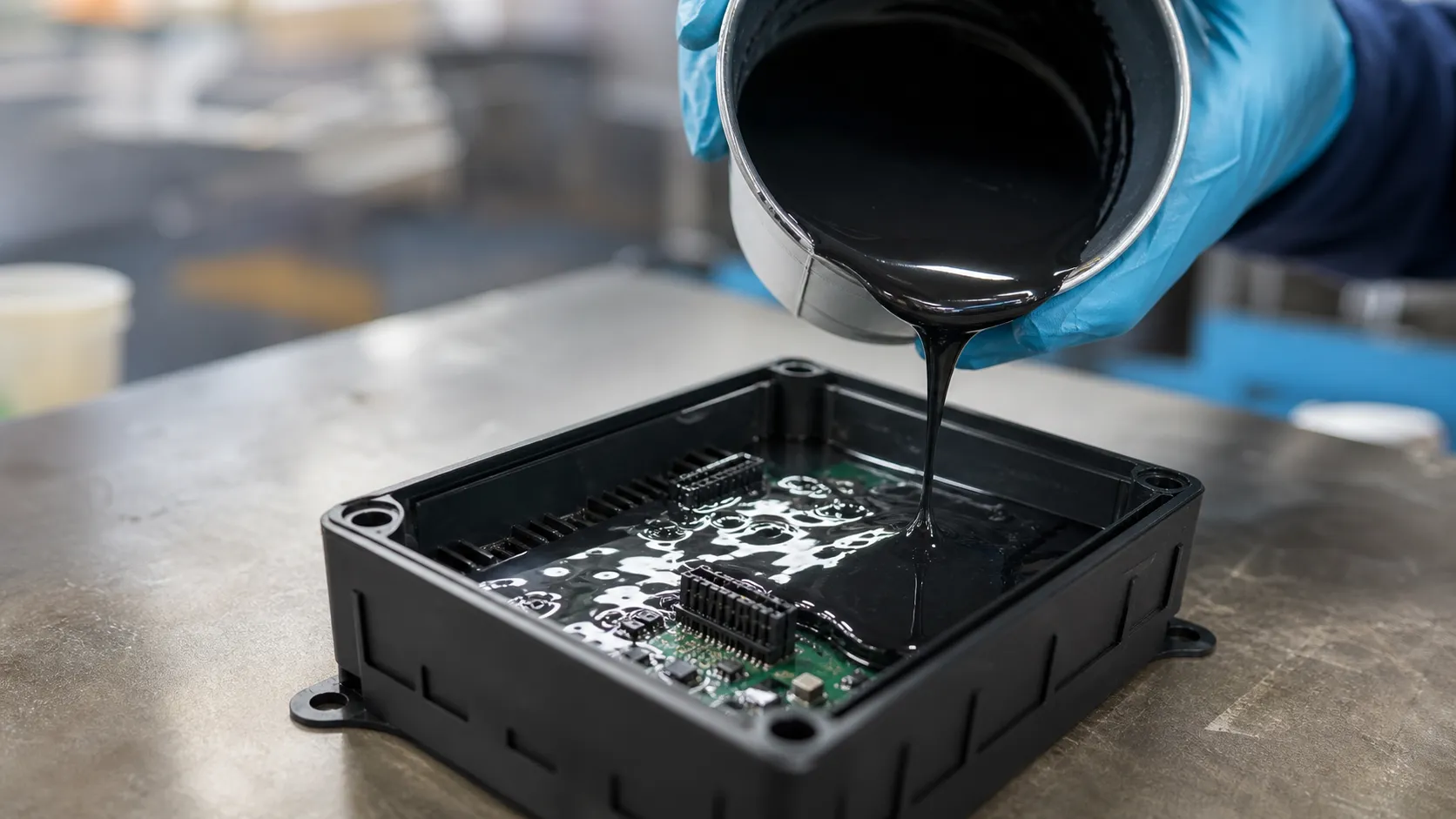
Are you struggling to choose the right protection for your critical electronic components?
A single failure in harsh environments can ruin an entire production run. That’s why selecting the right PCB potting epoxy isn’t just another manufacturing detail—it’s the backbone of your product’s long-term reliability.
In this guide, you’re going to learn exactly how to master electronic potting and encapsulation. We’ll break down key application scenarios, essential material properties, step-by-step selection criteria, and solutions to common curing defects. Plus, you’ll discover how custom formula adjustments and private-label manufacturing can streamline your bulk production.
Let’s dive right in.
What Is PCB potting epoxy Used for in Electronic Potting and Encapsulation?
Electronic components face harsh environments every day. High-performance PCB potting epoxy serves as a protective barrier, completely enclosing sensitive electronics to shield them from external hazards. This process, known as PCB encapsulation or circuit board potting, displaces air and fills voids within the housing to ensure long-term operational stability.
Main application scenarios
- Automotive Electronics: Safeguards engine control units (ECUs), sensor modules, and electric vehicle (EV) battery management systems from heavy vibrations and under-hood fluids.
- Industrial Automation: Protects power supplies, relays, and controllers deployed in high-dust, chemical-heavy factory environments.
- Outdoor Lighting & Power: Encapsulates LED drivers and outdoor telecom equipment to prevent water ingress and weather damage.
- Consumer Electronics: Seals household appliance control boards against moisture, thermal shock, and everyday wear.
Required material properties
To deliver reliable defense, a high-quality electrical insulation resin must possess a strict set of technical characteristics:
- Dielectric Strength: Exceptional electrical insulation to prevent arcing and short circuits in high-density layouts.
- Thermal Conductivity: Efficient heat dissipation pathways to draw thermal loads away from critical components.
- Low Shrinkage: Minimal volume reduction during the curing phase to avoid stress on delicate solder joints.
- Chemical Stability: Total resistance to oils, solvents, and industrial cleaning agents.
Common user expectations
Global buyers and engineers look for specific performance benchmarks when deploying a black potting compound or clear potting resin:
- Seamless Processing: Low viscosity profiles that ensure the liquid flows easily into tight spaces and complex geometries without leaving air pockets.
- Environmental Defense: A thoroughly moisture proof epoxy barrier that achieves high IP (Ingress Protection) ratings for outdoor or submerged applications.
- Long-Term Reliability: Zero cracking or delamination when exposed to rapid thermal cycling, protecting the manufacturer’s warranty and brand reputation.
Performance Requirements for PCB Potting Epoxy
Meeting performance standards in electronic encapsulation isn’t just about covering components; it’s about making sure your devices survive harsh environments. We manufacture PCB potting epoxy formulations designed to meet strict industrial metrics across three core areas:
Clarity, Gloss, and Appearance
Visual inspection and aesthetic quality matter, especially for optical electronics and clear indicator housings.
| Visual Metric | Standard Epoxy | Clear Potting Resin |
|---|---|---|
| Clarity | Standard translucent / opaque | Crystal-clear (High optical transparency) |
| Gloss Level | Semi-gloss / Matte finish | High-gloss surface finish |
| Yellowing Resistance | Standard UV protection | Anti-UV yellowing resistance |
| Surface Finish | Smooth, bubble-free | Self-leveling, mirror-like finish |
For non-optical components, our black potting compound provides deep color opacity and uniform gloss, hiding sensitive circuit designs while giving a clean, professional look.
Adhesion and Durability
Long-term protection depends heavily on how well the resin bonds to the circuit board, wires, and outer casing.
- Strong Substrate Bonding: Adheres tightly to FR4 boards, copper traces, aluminum housings, and plastic shells.
- Vibration and Shock Resistance: Absorbs mechanical impacts, protecting fragile solder joints from crack damage.
- Low Shrinkage Rate: Cures with minimal volumetric shrinkage to prevent stress on delicate surface-mount components (SMDs).
- Electrical Insulation: Delivers high dielectric strength to prevent short circuits and electrical breakdown.
Temperature, Moisture, and Chemical Resistance
Electronics face tough conditions. Our circuit board potting formulas are built to endure thermal stress, liquid exposure, and harsh chemicals.
- Thermal Management: Withstands broad operating temperature ranges from cold storage up to high operating heat without cracking or softening.
- Moisture Protection: Functions as a high-performance moisture proof epoxy that prevents water ingress, corrosion, and humidity damage.
- Chemical Resistance: Protects sensitive electronics against fuels, solvents, mild acids, and industrial oils.
How to Select the Right PCB Potting Epoxy
Selecting the correct PCB potting epoxy keeps your electronics safe from harsh field conditions. The choice comes down to chemistry, processing needs, and your manufacturing volume.
Recommended Formula Type
Different electronic designs face different environmental stresses. Matching the compound type to the application prevents premature circuit board potting failures.
- Epoxy AB Glue (Standard): Excellent electrical insulation resin with high rigidity and chemical resistance. Best for high-impact protection and black potting compound needs.
- Polyurethane (PU Glue): Flexible option that excels in low-temperature environments. It cushions delicate components from thermal shock.
- UV Resin: Perfect for rapid, thin-layer PCB encapsulation where instant curing under UV light speeds up production lines.
Mixing Ratio and Curing Conditions
Proper curing ensures the moisture proof epoxy achieves its full physical and electrical properties. Deviations in ratios can lead to sticky surfaces or brittle casting.
| Property | Standard Two-Part Epoxy | Fast-Cure Formulation |
|---|---|---|
| Mixing Ratio (Weight) | 4:1 or 2:1 | 1:1 |
| Pot Life (Working Time) | 45–60 minutes | 10–15 minutes |
| Full Cure Time (Room Temp) | 24 hours | 2–4 hours |
| Heat Cure Options | 2 hours at 80°C | 30 minutes at 60°C |
Packaging and Bulk Order Options
We provide scalable packaging options at our Dongguan factory to fit your specific manufacturing setup, whether you use manual mixing or automated dispensing systems.
- Dual Cartridges (50ml / 400ml): Ideal for sample testing, low-volume assemblies, or field repairs using manual dispense guns.
- Bulk Supply Pails (5kg / 20kg): Standard for mid-sized production runs utilizing benchtop meter-mix machines.
- Industrial Drums (200kg): Designed for high-volume automated OEM/ODM assembly lines requiring continuous material feed.
Quality Assurance Note: All bulk deliveries include comprehensive SDS/MSDS documentation and comply with ISO 9001 quality management standards to ensure batch-to-batch consistency.
Common Problems and Solutions
Working with PCB potting epoxy requires precision, but issues can still happen during application. Understanding why these problems occur helps you fix them quickly and keep your production line moving.
Bubbles, yellowing, or soft curing
- Bubbles: Entrapped air usually comes from high-speed mixing or pouring too fast. Solution: Vacuum deairing before pouring, or use a heat gun to pop surface bubbles. Choosing a low-viscosity clear potting resin also helps air escape naturally.
- Yellowing: Prolonged UV exposure or high operating temperatures can discolor the material. Solution: Switch to a UV-stabilized formula or a high-quality black potting compound if optical clarity isn’t required.
- Soft Curing: This happens due to inaccurate mixing ratios or low ambient temperatures. Solution: Always weigh your epoxy AB glue precisely according to the datasheet. If your workspace is cold, preheat the components to speed up the chemical reaction.
Surface defects and poor leveling
- Shrinkage and Cracks: High-exotherm epoxies shrink if cured too fast in large volumes. Solution: Use a multi-layer pour or switch to a slower-curing formula to control heat buildup.
- Fish eyes and Craters: Surface contamination from oil, moisture, or dust disrupts the liquid flow. Solution: Ensure the circuit board is completely clean and dry before applying the PCB encapsulation material.
- Wavy Surfaces: Poor leveling occurs when the viscosity is too high or the working time is too short. Solution: Slightly warm the resin before mixing to lower its viscosity and improve self-leveling.
How to test before mass production
| Test Type | Objective | Evaluation Method |
|---|---|---|
| Small-Batch Trial | Verify mixing ratios and cure times | Mix a 100g sample under standard workshop conditions to check hardness. |
| Compatibility Check | Ensure proper adhesion to components | Apply to a scrap board to check for lifting, delamination, or chemical reactions. |
| Environmental Stress | Validate electrical insulation resin performance | Run thermal cycling and moisture tests on samples before scaling up. |
Taking time for sample testing prevents costly defects and ensures your final products deliver reliable, long-term circuit board potting protection.
RW Atelier Custom Manufacturing Support
At RW Atelier, we don’t just supply standard adhesives; we manufacture tailored formulations built around your specific assembly lines. As a trusted custom epoxy resin manufacturer operating out of our Dongguan factory, we handle end-to-end OEM/ODM production under strict ISO 9001 quality controls. Whether you need a low-viscosity PCB potting epoxy for tight gaps or a heavy-duty black potting compound for outdoor thermal stability, we build solutions that fit your exact needs.
Formula adjustment
No two circuit boards are identical. If off-the-shelf circuit board potting resins do not meet your thermal, mechanical, or electrical targets, our lab tweaks the chemistry for your process.
- Viscosity & Flow: We adjust liquid flow rates to ensure deep penetration around micro-components without leaving air pockets.
- Curing Speed: We tune pot life and cure times, optimizing for fast heat-curing or room-temperature Epoxy AB glue systems.
- Thermal & Insulation Performance: We balance filler ratios to boost heat dissipation while maintaining strong electrical insulation resin properties.
- Alternative Chemistries: Beyond epoxy, we adjust PU glue and UV resin formulas for flexible or rapid-curing PCB encapsulation.
Private label packaging
We help global brands, distributors, and electronics factories scale faster with complete private-label packaging support.
| Packaging Type | Typical Application | Key Features |
|---|---|---|
| Dual Syringes / Cartridges | Manual repair, low-volume assembly | Precise 1:1 or 2:1 mixing, minimal waste |
| Pails & Drums | Automated dispensing systems | Cost-effective bulk supply for high-volume lines |
| Custom Bottles & Kits | Field maintenance, retail distribution | Branded labels with full SDS/MSDS compliance |
We handle label design, safety documentation, and export-ready packaging so your products land ready for market.
Sample and bulk quotation
Testing materials on real production lines is the only way to guarantee performance. We make evaluating our moisture proof epoxy simple, fast, and transparent.
- Fast Sample Testing: Request custom-formulated samples to verify adhesion, viscosity, and cure time before committing to full runs.
- Tiered Bulk Pricing: Get transparent, direct-from-factory quotes tailored to your production volume.
- Global Logistics Support: Complete compliance documentation, including full SDS/MSDS packages, ensures seamless customs clearance for international shipments.
Related Sources
- https://recom-power.com/en/rec-n-potting-compounds–a-guide-to-the-essentials-117.html
- https://blog.caplinq.com/understanding-and-preventing-yellowing-in-epoxy-based-clear-encapsulants_5869/
- https://www.allpcb.com/allelectrohub/epoxy-vs-silicone-selecting-the-optimal-potting-material-for-harsh-environment-electronics
- https://incurelab.com/wp/pcb-potting-epoxy-the-ultimate-guide
